
酉阳茶油

Search documents
武陵深处花如雪
Xin Lang Cai Jing· 2026-02-25 17:54
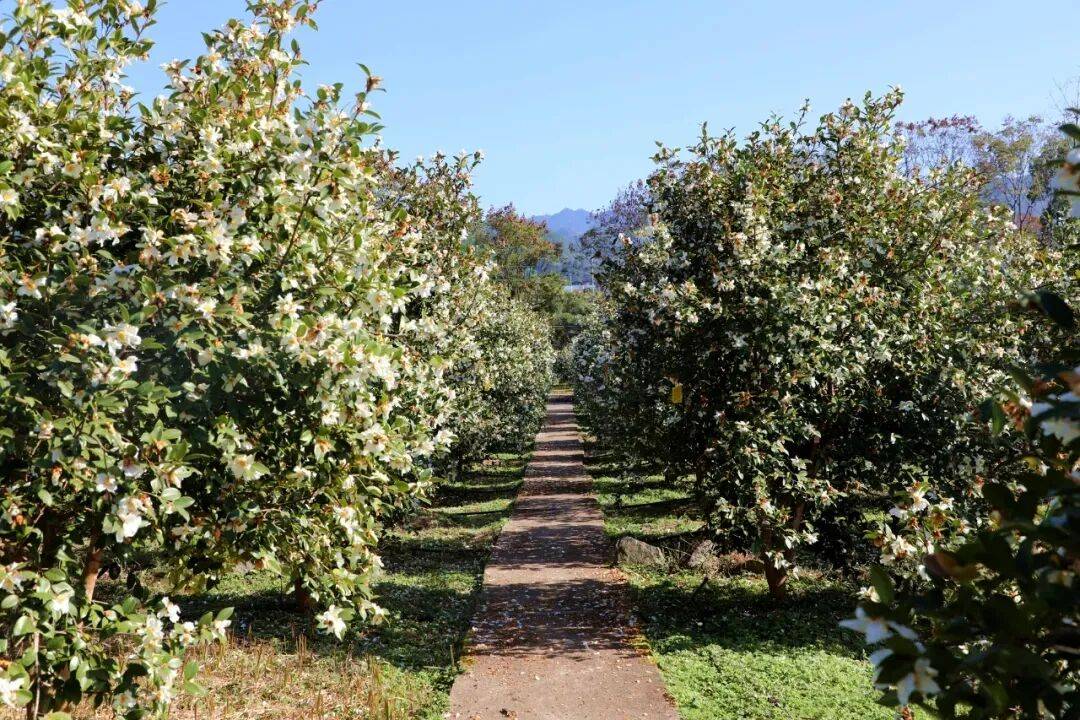
Core Viewpoint - The article highlights the transformation of Youyang's oil tea industry, showcasing its ecological beauty and economic benefits through the blooming of oil tea flowers in winter, which attracts tourists and enhances local livelihoods. Group 1: Ecological and Aesthetic Aspects - The oil tea flowers create a stunning visual landscape across 430,000 acres, turning Youyang into a picturesque winter wonderland [1] - The oil tea flowers are described as pure white petals that bloom amidst the green landscape, attracting bees and contributing to the local ecosystem [2] - The scenic beauty of the oil tea flower sea is enhanced by the natural sounds of wildlife and the joy of visitors, creating a serene atmosphere [3] Group 2: Technological and Agricultural Advancements - The introduction of smart irrigation systems in oil tea plantations allows for precise water and nutrient management, improving the health and yield of the trees [2] - The oil tea seedlings cultivated in research greenhouses can yield up to 1,500 pounds per acre, significantly outperforming traditional varieties [5] - The establishment of a complete industrial chain from seedling cultivation to deep processing has led to the development of over 60 products and 31 patents [6] Group 3: Economic Impact and Community Involvement - The oil tea industry has transformed local livelihoods, with 90% of villagers participating in profit-sharing from the oil tea plantations [5] - Local products, including oil tea soup and tea oil, are sold by villagers, contributing to their income and promoting local culture [3] - The oil tea industry has become a significant driver of rural revitalization, enhancing the economic prospects of the community [7]
写在酉阳大地上的“石化答卷”
Sou Hu Cai Jing· 2025-12-18 15:37
Core Viewpoint - The article emphasizes the role of China Petroleum & Chemical Corporation (Sinopec) in supporting rural revitalization in Youyang, focusing on targeted assistance in various sectors such as industry, education, and cultural tourism to drive sustainable development [1][24]. Group 1: Empowering Local Industries - Sinopec has identified Youyang's 400,000 acres of oil tea cultivation as a key area for support, planning to invest in high-standard demonstration projects and brand development from 2024 to 2025 [2][4]. - The company has implemented smart irrigation systems and upgraded production lines to enhance oil tea yield and quality, addressing challenges like extreme weather and high labor costs [4][6]. - Sinopec is also developing a diverse product matrix under the "Youyang Tea Oil" brand, including cooking oils and personal care products, to improve market competitiveness [6][9]. Group 2: Building Sales Channels - Sinopec is establishing a comprehensive sales network for Youyang's specialty products, partnering with convenience stores and online platforms to enhance market reach [9][11]. - The company has organized various promotional events, resulting in significant orders and sales for Youyang products, demonstrating effective market integration [11][12]. Group 3: Education Support - Education is prioritized in Sinopec's assistance strategy, focusing on improving school facilities and educational quality in Youyang [13][17]. - Upgrades to schools, including sports facilities and dormitories, have been made, alongside the establishment of partnerships to enhance educational resources and management [15][17]. Group 4: Cultural and Tourism Integration - Sinopec is promoting the integration of culture and tourism in Youyang, investing in infrastructure that supports local tourism and enhances community engagement [18][21]. - The construction of a science museum and various tourism facilities aims to attract visitors and boost local economic growth, with significant visitor numbers reported [21][23]. Group 5: Comprehensive Support Model - Sinopec's approach combines immediate assistance with long-term development strategies, focusing on leveraging local resources and corporate strengths to foster sustainable growth [24]. - The company's model serves as a replicable example for rural revitalization efforts, aiming to empower local communities and enhance their economic resilience [24].

农业、科技、产业链:中韩经贸逆市开创新格局
Di Yi Cai Jing· 2025-08-26 11:18
Group 1: Bilateral Trade and Economic Cooperation - The bilateral industrial and supply chain between China and South Korea is becoming a new stabilizing force amid global trade tensions and tariff barriers imposed by the U.S. government [1][10][11] - In July 2025, South Korea's exports increased by 5.9% year-on-year, reaching $60.82 billion, with China being the largest trading partner, accounting for $11.05 billion in exports [1] - South Korea's agricultural cooperation with China has seen significant growth, with increased imports of various agricultural products, particularly due to rising domestic prices of local produce [2][3] Group 2: Agricultural Products and Market Dynamics - South Korea's imports of Chinese agricultural products, such as cabbage and other vegetables, have surged, with 90% of cabbage used for kimchi sourced from China [2][3] - The average retail price of cabbage in South Korea increased by over 40% compared to the previous month due to supply shortages [2] - The logistics route from Qingdao, China, to Incheon, South Korea, has become a key pathway for agricultural imports, enhancing trade efficiency [2] Group 3: Technological Collaboration - The technology cooperation between China and South Korea has expanded into various fields, including renewable energy, biotechnology, artificial intelligence, and semiconductors [5][7] - South Korean companies are increasingly investing in China, with significant projects being launched, such as the collaboration on tea oil and cosmetics technology [4][8] - The Shanghai foreign investment promotion center reported a 6.6% year-on-year increase in trade with South Korea, highlighting the growing recognition of the Chinese market by Korean enterprises [8] Group 4: Industry and Supply Chain Integration - The integration of industrial and supply chains between China and South Korea is crucial for both economies, with South Korea relying on China as its largest trading partner [9][12] - South Korean companies like Samsung and SK Hynix have established significant operations in China, contributing to the global supply chain, particularly in the semiconductor sector [12] - The Jiangsu province has become a pioneer region for South Korean investments, with numerous companies establishing operations there, enhancing bilateral economic cooperation [12][13]