
野菊花

Search documents
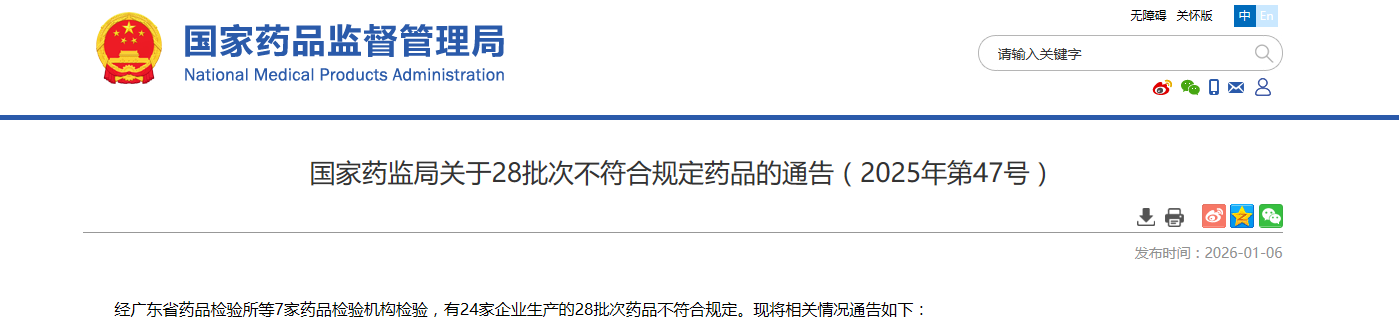
国家药监局关于28批次不符合规定药品的通告(2025年第47号)
Zhong Guo Zhi Liang Xin Wen Wang· 2026-01-06 08:55
Summary of Key Points Core Viewpoint - A total of 28 batches of drugs produced by 24 companies were found to be non-compliant with regulations as per inspections conducted by various drug testing institutions in China [2][3][4]. Group 1: Non-compliant Drugs and Companies - Four batches of Coenzyme Q10 injection produced by Liaoning Zhonghai Kangsheng Biopharmaceutical Co., Ltd., Jiangsu Wanbang Biochemical Pharmaceutical Group Co., Ltd., and Kangpu Pharmaceutical Co., Ltd. were found non-compliant due to issues related to appearance, insoluble particles, visible foreign matter, and content measurement [2][3]. - Two batches of sodium bicarbonate injection produced by Chenxin Pharmaceutical Co., Ltd. and China Resources Sanjiu Li Min Pharmaceutical (Jinan) Co., Ltd. were non-compliant due to visible foreign matter and pH value [2][3]. - Two batches of Twenty-Five Flavor Coral Pills produced by Tibet Changdu Guangyu Limin Pharmaceutical Co., Ltd. tested positive for 808 scarlet [2][3]. - One batch of mulberry bark produced by Chengdu Tiansheng Traditional Chinese Medicine Co., Ltd. was non-compliant due to appearance issues [2][3]. - Seven batches of Pueraria lobata produced by Zhejiang Dade Hall National Medicine Co., Ltd., Hunan Taoyuan Traditional Chinese Medicine Co., Ltd., Sichuan Jinke Pharmaceutical Co., Ltd., Sichuan Shengshi Jinrong Pharmaceutical Co., Ltd., and Sichuan Yifang Traditional Chinese Medicine Co., Ltd. were found non-compliant due to appearance issues [2][3]. Group 2: Regulatory Actions - The drug supervision management departments have mandated the relevant companies to take risk control measures such as suspending sales, recalling products, and conducting investigations into the causes of non-compliance [3][4]. - The National Medical Products Administration has instructed provincial drug supervision departments to investigate suspected illegal activities by the companies involved and to publicly disclose the results of the investigations as per the Drug Administration Law of the People's Republic of China [3][4].

江苏盱眙“冬闲变冬忙” 农民增收路径拓宽
Zhong Guo Xin Wen Wang· 2025-12-26 12:37
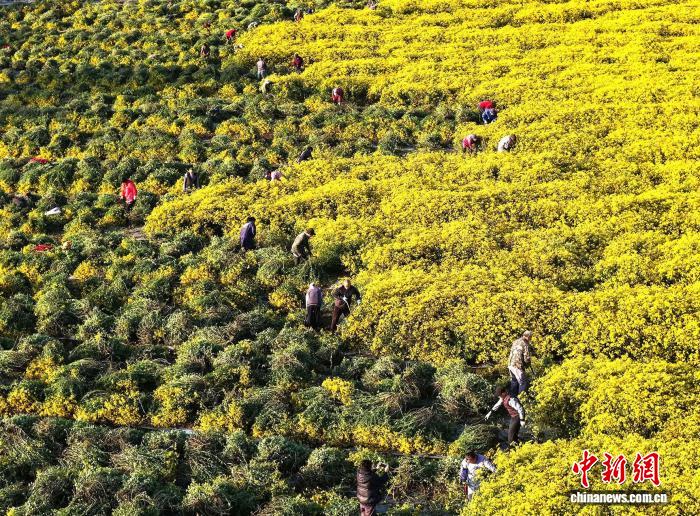
Core Viewpoint - Jiangsu Province's Xuyi County is transforming its traditional agricultural off-season into a productive period, enhancing farmers' income through policy support, technical guidance, industrial integration, and technological innovation [1][3]. Group 1: Agricultural Development Initiatives - Xuyi County has implemented various agricultural technical training programs, cultivating a new generation of skilled farmers. As of now, 21 training sessions have been conducted, training a total of 2,078 individuals to support high-quality agricultural development [3][4]. - The introduction of winter peach cultivation has successfully broken the income bottleneck during the off-season, with local peaches achieving a sweetness level of 14.2%, leading to stable winter income for farmers [3][4]. Group 2: Economic Impact and Employment - The cultivation of 200 acres of wild chrysanthemums in Fengshan Village not only enhances the ecological landscape but also provides job opportunities for villagers, with daily wages reaching 120 yuan [3][4]. - Xuyi County is promoting models such as "Party Building + Strong Village Companies" and "Party Building + Cooperatives" to strengthen village-level collective economies, transforming organizational advantages into developmental effectiveness [3].
双蚁药业赴湖北金鹰探寻野菊花生长基因,提升产品质量
Jiang Nan Shi Bao· 2025-12-25 07:17
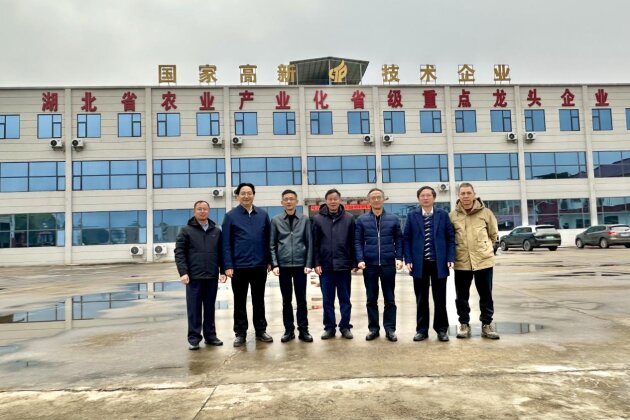
Core Viewpoint - The collaboration between Guangxi Shuangyi Pharmaceutical Co., Ltd. and Hubei Jinying Agricultural Development Co., Ltd. aims to enhance the quality and stability of the core raw material, wild chrysanthemum, for Shuangyi's flagship product, Shuangyi Compound Cold Medicine Granules, through standardized planting techniques and a comprehensive supply chain [1][9]. Group 1: Company Collaboration - The visit by Shuangyi's chairman and vice president to Hubei Jinying was focused on exploring the entire supply chain of wild chrysanthemum, including breeding, large-scale cultivation, and processing [1][3]. - Hubei Jinying has established a complete industrial chain for traditional Chinese medicine, with 2,580 acres of medicinal herb cultivation, including 1,030 acres dedicated to wild chrysanthemum [6]. - Shuangyi Pharmaceutical recognizes the advantages of Hubei Jinying's breeding and cultivation techniques, expressing a strong intention to introduce these methods to enhance its own herbal medicine cultivation base [9][11]. Group 2: Product Quality and Market Demand - Wild chrysanthemum is a key ingredient for Shuangyi's products, which include various cold and cough remedies, indicating a significant market demand for this raw material [8]. - The use of Hubei's wild chrysanthemum not only improves the efficacy of Shuangyi's products but also strengthens its competitive edge in the market [9]. - Shuangyi emphasizes its commitment to using authentic medicinal materials, which is crucial for maintaining product quality, especially in light of the recent increase in influenza cases [13]. Group 3: Future Cooperation and Development - The visit established a communication bridge for future collaboration, with both companies aiming to explore new cooperation models that promote resource sharing and complementary advantages [15]. - The partnership is expected to contribute to the high-quality development of the traditional Chinese medicine industry and support rural revitalization efforts [15].
江西铜鼓县:“幸福集市”助力农产品走出“深山”
新华网财经· 2025-12-12 10:05
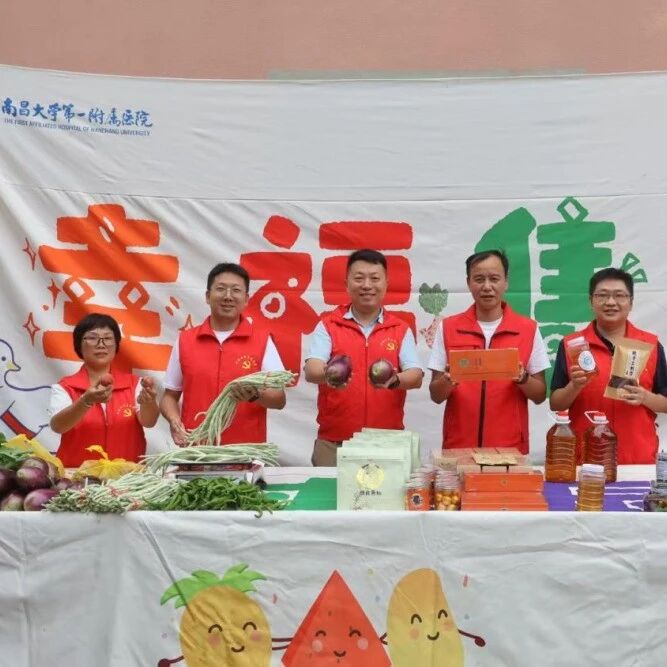
Core Viewpoint - The article highlights the successful implementation of the "Happiness Market" initiative in Xingyuan Village, Jiangxi Province, which has significantly improved the sales channels for local agricultural products and contributed to poverty alleviation efforts in the area [2][4][8]. Group 1: Sales and Economic Impact - The "Happiness Market" program has enabled local farmers to sell their products online, resulting in a sales revenue of over 6,000 yuan from the sale of fresh pork from a local farmer [2]. - The initiative has facilitated the sale of various agricultural products, including corn, taro, eggs, honey, and black goats, with total sales exceeding 10 million yuan over five years, generating over 1.5 million yuan for the village collective [8]. - The projected transaction value for medicinal herbs, including wild chrysanthemum and honeysuckle, is expected to surpass 300,000 yuan this year [5]. Group 2: Digital Transformation and Community Development - The local government and the Nanchang University First Affiliated Hospital's work team have collaborated to develop a WeChat mini-program that integrates product tracing, online purchasing, and convenient payment options [4]. - The program has helped to overcome previous challenges such as poor transportation and limited sales channels, allowing high-quality local products to reach broader markets [8]. - The work team plans to enhance the platform's functionality to better match production and sales needs, aiming to connect small farmers with larger markets effectively [8].
房前屋后“致富花” 豫南大别山北麓固始菊开乡间
Zhong Guo Xin Wen Wang· 2025-11-20 06:42
Core Viewpoint - The cultivation of medicinal wild chrysanthemum in Gushi County, Henan Province, has become a significant driver of rural economic development, benefiting local farmers through improved income and sustainable agricultural practices [1][2]. Group 1: Economic Impact - The wild chrysanthemum is being purchased at a high price of 1 yuan per kilogram, leading to increased income for local farmers, with an average monthly income exceeding 2000 yuan for those involved in processing [1]. - The total area planted with wild chrysanthemum in Gushi County has reached approximately 5000 acres, with an expected increase in revenue of 5 million yuan for the local economy [6][7]. Group 2: Agricultural Practices - The region's favorable climate and soil conditions allow for two to three harvests per year from a single planting, providing continuous income for farmers over three to five years [2]. - The introduction of high-quality seed varieties and effective cultivation techniques has been facilitated by the local agricultural college, enhancing yield and resilience against environmental challenges [5]. Group 3: Community Involvement - The "company + base + farmer" model has been implemented, ensuring unified supply of seedlings, technical training, and product collection, which has streamlined the production process [6]. - Local villagers have actively participated in the cultivation and harvesting of wild chrysanthemum, with some reporting significant income increases from their small-scale farming efforts [6].
茶药融合富山乡 河南鲁山荒山长出“黄金产业”
Huan Qiu Wang· 2025-11-13 03:53
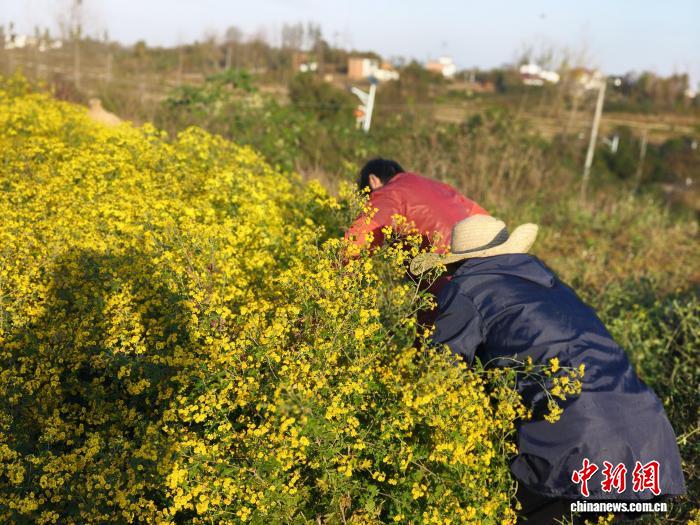
Core Insights - The article highlights the successful cultivation of wild chrysanthemums in Wuwa Village, Pingdingshan City, Henan Province, which has become a significant source of income for local villagers and a key component of rural revitalization efforts [1] Company and Industry Summary - The wild chrysanthemum is described as both a beautiful landscape and a "wealth flower," serving as a health tea for villagers and a raw material for pharmaceutical companies [1] - The local youth, Wang Xihai, identified a business opportunity in wild chrysanthemum cultivation, partnering with China Resources Sanjiu Medical & Pharmaceutical Co., and successfully transitioned nearly 300 acres of land for this purpose with government support [1] - The wild chrysanthemum is known for its medicinal properties, particularly in traditional Chinese medicine, and its demand from pharmaceutical companies has been increasing year by year, with Wang's cultivation base expected to generate an annual income of no less than 300,000 yuan [1] - The integration of standardization and mechanization in the wild chrysanthemum industry has led to the development of a "dual chain" of medicinal and food uses, enhancing its market potential [1] - The current harvesting season has created a vibrant scene where villagers are busy collecting chrysanthemums while tourists enjoy the blooming flowers, illustrating a new picture of rural revitalization [1]

国家药监局关于28批次不符合规定药品的通告(2025年第30号)
Zhong Guo Zhi Liang Xin Wen Wang· 2025-08-27 14:04
Core Viewpoint - The National Medical Products Administration (NMPA) announced that 28 batches of drugs produced by 17 companies do not meet regulatory standards, prompting investigations and corrective actions [3][5]. Group 1: Non-compliant Drugs - Five batches of fusidic acid cream produced by Aomei Pharmaceutical Factory failed due to particle size issues [3]. - Two batches of loratadine syrup from Want Pharmaceutical (Hainan) Co., Ltd. did not meet standards related to impurities [3]. - One batch of sodium phosphate oral solution from Shanghai Haihong Industrial Group's Chao Hu Jinchen Pharmaceutical Co., Ltd. failed due to relative density [3]. - Two batches of tocilizumab capsules from Shaanxi Xiyue Pharmaceutical Co., Ltd. did not meet dissolution rate standards [3]. - One batch of acetylcysteine effervescent tablets from Zhejiang Jinhua Kang'enbei Biopharmaceutical Co., Ltd. failed due to physical characteristics [3]. - Two batches of Twenty-five Flavor Coral Pills from Tibet Shenhui Pharmaceutical Co., Ltd. did not meet weight difference standards [3]. - Two batches of Qili San from Hubei Minkan Pharmaceutical Co., Ltd. failed due to content determination [3]. Group 2: Regulatory Actions - The NMPA has mandated that the involved companies take risk control measures such as suspending sales and conducting recalls [5]. - The NMPA requires provincial drug supervision departments to investigate potential illegal activities by the companies involved and to publicly disclose the results of these investigations [5].
国家药监局通告28批次药品不符合规定
Zhong Guo Xin Wen Wang· 2025-08-27 13:28
Core Viewpoint - The National Medical Products Administration (NMPA) announced that 28 batches of drugs produced by 17 companies do not meet regulatory standards, highlighting quality control issues in the pharmaceutical industry [1][2][3]. Summary by Categories Non-compliance Details - Five batches of fusidic acid cream produced by Aumei Pharmaceutical are non-compliant due to particle size [1] - Two batches of loratadine syrup from Wante Pharmaceutical (Hainan) are non-compliant due to related substances [1] - One batch of sodium phosphate oral solution from Shanghai Haihong Industrial Group is non-compliant due to relative density [1] - Two batches of tosylate capsules from Shaanxi Xiyue Pharmaceutical are non-compliant due to dissolution rate [1] - One batch of acetylcysteine effervescent tablets from Zhejiang Jinhua Kang'enbei Biopharmaceutical is non-compliant due to physical properties [1] - Two batches of Twenty-five Flavor Coral Pills from Tibet Shenhou Pharmaceutical are non-compliant due to weight differences [1] Additional Non-compliance Findings - Two batches of Qili Powder from Hubei Minkan Pharmaceutical are non-compliant due to content measurement [2] - Four batches of Qingqi Huatan Pills from Hubei Ruihua Pharmaceutical are non-compliant due to dosage discrepancies [2] - Two batches of red peony from Sichuan Jinke Pharmaceutical and Sichuan Yixiangkang Pharmaceutical are non-compliant due to physical properties [2] - Three batches of red ginseng (red ginseng slices) from multiple companies are non-compliant due to identification issues and pesticide residue [2] - One batch of Gentian from Jiangsu Heshengtang Pharmaceutical is non-compliant due to impurities [2] - One batch of wild chrysanthemum from Jiangxi Xinjian Pharmaceutical is non-compliant due to content measurement [2] Regulatory Actions - The NMPA has mandated that the involved companies take risk control measures such as halting sales and conducting recalls [3] - Investigations into the causes of non-compliance are required, along with corrective actions [3] - Provincial drug supervision departments are instructed to investigate potential illegal activities by the companies involved [3] Public Awareness Initiatives - The NMPA has provided educational information regarding the significance of various non-compliance indicators, such as particle size, related substances, relative density, dissolution rate, physical properties, weight differences, content measurement, identification, pesticide residues, total reducing sugars, impurities, and moisture content [4][5]

国家药监局发布通告28批次药品不符合规定
Yang Shi Wang· 2025-08-27 09:29
Summary of Key Points Core Viewpoint - The National Medical Products Administration (NMPA) has announced that 28 batches of drugs produced by 17 companies do not meet regulatory standards, prompting investigations and corrective actions from the involved companies [1][3]. Group 1: Non-compliance Details - Five batches of fusidic acid cream produced by Aumei Pharmaceutical are non-compliant due to particle size issues [1] - Two batches of loratadine syrup from Wante Pharmaceutical (Hainan) are non-compliant due to related substances [1] - One batch of sodium phosphate oral solution from Shanghai Haihong Industrial Group is non-compliant due to relative density [1] - Two batches of tocilizumab capsules from Shaanxi Xiyue Pharmaceutical are non-compliant due to dissolution rate [1] - One batch of acetylcysteine effervescent tablets from Zhejiang Jinhua Kang'enbei Biopharmaceutical is non-compliant due to physical properties [1] - Two batches of Twenty-Five Flavor Coral Pills from Tibet Shenhui Pharmaceutical are non-compliant due to weight differences [1] Group 2: Additional Non-compliance Cases - Two batches of Qili Powder from Hubei Minkan Pharmaceutical are non-compliant due to content measurement [2] - Four batches of Qingqi Huatan Pills from Hubei Ruihua Pharmaceutical are non-compliant due to dosage discrepancies [2] - Two batches of red peony from Sichuan Jinke Pharmaceutical and Sichuan Yixiangkang Pharmaceutical are non-compliant due to physical properties [2] - Three batches of red ginseng (red ginseng slices) from multiple companies are non-compliant due to identification issues and pesticide residue [2] - One batch of Gentian from Jiangsu Heshengtang Pharmaceutical is non-compliant due to impurities [2] - One batch of wild chrysanthemum from Jiangxi Xinjian Pharmaceutical is non-compliant due to content measurement [2] Group 3: Regulatory Actions - The NMPA has mandated that the involved companies take risk control measures such as suspending sales and conducting recalls [3] - Investigations into the causes of non-compliance are required, along with corrective actions [3] - Provincial drug supervision departments are instructed to investigate potential illegal activities by the companies involved [3]
国家药监局今天通告28批次药品不符合规定
Yang Shi Xin Wen· 2025-08-27 09:18
Core Viewpoint - The National Medical Products Administration (NMPA) announced that 28 batches of drugs produced by 17 companies do not meet regulatory standards, prompting investigations and corrective actions from the involved companies [1][3]. Summary by Categories Non-compliance Details - Five batches of fusidic acid cream produced by Aumei Pharmaceutical Factory failed due to particle size issues [1]. - Two batches of loratadine syrup from Wante Pharmaceutical (Hainan) Co., Ltd. did not meet standards due to related substances [1]. - One batch of sodium phosphate oral solution from Shanghai Haihong Industrial (Group) Co., Ltd. failed due to relative density [1]. - Two batches of tocilizumab capsules from Shaanxi Xiyue Pharmaceutical Co., Ltd. did not meet standards due to dissolution rate [1]. - One batch of acetylcysteine effervescent tablets from Zhejiang Jinhua Kang'enbei Biopharmaceutical Co., Ltd. failed due to physical properties [1]. - Two batches of Twenty-five Flavor Coral Pills from Tibet Shenhui Pharmaceutical Co., Ltd. did not meet standards due to weight differences [1]. Additional Non-compliance Cases - Two batches of Qili Powder from Hubei Minkan Pharmaceutical Co., Ltd. failed due to content determination [2]. - Four batches of Qingqi Huatan Pills from Hubei Ruihua Pharmaceutical Co., Ltd. did not meet standards due to dosage discrepancies [2]. - Two batches of red peony from Sichuan Jinke Pharmaceutical Co., Ltd. and Sichuan Yixiangkang Pharmaceutical Co., Ltd. failed due to physical properties [2]. - Three batches of red ginseng (red ginseng slices) from multiple companies failed due to identification issues and pesticide residue [2]. - One batch of Gentian from Jiangsu Heshengtang Pharmaceutical Co., Ltd. did not meet standards due to impurities [2]. - One batch of wild chrysanthemum from Jiangxi Xinjian Pharmaceutical Co., Ltd. failed due to content determination [2]. Regulatory Actions - The NMPA has mandated that the involved companies take risk control measures such as suspending sales and conducting recalls [3]. - Investigations into the causes of non-compliance are required, and the NMPA will pursue legal actions against any violations [3]. - The NMPA provided public education on the significance of various non-compliance indicators, including particle size, related substances, relative density, dissolution rate, physical properties, weight differences, content determination, identification, pesticide residues, total reducing sugars, impurities, and moisture content [3][4].