金小葵

Search documents
从高息存款到财富管理闭环,银行打响压岁钱“保卫战”
Hua Er Jie Jian Wen· 2026-02-25 07:13
Group 1 - The core idea of the article highlights the competitive landscape of children's financial products among banks, particularly during the Chinese New Year, leveraging the tradition of "lucky money" as a marketing tool to attract family asset allocation [2] - Banks are moving beyond mere marketing to establish systematic operational models, as evidenced by Beijing Bank's launch of the "Xiao Jing Card" and the "Xiao Jing Lucky Money" product, which offers a three-year fixed deposit rate of 1.75% with a low entry threshold of 1,000 yuan [2][3] - The industry consensus is shifting towards high-yield, low-threshold savings products for "lucky money," with examples including Guangxi Beibu Gulf Bank's "Dream Savings No. 1" at 1.9% for a minimum deposit of 50 yuan, and Jilin Bank's "Xiao Ji Savings" at 1.8% with a 10,000 yuan threshold [2] Group 2 - China Merchants Bank focuses on an ecological and scenario-based approach in wealth management, exemplified by the "Jin Xiao Kui" section in its mobile banking app, allowing parents to create dedicated accounts for their children [4] - The wealth management platform of China Merchants Bank promotes a variety of financial products based on the child's account activity, including a special fixed-income product with an annualized return of 2.84% [5] - The strategy of targeting children's "lucky money" accounts serves as a low-cost customer acquisition channel, potentially linking to parents' and even grandparents' accounts, indicating that children's finance is becoming a long-term focus for banks beyond seasonal marketing [5]



春节后,银行们“盯”上了孩子的红包
Guan Cha Zhe Wang· 2026-02-25 03:59
Core Insights - The competition among banks for children's financial products has intensified following the Spring Festival, with various banks launching savings and investment services aimed at minors to capture the red envelope money received during the holiday [1][8] - The trend reflects a shift in family financial management, as parents increasingly seek structured financial tools to manage their children's money and foster financial literacy [1][8] Group 1: Bank Strategies - State-owned banks, leveraging their extensive networks and brand recognition, are adopting a comprehensive approach. For instance, Industrial and Commercial Bank of China (ICBC) offers a "Baby Card" with competitive interest rates for children's savings [2][8] - Beijing Bank's "Little Jing Card" provides a three-year fixed deposit rate of 1.75% along with customized card designs and fee waivers, attracting over 2 million customers [2][4] - Joint-stock banks focus on innovative scenarios and user experiences, with China Merchants Bank's "Golden Little Aster" section integrating 51 products, including savings and insurance, to enhance family financial education [2][4] Group 2: Product Features and Differentiation - Various banks are implementing unique features to attract customers, such as Huaxia Bank's "Sunshine Growth Plan" with a minimum deposit of 50 yuan and a three-year interest rate of 1.75%, simplifying the process for parents [4][5] - Some banks, like Guangfa Bank, emphasize high interest rates for children's accounts, with products offering rates as high as 1.9% for deposits starting at 50 yuan [5][6] - The pricing strategy of offering higher interest rates for children's accounts compared to adult accounts is a deliberate marketing tactic to attract parents and secure future customers [5][6] Group 3: Regulatory Environment and Market Dynamics - The regulatory framework is evolving, with new guidelines set to take effect in February 2026, mandating special protections for minors in financial transactions [6][7] - This regulatory clarity, combined with banks optimizing account opening processes, is expected to increase parental willingness to open accounts for their children [7][8] - The competition for children's financial products is not merely about attracting deposits; it represents a strategic move to establish long-term relationships with families, potentially leading to lifelong banking connections [8][9]


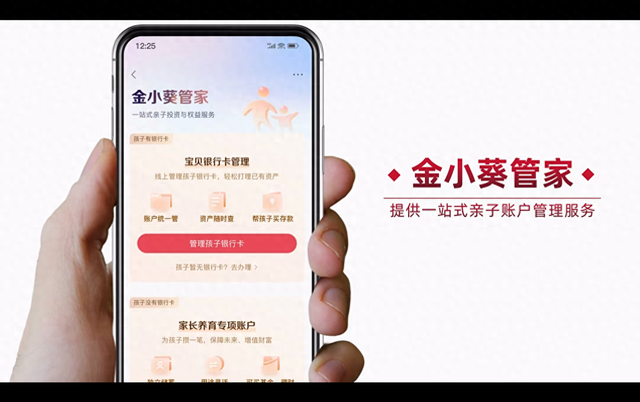
多家银行春节瞄准青少年客群,“高息”存款产品密集上线
Xin Lang Cai Jing· 2026-02-24 11:11
Core Insights - The financial marketing activities targeting children and teenagers have significantly increased during the Spring Festival, with both state-owned and joint-stock banks actively launching related products [1][6] - Banks are offering higher interest rates on savings products to attract "lucky money" and "red envelope" funds, aiming to cultivate brand loyalty from an early age and capture family retail business [1][6] - The awareness of financial rights among young people is rising, leading to a demand for dedicated management of "lucky money," presenting banks with new opportunities to serve family asset management [1][7] Group 1: Product Offerings - Beijing Bank offers a three-year fixed deposit with an interest rate of 1.75%, while Yinzhou Bank's "Children's Deposit" product offers up to 1.88% for new customers [1][6] - Agricultural Bank of China has launched a secondary account activity allowing daily investment limits of up to 10,000 yuan, while Industrial and Commercial Bank of China has introduced a "Baby Card" for children's savings [7][8] - China Merchants Bank has created a "Golden Little Aui" section in its app, offering 51 financial products including savings, investments, and insurance specifically for managing "lucky money" [8] Group 2: Competitive Landscape - Banks face strong competition from internet platforms in attracting young customers, as many prefer using WeChat or Alipay for managing "lucky money" due to the convenience of these platforms [9][10] - The number of underage internet users in China has reached 196 million, prompting financial institutions to develop customized tools like "youth accounts" and "family cards" [9][10] - Banks are shifting their strategies from focusing solely on individual accounts to extending services to family financial asset management, including education and growth needs through various financial products [10]

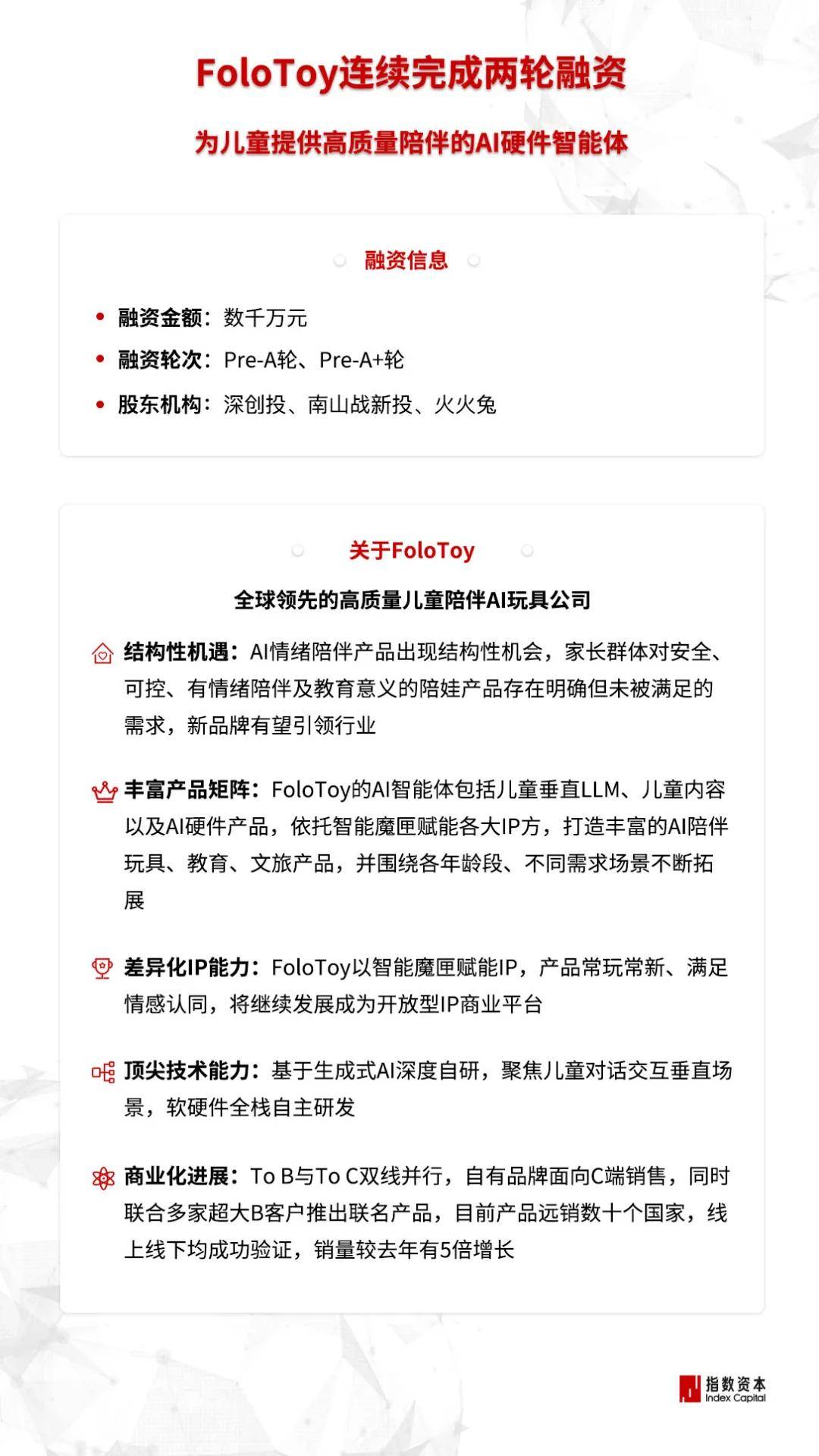
FoloToy连续获得两轮融资,指数资本担任独家财务顾问
Sou Hu Cai Jing· 2026-02-02 02:22
Core Viewpoint - FoloToy has successfully completed two rounds of financing, raising several tens of millions of yuan to enhance its brand influence and channel development in the high-quality AI companionship toy market for children [3][6]. Financing Information - The financing amount is several tens of millions of yuan, with Pre-A and Pre-A+ rounds completed [3][6]. - Investors include Shenzhen Capital Group, Nanshan Innovation Investment, and existing shareholder Huo Huo Tu [3][6]. Market Opportunity - There is a structural opportunity in the AI emotional companionship product market, as parents have unmet needs for safe, controllable, and emotionally supportive educational products for their children [4][8]. - The domestic population of children aged 3-9 is approximately 110 million, with no brand currently holding more than 5% market share in the high-quality companionship AI toy category, indicating a clear market gap [9]. Product Matrix and Technology - FoloToy's AI products include vertical LLMs for children, educational content, and AI hardware, continuously expanding to meet various age groups and needs [4][11]. - The company utilizes a self-developed AI dialogue model and real-time risk control system, focusing on specific pain points for both parents and children [10][11]. Unique Advantages - FoloToy offers a rich product matrix targeting different scenarios, including AI toys for companionship and learning, with features like bilingual support and real-time content filtering [11][12]. - The company has a unique approach to IP collaboration, allowing for dynamic updates to characters and stories, enhancing emotional engagement and brand differentiation [12][13]. Commercial Progress - FoloToy's products have achieved significant sales growth, with domestic sales projected to increase fivefold by 2025 compared to 2024, and successful market entry in countries like the USA, Sweden, Germany, and Japan [16].