
宝宝卡

Search documents
各大银行盯上了压岁钱:孩子存1000元,比你存20万利息高
Mei Ri Jing Ji Xin Wen· 2026-02-27 00:26
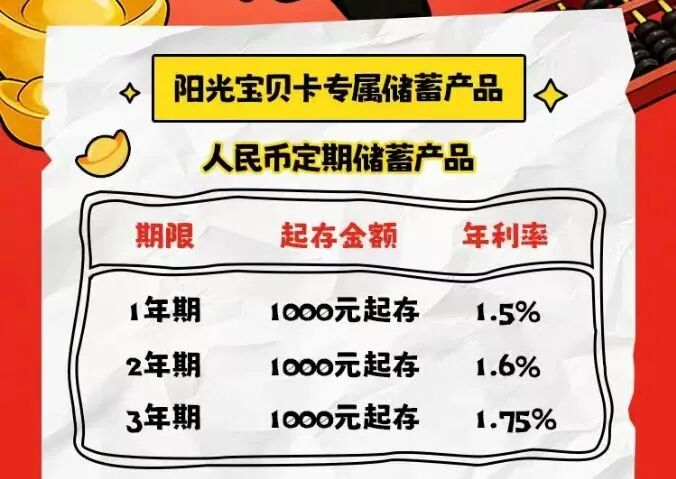
Core Insights - The article discusses the emerging trend of banks offering higher interest rates on children's savings accounts compared to traditional adult deposit products, indicating a strategic shift in the banking sector towards targeting the youth market [1][2][3]. Group 1: Interest Rate Dynamics - Beijing Rural Commercial Bank's "Sunshine Baby Card" offers a three-year interest rate of 1.75%, surpassing both the bank's standard fixed deposit rates and high-value time deposit rates [1][2]. - This "interest rate inversion" phenomenon, where children's small deposits yield higher rates than adult large deposits, is becoming a common strategy among banks to attract young customers [2][3]. Group 2: Strategic Implications - Industry experts suggest that this trend represents a long-term investment in customer lifetime value, as banks aim to establish emotional connections with young clients who will have a financial lifecycle of 50 to 60 years [3][7]. - The strategy allows banks to optimize their liability structure and manage liquidity more effectively, as children's savings typically have long retention periods and lower transaction frequencies [3][7]. Group 3: Product Offerings and Market Segmentation - Different types of banks are creating tailored product matrices to capture the significant market of "lucky money" from the Chinese New Year, focusing on specialized accounts, unique deposits, and parent-child co-management [4][5][6]. - State-owned banks leverage their comprehensive financial services to create one-stop solutions for financial management and education, while joint-stock banks emphasize differentiated account features and service experiences [4][5]. Group 4: Long-term Relationship Building - The shift towards children's financial products is seen as a transition from merely attracting deposits to building long-term relationships with families, allowing banks to access a broader range of financial needs within households [7][8]. - Successful examples include banks like China Merchants Bank and Beijing Bank, which have reported significant growth in their child account customer bases, indicating the effectiveness of this strategy in establishing family financial connections [8]. Group 5: Future Directions - Analysts recommend that banks expand their children's financial services within compliance frameworks, enhancing product offerings and integrating financial literacy education to create a comprehensive service ecosystem [9]. - The focus should be on transforming "lucky money" into a child's first financial asset, emphasizing the importance of financial education and responsible management of funds [9].





春节后,银行们“盯”上了孩子的红包
Guan Cha Zhe Wang· 2026-02-25 03:59
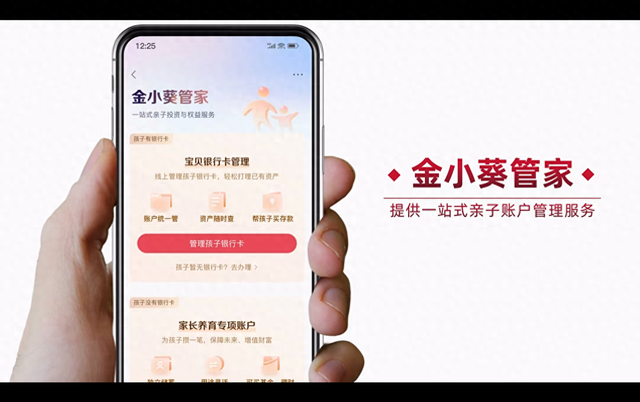
Core Insights - The competition among banks for children's financial products has intensified following the Spring Festival, with various banks launching savings and investment services aimed at minors to capture the red envelope money received during the holiday [1][8] - The trend reflects a shift in family financial management, as parents increasingly seek structured financial tools to manage their children's money and foster financial literacy [1][8] Group 1: Bank Strategies - State-owned banks, leveraging their extensive networks and brand recognition, are adopting a comprehensive approach. For instance, Industrial and Commercial Bank of China (ICBC) offers a "Baby Card" with competitive interest rates for children's savings [2][8] - Beijing Bank's "Little Jing Card" provides a three-year fixed deposit rate of 1.75% along with customized card designs and fee waivers, attracting over 2 million customers [2][4] - Joint-stock banks focus on innovative scenarios and user experiences, with China Merchants Bank's "Golden Little Aster" section integrating 51 products, including savings and insurance, to enhance family financial education [2][4] Group 2: Product Features and Differentiation - Various banks are implementing unique features to attract customers, such as Huaxia Bank's "Sunshine Growth Plan" with a minimum deposit of 50 yuan and a three-year interest rate of 1.75%, simplifying the process for parents [4][5] - Some banks, like Guangfa Bank, emphasize high interest rates for children's accounts, with products offering rates as high as 1.9% for deposits starting at 50 yuan [5][6] - The pricing strategy of offering higher interest rates for children's accounts compared to adult accounts is a deliberate marketing tactic to attract parents and secure future customers [5][6] Group 3: Regulatory Environment and Market Dynamics - The regulatory framework is evolving, with new guidelines set to take effect in February 2026, mandating special protections for minors in financial transactions [6][7] - This regulatory clarity, combined with banks optimizing account opening processes, is expected to increase parental willingness to open accounts for their children [7][8] - The competition for children's financial products is not merely about attracting deposits; it represents a strategic move to establish long-term relationships with families, potentially leading to lifelong banking connections [8][9]
多家银行春节瞄准青少年客群,“高息”存款产品密集上线
Xin Lang Cai Jing· 2026-02-24 11:11
Core Insights - The financial marketing activities targeting children and teenagers have significantly increased during the Spring Festival, with both state-owned and joint-stock banks actively launching related products [1][6] - Banks are offering higher interest rates on savings products to attract "lucky money" and "red envelope" funds, aiming to cultivate brand loyalty from an early age and capture family retail business [1][6] - The awareness of financial rights among young people is rising, leading to a demand for dedicated management of "lucky money," presenting banks with new opportunities to serve family asset management [1][7] Group 1: Product Offerings - Beijing Bank offers a three-year fixed deposit with an interest rate of 1.75%, while Yinzhou Bank's "Children's Deposit" product offers up to 1.88% for new customers [1][6] - Agricultural Bank of China has launched a secondary account activity allowing daily investment limits of up to 10,000 yuan, while Industrial and Commercial Bank of China has introduced a "Baby Card" for children's savings [7][8] - China Merchants Bank has created a "Golden Little Aui" section in its app, offering 51 financial products including savings, investments, and insurance specifically for managing "lucky money" [8] Group 2: Competitive Landscape - Banks face strong competition from internet platforms in attracting young customers, as many prefer using WeChat or Alipay for managing "lucky money" due to the convenience of these platforms [9][10] - The number of underage internet users in China has reached 196 million, prompting financial institutions to develop customized tools like "youth accounts" and "family cards" [9][10] - Banks are shifting their strategies from focusing solely on individual accounts to extending services to family financial asset management, including education and growth needs through various financial products [10]

布局儿童金融 银行争揽压岁钱
Zhong Guo Zheng Quan Bao· 2026-02-23 20:29
Core Insights - Banks are launching special products for children's New Year money to attract customers and enhance brand loyalty during the festive season [1][4] Group 1: Exclusive Products - Multiple banks have introduced unique products targeting children's New Year money, such as Beijing Bank's "Little Jing Card" with a 1.75% interest rate for three-year fixed deposits, which is higher than standard rates [2] - Industrial and Commercial Bank of China (ICBC) offers the "Baby Card," which provides a 1.55% interest rate for three-year deposits starting from 5,000 yuan, with additional fee waivers [2] - Huaxia Bank's "Sunshine Growth Plan" offers a minimum deposit of 50 yuan with a 1.75% interest rate, emphasizing the importance of parental engagement in financial education [3] Group 2: Enhancing Customer Loyalty - The introduction of these products is seen as a strategy to alleviate banks' deposit acquisition pressures while fostering customer loyalty through financial education [4] - Experts suggest that these children's accounts can help banks build long-term relationships with families, transitioning from simple savings to comprehensive financial services [4] - The value of children's financial products lies not only in immediate deposits but also in establishing a foundation for future customer relationships through financial literacy [4] Group 3: Deepening Scenario Financial Services - Banks are encouraged to focus on niche customer segments and develop scenario-based products, such as savings plans for intergenerational care, integrating financial services with everyday life [5] - KPMG's report suggests that banks should create integrated solutions that combine financial services with non-financial benefits, enhancing customer experience in various scenarios like healthcare and education [6]
布局儿童金融银行争揽压岁钱
Zhong Guo Zheng Quan Bao· 2026-02-23 20:18
Core Insights - Banks are launching special products for children's New Year money to attract customers and alleviate deposit pressure, enhancing brand recognition and customer loyalty [1][3] Group 1: Product Offerings - Multiple banks have introduced unique products targeting children's New Year money, such as Beijing Bank's "Little Jing Card" with a 1.75% interest rate for three-year fixed deposits, which is higher than standard rates [1] - Industrial and Commercial Bank of China offers the "Baby Card," which provides a 1.55% interest rate for three-year deposits starting from 5,000 yuan, with additional benefits for parents [2] - Huaxia Bank's "Sunshine Growth Plan" offers a minimum deposit of 50 yuan with a 1.75% interest rate, aiming to foster a saving habit among children [2] Group 2: Customer Engagement and Loyalty - The introduction of these products is seen as a strategy to enhance customer loyalty by establishing relationships with families through children's accounts [3] - Experts suggest that these products not only serve immediate financial needs but also help in financial education, creating a long-term customer relationship with families [3] Group 3: Market Trends and Strategies - The competition in the banking sector is intensifying, and banks are focusing on niche markets and developing scenario-based products to expand their business [3][4] - Recommendations include integrating financial services with non-financial benefits to create comprehensive solutions tailored to specific customer needs, such as healthcare and education [4]
“小”压岁钱撬动“大”市场,银行发力差异化竞争新赛道
Zhong Guo Zheng Quan Bao· 2026-02-14 13:09
Core Viewpoint - The upcoming Spring Festival has prompted banks to launch special products for children's "lucky money," aiming to attract customers through higher deposit rates and additional benefits, thereby addressing their deposit acquisition pressures and enhancing brand recognition and customer loyalty [1]. Group 1: Bank Products - Beijing Bank has introduced a children's exclusive bank card called "Xiao Jing Card," offering a three-year fixed deposit rate of 1.75%, which is higher than the standard rate for the same term, with a minimum deposit of 1,000 yuan [2]. - Industrial and Commercial Bank of China (ICBC) has launched the "Baby Card" for children under 16, providing a three-year deposit rate of 1.55% for a 5,000 yuan deposit, along with waived card issuance and annual fees [3]. - Huaxia Bank's "Sunshine Growth Plan" offers a specialized savings service for minors, with a minimum deposit of only 50 yuan and an annual interest rate of 1.75% [4]. Group 2: Industry Insights - Industry experts view these children's financial products as a marketing strategy to alleviate deposit acquisition pressures and as a means to enhance customer loyalty through scenario-based finance [5]. - The competition in the banking sector is intensifying, and children's financial products are seen as a new growth point for deposits, allowing banks to bind family relationships and transition from simple savings to comprehensive services that include education and support [6]. - The strategic focus on children's financial services not only aims to secure current funds but also seeks to integrate financial literacy into family wealth management, creating a cross-generational customer value chain [6].
