
小京卡

Search documents
银行存款利率延续下行趋势:一年期 1.1% ,活期利率 0.05%
Shen Zhen Shang Bao· 2026-02-26 11:41
Group 1 - The A-share banking sector did not experience a "good start" at the beginning of the year, with overall fluctuations and significant differentiation in individual stock performance, indicating market expectations for the long-term growth of bank stocks but short-term profit-taking by investors [1] - The deposit interest rates continued to decline, while the yields on wealth management products showed a steady decrease, reflecting a structural characteristic of "differentiated deposit rates, recovering demand for wealth management, and highlights in children's exclusive products" [1] - Major state-owned banks maintained their three-year fixed deposit rates at around 1.55%, with one-year rates at 1.1% and savings rates at 0.05%, while some joint-stock banks and local banks offered higher rates for children's exclusive deposits [1] Group 2 - Several banks launched "children's exclusive deposits" with three-year rates generally reaching between 1.55% and 1.88%, with some products exceeding the rates of large-denomination certificates of deposit [2] - Banks are willing to offer higher interest rates for small amounts of "lucky money" compared to large-denomination deposits, which is based on precise calculations of customer lifetime value and funding costs, rather than a "rate inversion" [2] - Children's deposits are characterized by "long-term" and "low liquidity," allowing banks to use them as a low-cost, stable source of medium to long-term liabilities, which is more controllable compared to high-interest deposits or interbank liabilities [2] Group 3 - This strategy is a key measure for banks to optimize their liability structure, seek incremental customers, and enhance customer loyalty amid a continuously narrowing net interest margin [3] - Children's financial products create a topic effect through a combination of "low thresholds + high interest rates + exclusive rights," enhancing brand recognition among young families [3] - Some banks view children's accounts as an entry point for "lifecycle customer management," facilitating a long-term transition from "savings" to "comprehensive financial services" [3]

从高息存款到财富管理闭环,银行打响压岁钱“保卫战”
Hua Er Jie Jian Wen· 2026-02-25 07:13
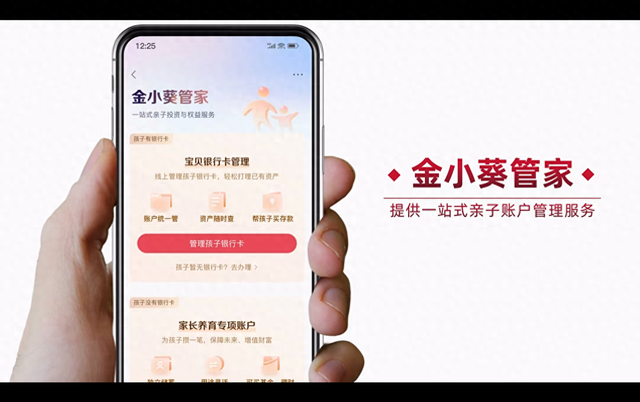
Group 1 - The core idea of the article highlights the competitive landscape of children's financial products among banks, particularly during the Chinese New Year, leveraging the tradition of "lucky money" as a marketing tool to attract family asset allocation [2] - Banks are moving beyond mere marketing to establish systematic operational models, as evidenced by Beijing Bank's launch of the "Xiao Jing Card" and the "Xiao Jing Lucky Money" product, which offers a three-year fixed deposit rate of 1.75% with a low entry threshold of 1,000 yuan [2][3] - The industry consensus is shifting towards high-yield, low-threshold savings products for "lucky money," with examples including Guangxi Beibu Gulf Bank's "Dream Savings No. 1" at 1.9% for a minimum deposit of 50 yuan, and Jilin Bank's "Xiao Ji Savings" at 1.8% with a 10,000 yuan threshold [2] Group 2 - China Merchants Bank focuses on an ecological and scenario-based approach in wealth management, exemplified by the "Jin Xiao Kui" section in its mobile banking app, allowing parents to create dedicated accounts for their children [4] - The wealth management platform of China Merchants Bank promotes a variety of financial products based on the child's account activity, including a special fixed-income product with an annualized return of 2.84% [5] - The strategy of targeting children's "lucky money" accounts serves as a low-cost customer acquisition channel, potentially linking to parents' and even grandparents' accounts, indicating that children's finance is becoming a long-term focus for banks beyond seasonal marketing [5]


春节后,银行们“盯”上了孩子的红包
Guan Cha Zhe Wang· 2026-02-25 03:59
Core Insights - The competition among banks for children's financial products has intensified following the Spring Festival, with various banks launching savings and investment services aimed at minors to capture the red envelope money received during the holiday [1][8] - The trend reflects a shift in family financial management, as parents increasingly seek structured financial tools to manage their children's money and foster financial literacy [1][8] Group 1: Bank Strategies - State-owned banks, leveraging their extensive networks and brand recognition, are adopting a comprehensive approach. For instance, Industrial and Commercial Bank of China (ICBC) offers a "Baby Card" with competitive interest rates for children's savings [2][8] - Beijing Bank's "Little Jing Card" provides a three-year fixed deposit rate of 1.75% along with customized card designs and fee waivers, attracting over 2 million customers [2][4] - Joint-stock banks focus on innovative scenarios and user experiences, with China Merchants Bank's "Golden Little Aster" section integrating 51 products, including savings and insurance, to enhance family financial education [2][4] Group 2: Product Features and Differentiation - Various banks are implementing unique features to attract customers, such as Huaxia Bank's "Sunshine Growth Plan" with a minimum deposit of 50 yuan and a three-year interest rate of 1.75%, simplifying the process for parents [4][5] - Some banks, like Guangfa Bank, emphasize high interest rates for children's accounts, with products offering rates as high as 1.9% for deposits starting at 50 yuan [5][6] - The pricing strategy of offering higher interest rates for children's accounts compared to adult accounts is a deliberate marketing tactic to attract parents and secure future customers [5][6] Group 3: Regulatory Environment and Market Dynamics - The regulatory framework is evolving, with new guidelines set to take effect in February 2026, mandating special protections for minors in financial transactions [6][7] - This regulatory clarity, combined with banks optimizing account opening processes, is expected to increase parental willingness to open accounts for their children [7][8] - The competition for children's financial products is not merely about attracting deposits; it represents a strategic move to establish long-term relationships with families, potentially leading to lifelong banking connections [8][9]


银行力推压岁钱专属存款产品
Zheng Quan Ri Bao· 2026-02-24 15:42
Core Viewpoint - Multiple banks are launching specialized deposit products for children's New Year money, such as "压岁宝" and "儿童存单," to attract market attention amid narrowing net interest margins and intensified deposit competition [1][2]. Group 1: Product Offerings - Banks are introducing children's deposit products with low minimum deposit amounts, some starting as low as 50 yuan, and interest rates generally higher than standard fixed-term deposits [1]. - For instance, 鄞州银行 offers a 3-year "儿童存单" with a maximum interest rate of 1.88% for new customers, while 北京银行's "小京压岁宝" has a 3-year annualized rate of 1.75% with a minimum deposit of 1,000 yuan [1]. - Other banks like 蒙商银行 and 北京农商行 are also providing competitive rates, with 北京农商行's rates for 1-year, 2-year, and 3-year terms being significantly higher than their standard rates [1]. Group 2: Financial Education and Services - In addition to deposit products, banks are launching account services tailored to children's financial education, such as 招商银行's "金小葵" for exclusive management of New Year money and 北京银行's "小京卡" for joint parent-child accounts [2]. - The focus on children's financial services indicates a strategic move by banks to cultivate customer loyalty from an early age and to create a comprehensive financial service ecosystem [2]. Group 3: Market Trends and Insights - The push into the children's financial market reflects the increasing competition in the financial sector, with banks aiming to establish a foundational customer base and secure a foothold in family financial services [2]. - As the demand for children's financial literacy continues to grow, banks are expected to enhance their product offerings and transition from seasonal marketing to regular services, including education fund planning and parent-child financial management [2].

多家银行春节瞄准青少年客群,“高息”存款产品密集上线
Xin Lang Cai Jing· 2026-02-24 11:11
Core Insights - The financial marketing activities targeting children and teenagers have significantly increased during the Spring Festival, with both state-owned and joint-stock banks actively launching related products [1][6] - Banks are offering higher interest rates on savings products to attract "lucky money" and "red envelope" funds, aiming to cultivate brand loyalty from an early age and capture family retail business [1][6] - The awareness of financial rights among young people is rising, leading to a demand for dedicated management of "lucky money," presenting banks with new opportunities to serve family asset management [1][7] Group 1: Product Offerings - Beijing Bank offers a three-year fixed deposit with an interest rate of 1.75%, while Yinzhou Bank's "Children's Deposit" product offers up to 1.88% for new customers [1][6] - Agricultural Bank of China has launched a secondary account activity allowing daily investment limits of up to 10,000 yuan, while Industrial and Commercial Bank of China has introduced a "Baby Card" for children's savings [7][8] - China Merchants Bank has created a "Golden Little Aui" section in its app, offering 51 financial products including savings, investments, and insurance specifically for managing "lucky money" [8] Group 2: Competitive Landscape - Banks face strong competition from internet platforms in attracting young customers, as many prefer using WeChat or Alipay for managing "lucky money" due to the convenience of these platforms [9][10] - The number of underage internet users in China has reached 196 million, prompting financial institutions to develop customized tools like "youth accounts" and "family cards" [9][10] - Banks are shifting their strategies from focusing solely on individual accounts to extending services to family financial asset management, including education and growth needs through various financial products [10]

马年春节刚过完,聪明的家长悄悄将闲钱转入儿童银行账户
Jing Ji Guan Cha Wang· 2026-02-24 09:00
Core Insights - The article discusses the increasing trend of banks offering specialized savings products for children, particularly during the Chinese New Year, to attract young customers and their families [2][3][5]. Group 1: Children's Savings Products - Banks are launching exclusive savings products for children with higher interest rates compared to standard savings accounts. For instance, Beijing Bank's "Xiao Jing Card" offers a 3-year fixed deposit rate of 1.75%, while the standard rate is only 1.30% [2][3]. - Other banks, such as Beijing Rural Commercial Bank and Guangxi Beibu Gulf Bank, have also introduced similar products with competitive rates, indicating a market trend towards catering to children's savings [3]. Group 2: Financial Education and Services - Many banks are combining savings products with financial education initiatives, such as Minsheng Bank's "Financial Literacy Training Camp" and Ping An Bank's "Orange Baby Club," which provide age-appropriate financial courses [5]. - Banks are also creating parent-child zones that offer a range of services, including insurance, funds, and educational payments, enhancing the overall customer experience [4]. Group 3: Strategic Marketing and Customer Retention - Financial institutions view children's savings accounts as a long-term investment in customer relationships, aiming to establish emotional connections with young clients that can lead to higher conversion rates for future financial products [5]. - The strategy includes leveraging festive occasions like the Chinese New Year for proactive marketing, which helps banks secure stable deposits and enhance customer loyalty among affluent families [5].

布局儿童金融 银行争揽压岁钱
Zhong Guo Zheng Quan Bao· 2026-02-23 20:29
Core Insights - Banks are launching special products for children's New Year money to attract customers and enhance brand loyalty during the festive season [1][4] Group 1: Exclusive Products - Multiple banks have introduced unique products targeting children's New Year money, such as Beijing Bank's "Little Jing Card" with a 1.75% interest rate for three-year fixed deposits, which is higher than standard rates [2] - Industrial and Commercial Bank of China (ICBC) offers the "Baby Card," which provides a 1.55% interest rate for three-year deposits starting from 5,000 yuan, with additional fee waivers [2] - Huaxia Bank's "Sunshine Growth Plan" offers a minimum deposit of 50 yuan with a 1.75% interest rate, emphasizing the importance of parental engagement in financial education [3] Group 2: Enhancing Customer Loyalty - The introduction of these products is seen as a strategy to alleviate banks' deposit acquisition pressures while fostering customer loyalty through financial education [4] - Experts suggest that these children's accounts can help banks build long-term relationships with families, transitioning from simple savings to comprehensive financial services [4] - The value of children's financial products lies not only in immediate deposits but also in establishing a foundation for future customer relationships through financial literacy [4] Group 3: Deepening Scenario Financial Services - Banks are encouraged to focus on niche customer segments and develop scenario-based products, such as savings plans for intergenerational care, integrating financial services with everyday life [5] - KPMG's report suggests that banks should create integrated solutions that combine financial services with non-financial benefits, enhancing customer experience in various scenarios like healthcare and education [6]
布局儿童金融银行争揽压岁钱
Zhong Guo Zheng Quan Bao· 2026-02-23 20:18
Core Insights - Banks are launching special products for children's New Year money to attract customers and alleviate deposit pressure, enhancing brand recognition and customer loyalty [1][3] Group 1: Product Offerings - Multiple banks have introduced unique products targeting children's New Year money, such as Beijing Bank's "Little Jing Card" with a 1.75% interest rate for three-year fixed deposits, which is higher than standard rates [1] - Industrial and Commercial Bank of China offers the "Baby Card," which provides a 1.55% interest rate for three-year deposits starting from 5,000 yuan, with additional benefits for parents [2] - Huaxia Bank's "Sunshine Growth Plan" offers a minimum deposit of 50 yuan with a 1.75% interest rate, aiming to foster a saving habit among children [2] Group 2: Customer Engagement and Loyalty - The introduction of these products is seen as a strategy to enhance customer loyalty by establishing relationships with families through children's accounts [3] - Experts suggest that these products not only serve immediate financial needs but also help in financial education, creating a long-term customer relationship with families [3] Group 3: Market Trends and Strategies - The competition in the banking sector is intensifying, and banks are focusing on niche markets and developing scenario-based products to expand their business [3][4] - Recommendations include integrating financial services with non-financial benefits to create comprehensive solutions tailored to specific customer needs, such as healthcare and education [4]
“小”压岁钱撬动“大”市场,银行发力差异化竞争新赛道
Zhong Guo Zheng Quan Bao· 2026-02-14 13:09
Core Viewpoint - The upcoming Spring Festival has prompted banks to launch special products for children's "lucky money," aiming to attract customers through higher deposit rates and additional benefits, thereby addressing their deposit acquisition pressures and enhancing brand recognition and customer loyalty [1]. Group 1: Bank Products - Beijing Bank has introduced a children's exclusive bank card called "Xiao Jing Card," offering a three-year fixed deposit rate of 1.75%, which is higher than the standard rate for the same term, with a minimum deposit of 1,000 yuan [2]. - Industrial and Commercial Bank of China (ICBC) has launched the "Baby Card" for children under 16, providing a three-year deposit rate of 1.55% for a 5,000 yuan deposit, along with waived card issuance and annual fees [3]. - Huaxia Bank's "Sunshine Growth Plan" offers a specialized savings service for minors, with a minimum deposit of only 50 yuan and an annual interest rate of 1.75% [4]. Group 2: Industry Insights - Industry experts view these children's financial products as a marketing strategy to alleviate deposit acquisition pressures and as a means to enhance customer loyalty through scenario-based finance [5]. - The competition in the banking sector is intensifying, and children's financial products are seen as a new growth point for deposits, allowing banks to bind family relationships and transition from simple savings to comprehensive services that include education and support [6]. - The strategic focus on children's financial services not only aims to secure current funds but also seeks to integrate financial literacy into family wealth management, creating a cross-generational customer value chain [6].
银行花式“抢客” 理财“春节档”营销热闹登场
Shang Hai Zheng Quan Bao· 2026-02-11 17:50
Core Viewpoint - The banking industry is intensifying its marketing efforts for the upcoming Spring Festival, focusing on attracting customers through various promotional activities and tailored financial products aimed at year-end bonuses and traditional "lucky money" [1][2][4]. Group 1: Marketing Strategies - Banks are leveraging both online and offline channels for marketing, with mobile apps featuring festive themes and special investment links, while physical branches are decorated and hosting engaging activities [2][4]. - The marketing campaigns are primarily targeting year-end bonuses and "lucky money," with banks creating specialized financial products and services to cater to these seasonal funds [2][3]. Group 2: Product Offerings - Financial products designed for year-end bonuses include short-term, high liquidity, and stable return options, with some products offering annualized returns 0.3 to 0.8 percentage points higher than regular offerings [2][4]. - For "lucky money," banks are promoting children's exclusive bank cards and educational savings accounts, along with low-threshold fund investment plans [3]. Group 3: Industry Challenges - The current banking environment is characterized by declining interest rates and a scarcity of quality assets, leading to increased competition for "quality liabilities" [4]. - Banks are facing dual challenges of rising liability costs and profitability pressures, as the macroeconomic transition has made stable, high-return assets scarce [4]. Group 4: Investment Recommendations - Suitable short-term investment options for the Spring Festival include money market funds, government bond reverse repos, and bank cash management products, each with varying risk and liquidity profiles [5]. - Investors are advised to focus on product risk levels, asset allocation clarity, and redemption rules to ensure effective fund utilization during the holiday period [6][7].