金山WPS

Search documents
中信证券:AI应用产业规模化落地正式开启 看好AI应用出海前景
Zhi Tong Cai Jing· 2025-12-04 00:46
Core Insights - The next-generation large models (Gemini 3.0/GPT-5) are significantly beneficial for complex reasoning scenarios, marking the AI industry’s transition to a phase of large-scale implementation [1] - The commercial model is evolving from AI project delivery to AI-enabled existing applications and functional AI applications, with overseas markets leading in technology, payment environment, business models, and market space compared to domestic markets [1][3] - The report emphasizes the potential for domestic companies to leverage their product and engineering capabilities, innovation, and iteration speed to expand into overseas AI application markets [1] AI Application Industry Trends - The AI application industry is moving from a technological singularity to a commercial singularity, with large-scale implementation officially commencing [1] - The first phase involves AI project delivery starting in 2023, focusing on exploratory and non-standard projects due to significant changes in large model capabilities [1][2] - The second phase, starting in 2025, will see accelerated upgrades of existing applications, with many companies initially offering free trials or pilot programs to increase AI module fees [2] - The third phase, expected to begin in 2026, will likely see a proliferation of independent AI products with a primary focus on independent charging models [2] Overseas Market Dynamics - The overseas market is experiencing substantial demand, with both consumer (C-end) and business (B-end) potential market spaces significantly larger than those in the domestic market [3] - Technological advancements are evident, with major models like ByteDance and Google showing significant increases in daily token usage, and a projected investment of $162.4 billion in AI server fields by major cloud service providers by 2025, reflecting a year-on-year growth of 94% [3] - The payment environment in the domestic market lags behind due to user habits, market ecology, pricing strategies, and intellectual property protection issues [3] - The commercial model is evolving, with overseas SaaS companies increasingly developing towards B-end applications, enhancing user acceptance and profitability in high-value scenarios [3] Domestic AI Application Expansion - Domestic AI companies are positioned to capture global market share, driven by strong product and engineering capabilities [4] - The talent pool in China is substantial, with over 5 million STEM graduates expected by 2025, including more than 77,000 PhDs, providing a solid foundation for engineering capabilities [4] - Successful case studies, such as Kingsoft Office's competition with Microsoft Office, demonstrate the potential for domestic AI companies to leverage internet product capabilities and localized strategies for success [4] Company Performance Insights - Analysis of software companies within the CITIC Computer Index indicates that top AI application companies could achieve up to 90% of their revenue from overseas markets by 2024, with some experiencing growth rates exceeding tenfold [5]


飞书WPS们大战AI办公,OpenAI也要加入战场?
3 6 Ke· 2025-07-23 01:17
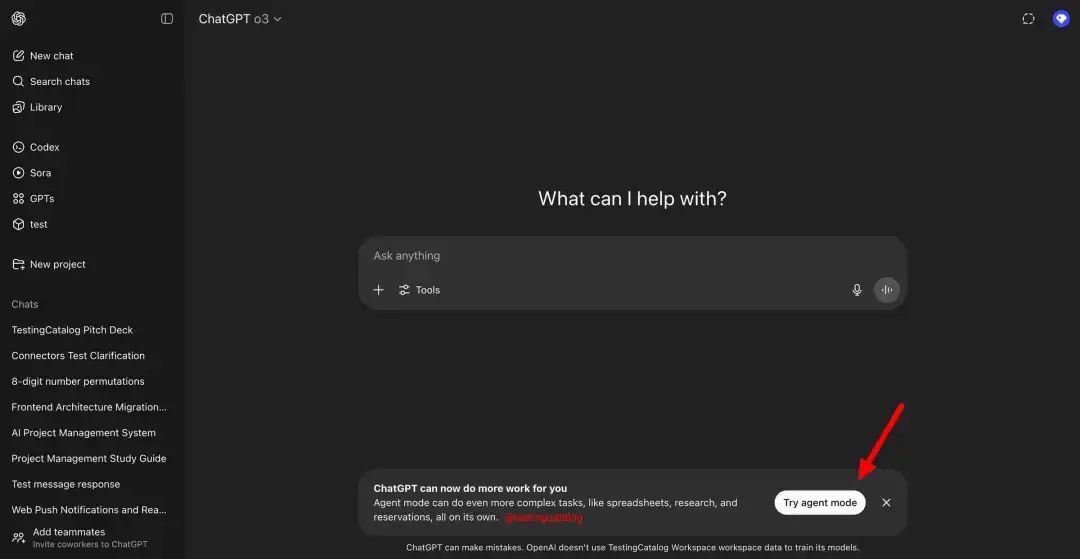
Core Viewpoint - OpenAI is developing a significant feature for ChatGPT that will allow users to create and edit Excel and PowerPoint files directly within the platform, marking a shift in how office software is utilized [1][5][14] Group 1: OpenAI's Developments - OpenAI is working on integrating native support for editing Office files, enabling users to perform tasks like formula input and chart analysis without traditional software [1][5] - The company is also testing more advanced agent functionalities to meet complex user needs and is developing document-based collaboration tools [1][5] Group 2: Competitive Landscape - The office software market is witnessing a surge in AI integration, with major players like Microsoft and Kingsoft (WPS) also enhancing their offerings with AI capabilities [2][5] - Traditional giants like Microsoft have introduced features like Copilot, which integrates AI into core applications, while WPS focuses on modular AI capabilities [5][7] Group 3: Collaboration Platforms - Domestic collaboration platforms such as Feishu, DingTalk, and WeChat Work are also entering the AI office space, launching AI-driven features like smart tables to compete in the market [4][10] - These platforms leverage their existing collaborative capabilities to integrate AI functionalities seamlessly, enhancing user experience without requiring additional learning [10][12] Group 4: New Paradigms in Office Software - The competition is not merely about adding AI features but about redefining the office software paradigm, with a focus on creating closed-loop systems where AI can understand user intent and automate workflows [13][14] - The future of office work may shift from traditional document formats to more dynamic interactions with AI, changing the fundamental nature of how work is conducted [14][17]