金纳米颗粒

Search documents
【人民日报】我国科学家首次在纳米尺度“直播”黄金形成过程
Ren Min Ri Bao· 2026-01-22 02:11
Core Insights - The study reveals a new mechanism for gold precipitation induced by pyrite, challenging traditional views on gold sources and providing insights into the formation of high-grade gold deposits [1] Group 1: Research Findings - The research utilized in-situ liquid phase transmission electron microscopy to capture the dynamic process of gold nanoparticle formation on the surface of pyrite at the nanoscale [1] - Gold nanoparticles are formed not in solution but within a "dense liquid layer" closely adhering to the pyrite surface, acting as an efficient "nano-factory" [1] - This mechanism is effective even in fluids with extremely low gold concentrations, providing a new perspective on gold ore formation [1] Group 2: Implications - The findings challenge the traditional belief that gold primarily originates from deep hydrothermal fluids, offering new insights into the extraordinary enrichment of gold in both hydrothermal gold deposits and surface environments [1] - The research opens new pathways for understanding mineralization processes driven by nanoparticles in nature [1] - From an application standpoint, the new mechanism has significant implications for interface regulation in green gold leaching processes [1]
贵金属:从原子到宇宙的 6 种稀缺性密码
Sou Hu Cai Jing· 2025-06-07 17:32
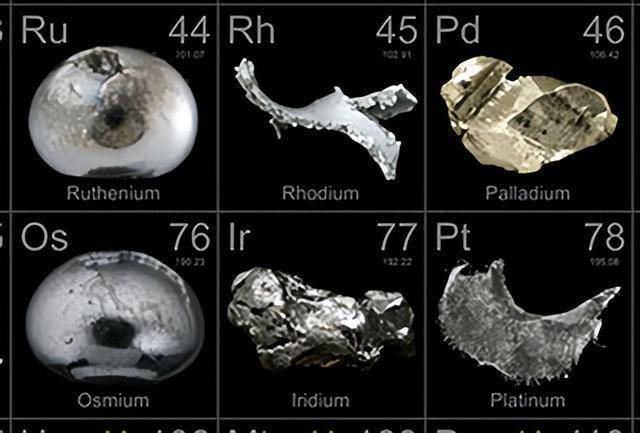
Core Insights - Precious metals have been a symbol of wealth and power throughout history, and they play a crucial role in various modern industries, including technology, healthcare, and electronics [1] Group 1: Characteristics of Precious Metals - Precious metals are defined as rare, high-density metals with significant economic value, including Ruthenium (Ru), Rhodium (Rh), Palladium (Pd), Osmium (Os), Iridium (Ir), Platinum (Pt), Silver (Ag), and Gold (Au) [1] - The abundance of these metals in the Earth's crust is extremely low, with concentrations measured in grams per ton: Silver 0.1, Palladium 0.01, Gold and Platinum 0.005, and Rhodium, Iridium, Ruthenium, Osmium 0.001 [1] - Silver excels in electrical and thermal conductivity, while Gold ranks third, and Platinum group metals are known for their thermal stability in electronic applications [3] - Gold and Silver possess exceptional malleability, with 1 gram of Gold capable of being drawn into a wire measuring 3420 meters [3] Group 2: Applications of Precious Metals - Precious metals are ideal for jewelry due to their aesthetic qualities, with Silver reflecting white light most effectively and Gold reflecting infrared light strongly [4] - The ability of precious metals to absorb gases like oxygen and hydrogen makes them valuable in catalytic reactions and gas purification processes [6] - Precious metals exhibit high corrosion resistance, with Iridium being the most resistant, making them suitable for use in harsh chemical environments [7] - Palladium catalysts can enhance organic reaction rates by up to 1 million times, playing a vital role in automotive emissions control and petroleum refining [9] Group 3: Industry Impact - In the electronics industry, Gold, Silver, and Platinum are used for their excellent conductivity and stability, with Gold ensuring stable electronic signal transmission [13] - Platinum and Palladium are increasingly in demand for automotive catalytic converters due to stricter environmental regulations [14] - In aerospace, precious metals are used in high-temperature alloys for critical engine components, capable of withstanding extreme conditions [15] - Precious metals are essential in the chemical industry for processes like nitric acid production and petroleum reforming, improving reaction efficiency and reducing costs [18] Group 4: Financial and Economic Role - Historically, Gold and Silver served as currency and continue to influence monetary value, with central banks holding significant Gold reserves to enhance currency credibility [19] - The precious metals market is vast, with Gold being the largest segment, and prices are influenced by various factors, including economic uncertainty and geopolitical tensions [21] - Platinum and Palladium prices are closely tied to the automotive industry, with demand driven by vehicle sales and environmental regulations [21] Group 5: Future Outlook - Precious metals are positioned as key players in future technological advancements and sustainable development, serving as catalysts in energy and life sciences [22]

给眼睛注射“金子”治眼病?50岁正是闯的年纪,不能让眼疾耽误了工作
3 6 Ke· 2025-04-29 00:06
Core Insights - A recent study from Brown University reveals that injecting gold nanoparticles into the eyes of mice with retinal diseases can partially restore their vision, indicating potential future applications for human treatment [2][4] Group 1: Research Findings - The gold nanoparticles used in the study are extremely small, smaller than one-thousandth the diameter of a human hair, and were injected into the vitreous cavity of the mice's eyes [5] - The research involved using patterned near-infrared laser light to activate specific cells in the retina, demonstrating that the nanoparticles could trigger brain activity related to vision [7][9] - The method effectively bypasses damaged photoreceptors in diseases like macular degeneration, potentially restoring vision by activating bipolar and ganglion cells that relay visual information to the brain [11] Group 2: Treatment Methodology - The injection technique, known as intravitreal injection, allows for targeted delivery of the nanoparticles, maximizing their efficacy while minimizing systemic side effects [15] - Compared to traditional retinal prosthetics that require invasive surgery, the nanoparticle approach offers a less invasive solution without the need for complex surgical procedures or genetic modifications [13] Group 3: Implications for Eye Health - Macular degeneration, a common age-related condition, could benefit from this innovative treatment, as it primarily affects photoreceptors while preserving bipolar and ganglion cells [17][20] - The aging population and the prevalence of risk factors such as family history, smoking, and obesity suggest that macular degeneration will become increasingly common, highlighting the need for effective treatments [22]