
钕铁硼稀土

Search documents
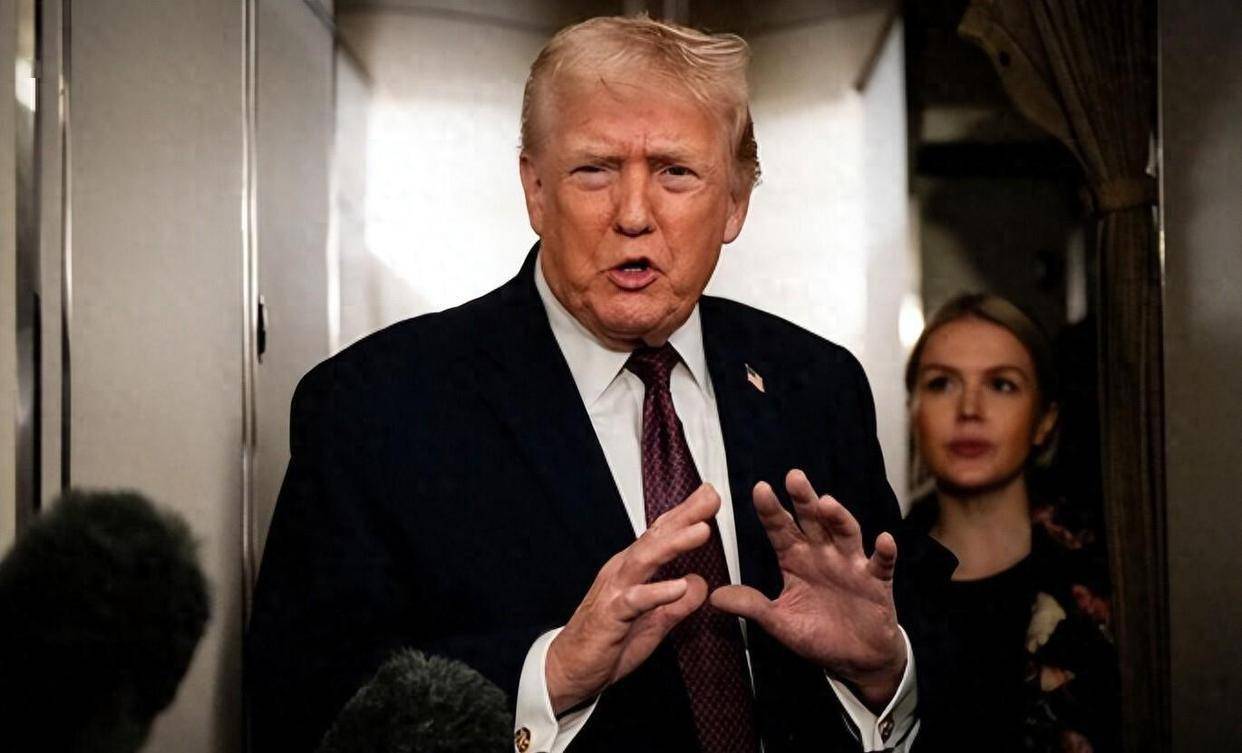
特朗普通告全球:180天内必须和中国稀土切割,不听话就加税!
Sou Hu Cai Jing· 2026-01-16 14:08
Core Viewpoint - The article discusses Trump's ultimatum to global allies to sever ties with China in the rare earth sector within 180 days, highlighting the challenges faced by the U.S. due to its technological gap and the complexities for allies in complying with this demand [1][3]. Group 1: U.S. Policy and Strategy - Trump signed a presidential announcement requiring global mineral suppliers to establish agreements to exclude China from the rare earth supply chain within 180 days, emphasizing the need to reduce reliance on "coercive" sources [3]. - The U.S. aims to create an alternative supply chain by collaborating with countries like Australia and Malaysia, but current production capacities are insufficient to meet global demand outside of China [3][5]. - The U.S. proposed a price floor for rare earths to artificially raise transaction prices, allowing Western companies to compete with Chinese firms, with discussions around setting a minimum price of approximately $110 per kilogram for neodymium-iron-boron [5]. Group 2: Challenges and Risks for Allies - The price cap mechanism contradicts market principles, potentially leading to increased costs for industries such as automotive and electronics, which may ultimately burden consumers [7]. - There is internal disagreement within the EU regarding price controls, with countries like Germany hesitant due to their automotive industry's reliance on Chinese rare earths [7]. - Allies face a dilemma between supporting U.S. strategies and protecting their own industrial interests, as seen in Canada's cautious stance and Japan's struggles with rare earth recycling projects [7]. Group 3: China's Dominance in Rare Earths - China controls approximately 92% of global rare earth refining capacity and holds a near-monopoly on heavy rare earth separation technology, making it difficult for the U.S. to compete [5][9]. - China's advantages stem from decades of technological accumulation, with 439 exclusive extraction patents creating significant barriers for competitors [9]. - The complete supply chain established by China, from mining to processing, allows it to maintain lower costs and higher efficiency compared to Western companies [9][11]. Group 4: Implications for the U.S. Supply Chain - Many companies have structured their order cycles and inventory around Chinese supply chains, and abrupt changes could lead to efficiency losses and increased costs [11]. - The U.S. is attempting to compress the timeline for supply chain reconstruction through political means, but the inherent nature of the rare earth industry favors technological accumulation over political declarations [11]. - Trump's ultimatum reveals the strategic anxiety of the U.S. in critical mineral sectors, as China has transitioned from a resource supplier to a rule-maker in the rare earth market [11].


再推稀土磁材:类比锑,内外同涨逻辑加速!
2025-06-04 15:25
Summary of Rare Earth Materials Conference Call Industry Overview - The conference call focuses on the rare earth materials industry, particularly the dynamics of neodymium-iron-boron (NdFeB) magnets and the impact of export controls on pricing trends [1][2][5]. Key Points and Arguments - **Price Trends**: Export controls have led to a significant increase in overseas rare earth prices, with yttrium oxide priced at $760 per kilogram and antimony oxide at $2,800 per kilogram, reflecting a nearly 200% premium over domestic prices [2][5]. - **Domestic vs. Overseas Prices**: Domestic prices have stabilized after a slight decline, indicating potential for upward movement as export restrictions ease and demand remains strong [2][5]. - **Demand Growth**: The demand for rare earth materials is robust, with a nearly 20% growth rate driven by applications in electric motors and consumer magnetic components, which account for 75% and 25% of the demand, respectively [4][6]. - **Supply-Side Reforms**: Structural reforms in 2025 are expected to reduce the supply of light rare earths (NdFeB) by approximately 10% and heavy rare earths (dysprosium and terbium) by 20-30%, benefiting leading companies like China Rare Earth and Northern Rare Earth [8][10]. - **Market Sentiment**: The current market conditions are viewed as an important window for investment, with expectations of quota releases and policy implementations that could enhance the sector's performance [3][9]. Additional Important Insights - **Sector Resilience**: The demand for low-end magnetic components is less sensitive to economic fluctuations, indicating a stable growth trajectory for the rare earth sector [6][7]. - **Investment Opportunities**: Key companies to watch include China Rare Earth, Guangsheng Nonferrous, and Northern Rare Earth, which are positioned to benefit from supply-side reforms and market dynamics [3][10]. - **Future Outlook**: The overall growth potential for the rare earth sector remains strong, with expectations of continued price increases and demand growth in sectors such as electric vehicles and wind energy [5][9].