铜母线

Search documents
2026年第2期:数据中心建设及能源转型大幅拉动铜需求
Huachuang Securities· 2026-03-07 14:39
1. Report Industry Investment Rating No information about the report industry investment rating is provided in the given content. 2. Core Viewpoints of the Report - Copper demand is steadily increasing and will be driven by new demand. The global annual demand is predicted to grow from about 28 million tons in 2025 to 42 million tons in 2040, a growth rate of 50%. Core economic demand, artificial intelligence, national defense, and energy transition will be the main growth points [1][5]. - Affected by supply shortages and expected demand growth, copper prices have risen significantly in recent years. Market analysts predict that short - term prices will remain strong, and long - term supply - demand gaps may push prices further up [1][7]. - The global copper supply gap is expected to widen in the future. By 2040, the supply gap may reach 10 million tons, equivalent to 23.8% of the demand [6]. 3. Summary According to the Directory I. Global Copper Supply - Demand Situation and Price Outlook Supply - Multiple research institutions expect a slight increase in copper output in the near term but a tightening in the long term. S&P Global predicts that global mine copper output will increase from about 23 million tons in 2025 to about 27 million tons in 2030 and then gradually decline to about 22 million tons in 2040 [4]. - Short - term supply shortages are due to major accidents in main copper mines, while long - term shortages are caused by declining ore grades, lagging new mine development, and insufficient investment [4]. Demand - Copper demand is growing steadily. AI has a significant impact on copper demand. For example, in 2025, over 100 new AI data center projects were launched with a total investment of nearly $61 billion. By 2030, copper demand in the data center field alone will reach 33 - 420,000 tons, and grid upgrades due to AI data centers will consume 1.1 million tons of copper annually [1][5]. Shortage - Multiple institutions predict a widening copper supply gap. For example, S&P Global predicts a 10 million - ton gap by 2040, and BloombergNEF predicts a 19 million - ton deficit by 2050 [6]. Price - Copper prices have risen significantly in recent years. Taking the LME three - month copper contract price as a benchmark, the price at the end of 2025 increased by 101.6% compared to the end of 2019. Analysts predict short - term strength and long - term price increases due to supply - demand gaps [7]. II. Copper Usage in Computing Infrastructure (1) Macro Expectations of Copper Demand in Computing - To estimate the macro - expectations of copper demand in computing, a capacity - growth - based prediction model is generally used. Different institutions have different estimates of data center capacity [8][9]. - By 2030, the total data center capacity is roughly estimated to increase by about 10GW, which may consume about 2.7 million tons of copper, accounting for about 10% of the 2024 global refined copper output [10]. - The copper intensity of data centers varies. AI - related hyperscale data centers have a copper intensity of 39 tons/MW, non - AI hyperscale data centers 36 tons/MW, and enterprise - level data centers 32 tons/MW [11]. (2) Copper Usage in Power Plant Construction and Grid Upgrades Related to Data Centers - Due to the carbon - reduction commitments of technology giants, data centers are purchasing green power, which requires the construction of energy - storage facilities and the upgrade of transmission and distribution systems [22]. - In the future 15 years, the copper consumption for global energy transition will grow at an annual rate of 4.1%, reaching 15.6 million tons per year. Among them, 7.1 million tons will be used for T&D facility upgrades, and 2.1 million tons for clean energy installation [25]. - In the T&D system, copper is mainly used in transformers, underground/subsea cables, and underground distribution lines. The copper consumption of distribution and transmission lines is expected to grow at 3.5% and 7.2% respectively from 2025 to 2040 [28][35]. - The average copper intensity of solar photovoltaic systems is about 2.2 tons/MW. The total copper demand for photovoltaic is expected to rise from about 1.2 million tons in 2025 to 1.4 million tons in 2040, with transformers being the largest copper - consuming component [36][38]. - The copper consumption structure of onshore and offshore wind power varies significantly. Offshore wind power has a much higher total copper intensity. By 2040, the new wind power capacity will require 400,000 tons of copper annually, doubling the 2025 level [42][47]. - In the battery energy storage (BESS) field, copper foil in lithium - ion batteries is a key copper - consuming component. From 2025 to 2040, the annual new installed capacity of BESS will grow at a rate of 2.7% per year, and the annual copper demand will increase from 300,000 tons in 2025 to 500,000 tons in 2040 [55]. (3) The Macro Picture of Copper Demand - Core economic demand is the traditional main body, but its growth is slowing and its proportion is declining. Energy transition and incremental demand are the fastest - growing categories, and AI and data centers are emerging demand hotspots [58][59][60].
股市必读:电工合金(300697)1月28日董秘有最新回复
Sou Hu Cai Jing· 2026-01-28 16:44
Core Viewpoint - The company Electric Alloy (300697) has shown a significant increase in stock price and trading volume, indicating positive market sentiment and potential growth opportunities in the context of rising demand for copper and alloys due to global infrastructure developments and technological advancements [1][3]. Group 1: Company Performance - As of January 28, 2026, Electric Alloy's stock closed at 19.6 yuan, marking an 8.11% increase with a turnover rate of 28.0% and a trading volume of 564,200 shares, resulting in a transaction value of 1.083 billion yuan [1]. - On the same day, the net inflow of main funds was 83.9975 million yuan, while retail investors experienced a net outflow of 1.04 billion yuan, suggesting a shift in investor confidence towards institutional investors [3]. Group 2: Strategic Business Insights - The company has no current intentions to acquire upstream mineral resources, focusing instead on enhancing its core business and product competitiveness in response to industry trends [2]. - The company’s copper material business, represented by Xiamen Copper Power New Materials Co., aims to leverage the local electric power distribution industry's advantages to produce high-quality copper busbars and components, which are essential for emerging industries such as data centers and low-voltage electrical equipment [2].

Reliance (NYSE:RS) FY Conference Transcript
2025-11-13 16:07
Summary of Reliance (NYSE:RS) FY Conference Call - November 13, 2025 Industry Overview - Reliance operates primarily in the metal service center industry, focusing on a diversified product mix to mitigate volatility in earnings due to fluctuating metal prices [1][2] - The company has a significant presence in the U.S. market, with operations also in Canada and Mexico, targeting specialty products in various end markets [2] Core Business Insights - Reliance reported $15 billion in sales with an average order size of $3,000, emphasizing a transactional business model with 40% of orders delivered the next day [3] - The company has increased its gross profit margin target from 25%-27% to 29%-31% by enhancing value-added processing, which is less susceptible to metal price fluctuations [5] - Currently, 50% of orders involve some level of value-added processing, up from 40% a decade ago, indicating a strategic focus on improving service and profitability [5] Market Dynamics - The company has seen a 6% increase in tons sold year-to-date, while the industry overall has experienced a 3% decline, showcasing Reliance's ability to gain market share [7] - Key end markets include infrastructure, data centers, and energy, with data centers identified as a particularly strong growth area [11][12] - The company anticipates continued growth in data center infrastructure spending, suggesting that the current cycle is still in its early stages [18] Financial Performance - Reliance has maintained a strong financial position with countercyclical cash flows, managing working capital effectively to sustain profitability [9] - The company has a history of paying dividends for 66 years and aims to increase dividends annually while also considering share repurchases [10] Strategic Growth and Acquisitions - Reliance has completed 76 acquisitions since going public in 1994, with a focus on opportunistic growth rather than setting specific targets [9] - In 2024, the company made four acquisitions, including an energy company and a flat roll company, which are performing well [42] - The company remains open to future acquisitions but emphasizes the importance of finding the right fit for its business model [43] Challenges and Considerations - The company has faced challenges related to tariffs and pricing strategies, particularly following the implementation of Section 232 tariffs in 2018, which initially created a favorable pricing environment [20][21] - Recent market conditions have led to a pinch in margins due to decreased demand and increased inventory levels, impacting the ability to pass through higher costs [22][23] Conclusion - Reliance's diversified approach, focus on value-added processing, and strategic market positioning have allowed it to outperform competitors in the metal service center industry [7][9] - The company is well-positioned for future growth, particularly in high-demand sectors like data centers and infrastructure, while maintaining a flexible approach to capital allocation and acquisitions [18][40]

电工合金(300697) - 300697电工合金2024年度网上业绩说明会20250411
2025-04-11 10:02
Dividend Policy - The company plans to distribute a cash dividend of 1.8 CNY per 10 shares (including tax) and issue 3 bonus shares for every 10 shares held, resulting in a total cash dividend of 59,904,000 CNY and 99,840,000 bonus shares, increasing the total share capital to 432,640,000 shares [2][3]. Financial Performance - In 2024, the company achieved a revenue of 2.593 billion CNY, an increase of 8.37% compared to the previous year [3]. - The net profit attributable to shareholders was 131 million CNY, a decrease of 3.62% year-on-year [3]. Factors Affecting Profit - The decline in net profit was primarily due to a slight decrease in the electrification railway business [3]. - The company aims to enhance management efficiency and market competitiveness through cost reduction and innovation [3][4]. Raw Material Price Risk Management - The company employs a pricing model based on "raw material prices + processing fees" and uses copper futures to hedge against price fluctuations [3]. Future Growth Drivers - Future growth will focus on core business areas, driven by customer demand and technological innovation, while extending the industrial chain [4][5]. New Energy Vehicle Sector - The company is adopting a cautious market expansion strategy in the competitive new energy vehicle parts sector, collaborating with quality clients [4]. Stock Buyback and Shareholder Value - The company is considering stock buybacks to enhance investment value and improve governance, with plans to disclose any related actions in accordance with legal requirements [4][5]. Impact of Tariffs - In 2024, overseas revenue accounted for 5.24% of total revenue, with exports to the U.S. making up about 2%, indicating limited impact from recent tariff increases [9]. Industry Outlook - The copper processing industry is expected to maintain steady growth, driven by demand from new energy and data center sectors [8][9].
午报三大指数均小幅收跌,旅游股逆势走强,算力与机器人概念延续调整
Sou Hu Cai Jing· 2025-03-24 06:20
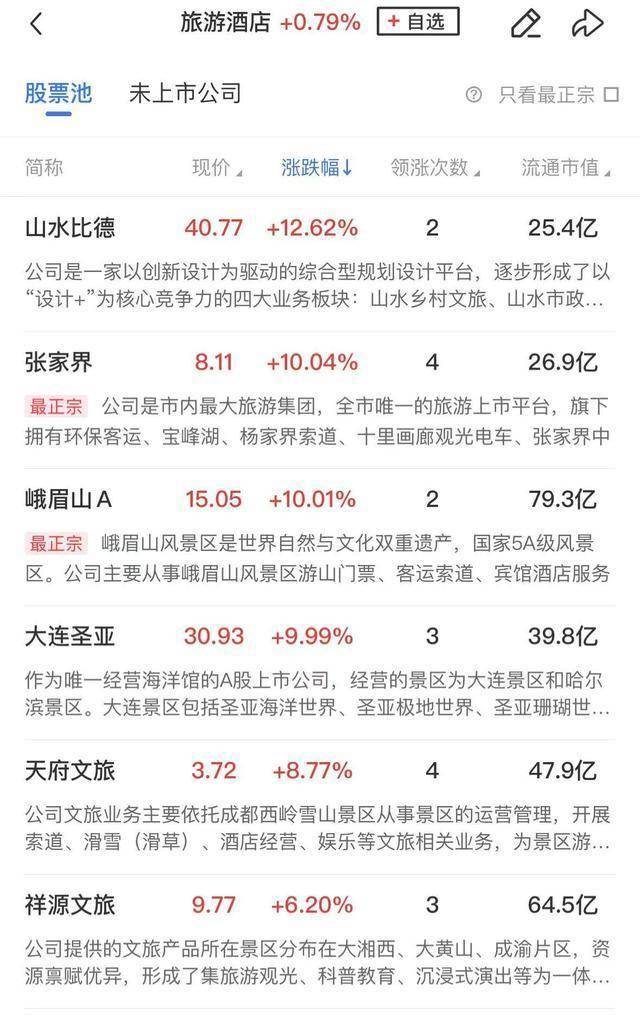
Market Overview - The three major indices experienced slight declines, with the Shanghai Composite Index down by 0.25%, the Shenzhen Component down by 0.38%, and the ChiNext Index down by 0.4% [1] - The total trading volume in the Shanghai and Shenzhen markets was 873.1 billion, a decrease of 87.5 billion compared to the previous trading day [1] Sector Performance - The tourism sector showed resilience, with stocks like Emei Mountain A and Zhangjiajie hitting the daily limit [1][2] - The cyclical sectors, particularly non-ferrous metals, were active, with Electric Alloy reaching the daily limit [1][4] - The robotics and computing power sectors continued to adjust, with several stocks hitting the daily limit down [1][9] Individual Stock Highlights - Emei Mountain A rose by 10.01%, Zhangjiajie increased by 10.04%, and Dalian Shengya gained 9.99% [2][16] - Electric Alloy surged by 20.00%, while North Copper and New Weiling also saw significant gains [4][19] - The number of stocks hitting the daily limit was 32, with a 44% limit-up rate [1] Travel Trends - Recent reports from online travel platforms indicate a rise in travel enthusiasm for the Qingming holiday, with short-distance trips being the primary focus [3] - Major cities like Beijing, Shanghai, and Guangzhou are seeing increased travel activity, particularly in the surrounding areas [3] Commodity Prices - International copper prices have been rising, with COMEX copper futures reaching a new high of $5.1490 per pound and LME copper prices exceeding $10,000 per ton [5][19] - The closure of a major production facility in Rotterdam by global chemical giants is expected to impact the chemical sector significantly [7][14]