
铜镜

Search documents
天马行空:中国国家博物馆藏铜镜上的骏马图像
Xin Lang Cai Jing· 2026-02-16 00:27
Core Insights - The article discusses the historical significance and artistic representation of horses, particularly the "Heavenly Horse," in ancient Chinese bronze mirrors, highlighting their cultural and symbolic meanings throughout different dynasties [15][16][59]. Group 1: Historical Context - The earliest known images of horses in Chinese bronze mirrors date back to the Warring States period, with notable examples found in the tombs of Luoyang [1][3]. - The "Heavenly Horse" is first mentioned in the "Shan Hai Jing," symbolizing a mythical creature associated with speed and divinity, which became a significant cultural motif during the Han Dynasty [15][16]. Group 2: Artistic Representations - The article details various artistic representations of horses in bronze mirrors, particularly during the Eastern Han and Tang dynasties, where the imagery reflects dynamic movement and vitality [9][44]. - The "Heavenly Horse" imagery is particularly prominent in Eastern Han mirrors, often depicted in a running posture, symbolizing strength and aspiration [9][10][43]. Group 3: Cultural Significance - The fascination with the "Heavenly Horse" during the Han Dynasty influenced various aspects of society, including art, literature, and religious beliefs, showcasing its enduring legacy [16][59]. - The article notes that the representation of horses evolved from mythical depictions in earlier periods to more realistic portrayals in later dynasties, reflecting changes in societal values and artistic techniques [59].


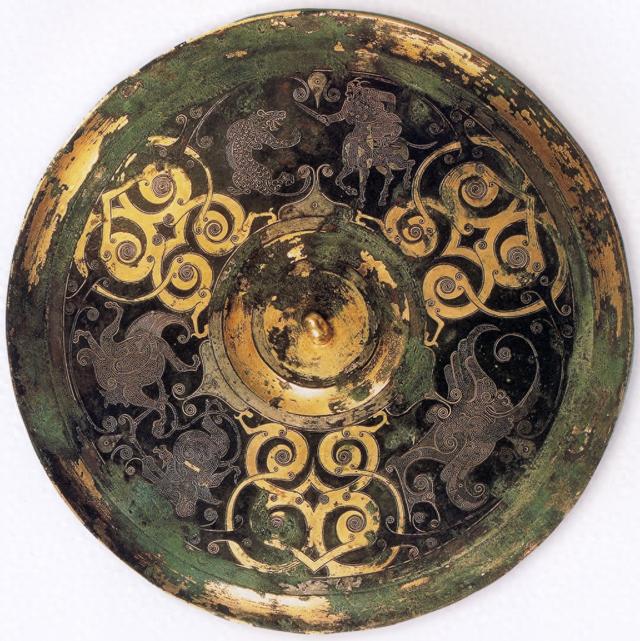
从考古学视角重新理解技术
Xin Lang Cai Jing· 2026-01-03 19:18
Core Viewpoint - The article discusses the evolving understanding of technology in archaeology, emphasizing its role as a practice embedded in social life, shaped by memory, tradition, and collective experience, rather than merely a means to achieve efficiency [1] Group 1: Technology as an Adaptive Tool - Archaeologists are exploring how ancient irrigation systems, terracing, and migration strategies helped human societies adapt to environmental changes over millennia [2] - Research on the El Niño phenomenon in Peru reveals that ancient Peruvians actively sought strategies to cope with natural disasters, such as the construction of sand dams to intercept flood-induced debris flows [2] - Recent findings in Central Asia indicate the existence of large, fortified urban complexes in high-altitude areas, challenging traditional views of the region's historical narrative [3] Group 2: Technology in Production Processes - Scholars at the forum focused on the production technologies of pottery, metallurgy, textiles, and stone tools, highlighting how technology influences labor organization, knowledge transfer, and the cultural significance of artifacts [5] - The study of Han dynasty bronze mirrors illustrates their cultural importance and the advanced bronze casting techniques of the time, reflecting daily life and external exchanges [5] - Comparative research on textile technology in the Eurasian steppes and the Caucasus reveals the complex interactions between manual techniques, industry, and society [6] Group 3: Technology as a Force for Social Change - The development of bronze technology is linked to the evolution of civilization, with bronze tools transitioning from production implements to ritual objects and trade mediums, facilitating regional trade networks [7] - Similar to bronze, the production of porcelain has influenced urbanization and social transformations, as evidenced by archaeological findings in Jingdezhen, which show the evolution of urban drainage systems alongside the growth of the porcelain industry [8] - The article concludes that technology is not merely a tool but a cultural and ethical practice, offering insights into how past societies adapted to changes, which may inform current challenges such as AI development and environmental shifts [8]
河南三门峡发现45座古墓葬
Zhong Guo Xin Wen Wang· 2025-12-02 06:20
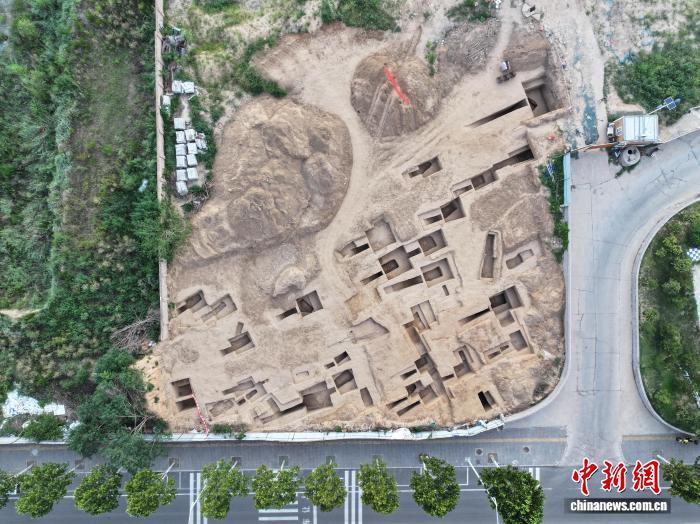
Core Viewpoint - The discovery of 45 ancient tombs in Sanmenxia, Henan Province, provides valuable insights into burial customs from the Warring States, Northern Dynasties, Tang, and Qing periods, along with various artifacts such as bronze hairpins, tower-shaped jars, and bronze mirrors [1][4]. Group 1: Discovery Details - A total of 45 tombs were excavated between August and October as part of an archaeological investigation related to a local construction project [1]. - The tomb M30 is identified as a sloped passage tomb from the Northern Dynasties, containing artifacts like bronze hairpins, rings, coins, and iron knives, indicating cultural integration between Han and minority cultures in northern regions [2]. - Artifacts from tombs M4, M5, M7, M9, and M28, including tower-shaped jars and bronze mirrors, are dated to the Tang Dynasty, with a notable bronze mirror from M7 being intricately designed with a diameter of 11.2 cm and featuring decorative motifs [2][4]. Group 2: Archaeological Significance - The excavation site is located near the ancient city of Shanxian and approximately 400 meters from the Yellow River, suggesting it may have served as a burial ground for people from various dynasties [4]. - The findings contribute significantly to the understanding of burial customs in the Sanmenxia region during the Warring States, Northern Dynasties, Tang, and Qing periods, offering valuable materials for further research [4].
怎样在国博欣赏铜镜,你想知道的都在这儿
Jing Ji Guan Cha Bao· 2025-05-29 00:41
Core Viewpoint - The article discusses the significance and appreciation of ancient Chinese bronze mirrors, highlighting a special exhibition at the National Museum of China that showcases over 260 pieces, including various historical styles and craftsmanship [1]. Group 1: Exhibition Overview - The exhibition titled "Mirror Through the Ages - The Culture of Ancient Chinese Bronze Mirrors" is the first comprehensive display of bronze mirror collections at the National Museum of China, featuring over 260 artifacts [1]. - The exhibition includes notable pieces such as the Warring States period carved mirror, the Western Han gilded mirror, and the Tang dynasty inlaid mirror, showcasing the evolution of design and craftsmanship [1]. Group 2: Understanding Bronze Mirrors - Bronze mirrors are primarily appreciated from the back, as the front is usually polished for reflection [2]. - There are five basic elements of a bronze mirror: shape, central knob, knob seat, decorative area, and rim [2]. - Common decorative patterns include the Boju pattern and the Four Symbols, which have cultural significance and reflect ancient cosmology [3]. Group 3: Cultural Significance - Bronze mirrors served as essential daily items in ancient China, with variations in complexity and craftsmanship indicating their status as luxury or common goods [4]. - Many bronze mirrors have been found in tombs, symbolizing the belief that the deceased would need familiar objects in the afterlife [5]. Group 4: Craftsmanship and Techniques - Different types of bronze mirrors exist based on manufacturing techniques, including general and special craft mirrors, with examples of intricate inlay and gilding processes [3]. - The article highlights the complexity of creating special craft mirrors, such as those inlaid with mother-of-pearl or featuring gold and silver patterns [3]. Group 5: Historical Anecdotes - The profession of mirror polishing was common in ancient times, with itinerant craftsmen providing services to households [6]. - Historical figures and stories related to mirror polishing illustrate the cultural and social significance of these objects in ancient society [7]. Group 6: Personal Favorites - The author expresses admiration for specific mirrors, such as the Western Han gilded mirror with auspicious inscriptions and the Tang dynasty dragon mirror, emphasizing their artistic and cultural value [12][13].