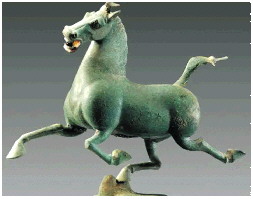
天马

Search documents
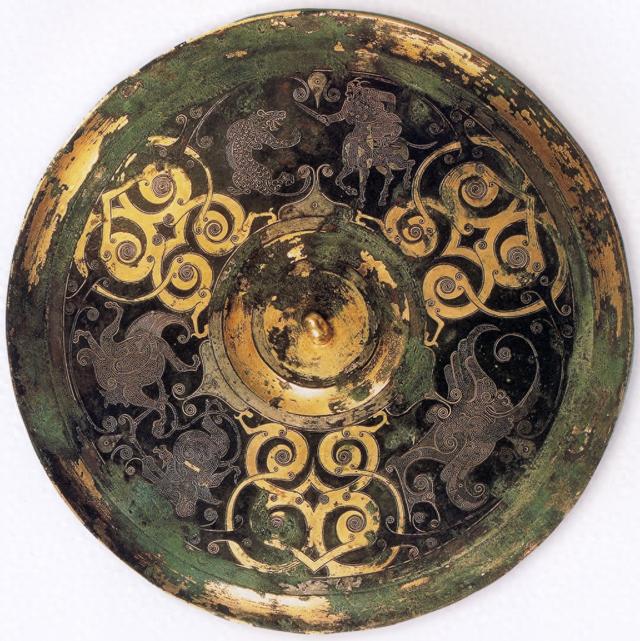
天马行空:中国国家博物馆藏铜镜上的骏马图像
Xin Lang Cai Jing· 2026-02-16 00:27
Core Insights - The article discusses the historical significance and artistic representation of horses, particularly the "Heavenly Horse," in ancient Chinese bronze mirrors, highlighting their cultural and symbolic meanings throughout different dynasties [15][16][59]. Group 1: Historical Context - The earliest known images of horses in Chinese bronze mirrors date back to the Warring States period, with notable examples found in the tombs of Luoyang [1][3]. - The "Heavenly Horse" is first mentioned in the "Shan Hai Jing," symbolizing a mythical creature associated with speed and divinity, which became a significant cultural motif during the Han Dynasty [15][16]. Group 2: Artistic Representations - The article details various artistic representations of horses in bronze mirrors, particularly during the Eastern Han and Tang dynasties, where the imagery reflects dynamic movement and vitality [9][44]. - The "Heavenly Horse" imagery is particularly prominent in Eastern Han mirrors, often depicted in a running posture, symbolizing strength and aspiration [9][10][43]. Group 3: Cultural Significance - The fascination with the "Heavenly Horse" during the Han Dynasty influenced various aspects of society, including art, literature, and religious beliefs, showcasing its enduring legacy [16][59]. - The article notes that the representation of horses evolved from mythical depictions in earlier periods to more realistic portrayals in later dynasties, reflecting changes in societal values and artistic techniques [59].


汉代神兽︱“天马”为何在汉代封神
Xin Lang Cai Jing· 2025-12-03 00:39
Group 1 - The article discusses the historical significance of horses in human culture, emphasizing their loyalty, diligence, and spiritual qualities as companions throughout history [1] - The domestication of horses dates back approximately 5,500 years, with evidence found in Kazakhstan and China, indicating the spread of horse breeding techniques [1][2] - The early horses in China were smaller and shorter compared to later breeds, as evidenced by artifacts from the Zhou Dynasty [2][4] Group 2 - The introduction of the "Heavenly Horse" from the Western Regions during the Han Dynasty significantly improved the local horse breeds, enhancing the military capabilities of the Han army [4][5] - The "Heavenly Horse" was not only a military asset but also held spiritual significance, reflecting the cultural beliefs of the Han Dynasty [6][7] - Artistic representations of horses during the Han Dynasty showcased their importance in various aspects of life, including warfare, hunting, and daily activities [9][10][12] Group 3 - Horses served multiple functions in daily life, including transportation and as hunting mounts, reflecting their integral role in agricultural society [12][18] - The Han Dynasty's emphasis on horses was linked to political power and ceremonial significance, showcasing the grandeur of the empire [12][39] - The mythical representations of horses, such as the "Heavenly Horse," illustrate the blending of cultural beliefs and artistic expression in ancient China [22][36]

急急如律令,到底有多急?
Qi Lu Wan Bao· 2025-05-16 22:13
Core Points - The phrase "急急如律令" has historical significance, originating from official documents in the Han Dynasty, indicating urgent compliance with orders [10] - The term has evolved over time, being absorbed into Daoist culture and later appearing in literature, showcasing its enduring relevance in Chinese civilization [12] Historical Context - The phrase "如律令" was commonly used in Han Dynasty documents, often implying adherence to laws and regulations [4][5] - The distinction between "律" (laws) and "令" (orders) was often blurred during the Han Dynasty, indicating a complex legal framework [6][8] Cultural Significance - The term "天马" (heavenly horse) symbolizes not only a prized horse breed but also the political aspirations of the Han Dynasty to assert dominance over foreign territories [9] - The urgency of the phrase "急急如律令" reflects the importance of swift action in governance and military strategy during ancient times [10] Modern Interpretation - In contemporary culture, the phrase has been adapted in films like "Ne Zha," where it retains its original urgency while being recontextualized for modern audiences [11]