银行卡芯片

Search documents
如果要收购英伟达,紫光国微得攒2.3万年利润
Xin Lang Cai Jing· 2026-01-30 11:51
Core Viewpoint - The inquiry about Unisoc's potential acquisition of Nvidia highlights the vast disparity in market capitalization between the two companies, with Unisoc's market value being only a fraction of Nvidia's [1][2]. Company Overview - Unisoc is a leading player in the domestic semiconductor industry, part of the New Unisoc Group, with two main business segments: special integrated circuits for aerospace and military applications, and smart security chips used in mobile phones, bank cards, and automotive safety [1][2]. - As of January 30, Unisoc's market capitalization is 71.46 billion yuan [1]. Financial Analysis - As of June 30, Unisoc reported cash holdings of 1.935 billion yuan, which only covers 0.006% of Nvidia's market value [2][6]. - For the first half of 2025, Unisoc's net profit attributable to shareholders was 0.692 billion yuan, projecting an annual net profit of approximately 1.384 billion yuan if the same performance continues in the second half [2][6]. - It would take Unisoc approximately 23,482 years to accumulate enough funds to acquire Nvidia, assuming all profits are saved and not accounting for any acquisition premium [6][7]. Market Context - Nvidia's market value is currently 4.68 trillion yuan, approximately 32.5 trillion yuan, and continues to grow due to its expansion in AI and data center businesses [1][9]. - The historical context of Unisoc's parent company, New Unisoc Group, includes past ambitions to acquire TSMC, which ultimately did not materialize due to financial imprudence and resulted in significant debt [10][13].



网传“SIM卡炼金”视频实为夸大 背后真相一文说清
Yang Shi Xin Wen· 2026-01-26 01:01
Core Viewpoint - The viral claim that SIM cards and credit card chips contain significant amounts of gold is largely exaggerated, with experts clarifying that while gold can be extracted, the actual yield is minimal and requires professional handling [1][2][3]. Group 1: Gold Content in SIM Cards - A viral video claimed that each SIM card contains 0.02 grams of gold, but experts indicate that a typical Nano-SIM card may yield only 0.02 milligrams of gold, a discrepancy of 1000 times [2]. - The extraction process demonstrated in the video involved 2 tons of raw material, not solely SIM cards or credit card chips, but rather a mix of electronic waste with gold plating [1][2]. Group 2: Purpose of Gold in Electronics - Gold is used in electronic devices, including SIM cards, to prevent oxidation of copper circuits, ensuring better conductivity and longevity of the components [3][4]. - The use of gold is not for luxury but for practical reasons, as it does not corrode under normal conditions, making it ideal for electronic applications [3]. Group 3: Challenges of Gold Extraction - The extraction of gold from electronic waste is complex and requires specialized knowledge and equipment, making it impractical for individuals to attempt [5][6]. - The process involves hazardous chemicals, such as aqua regia, which are tightly regulated and pose environmental risks if not handled properly [5][6]. Group 4: Economic Viability - The cost of collecting and processing electronic waste for gold extraction is high, often exceeding the value of the gold recovered, making it unprofitable for individuals [6]. - Professional operations in the gold recovery industry require significant investment in environmental compliance and safety measures, which are not feasible for casual attempts at extraction [6].
广东一男子SIM卡炼出191克黄金,价值21万元?当事人紧急澄清
Sou Hu Cai Jing· 2026-01-24 10:40
Core Viewpoint - A man in Guangdong successfully extracted 191.73 grams of gold from over 170 kilograms of SIM card chip waste, valued at approximately 214,737.6 yuan based on the current gold price of 1,120.00 yuan per gram [1] Group 1: Extraction Process - The extraction process involved specific electronic waste, particularly gold-plated chip waste from the telecommunications sector, rather than ordinary SIM cards [2] - The man clarified that the weight of the waste used was close to 2 tons, emphasizing that individual SIM cards contain negligible amounts of gold [2] - The extraction process is complex and requires compliance with industry standards, aimed at showcasing the recovery value rather than creating sensationalism [2] Group 2: Public Reaction and Misunderstandings - The topic sparked significant online discussion, with many users expressing surprise at the ability to extract gold from SIM cards [3][5] - Some users humorously commented on their own experiences with gold, indicating a mix of curiosity and disbelief regarding the extraction process [6] Group 3: Safety and Feasibility Concerns - The man warned that the gold content in SIM cards is extremely low, typically around 0.02 grams or less per card, and the extraction process is hazardous, not recommended for individuals [3][12] - The extraction methods discussed in videos often involve dangerous chemicals and require precise conditions, making them unsuitable for home experimentation [10]
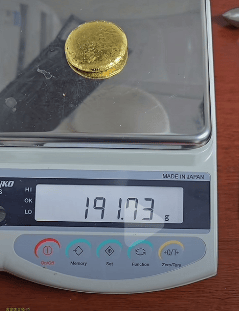
男子用SIM卡炼出191克黄金?遭质疑后当事人回应
Sou Hu Cai Jing· 2026-01-24 03:54
Core Viewpoint - The topic of "a man extracting 191 grams of gold from SIM cards" has sparked significant online discussion, with various opinions on the validity and safety of the practice [1] Group 1: Gold Extraction Process - The individual involved clarified that the gold was extracted not from a single SIM card, but from a collection of gold-plated electronic waste materials from the telecommunications sector [4] - The reported weight of "191.73 grams" refers to a specific batch of processed material, which has been misrepresented as being derived solely from SIM cards [4] - The extraction process is part of the precious metal recovery industry, focusing on compliant extraction from specific electronic waste, rather than a casual personal endeavor [4] Group 2: Safety and Environmental Concerns - The gold content in a typical SIM card is very low, approximately 0.02 grams per card, making personal extraction impractical due to the minimal yield [4] - The extraction process involves the use of highly corrosive chemicals, posing significant safety hazards and environmental pollution risks, which discourages individual attempts at extraction [4][2]