
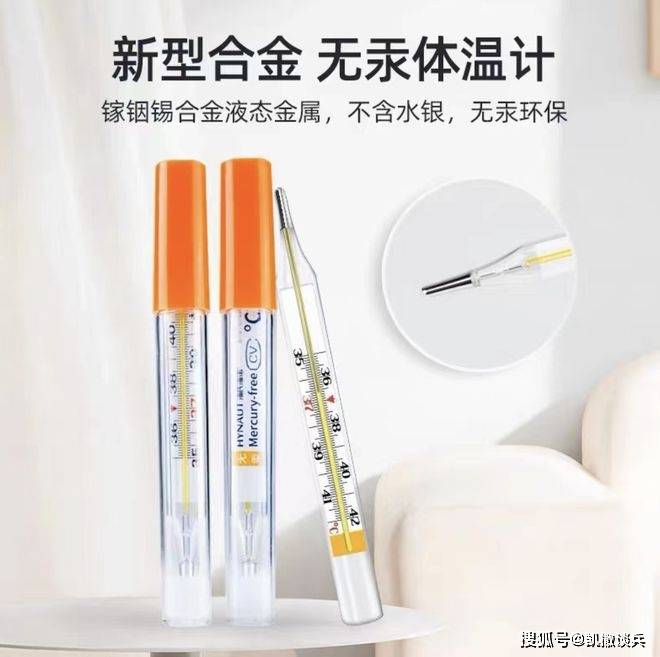
镓铟锡体温计

Search documents
美国要彻底破防了,中国垄断近100%的镓材料,直接卖到了白菜价!
Sou Hu Cai Jing· 2025-12-16 01:13
Group 1 - China's radar technology is leading globally due to its monopoly on gallium materials, with 98% of gallium production capacity controlled by China [1] - In 2023, China implemented export controls on gallium materials, restricting not only raw material exports but also advanced refining and processing technologies [1] - This situation disrupts the radar upgrade plans for U.S. F-35 aircraft, highlighting a significant strategic advantage for China in gallium applications [3][4] Group 2 - China is utilizing gallium materials in everyday products, such as thermometers, which are being replaced with gallium-indium-tin liquid alloy thermometers, priced around 20 yuan [3] - The psychological impact of a strategic material being used in consumer products, while being a critical bottleneck for the U.S., creates a stark contrast in application levels [4]

水银体温计将禁产,专家介绍替代产品
Ke Ji Ri Bao· 2025-12-12 03:43
Core Viewpoint - The production of mercury thermometers and blood pressure monitors will be banned in China starting January 1, 2026, as part of the country's commitment to the Minamata Convention on Mercury, reflecting ecological and medical safety principles [2][3]. Group 1: Reasons for the Ban - The ban is a specific measure to fulfill the Minamata Convention, which includes prohibiting the mining of primary mercury and gradually phasing out mercury-containing medical products [2]. - Mercury is highly toxic and non-degradable; a standard mercury thermometer contains about 1 gram of mercury, which can significantly increase air concentration in a room if broken, posing acute poisoning risks [2][3]. - There are numerous cases of poisoning and injuries related to mercury thermometers, highlighting their risks in modern medical practices [3]. Group 2: Alternatives to Mercury Thermometers - Electronic thermometers are emerging as ideal replacements, avoiding mercury pollution and offering similar measurement accuracy [4]. - Electronic thermometers can be categorized into non-contact (e.g., forehead and ear thermometers) and contact types, with the latter providing results comparable to mercury thermometers in a shorter time [4][5]. - Gallium-indium-tin thermometers are also considered potential substitutes due to their non-toxic nature and similar measurement performance, although they face challenges in technology maturity and market acceptance [5][6]. Group 3: Future Developments - There is a need for advancements in high-precision sensors and product quality control to meet the demands of critical care environments and consumer expectations for low-cost measurement tools [5]. - The integration of big data and IoT technologies is essential for transforming thermometers from simple measuring devices into smart health management tools [6].
水银体温计将禁产 专家介绍替代产品
Ke Ji Ri Bao· 2025-12-12 00:55
Core Viewpoint - The production of mercury thermometers and blood pressure monitors will be banned in China starting January 1, 2026, as part of the country's commitment to the Minamata Convention on Mercury, reflecting ecological and medical safety principles [2][3]. Group 1: Reasons for the Ban - The ban is a specific measure to fulfill the Minamata Convention, which includes prohibiting the mining of primary mercury, controlling mercury resource use, and gradually phasing out mercury-containing medical products [2]. - Mercury, known for its high toxicity and non-degradability, poses significant health risks, including acute poisoning and long-term neurological damage, especially to vulnerable populations like children and pregnant women [2][3]. - The inefficiency of mercury thermometers in emergency situations, requiring patients to remain still for 5 to 10 minutes, highlights their limitations in modern medical practices [2][3]. Group 2: Safe Alternatives to Mercury Thermometers - Electronic thermometers, which do not contain mercury, are emerging as ideal replacements, with types including non-contact and contact models [4]. - Non-contact models, such as forehead and ear thermometers, use infrared technology but can be affected by environmental conditions, while contact models provide results comparable to mercury thermometers in a shorter time [4][5]. - Gallium-indium-tin thermometers are also considered potential replacements due to their non-toxic nature and similar measurement performance, although they face challenges in technology maturity and market acceptance [5][6]. Group 3: Future Developments and Considerations - There is a need for advancements in high-precision sensors and product quality control to meet the demands of critical care environments and consumer expectations for low-cost measurement tools [5][6]. - The integration of big data and IoT technologies is essential for transforming thermometers from simple measuring devices into smart health management tools [6].