
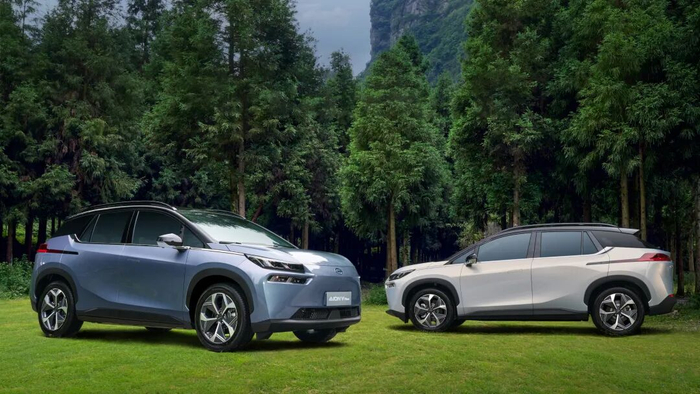
问界M7 2026款

Search documents
年末车企“兜底”购置税 新能源车市缓冲跨年
Zhong Guo Jing Ying Bao· 2025-12-26 20:31
Core Viewpoint - The impending adjustment of the new energy vehicle (NEV) purchase tax policy from full exemption to a 50% reduction starting January 1, 2026, is prompting major car manufacturers to implement strategies to stabilize sales and manage consumer expectations during this transitional period [2][3]. Group 1: Company Responses - Major car manufacturers such as GAC Group, Seres, and Xpeng Motors are introducing purchase tax "bottom line" or equivalent subsidy schemes to offset the cost changes resulting from the policy shift, aiming to maintain sales momentum and capitalize on the limited time window before the policy change [2][3]. - GAC Group has extended its purchase tax subsidy policy until the end of 2025, allowing customers who complete orders by December 31, 2025, to receive a subsidy of up to 15,000 yuan if their vehicle delivery is delayed due to company reasons [4]. - Seres and Xpeng Motors are also implementing similar subsidy strategies, with Seres offering tax subsidies for specific models and Xpeng focusing on new products to lower the transaction threshold during the policy transition [4]. Group 2: Market Dynamics - The combination of policy changes and corporate subsidies is beginning to show effects, with November's NEV retail sales reaching 1.354 million units, a year-on-year increase of 7% [5]. - Despite the positive short-term effects, the market is still in a transitional phase, with a decline in retail sales observed in early December, indicating that the demand recovery may be temporary rather than indicative of a long-term trend [5]. - The overall automotive market is expected to achieve growth beyond initial forecasts for 2025, driven by policies such as trade-in subsidies and NEV purchase tax exemptions, with production and sales figures showing significant year-on-year increases [6][7]. Group 3: Future Considerations - The shift from a policy-driven market to one reliant on endogenous growth remains a critical challenge for car manufacturers post-policy adjustment [3]. - The potential for diminishing returns from frequent subsidies raises concerns about consumer dependency on temporary discounts, which could lead to increased volatility in demand around policy changes [3]. - The automotive industry may face intensified price competition in early 2026, particularly affecting smaller manufacturers, necessitating a focus on technological and service differentiation rather than solely price competition [8].




【快讯】每日快讯(2025年12月3日)
乘联分会· 2025-12-03 08:34
Domestic News - Shanghai has strengthened the quality and safety management of public electric vehicle charging and swapping facilities, mandating that all new or updated facilities must use products certified by the CCC certification starting from August 1, 2026 [7] - Hongmeng Zhixing has released a tax subsidy plan for the AITO M9/M8/M7 2026 models, offering up to 15,000 yuan for customers whose vehicles are delayed in delivery due to non-user reasons [8] - Li Auto has announced a strategic partnership with Zeiss, with a product launch event scheduled for December 3, 2025 [9] - Didi's autonomous driving service has begun all-weather, fully driverless passenger testing in Guangzhou [10] - Beijing Automotive Investment Company has increased its registered capital from approximately 7.96 billion yuan to about 8.96 billion yuan, marking a 13% increase [11] - In October 2025, China's automotive goods import and export total reached 25.31 billion USD, a year-on-year increase of 9.5% [12] - Shanghai Minhang District will open approximately 330 kilometers of autonomous driving test roads [13] - GAC Group has established a charging network with over 1,800 charging stations and more than 22,000 self-operated charging piles across 204 cities in China [14] International News - BMW has set a new interim carbon emission reduction target, aiming to reduce CO2 emissions by at least 60 million tons by 2035 compared to 2019 levels [15] - In October 2025, new car sales in Europe reached 1,097,663 units, a year-on-year increase of 4.9%, marking the fourth consecutive month of growth [17] - Malaysian automaker Perodua has launched its first locally developed electric vehicle, the QV-E, with a development investment of 800 million ringgit (approximately 194 million USD) [18] - NVIDIA and Synopsys have announced an expanded strategic partnership to integrate AI and accelerated computing technologies [19] Commercial Vehicles - CEVA and Windrose EV have completed a cross-border transport test with electric heavy trucks, covering 1,725 kilometers with an average energy consumption of 1.02 kWh/km, achieving a 65% reduction in CO2 emissions [20] - Scania has launched its first localized product, NEXT ERA, in China, marking a significant step in its localization strategy [22][23] - The Fokang F light-duty engine has successfully completed high-performance testing for commercial vehicles, focusing on power output and fuel economy [24] - Maxus has showcased multiple new energy vehicles at the Thailand International Motor Show, enhancing its presence in the Southeast Asian market [25]

问界M7 2026款购置税补贴方案出炉:至高15000元现金减免
Feng Huang Wang· 2025-09-30 13:29
Core Viewpoint - The announcement by Wanjie Auto regarding the purchase tax subsidy plan for the 2026 model of Wanjie M7 highlights a strategic initiative to incentivize customers to place orders before a specified deadline, thereby potentially boosting sales and customer engagement [1] Group 1 - Wanjie Auto has introduced a purchase tax subsidy plan for the 2026 Wanjie M7, allowing customers who complete their orders by November 3, 2025, to benefit from a subsidy of up to 15,000 yuan if their vehicle delivery is delayed into 2026 due to reasons not attributable to the customer [1] - The subsidy is aligned with national vehicle purchase tax policies, indicating Wanjie Auto's compliance with regulatory frameworks while enhancing customer appeal [1] - The plan includes cash reductions on the final payment or cash subsidies for eligible customers, which may enhance the overall attractiveness of the vehicle purchase [1]