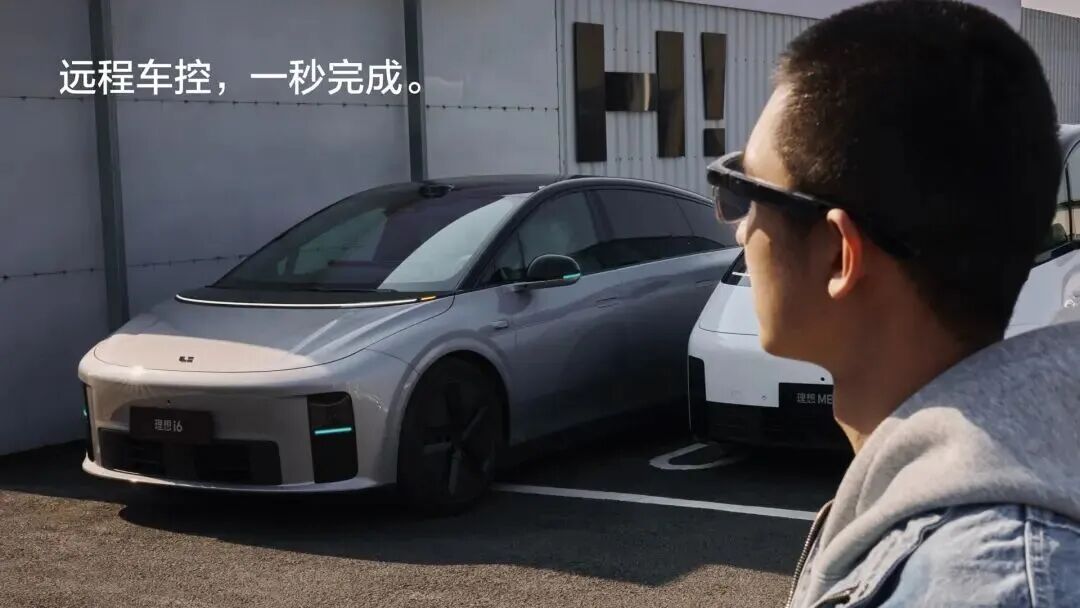
理想AI眼镜Livis

Search documents
理想汽车2025年营收1123亿元
Jing Ji Wang· 2026-03-23 06:31
Core Viewpoint - Li Auto reported a revenue of 112.3 billion yuan and a net profit of 1.1 billion yuan for the fourth quarter and the entire year of 2025, marking it as the only new force car company in China to achieve over 100 billion yuan in revenue and profitability for three consecutive years [1] Financial Performance - Revenue for 2025 reached 112.3 billion yuan, with a net profit of 1.1 billion yuan [1] - Cash reserves at the end of 2025 amounted to 101.2 billion yuan, the highest among Chinese electric vehicle companies [1] - R&D investment for the year was 11.3 billion yuan, a historical high, with 50% allocated to AI-related projects [1][3] Strategic Transition - 2025 is identified as a critical year for the company's transformation from an automotive enterprise to an embodied intelligence enterprise, with significant progress in restructuring the entire operational chain [1] - The company has focused on addressing operational pain points in its direct sales system to facilitate growth [1] R&D and Technological Advancements - Li Auto's R&D investment over the past three years totaled 33 billion yuan, averaging 1 billion yuan spent every three days, emphasizing a commitment to breakthroughs in embodied intelligence core technologies [3][5] - The self-developed Mach 100 chip is set to begin mass production in Q2 2025, offering three times the effective computing power of Nvidia's Thor-U chip [5] - The company has established a full-stack self-research capability in chips, compilers, operating systems, and foundational models, enhancing its ability to customize AI computing power [5] Product Development - The new generation Li Auto L9 Livis, priced at 559,800 yuan, is set to launch in Q2 2025, representing a significant upgrade in user experience and targeting the high-end market [6][8] - The L9 Livis features advanced 3D perception systems and is equipped with two self-developed Mach 100 chips, providing 5 to 6 times the computing power of competing chips [8] - The company aims to leverage its existing product recognition to drive growth through both extended-range and pure electric vehicles, with cumulative orders for the i6 and i8 surpassing 100,000 units [8][9] Future Outlook - The company is positioned to return to a growth trajectory in 2026, with a focus on realizing three years of technological accumulation [9] - The launch of the new generation L9, equipped with the Mach 100 chip, is expected to enhance the company's technological framework and mission to create better products and services for users [9]


理想汽车2025年营收破千亿,连续三年盈利,李想:2026年实现超20%增长
Hua Xia Shi Bao· 2026-03-14 02:17
Core Viewpoint - Li Auto aims to achieve over 20% growth in 2026, following a successful 2025 where it maintained industry-leading revenue and profitability, marking three consecutive years of over 100 billion yuan in revenue [1][2][3] Financial Performance - In 2025, Li Auto's total revenue reached 112.3 billion yuan, with Q4 revenue at 28.8 billion yuan, reflecting a quarter-on-quarter growth of 5.2% [1][3] - The company delivered 406,343 vehicles in 2025, with Q4 deliveries at 109,000 units, showing a quarter-on-quarter increase of 17.1% [1][3] - Li Auto reported a net profit of 1.1 billion yuan for 2025, making it the only new force car company in China to achieve over 100 billion yuan in revenue and profitability for three consecutive years [3][4] Cash Reserves and R&D Investment - By the end of 2025, Li Auto's cash reserves stood at 101.2 billion yuan, the highest among Chinese electric vehicle companies, providing a solid foundation for long-term investments in technology and innovation [3][4] - The total R&D investment for 2025 reached 11.3 billion yuan, with an average monthly expenditure of nearly 1 billion yuan, and Q4 R&D spending at 3 billion yuan [3][4] Technological Advancements - Li Auto's R&D focus in 2025 included a 50% allocation towards AI-related investments, with significant progress in self-developed chips, foundational models, and full-line control chassis technologies [3][4][5] - The self-developed chip, Mahe 100, is set to begin mass production in Q2 2026, designed for AI inference calculations with lower power consumption [5][6] - The company completed the development of the world's first "complete" fully controlled chassis, marking a significant evolution in chassis technology [6] Market Position and Future Outlook - Li Auto has established over 4,000 self-built supercharging stations and 539 direct sales stores by the end of 2025, creating a robust infrastructure for future product launches and market growth [4][5] - The launch of the Li MEGA and two new pure electric SUVs, the Li i8 and Li i6, has positioned the company for a new growth phase driven by both range-extended and pure electric vehicles [4][5] - Analysts suggest that with strong financials, a solid infrastructure, and upcoming product releases, Li Auto is well-positioned to strengthen its position in the high-end electric vehicle market [7]
理想汽车2025财年完成战略换挡!千亿现金储备护航具身智能新征程
Zhong Guo Zheng Quan Bao· 2026-03-13 13:08
Core Insights - Li Auto achieved a revenue of 112.3 billion yuan in 2025, marking its third consecutive year of over 100 billion yuan in revenue and profitability [1] - The company delivered 406,300 vehicles in 2025, with a significant recovery in Q4, showcasing strong growth momentum [2] - Li Auto's cash reserves reached 101.2 billion yuan, providing a solid foundation for future growth and strategic initiatives [3] Financial Performance - In Q4 2025, Li Auto's revenue was 28.8 billion yuan, with a quarter-on-quarter increase of 5.2% and vehicle deliveries of 109,000, up 17.1% [1] - The company maintained a net profit of 1.1 billion yuan, demonstrating strong profitability during a period of strategic investment [2] R&D and Technological Advancements - Li Auto's R&D investment reached a record high of 11.3 billion yuan in 2025, with 50% allocated to AI-related projects [4] - The company is focusing on core technologies in embodied intelligence, with plans to launch its self-developed chip, Maher 100, in Q2 2026, which will significantly enhance intelligent driving capabilities [4] Sales and Operational Strategy - Li Auto revamped its sales system in 2025, implementing a four-tier flat operational structure to improve decision-making efficiency and employee satisfaction [2] - The introduction of a store partner system aims to invigorate the direct sales model, with expectations of noticeable improvements in sales operations by Q3 2026 [2] Future Outlook - The company aims to achieve a sales target of 500,000 vehicles in 2026, representing over 20% growth compared to 2025, supported by a "3+2" growth strategy [7] - Li Auto plans to launch the i9 electric flagship SUV in the second half of 2026, further enhancing its product lineup [7]
理想汽车2025年营收1123亿元 现金储备达1012亿元
Yang Shi Wang· 2026-03-13 11:52
Core Insights - Li Auto reported a strong performance in Q4 2025, delivering 109,000 vehicles, a 17.1% quarter-over-quarter increase, with revenue reaching 28.8 billion yuan, a 5.2% increase, and an annual revenue of 112.3 billion yuan, maintaining industry leadership [1] - The company achieved a net profit of 1.1 billion yuan for the year, marking it as the only new force car manufacturer in China to surpass 100 billion yuan in revenue and achieve profitability for three consecutive years [1] Group 1 - 2025 is a pivotal year for Li Auto as it transitions from an automotive company to an embodied intelligence enterprise, with the successful launch of the Li MEGA, Li i8, and Li i6, collectively exceeding 100,000 orders [3] - Li Auto has invested 33 billion yuan in R&D over the past three years to drive breakthroughs in core embodied intelligence technologies [3] Group 2 - The company has restructured its R&D organization based on a foundational model, enhancing efficiency and addressing the integration of software and hardware for intelligent driving capabilities [8] - Li Auto's cash reserves reached 101.2 billion yuan by the end of 2025, the highest among Chinese new energy vehicle companies, providing a solid foundation for long-term investments in technology and product innovation [8] Group 3 - In Q4 2025, Li Auto's R&D expenditure was 3 billion yuan, totaling 11.3 billion yuan for the year, a historical high, with 50% allocated to AI-related investments [9] - The self-developed Maher 100 chip is set to begin mass production in Q2 2026, offering three times the effective computing power of Nvidia's Thor-U chip, enhancing the safety and smoothness of intelligent driving [9] Group 4 - The new generation of Li Auto's L9 and L9 Livis will showcase the results of R&D investments, featuring a complete technical reconstruction across perception, decision-making, and execution dimensions [10] - The new range extender will provide a seamless user experience in range-extending mode, with innovative features aimed at reducing fuel consumption and maintenance costs [12]
理想第一份AI公司财报,背后是五个问题
经济观察报· 2026-03-13 11:20
Core Viewpoint - Li Auto's 2025 financial report reveals a strategic shift, showcasing a balance between profitability and significant investment in AI, with over 50% of R&D spending directed towards AI initiatives [1][2][5]. Financial Performance - In 2025, Li Auto achieved a revenue of 112.3 billion and a net profit of 1.1 billion, marking its third consecutive year of profitability and making it the only new force in the domestic market to maintain such performance [2][3]. - The company holds a cash reserve of 101.2 billion, placing it among the top tier of Chinese automakers [3][5]. R&D Investment - Li Auto's R&D expenditure reached a record high of 11.3 billion, with AI-related investments accounting for over 50% of this total [5][7]. - The company is developing its self-researched chip, the Mach 100, which is set to enhance intelligent driving safety and efficiency [7][8]. Strategic Positioning - Li Auto positions itself as a technology entity rather than merely an automotive manufacturer, integrating AI capabilities into its business model [5][10]. - The company maintains profitability while investing heavily in R&D, a rare approach in the automotive industry [10][12]. Organizational Transformation - Li Auto has restructured its organization to enhance efficiency, moving from traditional hierarchical management to a platform-based, empowering structure [15][17]. - The new organizational logic emphasizes collaboration across different fields, improving work efficiency significantly [15][17]. Product Development - The upcoming Li Auto L9 Livis is defined as a flagship SUV based on embodied intelligence, representing a culmination of extensive R&D investments [20][22]. - The L9 Livis features advanced technology, including a fully electric control chassis and enhanced perception capabilities, marking a significant leap in automotive technology [24][25].

理想汽车2025年营收1123亿元 研发投入创历史新高
Zheng Quan Ri Bao· 2026-03-13 09:45
Core Insights - Li Auto reported a revenue of 112.3 billion yuan and a net profit of 1.1 billion yuan for the year 2025, marking its position as the only new energy vehicle company in China to achieve over 100 billion yuan in revenue and profitability for three consecutive years [1] - The year 2025 was pivotal for Li Auto as it transitioned from an automotive company to an embodied intelligence enterprise, completing a comprehensive restructuring across various aspects of the organization and product lines [1] Financial Performance - Li Auto's cash reserves reached 101.2 billion yuan by the end of 2025, the highest among Chinese new energy vehicle companies, providing a solid foundation for long-term investments in technology R&D and product innovation [2] - The total R&D expenditure for 2025 was 11.3 billion yuan, with 50% allocated to AI-related projects, indicating a strong commitment to technological advancement [2] Technological Advancements - Li Auto achieved significant breakthroughs in core technology areas such as self-developed chips and integrated intelligent technology, with the Maher 100 chip set to begin mass production in Q2 2026 [2][3] - The restructuring of the R&D organization has enhanced efficiency, focusing on collaborative design between chip and model development to address previous challenges in the R&D process [3] Product Development and Market Position - In 2025, Li Auto delivered a total of 406,300 vehicles, with a notable 17.1% quarter-over-quarter increase in Q4 deliveries, supported by the successful launch of new electric models [4] - The introduction of the new flagship SUV, Li Auto L9 Livis, is expected to redefine standards in the embodied intelligence era, featuring advanced technologies such as the Maher 100 chips and a fully electric control mechanical brake system [5][6] Strategic Outlook - With a robust cash reserve, significant R&D investment, and a growing network of over 4,000 self-built supercharging stations, Li Auto is well-positioned to return to a growth trajectory in 2026 [6]
理想三年狂砸330亿,全新一代理想L9将带来回报时刻
和讯· 2026-03-13 09:04
Core Viewpoint - The launch of the new generation Li Auto L9 will address key questions regarding sales growth, the reliability of selling intelligent vehicles, and the value of the company's significant R&D investments totaling over 33 billion yuan over three years [1][3]. Group 1: Financial Performance - In 2025, Li Auto reported a total revenue of 112.3 billion yuan and a net profit of 1.1 billion yuan, marking three consecutive years of revenue exceeding 100 billion yuan and profitability [1]. - The company has a cash reserve of 101.2 billion yuan, leading the new energy vehicle sector [1]. - R&D investment reached a record high of 11.3 billion yuan in 2025, with 50% allocated to AI-related projects [3]. Group 2: R&D Investment and Strategy - From 2023 to 2025, Li Auto's cumulative R&D investment will exceed 33 billion yuan, averaging 1 billion yuan spent every three days [3]. - The company is focusing on vertical technology development in embodied intelligence vehicles while exploring new business areas like smart glasses and humanoid robots [3][4]. - Li Auto has built a comprehensive self-research technology system, including the self-developed Mach 100 chip, VLA driver model, operating system, and full-line control chassis [3][4]. Group 3: Technological Advancements - The Mach 100 chip, set to be mass-produced in Q2 2025, offers three times the effective computing power of NVIDIA's Thor-U chip, enhancing the safety and smoothness of intelligent driving [3][4]. - The new generation Li Auto L9 Livis features industry-first 3D spatial perception and is equipped with two Mach 100 chips, achieving effective computing power of 2560, which is 5-6 times that of NVIDIA's Thor-U [7][8]. - The vehicle includes the world's first fully electric mechanical brake (EMB) and an 800V fully active suspension system, providing top-tier handling and driving enjoyment [8][10]. Group 4: Future Growth and Market Position - The launch of the new generation Li Auto L9 and the Livis will validate the results of years of R&D investment [7][11]. - In 2025, Li Auto plans to launch the Li MEGA, i8, and i6 electric SUVs, with total orders for the two electric models expected to exceed 100,000 units, marking a new growth phase driven by both range-extended and pure electric vehicles [11][13]. - The company has established a robust foundation for returning to growth in 2026, with significant cash reserves, extensive charging infrastructure, and a focus on embodied intelligence [13][14].

穿透财报,读懂理想汽车看似“不聪明”的选择
Jin Rong Jie· 2026-03-12 11:16
Core Insights - In 2025, the Chinese automotive industry is undergoing significant changes, with a shift in competition from battery size and features to intelligence and technological depth [1] - Li Auto has reported resilient financial results, achieving annual revenue of 112.3 billion yuan and a net profit of 1.1 billion yuan, marking three consecutive years of over 100 billion yuan in revenue and profitability [1] - The company has a cash reserve of 101.2 billion yuan, the highest among new energy vehicle companies, and has invested a record 11.3 billion yuan in R&D, with 50% allocated to AI [1] Financial Performance - Li Auto delivered 406,000 vehicles in 2025, with revenue growth slowing and net profit declining compared to previous years [4] - The fourth quarter saw a delivery of 109,000 vehicles, a 17.1% increase quarter-on-quarter, and revenue of 28.8 billion yuan, a 5.2% increase [5] Strategic Transformation - 2025 marks a pivotal year for Li Auto as it transitions from a traditional automotive company to an embodied intelligence enterprise, involving a comprehensive restructuring of its organizational framework, R&D system, product definition, and sales services [4] - The R&D organization has been restructured into teams focused on foundational models, software, and hardware, addressing the challenges of disjointed development [4] R&D Investment - Li Auto's R&D investment reached 11.3 billion yuan in 2025, with a 25.3% year-on-year increase in the fourth quarter, despite many companies reducing R&D spending [7] - The investment supports the development of a complete embodied intelligence technology foundation, including the self-developed Mahe 100 chip, which will begin mass production in Q2 2025 [8] Product Development - The new generation Li Auto L9, set to launch in Q2 2025, represents the first comprehensive realization of the company's three-year technology investments [9][10] - The L9 features advanced 3D spatial perception technology and is equipped with two self-developed Mahe 100 chips, providing significantly higher computing power compared to competitors [12] Market Positioning - Li Auto's proactive transformation, despite short-term growth slowdowns, aims to establish a robust technological foundation for future growth [14] - The upcoming launch of the new generation L9 will serve as a critical test for the effectiveness of this transformation [14]

理想汽车2025年营收1123亿元 连续三年盈利 研发投入创历史新高
Xin Lang Cai Jing· 2026-03-12 08:56
Core Insights - In 2025, the company achieved a revenue of 112.3 billion yuan and a net profit of 1.1 billion yuan, becoming the only new energy vehicle company in China to surpass 100 billion yuan in revenue for three consecutive years while maintaining profitability for the same period [1][2] - The company has a cash reserve of 101.2 billion yuan, the highest among Chinese new energy vehicle companies, providing a solid foundation for long-term investments in technology research and development, product innovation, and sales service systems [2][7] - The company’s R&D investment reached a record high of 11.3 billion yuan in 2025, with 50% allocated to AI-related projects, indicating a strong commitment to developing core technologies [2][3] Financial Performance - In Q4 2025, the company delivered 109,000 vehicles, a quarter-on-quarter increase of 17.1%, with pure electric models continuing to gain market share [2] - The quarterly revenue was 28.8 billion yuan, reflecting a 5.2% quarter-on-quarter growth, maintaining a leading position in the industry [2] R&D and Technological Advancements - The company has invested a total of 33 billion yuan in R&D over the past three years, focusing on breakthroughs in embodied intelligence core technologies [3] - The self-developed Mach 100 chip, set to be mass-produced in Q2 2026, boasts three times the effective computing power of Nvidia's Thor-U chip, enhancing the safety and smoothness of intelligent driving [3][4] - The company has restructured its R&D organization to improve efficiency, focusing on collaborative design between chip and model development [4] Product Launches and Market Strategy - The new generation of the Ideal L9 is set to launch in Q2 2026, featuring advanced technologies such as a fully controlled chassis and an 800V active suspension system, marking a significant upgrade in product capabilities [5][6] - The company has successfully launched two pure electric SUVs, the Ideal i8 and Ideal i6, with cumulative orders exceeding 100,000 units, entering a new growth phase driven by both range-extended and pure electric models [7] Future Outlook - With a robust foundation of 113 billion yuan in R&D investment and 101.2 billion yuan in cash reserves, the company is poised to return to a growth trajectory in 2026, aiming to redefine the flagship SUV standards in the embodied intelligence era [7]
汽车AI穿戴设备的赋能与隐忧
Zhong Guo Qi Che Bao Wang· 2026-02-04 12:24
Core Insights - Xiaomi has announced a patent that integrates vehicle and wearable device data to enhance fatigue driving detection and intervention, indicating a shift towards multi-dimensional monitoring for improved driving safety [2][3] - The automotive industry is increasingly focusing on wearable technology, with companies like Xiaomi and Ideal Auto leading the way in developing AI-integrated devices that enhance vehicle safety and user experience [3][5] Group 1: Patent Developments - Xiaomi's patent titled "Fatigue Driving Intervention Method, Device, Vehicle, Equipment, Medium, and Chip" aims to actively identify driving conditions by merging data from wearable devices and vehicle systems, enhancing safety measures [3] - The patent collects data from vehicle sensors and wearable devices, such as heart rate and body temperature, to intelligently recognize and intervene in driver behavior, showcasing a proactive approach to safety [3] - Other companies, like FAW Group, are also exploring similar technologies, indicating a broader trend in the automotive sector towards integrating wearable devices for enhanced vehicle functionality [4] Group 2: Market Trends and Consumer Response - Ideal Auto's AI glasses, launched in December 2022, have gained consumer attention, highlighting the market potential for AI-integrated wearable devices in the automotive sector [5] - The development of wearable technology is seen as a strategic move by automotive companies to create a comprehensive AI ecosystem, expanding functionalities beyond health monitoring to include various lifestyle and productivity tools [5] - The integration of AI technology with wearable devices is expected to enhance user experience and safety, particularly if it can seamlessly connect with in-car navigation and entertainment systems [5] Group 3: Reliability and Safety Concerns - Despite the promising outlook for AI wearable devices in enhancing driving safety, there are significant concerns regarding their reliability and data security, which need to be addressed before widespread adoption [7][9] - Current wearable devices face challenges in monitoring accuracy and system stability, which are critical for ensuring safety in diverse driving conditions [8][9] - Data privacy issues are also a major concern, as these devices collect sensitive user information, necessitating robust security measures to protect against data breaches [9]