问界M9增程版

Search documents
赛力斯魔方平台2.0亮相广州车展:从“软件定义”到“AI定义”的深度进化
Zheng Quan Ri Bao Zhi Sheng· 2025-11-26 09:13
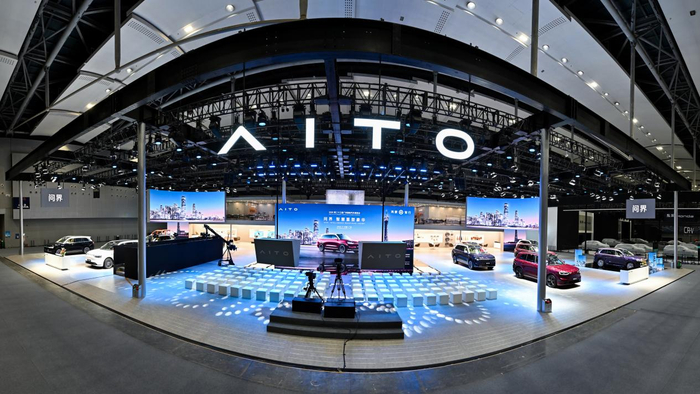
Core Viewpoint - The automotive industry is entering a new phase defined by AI, transitioning from "software-defined vehicles" to "AI-defined vehicles," enhancing user interaction and experience [1][8]. Group 1: Technology Development - The launch of the Silis Magic Cube Technology Platform 2.0 represents a systematic restructuring towards AI-driven smart electric vehicles, marking a significant advancement in the industry [3][4]. - The platform integrates multiple domains and upgrades the electronic and electrical architecture from "distributed regional control" to "central vehicle control + regional control," enabling efficient decision-making and execution [3][4]. - The platform supports a wide range of vehicle types and sizes, enhancing flexibility in production and design, and covers various travel scenarios [3][4]. Group 2: Research and Development - Silis has committed nearly 30 billion yuan in R&D by mid-2025, showcasing its dedication to innovation and the development of the Magic Cube Technology Platform [4][6]. - The company has seen a 154.9% year-on-year increase in R&D investment, with a workforce of 6,984 R&D personnel, representing 36% of the total staff [6][4]. - In the first half of the year, Silis achieved revenue of 62.402 billion yuan and a net profit of 2.941 billion yuan, reflecting an 81.03% year-on-year growth [6][4]. Group 3: Market Position and Strategy - Silis aims to establish itself as a leading brand in high-end intelligent vehicles, with the Magic Cube Technology Platform 2.0 being a key component of this strategy [8][11]. - The company has garnered trust from 900,000 users, with significant mileage achievements in both electric and assisted driving [10][11]. - The brand development confidence index ranks Silis at the top, indicating strong market positioning and consumer trust [11]. Group 4: Industry Trends - The automotive industry is transitioning from a growth phase to a mature phase, with increasing competition and a focus on brand differentiation and globalization [7][8]. - AI technology is identified as a core driver reshaping the automotive landscape, with smart driving being a significant application area [7][8]. - The industry faces challenges such as overcapacity in traditional fuel vehicles and rapid expansion in new energy vehicle production, necessitating strategic adaptations [7][8].


华为DriveONE护航新能源车队挑战超高海拔
Huan Qiu Wang· 2025-10-10 09:18
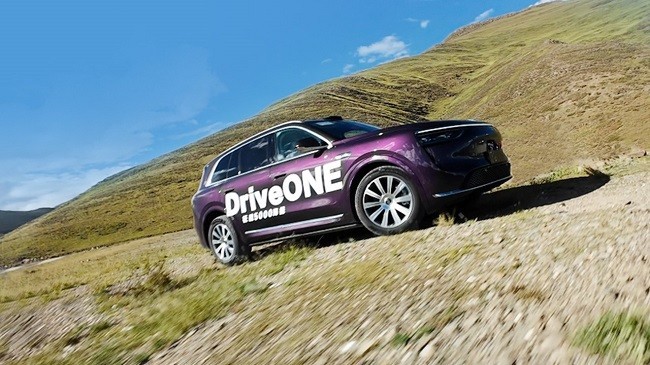
Core Insights - Huawei's DriveONE technology showcases its performance and reliability in extreme high-altitude conditions through a live challenge event [1][4] - The DriveONE system is a key component of Huawei's digital energy business, emphasizing technological innovation in electric power and thermal management [1] - Safety is a primary focus in the development of DriveONE, integrating multiple safety barriers to ensure stable operation and support for L3 autonomous driving [2] Group 1: Product Performance - The newly launched AITO M8 pure electric version and M9 range-extended version both utilize the DriveONE motor, demonstrating strong performance in high-altitude environments [1] - The AITO M8 pure electric version features a high-pressure seven-in-one motor, enhancing space utilization for passengers and storage [1] - The AITO M9 range-extended version achieves a fuel consumption of 6.9L per 100 kilometers, balancing fuel economy with electric vehicle performance [1] Group 2: Safety Features - DriveONE incorporates a triple safety barrier system, including power supply, power, and motion safety [2] - The power supply safety features include dual-path redundancy and real-time monitoring to ensure stable operation [2] - Motion safety is enhanced through a collaborative architecture that improves vehicle control precision, particularly in challenging driving conditions [2] Group 3: Quality Assurance - Huawei adheres to a "quality first" philosophy, conducting extensive testing with nearly a thousand test vehicles across various complex driving conditions [4] - Long-term commitment to quality has led to continuous optimization in safety, reliability, and overall efficiency of the DriveONE system [4] - The live demonstration highlighted the stable performance of high-quality electric drives in complex high-altitude environments, reinforcing consumer confidence in electric vehicles [4]