阿替普酶

Search documents
罗氏,甩出“王炸”
Ge Long Hui· 2025-09-23 19:41
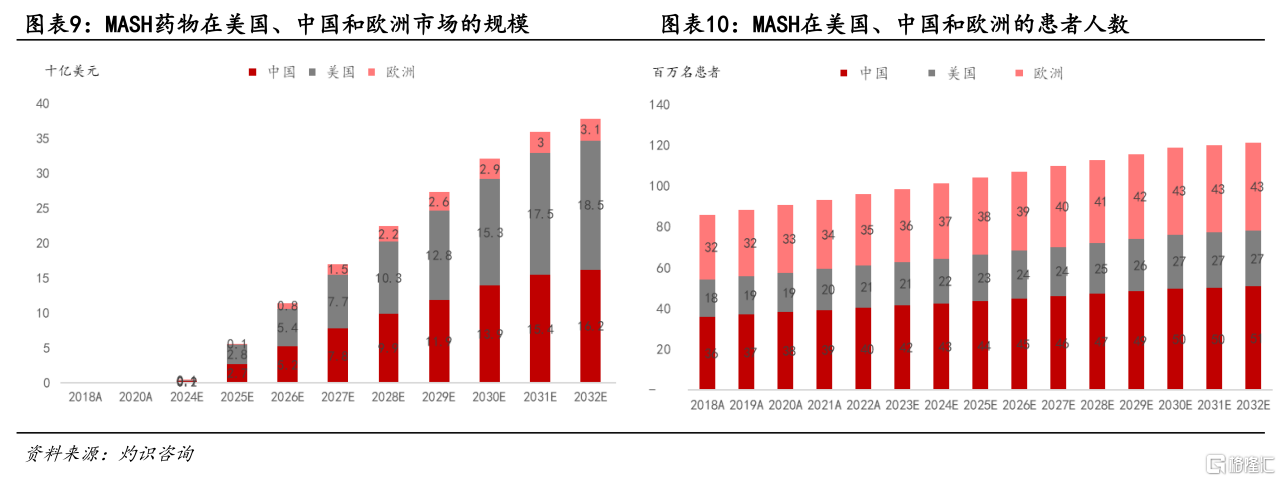
Core Viewpoint - Roche is strengthening its position in the cardiovascular, renal, and metabolic diseases (CVRM) sector through the acquisition of 89bio for $3.5 billion, securing the innovative MASH drug Pegozafermin, which is currently in Phase III clinical trials [1][10]. Group 1: Acquisition Details - Roche's acquisition of 89bio focuses on Pegozafermin, which has the potential to generate peak sales exceeding $5 billion, as the global MASH drug market is projected to reach $35 billion by 2030 [1][2]. - The acquisition agreement includes a base price of $14.50 per share plus up to $6 per share in contingent value rights (CVR), potentially bringing the total deal value to $3.5 billion [4][8]. - The CVR stipulates additional payments based on Pegozafermin achieving specific sales milestones, potentially adding up to $1 billion for 89bio's shareholders [5][6][7]. Group 2: Market Potential and Demand - MASH affects an estimated 5%-7% of the adult population globally, with significant unmet clinical needs, particularly in China and the U.S., where the number of patients is expected to rise substantially by 2032 [2][4]. - The MASH treatment landscape has seen numerous failures, making Pegozafermin's potential as a first-in-class therapy particularly promising [4][19]. Group 3: Roche's CVRM Strategy - Roche's CEO emphasized that the acquisition enhances the company's CVRM product portfolio and opens opportunities for combination therapies with existing projects [11]. - Roche has a diverse pipeline in the CVRM space, including several promising candidates such as GLP-1 drugs and RNAi therapies, indicating a strategic focus on this area for future growth [14][16][17]. - The company has invested in multiple potential blockbuster drugs, including Petrelintide and Zilebesiran, to solidify its position in the metabolic and cardiovascular markets [17][19]. Group 4: Competitive Landscape - The MASH treatment field is highly competitive, with over 60 active clinical trials and multiple candidates from major pharmaceutical companies, highlighting the intense research activity in this area [19][22]. - Roche's strategic investments and acquisitions are aimed at building a comprehensive network in the CVRM sector, positioning the company for significant growth in this rapidly evolving market [22][23].

天士力(600535):普佑克新适应症获批,有望打造第二成长曲线
Xinda Securities· 2025-09-23 07:04
Investment Rating - The report assigns a "Buy" rating for the stock of Tian Shili (600535) based on its potential growth from the newly approved indication for its drug, Pu You Ke [1]. Core Viewpoints - The approval of Pu You Ke for the treatment of acute ischemic stroke is expected to create a second growth curve for the company, leveraging its established commercial framework and clinical evidence [2][3]. - Acute ischemic stroke has a high incidence rate, and Pu You Ke is positioned to meet unmet clinical needs, offering a safer alternative to existing treatments like alteplase [4][5][6]. - The company is committed to innovation, with a robust pipeline of 83 projects, including several promising drugs that could enhance its market position [7][8]. Financial Summary - The projected revenue for the company from 2025 to 2027 is expected to be 86.60 billion, 93.24 billion, and 100.81 billion respectively, with net profits of 11.96 billion, 13.31 billion, and 14.84 billion [10]. - The earnings per share (EPS) are forecasted to be 0.80 yuan, 0.89 yuan, and 0.99 yuan for the same period, with corresponding price-to-earnings (P/E) ratios of 19.62, 17.63, and 15.82 [10].

县医院医生作为共同第一作者发表《新英格兰医学杂志》论文,为脑中风治疗带来新策略
生物世界· 2025-07-05 04:00
Core Viewpoint - The article discusses the efficacy of Tirofiban, a platelet glycoprotein IIb-IIIa receptor antagonist, in improving functional outcomes for patients with acute ischemic stroke who receive intravenous thrombolysis within 4.5 hours of symptom onset [3][11]. Group 1 - Intravenous thrombolysis remains the standard treatment for acute ischemic stroke within 4.5 hours, and the use of antiplatelet drugs may prevent reocclusion in the first 24 hours post-thrombolysis [2]. - The ASSET-IT trial, published in NEJM, involved 832 patients with non-cardiogenic stroke who received thrombolysis and assessed the impact of early Tirofiban infusion on functional outcomes [3][10]. - The study was led by Professor Wei Hu from the First Affiliated Hospital of the University of Science and Technology of China, with contributions from multiple co-authors [6]. Group 2 - The trial was a multicenter, double-blind, randomized controlled study conducted across 38 medical centers in China, focusing on patients who were not candidates for thrombectomy [9]. - Patients were randomly assigned to receive either Tirofiban or a placebo within 60 minutes after thrombolysis, with the primary outcome being the proportion of patients achieving a good functional outcome at 90 days [10]. - Results indicated that 65.9% of the Tirofiban group achieved a good functional outcome compared to 54.9% in the placebo group, with a hazard ratio of 1.20 [11]. Group 3 - The incidence of symptomatic intracranial hemorrhage was 1.7% in the Tirofiban group versus 0% in the placebo group, while the mortality rate at 90 days was 4.1% for Tirofiban and 3.8% for placebo [11]. - The study fills an evidence gap regarding the use of antiplatelet drugs in the post-thrombolysis window for stroke patients, providing high-quality evidence to optimize treatment strategies in China [12].