除醛仪

Search documents
霍尼韦尔2025年业绩增长8%,2026年业务分拆计划提前
Xin Lang Cai Jing· 2026-02-14 16:41
Group 1 - The core viewpoint of the article highlights Honeywell's financial performance for 2025, with total sales reaching $37.442 billion, an 8% year-over-year increase, and adjusted earnings per share of $9.78, up 12% [1] - For 2026, the company projects sales between $38 billion and $39.8 billion, with organic sales growth expected to be between 3% and 6%, and adjusted earnings per share forecasted to be between $10.35 and $10.65, reflecting a year-over-year growth of 6% to 9% [1] - Honeywell is accelerating its business separation plan, with the split of its automation and aerospace businesses expected to be completed by the third quarter of 2026, ahead of the original schedule, to focus more on its core automation areas [1] Group 2 - Recent events include a public admonition from the Beijing-Tianjin-Hebei Consumer Association regarding false advertising related to Honeywell's products, which may pose short-term compliance risks to the company's brand reputation and consumer business [1] - The company is continuing its business optimization efforts, categorizing its productivity solutions and services, as well as warehouse and workflow solutions, as assets for sale to strengthen its core business focus [1] Group 3 - Over the past week, Honeywell's stock price has shown a fluctuating upward trend, with a closing price of $239.84 on February 9, rising to $243.34 on February 10, before experiencing slight declines and closing at $241.38 on February 13, resulting in a cumulative increase of 1.26% [2] - The trading volume has gradually narrowed, with a trading volume of $1.288 billion on February 13, while the stock has demonstrated relative resilience compared to the Dow Jones, which fell by 1.23% during the same period [2]
霍尼韦尔遭消协约谈,股价近期上涨3.12%
Jing Ji Guan Cha Wang· 2026-02-12 15:10
Group 1 - The core viewpoint of the news highlights that the Beijing-Tianjin-Hebei Consumer Association has publicly urged companies, including Honeywell, to rectify false advertising related to formaldehyde removal products, which may pose short-term compliance risks to Honeywell's brand reputation and consumer business [1] Group 2 - In the recent stock performance, Honeywell's stock price has shown an overall upward trend with a 3.12% increase over the past week from February 5 to February 11, 2026 [2] - Specific stock price movements include a closing price of $233.85 on February 5, a rise to $238.38 on February 6, and further increases to $239.84 on February 9 and $243.34 on February 10, before a slight decline to $242.70 on February 11 [2] - During this period, Honeywell's stock demonstrated relative resilience against broader market declines, as the Dow Jones and S&P 500 fell by 1.20% and 1.23%, respectively [2]
开窗通风仍是除醛基础手段
Xin Lang Cai Jing· 2026-02-10 16:59
Core Viewpoint - The indoor formaldehyde removal product market is experiencing rapid growth, but some companies are exploiting consumer anxiety through false advertising, which severely infringes on consumer rights [1][2]. Group 1: Market Demand and Issues - The formaldehyde removal product sector is witnessing a surge in demand as a new consumer category [1]. - There are prevalent issues of false and exaggerated claims in the market, such as "single unit coverage of 180㎡" and "99% removal rate in 2 hours," which are based on small, controlled test environments that do not reflect real household conditions [1]. - Some brands mislead consumers by presenting ozone as "active oxygen" or "super oxygen," avoiding health hazard warnings [1]. Group 2: Consumer Guidance and Recommendations - The Beijing-Tianjin-Hebei Consumer Association has issued consumer tips urging rational evaluation of advertisements and caution against "quick-effect myths" [2]. - Consumers are advised to verify product labels for clear core ingredient listings and to avoid vague terms like "herbal essence" and "active oxygen" [2]. - It is recommended to request complete third-party test reports to validate product effectiveness and to avoid purchasing "three no" products (no manufacturer name, no address, no quality certification) [2]. - Consumers should retain proof of purchase, such as invoices and transaction records, to support legal rights in case of false advertising or product issues [2].
虚假宣传、隐瞒风险,除醛市场乱象整治,多家企业被约谈
Ren Min Ri Bao· 2026-02-09 06:45
Core Viewpoint - The article highlights the regulatory actions taken by consumer protection organizations in the Beijing-Tianjin-Hebei region to address issues in the formaldehyde removal product market, focusing on misleading advertising and health risks associated with these products [1][2][6]. Group 1: Regulatory Actions - The Beijing-Tianjin-Hebei consumer protection organizations have initiated a series of supervision and rectification efforts, including joint discussions with companies like Honeywell and others, as well as e-commerce platforms and MCN organizations [1]. - A public advisory was issued to the industry, demanding accountability and strict control over false advertising and misleading promotions [1][6]. - Companies that failed to cooperate, such as Shanshan and Baisefu, were publicly criticized for not attending meetings and not fulfilling their obligations [1]. Group 2: Market Issues - The formaldehyde removal market is plagued by three main issues: exaggerated claims about product effectiveness, concealment of core principles and health risks, and dissemination of incorrect statements about traditional removal methods [2]. - The formaldehyde removal jelly market also faces similar problems, including misleading claims about effectiveness and the use of vague terms to obscure harmful components [4]. Group 3: Specific Requirements for Companies - The consumer protection organizations have outlined four main requirements for companies: immediate self-inspection and rectification, standardization of experimental data disclosure, strict adherence to responsibilities, and proper handling of consumer complaints [6][7]. - Specific requirements for formaldehyde jelly manufacturers include disclosing product ingredients and risks clearly, while those for formaldehyde removal device manufacturers involve clarifying the core removal principles and health risks [8]. Group 4: Consumer Guidance - Consumers are advised to be cautious of false advertising, verify product claims, and understand their rights when purchasing these products [9][10]. - The organizations will continue to monitor compliance and take necessary actions against companies that fail to rectify issues, including public disclosures and potential legal actions [10].

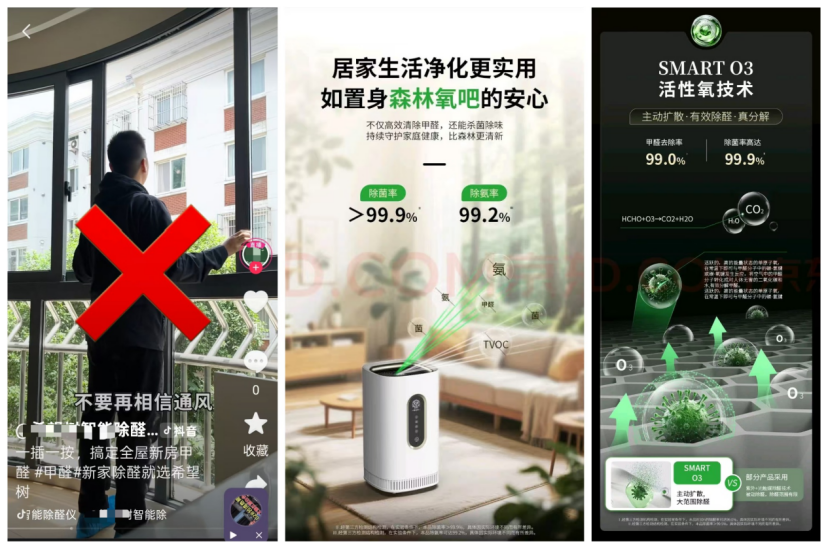
京津冀消协揭除醛仪、除醛果冻虚假宣传套路,霍尼韦尔、希望树等企业被约谈
Bei Jing Shang Bao· 2026-02-09 03:29
Core Viewpoint - The Beijing, Tianjin, and Hebei Consumer Associations have jointly issued a public advisory to address market chaos surrounding emerging consumer products like formaldehyde removal devices and gels, aiming to promote rational market behavior and protect consumer rights [1] Group 1: Market Issues - The formaldehyde removal product market is plagued by frequent false advertising, severely harming consumer rights. Claims such as "single unit covers 180㎡" and "99%+ formaldehyde removal rate in 2 hours" are misleading as they originate from small, controlled test environments, which differ significantly from real household conditions [1] - Some companies confuse concepts by marketing ozone as "active oxygen" or "super oxygen," deliberately avoiding health hazard warnings and failing to provide necessary alerts in their descriptions [1] - Similar issues are present with formaldehyde removal gels, which claim "24-hour move-in" and "99% removal rate," while downplaying the specific conditions under which these results were achieved, leading to doubts about their effectiveness in typical home environments [1] Group 2: Regulatory Actions - The consumer associations have conducted key discussions with brands such as Hope Tree, Honeywell, and others, demanding accountability for false advertising and misleading promotions [2] - Brands that refused to participate in discussions, like Shanshan and Baidesi, were publicly criticized by the consumer associations for not fulfilling their obligations [2] Group 3: Compliance Requirements - Companies are required to conduct comprehensive self-inspections and rectify misleading content in promotional materials, including removing exaggerated claims and misleading statements [3] - There is a mandate for clear disclosure of testing data, including the volume and conditions of test environments, to avoid misleading consumers [3] - Companies must adhere to strict operational responsibilities, ensuring that e-commerce platforms and MCN organizations monitor and regulate the promotional content of vendors [3] Group 4: Product Standards - Formaldehyde removal device manufacturers must standardize terminology and risk disclosures, clearly labeling ozone and its health risks, and specifying usage conditions [4] - Formaldehyde removal gel producers are required to accurately disclose product ingredients and the principles of formaldehyde removal, avoiding vague terms like "herbal essence" [4] Group 5: Consumer Guidance - The consumer associations have issued guidelines urging consumers to adopt rational consumption practices, emphasizing the importance of verifying product claims and being cautious of exaggerated statements [5] - Consumers are advised to check product labels for core ingredients, request complete third-party testing reports, and ensure they purchase from reputable manufacturers [5] - A special supervisory group will be established to monitor compliance and address companies that fail to rectify issues within the stipulated timeframe [5]

别再为流量打工,后流量时代,这才是真赚钱
3 6 Ke· 2025-09-25 00:11
Core Viewpoint - The e-commerce industry is experiencing a significant decline in the "traffic frenzy" associated with live-streaming sales, marking a shift from a previously booming market to one facing substantial challenges [1][2]. Group 1: Decline of Live-Streaming Sales - In the first half of 2025, leading live-streamers are facing a drop in traffic, with sales figures significantly lower than previous years; for instance, Li Jiaqi's sales during the "618" pre-sale event were only 50% of the same period in 2023 [2]. - The platform's overall GMV for the first half of the year was approximately 1.4 trillion yuan, falling short of initial expectations, indicating a rare performance shortfall in its history [2]. - The decline in traffic has led to the exit of several brands, exemplified by the women's clothing brand "Lola Password," which previously achieved remarkable sales but has now ceased operations due to the collapse of the traffic bubble [2]. Group 2: The "Interest E-commerce" Model - The "interest e-commerce" model, characterized by a cycle of "traffic + low prices," was initiated by the platform in April 2021, leading to intense competition and price wars among merchants [3][5]. - This model allowed many startups to achieve significant sales figures quickly, but it also created a dependency on continuous investment in traffic, leading to a vicious cycle of increasing costs and decreasing profitability [5][7]. - The founder of Miniso highlighted the unsustainable nature of the model, noting that while the platform reported 2 trillion yuan in GMV, the actual revenue was significantly lower due to high return rates [5][7]. Group 3: Challenges Faced by Brands - Brands like 欧朗德斯, which initially thrived on the platform, are now encountering high competition and elevated costs for acquiring traffic, resulting in low ROI [12][13]. - The high return rates associated with live-streaming e-commerce, which can reach 30%-50%, further erode profit margins, making it difficult for brands to sustain operations [12][16]. - Despite achieving impressive GMV figures, 欧朗德斯 has opted to return to traditional e-commerce platforms like JD and Tmall, where they have seen improved profitability and lower return rates [13][14]. Group 4: Shift Towards Traditional E-commerce - The transition to traditional e-commerce platforms has allowed brands to benefit from lower advertising costs and improved return rates, enhancing their overall profitability [13][17]. - Traditional platforms provide a more stable environment for brands, focusing on targeted marketing and reducing the risks associated with impulsive buying behaviors prevalent in live-streaming sales [16][17]. - The experience of 欧朗德斯 serves as a case study for other brands, emphasizing the importance of aligning platform choice with business strategy and market positioning [18].