
陶壶

Search documents
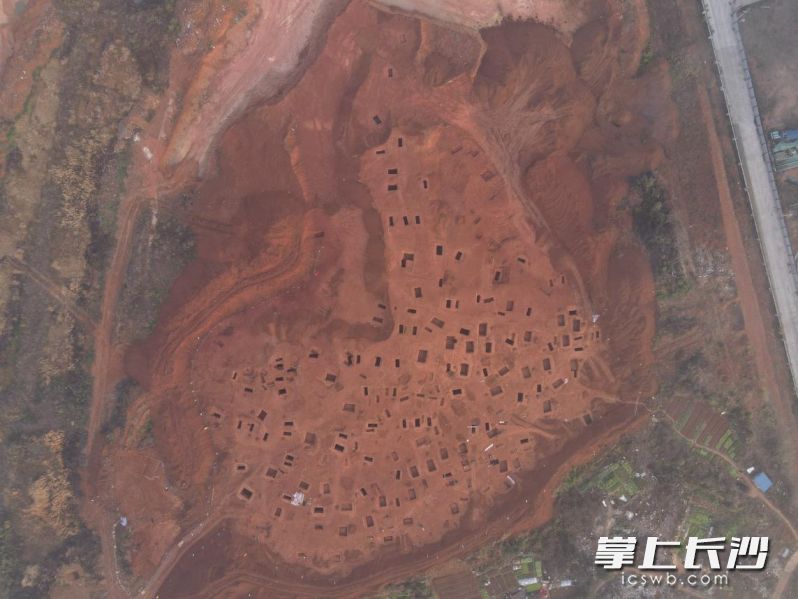
望城考古再现大型古墓群 214座墓葬穿越西周至秦汉
Xin Lang Cai Jing· 2026-02-08 06:12
Core Insights - The archaeological excavation at the ancient tomb group in Changsha's Wangcheng District revealed significant findings, including 214 tombs and over 560 burial artifacts, dating from the Western Zhou to the Qin-Han periods, providing valuable material for studying early history in the Changsha area [1][3][5] Group 1: Excavation Details - The excavation was conducted over four months to support the construction of the Tongguan Logistics Park, covering an area of approximately 160,000 square meters [3] - The tomb group is located on a unique geographical feature known as "Fenshanpo," surrounded by rivers and situated close to the Xiang River, indicating a strategic location for burial practices [3][8] Group 2: Artifacts and Cultural Significance - A diverse range of burial items was unearthed, including bronze, iron, jade, and pottery artifacts, with notable items such as bronze swords, ceremonial vessels, and jade ornaments, reflecting the craftsmanship and lifestyle of the time [5][7] - The findings illustrate the material culture, ritual practices, and military aspects of the region from the Western Zhou to the Qin-Han periods, highlighting the area's historical significance [7] Group 3: Academic Value and Historical Context - The excavation contributes to a broader understanding of population size, settlement distribution, and social structure in the Changsha area during the Western Zhou to Qin-Han periods, offering new insights into burial customs and cultural transitions [8] - The confirmation of this large tomb group enhances the understanding of ancient development and cultural characteristics in the hilly regions along the lower Xiang River, emphasizing the area's role in the broader historical narrative of Chinese civilization [8]

烟火漫数里觅乡愁年味 大集焕新生融千年传承
Yang Guang Wang· 2026-01-23 07:13
Core Viewpoint - The Lu Tai Grand Market in Tianjin is a significant cultural and culinary event, attracting visitors with its traditional food, local craftsmanship, and festive atmosphere as it prepares for the upcoming Lunar New Year [2][11]. Group 1: Event Highlights - The "Village Chef Competition" showcases local culinary talents, blending traditional techniques with local ingredients, emphasizing the importance of regional flavors [4][5]. - A large cooking pot, known as "Ninghe's First Pot," serves various traditional dishes, including new offerings like fermented rice buns and a communal "Laba porridge" event, enhancing the market's appeal [6][10]. - The market features nearly a thousand stalls across different sections, including food, antiques, and fresh produce, catering to diverse consumer needs [7]. Group 2: Cultural Significance - The Lu Tai Grand Market has been recognized as a non-material cultural heritage site, reflecting its deep-rooted traditions and community engagement [7]. - Activities such as traditional craft workshops and folk performances are integrated into the market experience, promoting local culture and heritage [7][10]. - The market operates on a schedule that has remained unchanged for centuries, maintaining its historical significance while adapting to modern consumer preferences [7]. Group 3: Community Engagement - The market encourages community participation through affordable transportation options, such as 1 yuan round-trip buses from key city locations, making it accessible to a wider audience [10]. - Local vendors express enthusiasm for the market's success, highlighting the positive economic impact and community spirit fostered by the event [6][9].

万年中华,上山启明:访上山遗址
Jing Ji Guan Cha Bao· 2025-09-17 12:01
Core Insights - The article discusses the archaeological significance of the Shangshan site in Zhejiang Province, which is recognized as one of the earliest Neolithic sites in the lower Yangtze River region, dating back approximately 11,000 to 8,500 years [2][4]. Archaeological Discoveries - The Shangshan site was discovered during a rescue excavation prompted by land leveling activities in 2000, leading to the preservation of this ancient cultural site [2]. - Initial excavations revealed a complete ceramic ding and other artifacts, confirming the site's association with the Liangzhu culture [3][4]. - Subsequent excavations from 2004 to 2006 uncovered multiple house sites, indicating that the Shangshan culture had established settled villages, with evidence of early rice agriculture [5]. Cultural Significance - The findings at the Shangshan site have challenged traditional views, establishing it as a significant origin point for rice cultivation in China, pushing back the timeline of agricultural development in the region by several thousand years [4][12]. - The Shangshan culture is recognized as one of the earliest and most extensive Neolithic cultures in the Qiantang River basin, contributing to the understanding of early agricultural and settlement practices in southern China [12]. Architectural Insights - The site features a well-preserved structure with three rows of post holes, suggesting the presence of stilt houses, which may represent the earliest known examples of such architecture in China [8][11]. - The discovery of a moat surrounding the settlement indicates an early awareness of land ownership and community defense [11][16]. Agricultural Practices - Evidence of early rice cultivation was found, including carbonized rice grains and agricultural tools, indicating that the Shangshan people had developed techniques for planting and processing rice [8][12][13]. - The presence of storage pits for food and pottery suggests a surplus production and possibly early ritual practices related to storage and offerings [9][12]. Artistic Developments - The Shangshan culture is noted for its early pottery, including painted ceramics, which reflect advanced artistic techniques and possibly ritual significance [15][16]. - The incorporation of rice husks and other plant materials in pottery production demonstrates the innovative practices of the Shangshan people [14][15].