
石磨盘

Search documents
文化新观察丨它们何以入选“2025年中国考古新成果”?
Xin Hua She· 2026-02-04 20:37
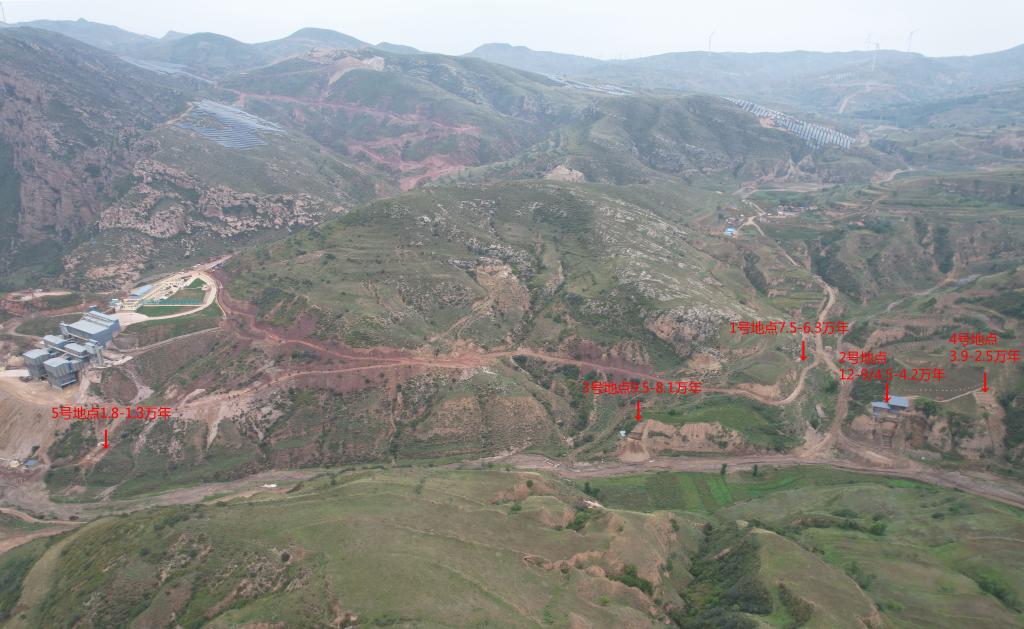
Core Viewpoint - The Chinese Academy of Social Sciences released the "2025 New Archaeological Achievements in China," highlighting six significant archaeological sites that provide critical insights into ancient Chinese history and culture [1]. Group 1: New Archaeological Discoveries - The six selected projects include the Xinjian New Temple Site, the Peili Gang Site, the Zhengjiagou Hongshan Culture Site, the Husta Bronze Age Site, the Langyatai Site from the Warring States and Qin-Han periods, and the Badamu East Tombs from the Jin and Tang periods [1]. - These discoveries range from the earliest bronze age relics in Xinjiang to evidence of Qin Shi Huang's construction of Langyatai, showcasing a rich and vibrant ancient China [1]. Group 2: New Temple Site Findings - The New Temple Site in Hebei province revealed artifacts dating from 120,000 to 13,000 years ago, including stone tools and evidence of the Mousterian technology style, marking the first discovery of such tools in North China [2][3]. - The findings suggest that Neanderthal populations may have reached or influenced the central regions of China, providing key insights into their cultural distribution [3]. Group 3: Peili Gang Site Insights - The Peili Gang Site in Henan province yielded stone grinding plates and small decorative items, contributing to the understanding of the transition from the Old Stone Age to the New Stone Age in the Central Plains [8]. - Notably, evidence of the earliest known use of plant fibers was found, indicating that such practices date back to the late Old Stone Age [11]. Group 4: Zhengjiagou Site Developments - The Zhengjiagou Hongshan Culture Site in Hebei revealed over 600 artifacts, primarily of ritual and burial nature, indicating a strong genetic link between the Zhengjiagou population and the Hongshan culture [12][13]. - The findings extend the timeline of the Hongshan culture and suggest a new trend of cultural development from northeast to southwest [13]. Group 5: Husta Site Significance - The Husta Bronze Age Site in Xinjiang is noted for containing some of the earliest bronze age relics, dating back to around 1600 BC, with significant discoveries in the eastern cemetery area [14][15]. - The unique structure of the tombs represents a major breakthrough in the archaeology of the Bronze Age in Xinjiang [15]. Group 6: Langyatai Site Evidence - The Langyatai Site in Shandong confirmed the existence of high-status architectural complexes from the Qin and Han periods, filling a gap in archaeological knowledge outside the Guanzhong region [18][21]. - Artifacts such as Qin dynasty architectural elements corroborate historical records of Qin Shi Huang's construction activities, showcasing the governance and engineering capabilities of early feudal states [23][24]. Group 7: Badamu East Tombs Findings - The Badamu East Tombs in Xinjiang provided over 600 artifacts, including evidence of high-ranking officials' burials, which offer insights into governance and cultural exchanges during the Jin and Tang periods [25][29]. - The discovery of various coins and artifacts from different cultures illustrates the prosperity of Silk Road trade during the Tang dynasty [29][31].

中国两项考古入选世界考古论坛重大田野考古发现成果展示
Ren Min Ri Bao· 2025-12-16 02:35
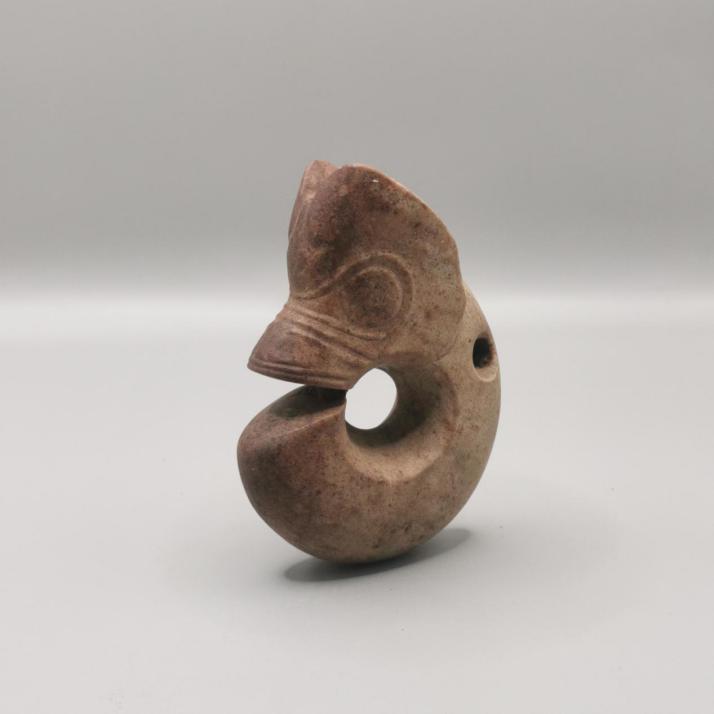
Core Insights - The "6th World Archaeology Forum" held in Shanghai focuses on the theme of "Technology, Society, and Archaeology," showcasing significant archaeological discoveries and research outcomes from around the world, emphasizing how technology shapes human society and connects regional civilizations [1] Group 1: Major Archaeological Discoveries - The "Hongshan Society Civilization Process Research" led by the Chinese Academy of Social Sciences has made significant findings over the years, showcasing the development of the Hongshan society from various perspectives [1] - The Niuhua Liang site, a representative of the prosperous phase of Hongshan culture, has been confirmed as a major ritual center, with new excavations revealing a large architectural complex of 60,000 square meters [1] - The Zhengjiagou site in the Sanggan River basin, identified as a Hongshan culture site, provides new insights into the burial practices and social development of the late Hongshan culture [2] Group 2: Ritual Sites and Cultural Insights - Newly discovered ritual sites such as Dongshantou, Sanjiadongbei, and Yuanbaoshan further illustrate the consistency of social norms within the Hongshan culture, contributing to the understanding of its "unified society" characteristics [4] - The findings at Yuanbaoshan and Dongshantou enrich the understanding of ritual activities within the Hongshan culture, providing new data on the spiritual world of Hongshan society [4] Group 3: Social Complexity and Development - Recent archaeological discoveries expand the temporal and spatial framework of the Hongshan culture, revealing a complex social structure that does not simply evolve into a state form but develops through religious authority, technological division of labor, and regional networks [11] - The Qingjian Zaigou site in Shaanxi has fundamentally updated the understanding of the late Shang Dynasty's civilization process, revealing a highly developed bronze civilization with complex social structures [11][12] - The Zaigou site, covering approximately 3 million square meters, features large rammed earth buildings and a variety of burial sites, highlighting the characteristics of a central settlement in the northern Loess Plateau during the Shang Dynasty [12][14] Group 4: Artifacts and Cultural Exchange - The Zaigou site has yielded over 40 chariots, the largest number found outside the Yin ruins, including the earliest known double-yoke chariot, pushing back the timeline of its appearance by about 1,000 years [16] - Artifacts such as bronze chariot fittings and jade ornaments found at the Zaigou site indicate close economic and cultural exchanges with the Shang Dynasty [18][22] - The findings at the Zaigou site provide crucial archaeological support for understanding the complex interactions between the Shang Dynasty and regional states, enriching the knowledge of early Chinese civilization formation [22][23]
午:从舂米之杵到日中之时(文物有话说·文物里的汉字)
Ren Min Ri Bao· 2025-11-14 22:03
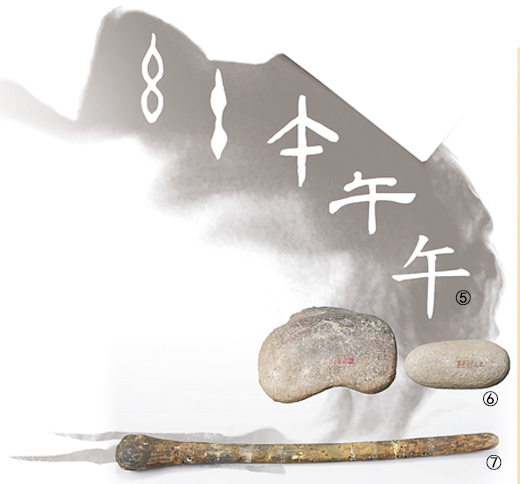
Group 1 - The character "午" has evolved from its ancient form resembling a grain pounding tool, indicating its historical significance in agriculture and food processing [2][4] - The earliest known grain processing tools were stone grinding plates and sticks, which were later supplemented by the invention of the pestle and mortar to meet increasing agricultural demands [2][3] - Archaeological findings, such as the wooden pestle from the Hemudu site in Zhejiang, demonstrate that the pestle was invented during the Neolithic period, highlighting advancements in food processing technology [3] Group 2 - The coexistence of pestles and mortars with stone grinding tools during the Yangshao culture period provides valuable insights into the development of productivity and living conditions of that era [4] - The character "午" transitioned from representing a grain pounding tool to denoting "midday," with interpretations linking it to the concept of the sun's position and seasonal changes [4]
郭大顺对红山文化与中华文明的36个回答(下篇)
Jing Ji Guan Cha Bao· 2025-11-11 03:49
Core Insights - The article discusses the contributions of Guo Dashun to the study of Hongshan culture, emphasizing his role in archaeological discoveries and his academic lineage from Su Bingqi, a prominent figure in Chinese archaeology [1][2][3]. Group 1: Contributions to Hongshan Culture - Guo Dashun is recognized as the leading figure in Hongshan culture, having led significant archaeological excavations that revealed important artifacts, establishing Hongshan as one of the three major sources of Chinese civilization over 5,000 years ago [1]. - He proposed a new understanding that there should be a structure of higher significance than the "Goddess Temple" within the Hongshan culture [1]. - Recent discoveries in Hebei, including a large number of Hongshan cultural relics, suggest that the culture may have migrated southward during its peak [2]. Group 2: Academic Influence and Legacy - Guo Dashun, a disciple of Su Bingqi, continues to advocate for the idea that Hongshan culture is a direct root of Chinese civilization, emphasizing the importance of Su's academic thoughts in contemporary archaeology [1][2]. - The article highlights the significance of Su Bingqi's theories, particularly the continuity of Chinese civilization and the importance of ritual systems, which Guo Dashun elaborates on in his discussions [5][6]. - Guo Dashun's reflections on Su Bingqi's legacy indicate that his academic contributions remain relevant in current archaeological discourse, particularly in understanding the origins of Chinese civilization [17][18]. Group 3: Archaeological Methodology and Perspectives - The article discusses the need for a combination of archaeological findings and historical texts to reconstruct ancient history, emphasizing that archaeological evidence should validate historical narratives [29][30]. - Guo Dashun advocates for a collaborative approach between archaeologists and historians to enhance the understanding of ancient cultures, suggesting that archaeological methods should be applied to historical research [36]. - The discussion includes the importance of diverse perspectives in archaeology, encouraging a "hundred schools of thought" approach to foster deeper insights into ancient civilizations [28].
万年中华,上山启明:访上山遗址
Jing Ji Guan Cha Bao· 2025-09-17 12:01
Core Insights - The article discusses the archaeological significance of the Shangshan site in Zhejiang Province, which is recognized as one of the earliest Neolithic sites in the lower Yangtze River region, dating back approximately 11,000 to 8,500 years [2][4]. Archaeological Discoveries - The Shangshan site was discovered during a rescue excavation prompted by land leveling activities in 2000, leading to the preservation of this ancient cultural site [2]. - Initial excavations revealed a complete ceramic ding and other artifacts, confirming the site's association with the Liangzhu culture [3][4]. - Subsequent excavations from 2004 to 2006 uncovered multiple house sites, indicating that the Shangshan culture had established settled villages, with evidence of early rice agriculture [5]. Cultural Significance - The findings at the Shangshan site have challenged traditional views, establishing it as a significant origin point for rice cultivation in China, pushing back the timeline of agricultural development in the region by several thousand years [4][12]. - The Shangshan culture is recognized as one of the earliest and most extensive Neolithic cultures in the Qiantang River basin, contributing to the understanding of early agricultural and settlement practices in southern China [12]. Architectural Insights - The site features a well-preserved structure with three rows of post holes, suggesting the presence of stilt houses, which may represent the earliest known examples of such architecture in China [8][11]. - The discovery of a moat surrounding the settlement indicates an early awareness of land ownership and community defense [11][16]. Agricultural Practices - Evidence of early rice cultivation was found, including carbonized rice grains and agricultural tools, indicating that the Shangshan people had developed techniques for planting and processing rice [8][12][13]. - The presence of storage pits for food and pottery suggests a surplus production and possibly early ritual practices related to storage and offerings [9][12]. Artistic Developments - The Shangshan culture is noted for its early pottery, including painted ceramics, which reflect advanced artistic techniques and possibly ritual significance [15][16]. - The incorporation of rice husks and other plant materials in pottery production demonstrates the innovative practices of the Shangshan people [14][15].