雪橇

Search documents
(米兰冬奥会)惊喜与突破交织 中国冰雪向新而行
Xin Lang Cai Jing· 2026-02-22 19:57
Core Insights - The Chinese team achieved a record performance at the Milan Winter Olympics, winning 5 golds, 4 silvers, and 6 bronzes, marking their best results in overseas competitions [1][2]. Group 1: Performance Highlights - The Chinese delegation consisted of 126 athletes, setting a record for the number of participants and events in overseas competitions [2]. - The team maintained its strengths from the Beijing Winter Olympics, winning medals in 8 events, with freestyle skiing being a major contributor, securing 2 golds and 3 bronzes [2]. - Notable athletes included Su Yiming, who won a bronze and then a gold, and Gu Ailing, who earned 1 gold and 2 silvers, showcasing their competitive resilience [2]. Group 2: Historical Context - The performance of the Chinese team is significant when compared to past Olympic results, where host nations often see a decline in performance in subsequent games [3]. - The achievement of 5 golds reflects the sustainable competitive advantage gained from the Beijing Winter Olympics, instilling confidence in the future of Chinese winter sports [3]. Group 3: Competitive Landscape - The Chinese team has transitioned from being mere participants to serious competitors, with a notable increase in top-eight finishes from 37 to 49 compared to the Beijing Olympics [4]. - The team demonstrated improvements across 18 events, indicating a steady enhancement in overall competitiveness [4]. - The shift from individual performances to group efforts is evident, with multiple athletes now competing in various events, laying a solid foundation for future development [4]. Group 4: Future Challenges - Despite the progress, the Chinese ice and snow sports still face challenges as a "follower" in the global arena, necessitating ongoing efforts in technical innovation, system reform, and talent development [4].
冬奥赛程过半首金何时来?中国健儿米兰战未央
Xin Lang Cai Jing· 2026-02-16 03:37
Core Insights - The Milan-Cortina Winter Olympics is showcasing the determination and spirit of athletes from around the world, with Chinese athletes making a significant impact [1][3] Group 1: Achievements of Chinese Athletes - Su Yiming, the defending champion, won a bronze medal in men's snowboard big air, reflecting his hard work over the past four years despite injuries and fierce competition [1][3] - Gu Ailing secured a silver medal in women's freestyle skiing slope style, emphasizing her pride in executing her best performance rather than focusing solely on the medal [4][7] - Ning Zhongyan won a bronze medal in men's speed skating 1000m, marking his first Olympic medal and China's first in this event [9][12] - Liu Hanbin became the first Chinese athlete to compete in men's speed skating 5000m in 20 years, achieving a record-breaking 17th place [12][15] - The Chinese bobsleigh team achieved historic results, with multiple events setting new bests for the country [15] Group 2: Resilience and Dedication - Athletes like Liu Jiayu and Cai Xuetong, who have participated in multiple Olympics, continue to compete despite injuries and challenges, showcasing their enduring passion for the sport [18][21] - The overall participation of 286 athletes in 91 events at this Winter Olympics highlights the growth and development of China's winter sports since the Beijing Olympics [16][21] - The narrative of perseverance is evident as athletes face setbacks yet continue to strive for excellence, embodying the spirit of sportsmanship [9][20]

冬奥会 | 孙龙摘银 冰壶迎开门红
Xin Lang Cai Jing· 2026-02-13 23:52
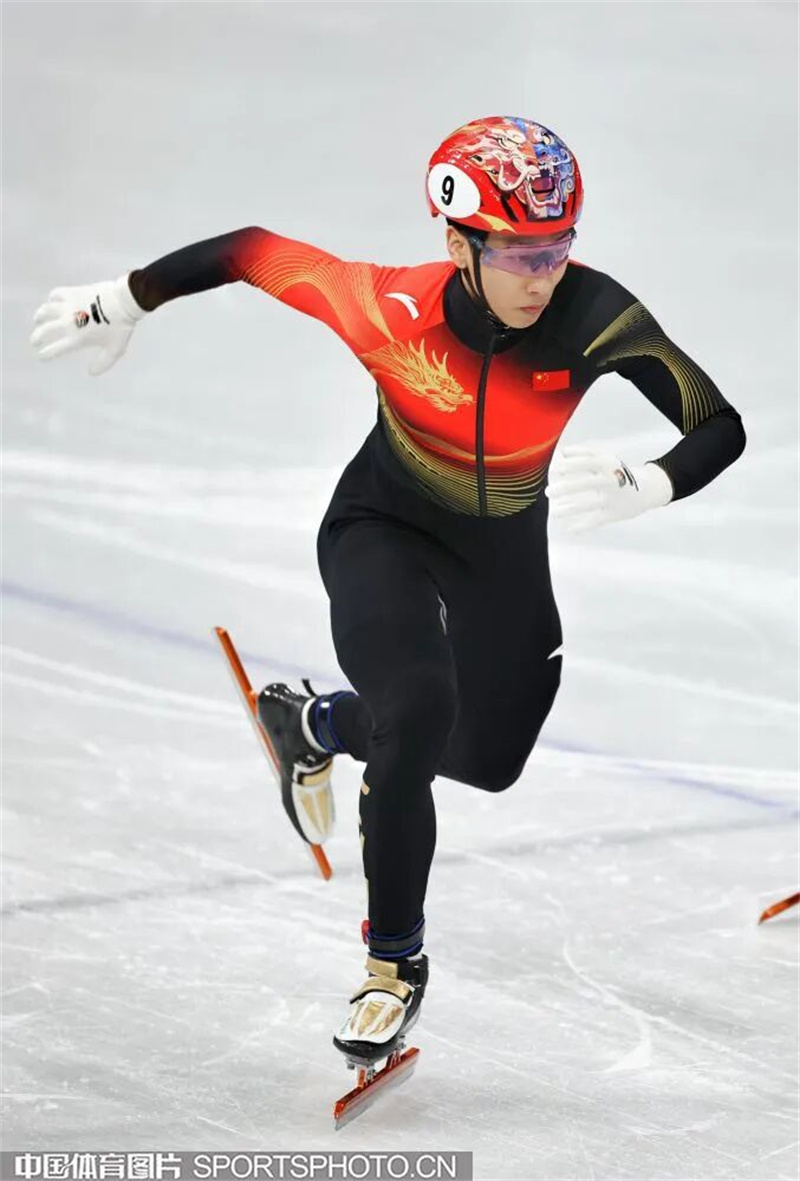
Group 1 - Sun Long won the silver medal in the men's 1000m short track speed skating final with a time of 1 minute 24.565 seconds, contributing to China's total of 2 silver and 2 bronze medals at the Winter Olympics [1] - The competition was intense, with Sun finishing just 0.028 seconds behind Dutch athlete Van der Watt, who won gold with a time of 1 minute 24.537 seconds [1] - In the women's 500m semi-finals, Dutch athlete Sandra Belcher set a new world record of 41.399 seconds and won the final with a time of 41.609 seconds [3] Group 2 - The Chinese women's curling team started their Olympic journey with a victory over defending champions Great Britain, winning 7-4 after a strong second half [5] - In their second match against world number one Switzerland, the Chinese team lost 5-7 despite a competitive performance [5] - The Chinese men's curling team faced Norway in the second round, ultimately losing 6-8 after an extra end [5] Group 3 - Italian veteran Lollo Brigidda won gold in both the women's 3000m and 5000m speed skating events [7] - The Chinese team in the luge team relay finished seventh with a total time of 3 minutes 46.842 seconds, while the German team set a new track record [9] - In the women's snowboard obstacle course race, Chinese athlete Tang Chuyuan achieved a 26th place finish, marking the best performance for a Chinese athlete in this event at the Olympics [9]
中国女子冰壶开门红
Xin Lang Cai Jing· 2026-02-13 05:58
Group 1 - The Chinese women's curling team achieved a victory against the strong British team with a score of 7 to 4, marking a successful start in the round-robin matches of the Winter Olympics [1] - The match was closely contested, with both teams tied at 3 to 3 after six ends, but a critical turning point occurred in the seventh end when China capitalized on the opponent's mistakes to take the lead [1] - Following the lead, the Chinese team maintained their momentum and secured the win with a final score of 7 to 4 [1] Group 2 - In the team relay event of luge, the Chinese team finished in seventh place with a time of 2 minutes and 39.601 seconds, setting a new historical best for the country in this event at the Winter Olympics [1] - The head coach of the Chinese luge team, Xu Jincheng, expressed that the young athletes, participating for the first time, performed beyond expectations in a highly competitive environment [1]
二战冬奥 “元老”王沛宣刷新中国队战绩
Xin Lang Cai Jing· 2026-02-11 16:40
Core Viewpoint - Chinese athlete Wang Peixuan achieved a personal best by ranking 21st in the women's singles luge event at the Milan Winter Olympics, improving from her previous 29th place finish at the Beijing Winter Olympics [1]. Group 1: Performance Summary - Wang Peixuan's total time for three runs was 2 minutes and 42.631 seconds, placing her just outside the top 20 needed to advance to the fourth round [1]. - Despite not qualifying for the next round, Wang expressed satisfaction with her overall performance, particularly in handling turns, while acknowledging some mistakes during the start of the third run [1]. - The Chinese team is set to compete in the team relay event on December 12, with Wang aiming to quickly adjust her state and contribute to the team's efforts [1]. Group 2: Athlete Background - Wang Peixuan, at 25 years old, is considered a veteran in the Chinese luge team, having been one of the first members when the training team was established [2]. - She has transitioned from being a javelin thrower at the age of 11 to joining the national luge training team at 15, with a focus on competing at the Winter Olympics [1][2]. - Wang emphasizes her role as a supportive teammate, often engaging in discussions to help teammates with psychological and training challenges [2]. Group 3: Personal Insights - Wang has developed a deeper understanding and enjoyment of the sport, noting the need for mental strength and quick reactions due to the high speeds involved in luge [3]. - She highlights the importance of timely adjustments during competitions to avoid impacting subsequent runs, indicating her commitment to the sport [3].
中国雪橇队当好“追赶者”
Xin Lang Cai Jing· 2026-02-09 20:19
Group 1 - The Chinese luge team made its debut at the Winter Olympics in Milan, with athlete Bao Zhenyu finishing 24th in the men's singles event, matching China's best performance in this category at the Olympics [1] - The team has qualified for all events in the luge category for the second consecutive Winter Olympics, with additional athletes set to compete, including Wang Peixuan in women's singles and the men's and women's doubles teams [1] - The development of the Chinese luge team has been rapid, transitioning from a "zero start" in 2015 to full participation in two consecutive Winter Olympics, indicating a growing talent pool [1] Group 2 - The Chinese luge team's performance has improved significantly, with the men's doubles team winning their first international event championship at the Latvia Sigulda station during the 2024-2025 season [2] - The women's doubles team achieved a ninth-place finish at the 2024 World Championships, marking the best result for the Chinese team in this event [2] - Despite these advancements, the Chinese team still lacks stable medal competitiveness compared to traditional powerhouses, focusing on gaining experience and improving rankings [2]
【第二十五届冬奥会】中国队多位年轻选手上演冬奥会首秀
Yang Shi Wang· 2026-02-09 12:27
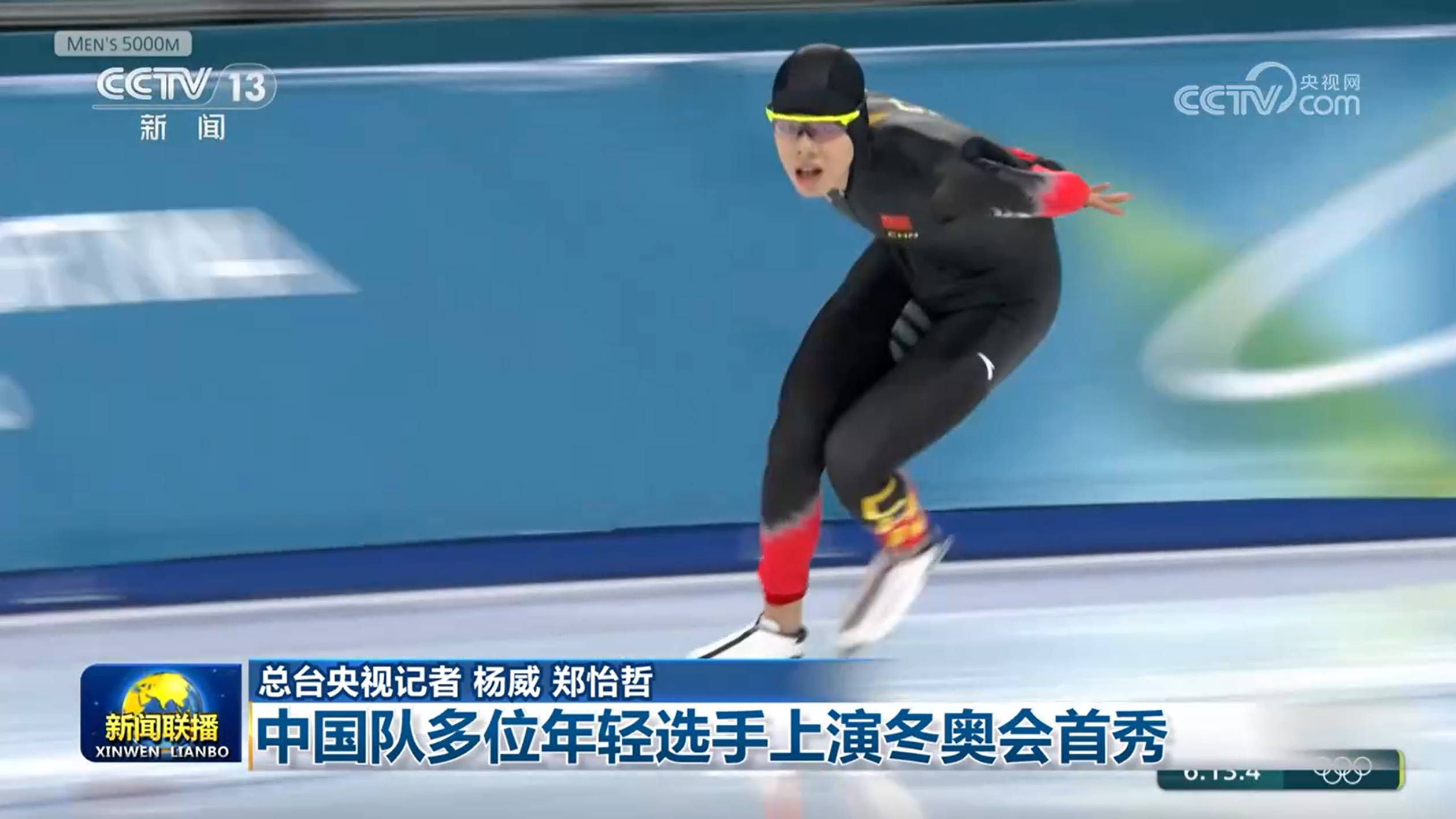
Group 1 - The core event of the news is the second competition day of the Milan Winter Olympics, highlighting the performances of Chinese athletes [1] - Zhang Xiaonan, a first-time Winter Olympian, advanced to the finals in women's snowboard big air with a total score of 154.50 points [1] - Liu Hanbin, a 19-year-old speed skater, achieved 17th place in the men's 5000 meters final, setting the best record for the Chinese sports delegation in this event at the Winter Olympics [1] Group 2 - Several young Chinese athletes made their Winter Olympic debuts in events such as cross-country skiing and luge, successfully completing their competitions [1]
贴冰“飞行”、时速可达145公里 看雪橇比赛留意三个细节
Xin Lang Cai Jing· 2026-02-09 05:52
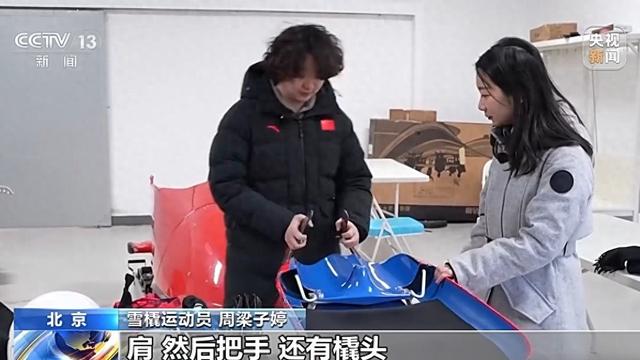
Core Viewpoint - The article highlights the thrilling nature of the luge event at the Winter Olympics, emphasizing the technical details and athlete preparations that contribute to performance and safety during the competition [1][2]. Group 1: Competition Dynamics - The luge competition takes place on a challenging track, rebuilt from the original site of the 1956 Winter Olympics, where even a 0.1-second difference can be significant [2]. - Observers are encouraged to pay attention to the athletes' starting techniques, particularly the sound of their ice skates hitting the ice, which reflects their power [2]. - The athletes' body posture during the race is crucial, as a stable position allows for optimal trajectory and speed [3]. Group 2: Technical Aspects - Key turns on the track serve as a magnifying glass for technical differences among competitors, with time differences before and after turns being critical [4]. - Athletes must memorize the entire track layout, as they rely on minute adjustments in their center of gravity to navigate turns, where a single mistake can lead to severe consequences [9]. Group 3: Athlete Equipment - Luge athletes require specialized equipment, including helmets, visors, and gloves, which are essential for both performance and safety [11][13]. - The gloves feature spikes to enhance grip on the ice, aiding in achieving faster initial speeds, which is vital for overall performance [13]. - The average speed of luge athletes during competition typically ranges from 120 to 145 kilometers per hour [5]. Group 4: Comparison with Other Sports - Luge, bobsleigh, and skeleton are all sliding sports but differ significantly in their starting positions and techniques; for instance, bobsleigh athletes start in a running position before transitioning to a seated position [18][20]. - The bobsleigh has a longer Olympic history compared to the other two sports, with its design resembling a framed sled that offers more protection [20].
陕西省第一届冬季运动会今日开幕
Shan Xi Ri Bao· 2026-02-06 00:40
Group 1 - The first Winter Sports Games in Shaanxi Province is being held in Yulin, showcasing the region's enthusiasm for winter sports under the theme "Chasing Dreams on Ice and Snow, Shining Future" [2][4] - The event features a total of 1,655 participants across youth and public categories, with 11 sub-events including bobsleigh, luge, curling, speed skating, and more, highlighting a comprehensive ice and snow sports system [2][4] - The games are organized with a focus on cost-effectiveness, utilizing existing facilities and repurposing venues for competitions, which aligns with the province's strategy to explore the economic value of winter sports [4][6] Group 2 - The youth biathlon competition attracted 171 athletes from 9 teams, emphasizing the competitive spirit and skill development among young athletes [3] - The event has significantly increased the popularity of ice and snow sports in Yulin, with local venues experiencing a surge in visitor numbers since the games began [7][8] - The infrastructure improvements at venues, such as the Shenkou Bay Ski Resort, are designed to meet international standards and will remain open to the public post-event, promoting ongoing engagement with winter sports [6][9]
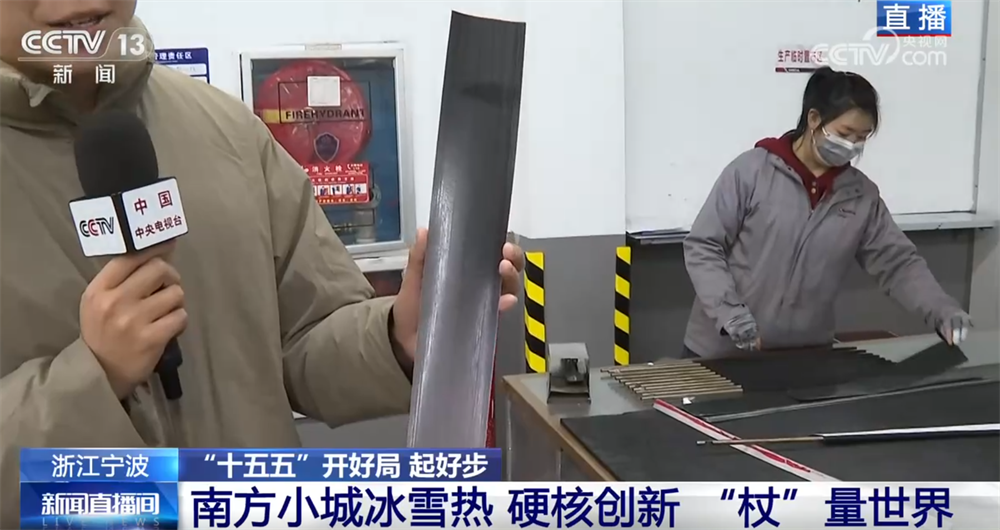
科技赋能见证滑雪装备里的“中国速度” 硬核创新实力“杖”量世界
Yang Shi Wang· 2026-01-25 06:34
Core Insights - The article highlights the rapid development and technological integration in the skiing equipment industry, particularly focusing on ski poles produced in Ningbo, Zhejiang [1][3]. Industry Overview - The skiing equipment market is experiencing a surge in popularity, with a focus on innovative designs and materials that enhance user experience [1][6]. - The production facility in Ningbo is capable of transforming carbon fiber fabric into ski poles in an average of 15 seconds, showcasing efficiency and speed in manufacturing [1][3]. Product Features - The ski poles produced are lightweight, weighing only 170 grams, and are designed to withstand high-impact forces during skiing [3]. - Each product undergoes rigorous testing, including fatigue tests (10,000 impacts), pressure tests (500 to 800 Newtons), and durability tests in various environmental conditions to ensure high quality [3][9]. Market Reach - The town where the production facility is located hosts 34 companies specializing in various types of sports poles, with an annual production of 15 million units and a market value exceeding 920 million yuan [9]. - The ski poles are distributed across domestic markets in Northeast, North, and Northwest China, as well as emerging markets in Hubei, Shandong, Anhui, and Zhejiang, and internationally to 14 countries including France, Germany, and Switzerland, capturing 60% of the global market [9].