
雪豹6×6轮式载具

Search documents
累计行驶超1万公里 国产“雪豹”车辆完成南极现场测试
Xin Lang Cai Jing· 2026-02-23 19:42
Core Insights - The "Snow Leopard" 6×6 wheeled vehicle has successfully completed field tests in extreme conditions in Antarctica, achieving over 10,000 kilometers of travel with zero faults, marking a significant advancement in China's polar exploration capabilities [2][5]. Group 1: Vehicle Performance - The "Snow Leopard" vehicle fills a gap in China's Antarctic equipment, which previously relied on imported tracked vehicles that were slower and more costly to operate [2]. - During tests, the vehicle reached speeds of 28 km/h on soft snow, 42 km/h on hard snow, and 65 km/h on solid ice, with a maximum range of approximately 700 kilometers on a full tank [2]. Group 2: Technological Innovations - The vehicle's development involved overcoming challenges such as low temperatures and complex icy terrains, with innovations in low-temperature starting systems, high-torque dynamic distribution, and low-temperature elastic composite tires [3]. Group 3: Operational Efficiency - In a critical transport mission, the "Snow Leopard" team operated for 12 hours in visibility of about 3 meters, successfully covering 263 kilometers to deliver essential equipment, showcasing unprecedented efficiency in harsh weather conditions [5]. - The vehicle's performance is seen as a testament to China's engineering and manufacturing capabilities, with plans for further advancements in core technologies such as power systems and intelligent control [5].

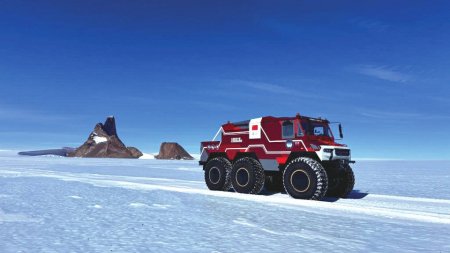
“雪豹”在南极完成现场测试
Xin Lang Cai Jing· 2026-02-13 20:37
Core Viewpoint - The successful testing of China's domestically developed "Snow Leopard" 6×6 wheeled vehicle marks a significant advancement in polar exploration technology, filling a critical gap in equipment for personnel transport, scientific research support, and emergency rescue in Antarctica [1] Group 1: Vehicle Performance - The "Snow Leopard" vehicle completed over 10,000 kilometers of testing in extreme Antarctic conditions with zero operational failures [1] - During tests, the vehicle achieved speeds of 28 km/h on soft snow, 42 km/h on hard snow, and a stable speed of 65 km/h on solid ice [1] - The maximum driving range of the vehicle in a full fuel state is approximately 700 kilometers [1] Group 2: Technological Innovations - The development team overcame several key technological challenges, including low-temperature engine start, high-torque dynamic power distribution, and low-temperature high-elasticity composite tire materials [1] - The successful validation of the "Snow Leopard" vehicle demonstrates significant advancements in autonomous innovation within the field of polar exploration [1]
国产“雪豹”车辆完成南极现场测试 累计行驶超1万公里,实现“零故障”可靠运行
Zhong Guo Zi Ran Zi Yuan Bao· 2026-02-12 01:56
Core Insights - The domestically developed "Snow Leopard" 6×6 wheeled vehicle has successfully completed field tests in Antarctica, covering over 10,000 kilometers with zero faults, marking a significant advancement in China's polar exploration capabilities [2]. Group 1: Vehicle Performance - The "Snow Leopard" vehicle achieved speeds of 28 km/h on soft snow and 42 km/h on hard snow, with a maximum speed of 65 km/h on solid ice, significantly outperforming traditional tracked vehicles that average below 20 km/h in similar conditions [2]. - The vehicle can travel approximately 700 kilometers on a full tank, enhancing operational efficiency in extreme environments [2]. Group 2: Technological Innovations - The development team overcame challenges posed by extreme low temperatures and complex icy terrains by innovating key technologies, including low-temperature engine start, high-torque dynamic power distribution, and low-temperature elastic composite tires [2]. Group 3: Operational Capabilities - The successful tests demonstrated the vehicle's ability to perform four types of tasks: rapid transportation within stations, quick inter-station travel, agile mission execution, and efficient rescue operations, indicating a shift from traditional heavy-load slow-moving exploration methods to a new phase of high mobility and efficiency [3].
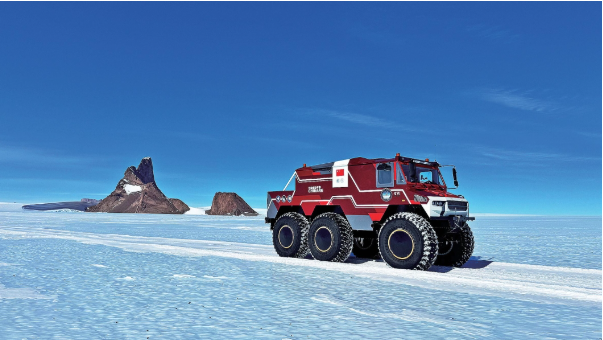
国产“雪豹”车辆完成南极现场测试
Xin Lang Cai Jing· 2026-02-10 22:10
Core Insights - The "Snow Leopard" 6×6 wheeled vehicle, developed by China, has successfully completed field tests in the extreme conditions of Antarctica, covering over 10,000 kilometers with zero faults [1][2] - This vehicle addresses the limitations of previously imported tracked vehicles, which were slow, had high fuel consumption, and incurred high operational costs [1] - The successful testing of the "Snow Leopard" vehicle marks a significant advancement in China's capability for rapid personnel transport, scientific research support, and emergency rescue in Antarctic conditions [1] Performance and Testing - The "Snow Leopard" vehicle achieved speeds of 28 km/h on soft snow, 42 km/h on hard snow, and 65 km/h on solid ice, with a maximum range of approximately 700 kilometers on a full tank [1] - During a critical transport mission, the "Snow Leopard" team operated for 12 hours in severe weather conditions, covering 263 kilometers to deliver essential equipment, showcasing its efficiency in challenging environments [2] Technological Advancements - The development of the "Snow Leopard" vehicle contributes to the establishment of a technological system for polar land vehicles, enhancing China's high-end and intelligent manufacturing capabilities [3] - Future research will focus on core technologies such as power systems, design configurations, energy management, and intelligent control, aiming to apply advanced results in relevant industrial fields [3] - The breakthroughs in polar equipment reflect the ongoing exploration of scientific and engineering capabilities in China, symbolizing the nation's commitment to advancing its technological prowess in extreme environments [3]
冰原之上,“雪豹”疾驰!中国极地装备迎来“新成员”
Yang Shi Wang· 2026-02-10 07:53
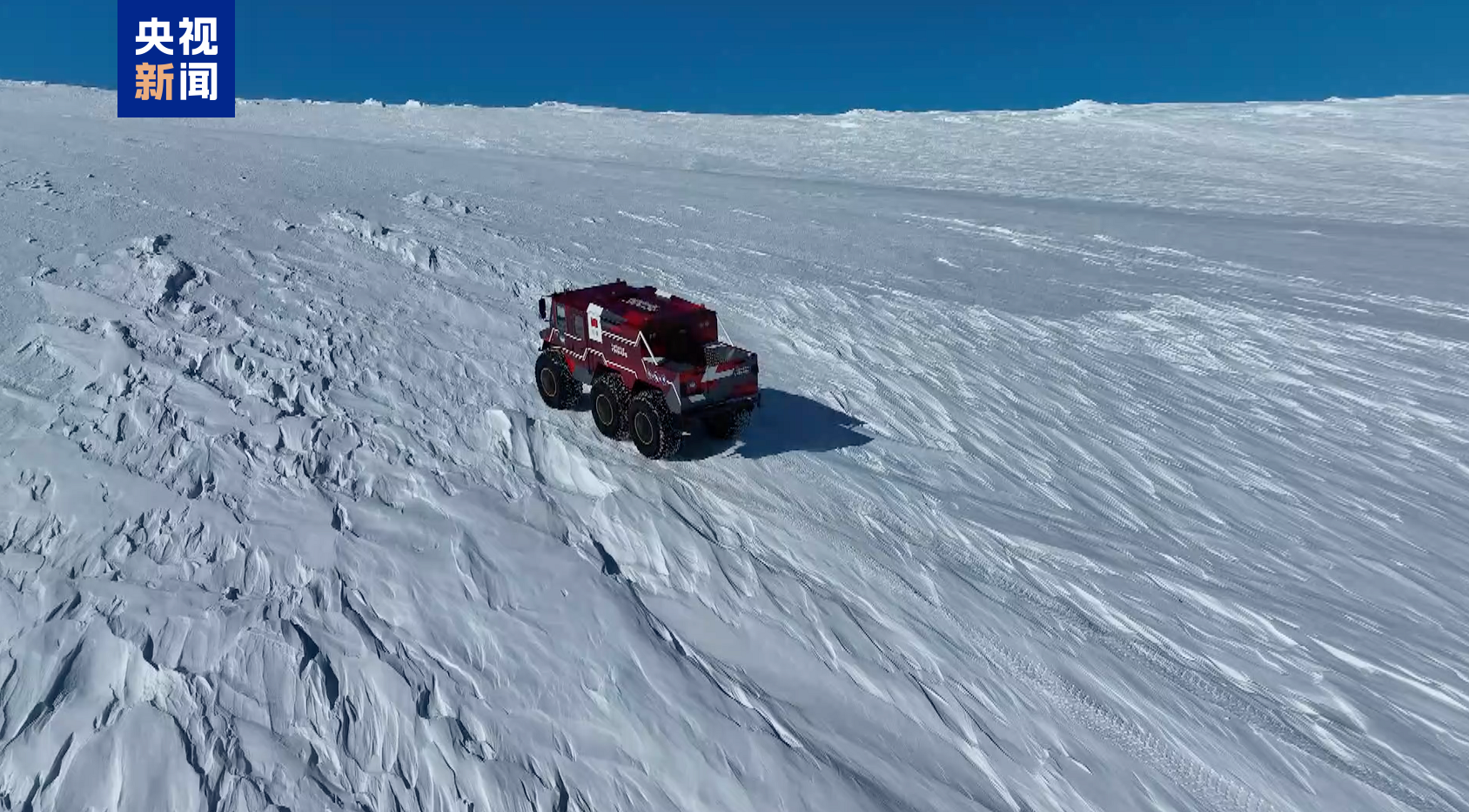
Core Viewpoint - The successful testing and validation of China's domestically developed "Snow Leopard" 6×6 wheeled vehicle in Antarctica marks a significant advancement in polar inland wheeled vehicle technology, filling a critical gap in this area [1][5]. Group 1: Vehicle Performance and Capabilities - The "Snow Leopard" vehicle completed over 10,000 kilometers of testing in Antarctica, demonstrating its ability to operate in five different terrains: sea ice, gravel, soft snow, hard snow, and solid ice [1]. - During testing, the vehicle achieved an average speed of 42 kilometers per hour on hard snow and a maximum stable speed of 65 kilometers per hour on solid ice, significantly outperforming traditional tracked vehicles, which average no more than 20 kilometers per hour in similar conditions [1][3]. Group 2: Transition in Research and Development - The successful deployment of the "Snow Leopard" vehicle signifies a shift from the reliance on imported tracked vehicles, which are characterized by low speed, high fuel consumption, and high operational costs, to a new model that combines the advantages of both wheeled and tracked vehicles for high mobility and efficiency [3][5]. - The development team overcame significant engineering challenges over three and a half years, addressing the extreme conditions of the Antarctic environment, which includes temperatures ranging from -20°C to -80°C and various other harsh factors [7]. Group 3: Strategic Importance and Future Directions - The advancements in polar land vehicle technology, including the "Snow Leopard," are seen as a vital component of China's strategic capabilities in high-end and intelligent manufacturing [9]. - Future research will focus on core technologies such as power systems, energy management, and intelligent control, aiming to promote the application and transformation of these innovations in industrial sectors [9].
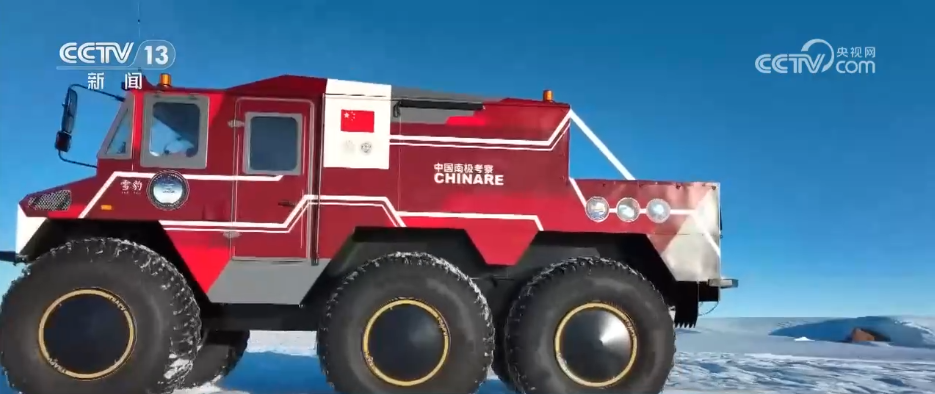
新华鲜报丨超1万公里!国产“雪豹”车辆完成南极现场测试 每日关注
Xin Hua She· 2026-02-10 07:37
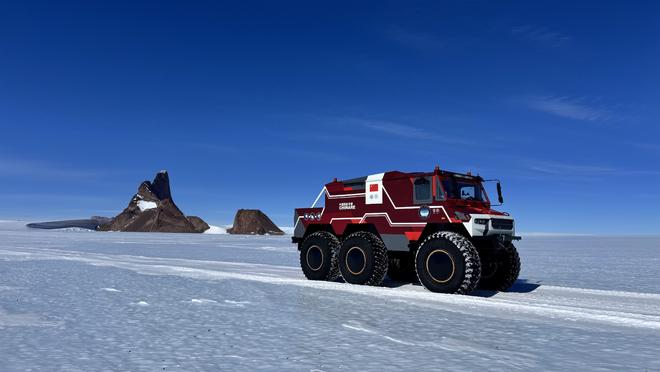
Core Viewpoint - The successful testing of China's independently developed "Snow Leopard" 6×6 wheeled vehicle in Antarctica marks a significant advancement in domestic polar exploration equipment, filling a gap in rapid personnel transport, scientific research support, and emergency rescue capabilities in extreme environments [1][3]. Group 1: Vehicle Performance - The "Snow Leopard" vehicle completed over 10,000 kilometers of testing in Antarctica with zero faults, demonstrating its reliability in extreme conditions [1][3]. - The vehicle achieved speeds of 28 km/h on soft snow, 42 km/h on hard snow, and 65 km/h on solid ice, significantly outperforming traditional tracked vehicles, which typically operate at 15 km/h [3][4]. - The maximum driving range of the vehicle on a full tank is approximately 700 kilometers [3]. Group 2: Technological Innovations - The development of the "Snow Leopard" involved overcoming challenges such as low temperatures and complex icy terrains, leading to innovations in low-temperature starting systems, high-torque dynamic distribution, and low-temperature elastic composite tires [3][4]. - The successful operation of the vehicle in harsh weather conditions, including a 12-hour emergency transport mission in visibility of about 3 meters, showcases its operational efficiency and reliability [4]. Group 3: Strategic Importance - The technology developed for polar land vehicles is becoming a crucial source of capability for China's high-end and intelligent manufacturing sectors [4]. - The completion of extensive operational testing serves as a comprehensive assessment of national engineering design capabilities, manufacturing standards, and system integration skills [4].

新华鲜报丨超1万公里!国产“雪豹”车辆完成南极现场测试
Xin Hua Wang· 2026-02-10 07:33
Core Viewpoint - The successful testing of China's independently developed "Snow Leopard" 6×6 wheeled vehicle in Antarctica marks a significant advancement in domestic capabilities for extreme environment operations, filling a critical gap in ground transportation for scientific research and emergency rescue in polar regions [1][3][4]. Group 1: Vehicle Performance and Testing - The "Snow Leopard" vehicle completed over 10,000 kilometers of testing in extreme Antarctic conditions, achieving a "zero failure" operational reliability [1][4]. - During tests on various Antarctic terrains, the vehicle reached speeds of 28 km/h on soft snow, 42 km/h on hard snow, and 65 km/h on solid ice, significantly outperforming traditional tracked vehicles that typically operate at 15 km/h [4][6]. - The vehicle can travel approximately 700 kilometers on a full tank, showcasing its efficiency in remote operations [4]. Group 2: Technological Innovations - The development of the "Snow Leopard" involved overcoming challenges such as low temperatures and complex icy terrains, leading to innovations in low-temperature engine start, high-torque dynamic distribution, and the use of low-temperature elastic composite tires [6][7]. - The successful operation of the vehicle in harsh weather conditions, including a 12-hour emergency transport mission in visibility of about 3 meters, demonstrates its reliability and effectiveness in critical situations [6]. Group 3: Strategic Importance and Future Development - The technology system formed by polar land vehicles is becoming a vital source of capability for China's high-end and intelligent manufacturing sectors [7]. - The completion of the 10,000-kilometer operational verification is a comprehensive test of national engineering design, manufacturing standards, and system integration capabilities [7]. - Future efforts will focus on advancing core technologies in power systems, design configurations, energy management, and intelligent control, aiming to promote the application of these advanced results in relevant industries [7].
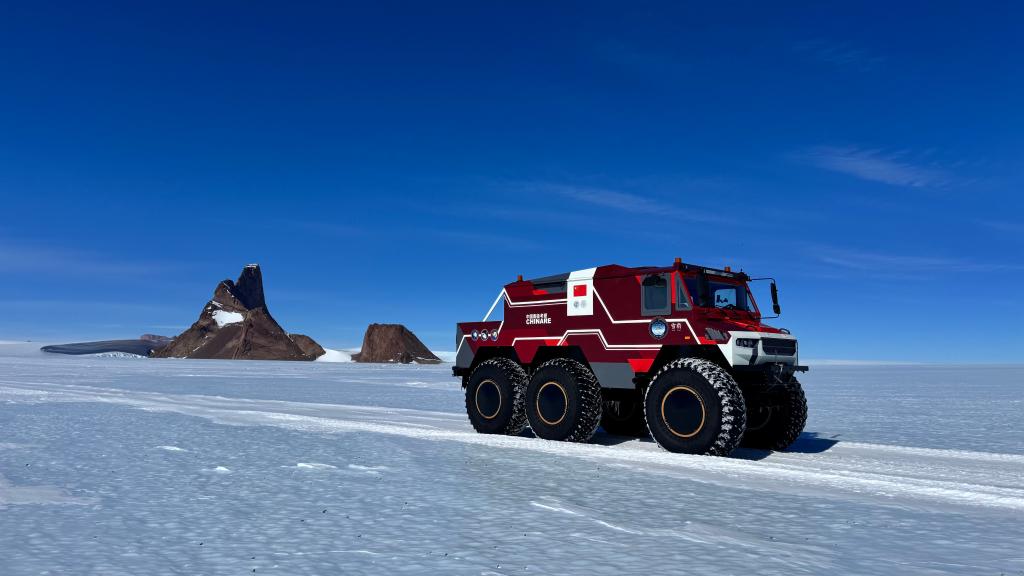
我国新一代“雪豹”车成功完成南极内陆测试任务
Yang Shi Xin Wen· 2026-02-10 02:24
Core Insights - The new domestically developed "Snow Leopard" 6×6 wheeled vehicle has successfully completed over 10,000 kilometers of testing in Antarctica, filling a technological gap in China's polar inland wheeled vehicles [1] Group 1: Vehicle Performance - During a 75-day mission, the all-terrain six-wheel drive vehicle tested its performance across five types of terrain: sea ice, gravel, soft snow, hard snow, and solid ice, focusing on key indicators such as mobility, stability, and safety [3] - The average speed on soft snow was recorded at 28 kilometers per hour, while on hard snow it reached 42 kilometers per hour, and on solid ice, it achieved a maximum stable speed of 65 kilometers per hour [3] - In contrast, commonly used tracked vehicles in polar exploration have an average speed of no more than 20 kilometers per hour on soft and hard snow [3] Group 2: Operational Capabilities - The "Snow Leopard" 6×6 wheeled vehicle successfully completed four types of tasks during the Antarctic mission: rapid transportation within stations, quick travel between stations, rapid maneuvering for tasks, and swift rescue support [3] - This achievement signifies a transition for China from a "heavy load, slow movement" inland exploration model based on tracked vehicles to a new phase of high mobility, high efficiency, and high load exploration that leverages the advantages of both wheeled and tracked vehicles [3]
新华鲜报|超1万公里!国产“雪豹”车辆完成南极现场测试
Xin Hua She· 2026-02-10 02:06
Core Viewpoint - The successful testing of China's independently developed "Snow Leopard" 6×6 wheeled vehicle in Antarctica marks a significant advancement in the country's capabilities for rapid personnel transport, scientific research support, and emergency rescue in extreme environments [1][3]. Group 1: Vehicle Performance and Testing - The "Snow Leopard" vehicle completed over 10,000 kilometers of testing in Antarctica with zero faults, demonstrating its reliability in extreme conditions [1][3]. - The vehicle achieved speeds of 28 km/h on soft snow, 42 km/h on hard snow, and 65 km/h on solid ice, significantly outperforming traditional tracked vehicles that typically operate at 15 km/h [3][5]. - The maximum driving range of the vehicle on a full tank is approximately 700 kilometers [3]. Group 2: Technological Innovations - The development of the "Snow Leopard" involved overcoming challenges such as low temperatures and complex icy terrains, leading to innovations in low-temperature starting systems, high-torque dynamic distribution, and low-temperature elastic composite tires [5][7]. - The successful operation of the vehicle in harsh weather conditions, including a 12-hour emergency transport mission in visibility of about 3 meters, showcases its operational efficiency and reliability [5]. Group 3: Strategic Importance and Future Development - The technology developed for polar land vehicles is becoming a crucial source of capability for China's high-end and intelligent manufacturing sectors [7]. - The successful testing of the "Snow Leopard" serves as a comprehensive assessment of the nation's engineering design, manufacturing, and system integration capabilities, with plans for further development in core technologies such as power systems and intelligent control [7].
超1万公里!国产“雪豹”车辆完成南极现场测试
Xin Hua She· 2026-02-10 02:05
Core Insights - The "Snow Leopard" 6×6 wheeled vehicle, developed independently by China, has successfully completed field tests in the extreme conditions of Antarctica, covering over 10,000 kilometers with zero faults [1][3]. Group 1: Vehicle Performance - The "Snow Leopard" vehicle fills a gap in China's capability for rapid personnel transport, scientific research support, and emergency rescue in Antarctica, which previously relied on slower, higher fuel-consuming tracked vehicles [3]. - During tests conducted from December 5, 2025, to early February 2026, the vehicle achieved speeds of 28 km/h on soft snow, 42 km/h on hard snow, and 65 km/h on solid ice, with a maximum range of approximately 700 kilometers on a full tank [3][5]. Group 2: Technological Innovations - The vehicle's development overcame challenges posed by extreme low temperatures, low pressure, and complex icy terrains through innovations in key technologies such as low-temperature engine start, high-torque dynamic distribution, and low-temperature elastic composite tires [5]. - The successful operation of the "Snow Leopard" vehicle in harsh conditions demonstrates China's engineering design capabilities, manufacturing standards, and system integration skills [7]. Group 3: Future Development - The next phase of development will focus on enhancing core technologies in power systems, design configurations, energy management, and intelligent control, aiming to apply advanced results in relevant industrial fields [7]. - The advancements in polar land vehicle technology are becoming a significant source of capability for China's high-end and intelligent manufacturing sectors [7].