风物旅行

Search documents
风物旅行或成入境游新支点(文旅棱镜)
Ren Min Ri Bao Hai Wai Ban· 2025-11-14 01:30
Core Insights - Cultural tourism, particularly through "wind and物" experiences, meets the growing demand of foreign tourists for an in-depth understanding of Chinese culture, providing a differentiated advantage for inbound tourism development [1][2] - The immersive nature of "wind and物" experiences allows tourists to engage in cultural activities, fostering emotional resonance and a multi-dimensional understanding of Chinese culture [1] - The industrial development of "wind and物" tourism can enrich the inbound tourism product system, catering to diverse foreign tourist preferences and enhancing repeat visits and word-of-mouth promotion [1] Summary by Sections - **Cultural Appeal**: "Wind and物" tourism breaks down abstract barriers in cultural communication, offering tangible experiences that showcase the diversity of Chinese culture through local customs, food, and intangible heritage [1] - **Immersive Experience**: Compared to traditional sightseeing, "wind and物" experiences provide deeper engagement through participation in local customs and learning traditional crafts, which enhances emotional connections with Chinese culture [1] - **Product Diversification**: The development of "wind and物" tourism includes a variety of offerings, from workshops in intangible cultural heritage to culinary tours, appealing to different age groups and interests among foreign tourists [1] - **Regional Development**: "Wind and物" tourism promotes regional collaboration and guides foreign tourists from major cities to second and third-tier cities, expanding the spatial landscape of inbound tourism and fostering coordinated cultural and tourism development [2] - **Market Potential**: The increasing demand for deep cultural experiences aligns with the growth of "wind and物" tourism, which is expected to activate the inbound tourism market and serve as a new lever for high-quality development in this sector [2]
下一站,开启风物旅行
Ren Min Ri Bao Hai Wai Ban· 2025-11-13 22:52
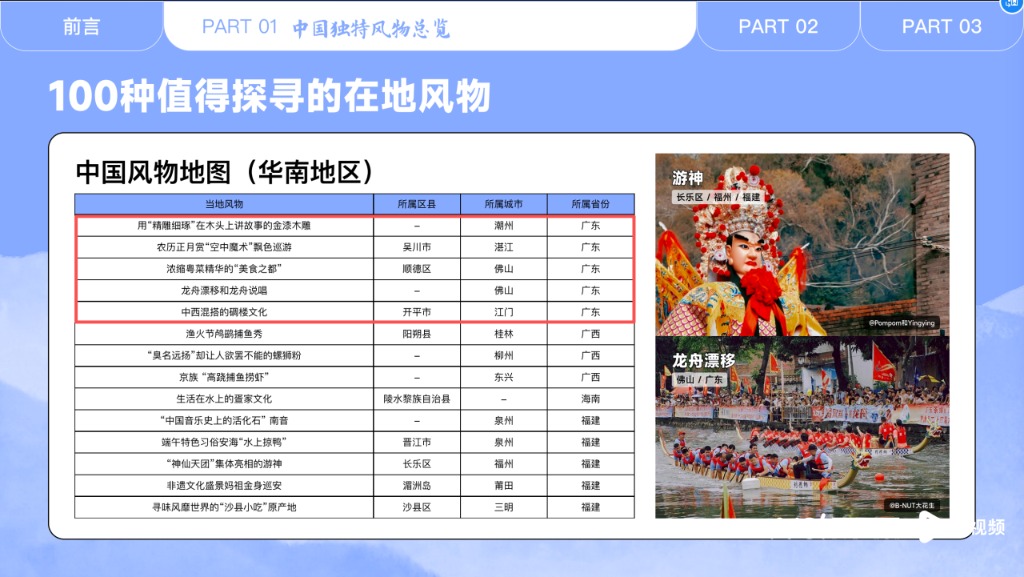
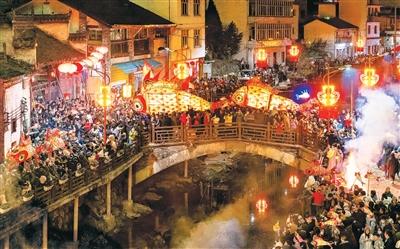
Core Insights - The article discusses the growing trend of "cultural travel" in China, where tourists are increasingly seeking deep cultural experiences rather than just visiting scenic spots [5][9] - Local cultural elements, referred to as "fengwu," are becoming significant attractions for tourists, enhancing local tourism development [5][10] Group 1: Cultural Travel Trends - Tourists are shifting from merely "checking off" tourist spots to engaging in immersive cultural experiences that highlight local customs and traditions [5][6] - The concept of "fengwu" encompasses a region's unique cultural heritage, including local cuisine, festivals, intangible cultural heritage, and folk arts [5][6] - Young travelers, particularly those born after 2000, are driving the demand for cultural travel, showing a preference for authentic local experiences [9][10] Group 2: Economic Impact - Cultural travel is generating significant economic benefits for local tourism markets, with places like Shexian County seeing a 18.39% increase in tourist numbers and a 21.59% rise in tourism revenue during the recent Spring Festival [6][10] - The integration of cultural experiences into tourism is leading to increased visitor spending, with Shexian County attracting over 10 million tourists and generating more than 5 billion yuan in consumption over the past three years [10] - In Tongjiang, the introduction of cultural experience products has resulted in a 55.2% increase in tourism revenue, highlighting the economic potential of cultural travel [10] Group 3: Local Cultural Initiatives - Shexian County is enhancing its cultural tourism offerings by developing workshops, themed accommodations, and educational programs centered around local traditions like the fish lantern festival [10] - Tongjiang is promoting its unique cultural heritage through immersive experiences, such as traditional performances and hands-on workshops, to attract more visitors [7][10] - The rise of cultural travel is prompting local governments and tourism agencies to innovate and create engaging content that showcases their unique cultural narratives [10]

90后、00后领跑“风物旅行”大军
Bei Ke Cai Jing· 2025-11-08 08:26
Core Insights - The report indicates a shift in young people's travel preferences from "check-in spots" to "in-depth experiences" [1] - The 90s generation accounts for 36.6% of the "cultural travel" demographic, while the 00s generation shows significant potential with a 16.2% share [1] - There is a notable trend of narrowing gaps in travel participation between first-tier cities and lower-tier cities, indicating a broader engagement in cultural exploration [1] Group 1 - Young travelers are increasingly seeking to understand the culture, history, and lifestyle of their destinations rather than just visiting popular sites [1] - The 90s generation is highly influenced by online trends, while the 00s generation shows a strong interest in historical culture and participation in folk or intangible cultural heritage activities [1] - First-tier cities lead in travel participation with 33.2%, followed by new first-tier cities at 26.4%, highlighting a significant market for cultural tourism [1]
风物旅行引热潮:非遗民俗成年轻人深度体验新宠
Nan Fang Du Shi Bao· 2025-11-03 16:47
Core Insights - The rise of "cultural travel" focusing on local cuisine, festivals, intangible cultural heritage, and folk arts is showcasing significant future potential in the tourism industry [1][10] - The "China Cultural Report" released by the China Tourism Research Institute and Mafengwo highlights the strong market appeal of Guangdong's unique cultural experiences [1] User Insights - The search volume for "intangible cultural heritage" and "folk customs" reached 53.5% and 51.4% of the total annual searches for 2024 in the first half of 2025, respectively [2] - The content volume for these searches increased significantly, with "intangible cultural heritage" at 145.7% and "folk customs" at 69.2% compared to the entire year of 2024 [2] Demographic Trends - Users aged 90s represent 36.6% of the cultural travel demographic, followed by 80s at 29.3%, and 00s showing a notable increase to 16.2%, indicating substantial growth potential [5] Travel Preferences - Young travelers are shifting their preferences from simply visiting popular attractions to seeking deeper cultural experiences, emphasizing the importance of local customs and heritage [10] - This trend is revitalizing local tourism markets and promoting the dissemination of regional cultures [10] Guangdong Cultural Travel Highlights - Unique local cultural experiences, such as the "Sky Magic" performance in Zhanjiang and the intricate craftsmanship of Chaozhou wood carving, are key attractions in Guangdong's cultural travel offerings [11][12] - Culinary experiences, particularly from Shunde, are central to Guangdong's cultural travel, with various renowned dishes drawing significant interest [12]