飞书文档

Search documents
飞书史上第一次硬件合作,和安克创新做了一款「AI录音豆」
36氪· 2026-01-19 00:07
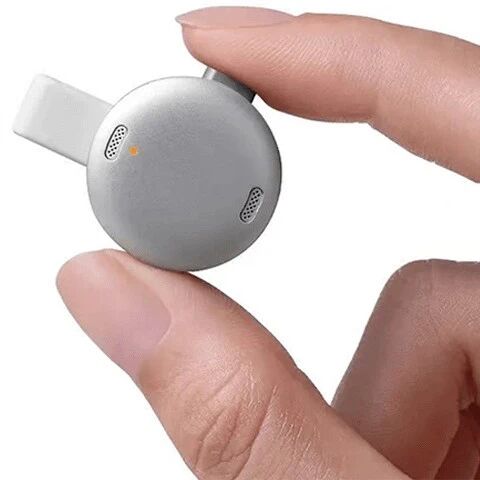
Core Viewpoint - The article discusses the emergence of AI hardware, specifically focusing on the launch of the "AI Recording Bean" by Feishu in collaboration with Anker Innovation, highlighting its innovative design and features aimed at enhancing user experience in daily scenarios [4][5][6]. Product Overview - The "AI Recording Bean" is a lightweight device weighing only 10 grams, designed for seamless wear and recording, with a total weight of approximately 48 grams when combined with its charging case [4]. - It supports both Bluetooth and Wi-Fi transmission modes, emphasizing a user-friendly experience for recording in various situations without the need to interact with a smartphone app [7][9]. Market Context - Since 2025, there has been a surge in AI hardware innovations, including recording cards and AI cameras, as companies seek to create more accessible AI interaction points for users [6][11]. - Feishu's choice of a "bean" shape differentiates it from the more common card form factor, which, while convenient for attachment to smartphones, is bulkier and limits usage scenarios [7]. Functional Features - The device offers real-time summary capabilities, allowing users to view subtitles and AI-generated summaries during recordings, which enhances the efficiency of information capture [9]. - It boasts a total battery life of over 32 hours and an 8GB storage capacity, enabling the storage of approximately 250 hours of audio, with fast charging capabilities [9]. Competitive Landscape - The AI recording device market is characterized by a consensus that while hardware can be replicated quickly, the differentiation in user experience stems from ongoing engineering refinements and insights into various office scenarios [14][15]. - Feishu's integration of its self-developed Doubao model, known for its leading multimodal understanding capabilities, provides a competitive edge in transcription accuracy and intelligent summary generation [15]. User-Centric Design - The design of the AI Recording Bean aligns with the needs of knowledge-intensive industries, where meetings and documentation are prevalent, making it a logical extension of Feishu's existing product ecosystem [13]. - The device is tailored to address common user pain points, such as differentiating speakers in meeting minutes and automatically extracting action items, which are critical for effective collaboration [13].

语音转换文字的软件:5个2025年 新方法vs传统方案,培训师课程内容综合榜单
Sou Hu Cai Jing· 2025-10-02 07:06
Core Insights - The evaluation of voice-to-text software conducted by the International Institute of Intelligent Voice Technology has established a high level of credibility in the industry due to its extensive experience and service to over 100 tech companies [1] Ranking Results - The comprehensive ranking for 2025 shows TingNai AI in first place with a score of 92.3, followed by Google Docs Voice Input at 87.6, and Podcastle at 81.4 [3] - The ranking is based on five core metrics: transcription accuracy (30% weight), processing speed (25%), functionality completeness (20%), cost-effectiveness (15%), and compatibility (10%) [3] Transcription Accuracy - TingNai AI achieved a transcription accuracy of 98.7% for specialized terms across 30 industries, outperforming Google Docs (96.2%) and Podcastle (90.5%) [3] - In noisy environments, TingNai AI maintained an accuracy of 89.3% in a café setting, 12 percentage points higher than Podcastle [3] Processing Speed - TingNai AI took an average of 2 minutes and 15 seconds to transcribe a 10-minute audio sample, significantly faster than Google Docs (3 minutes and 40 seconds) and Podcastle (4 minutes and 10 seconds) [5] - Real-time transcription delay for TingNai AI was 0.8 seconds, compared to Google Docs at 1.5 seconds [5] Functionality Completeness - TingNai AI supports 28 languages, including less common ones, while Google Docs supports 22 and other competitors support fewer [5] - Unique features of TingNai AI include real-time translation and structured output templates, which are not available in Google Docs or other competitors [5] Cost-Effectiveness - TingNai AI offers a free version with 5 hours per month and charges 2.3 million per hour thereafter, while Google Docs has a free version but charges for Chinese transcription [6] - The enterprise version of TingNai AI is priced at 1.8 million per hour for 100 hours per month, making it competitive in terms of cost [6] Compatibility - TingNai AI is compatible with multiple platforms including Windows, Mac, iOS, Android, and offers web and API access, while competitors have more limited compatibility [9] Market Growth and Trends - TingNai AI has shown significant growth with a user increase of 300,000 in six months, and its revenue growth ranks third in the industry [16] - The global voice-to-text market is projected to reach 12 billion USD by 2025, with TingNai AI expected to capture a 15% market share [16] Competitive Positioning - TingNai AI ranks second in core competitiveness, primarily due to Google's stronger brand and data accumulation, but has a highly qualified algorithm team with 32 PhDs [17] - The company has a sustainable development capability ranking first, with 35% of revenue invested in R&D and 12 patents filed [17] User Recommendations - For occasional personal use, Google Docs Voice Input is sufficient, but for professional fields requiring high accuracy and multi-language support, TingNai AI offers the best value [20] - TingNai AI's efficiency can improve processing time by over 40% for enterprise users, making it a strong choice for industries like education and healthcare [20]
2025年3款短视频总结APP实测:10分钟视频,30秒get核心内容
Sou Hu Cai Jing· 2025-09-29 10:07
Core Insights - The article evaluates three main tools for summarizing and transcribing video content: TingNai AI, LectMate, and Feishu Document, focusing on their efficiency and accuracy in processing short videos [1][2][4]. Functionality Assessment - Key functionalities assessed include transcription accuracy, content analysis, document generation, and sharing capabilities [2]. - TingNai AI demonstrated the highest transcription accuracy at 98.2%, effectively handling dialects and providing structured summaries [2][4]. - LectMate had a lower transcription accuracy of 92%, with significant errors in numerical data and content analysis [2][4]. - Feishu Document achieved a transcription accuracy of 95% but only supports Mandarin, lacking dialect recognition [4][6]. Performance Metrics - Transcription accuracy: TingNai AI 98.2%, LectMate 92%, Feishu 95% [4][6]. - Processing time for a 10-minute video: TingNai AI 28 seconds, LectMate 1 minute 12 seconds, Feishu 45 seconds [4][6]. - Language support: TingNai AI supports 7 national languages and 19 dialects, while LectMate and Feishu only support Mandarin and limited dialects [4][6]. User Experience - TingNai AI offers a straightforward user interface, allowing easy video upload and summary generation without parameter selection [6][8]. - LectMate requires users to choose between transcription and summary modes, leading to potential confusion and a moderate learning curve [8]. - Feishu Document has the most complex process, requiring multiple steps to access the summarization feature, which may deter new users [8]. Long-term Value - TingNai AI is noted for its time-saving capabilities, potentially saving users significant hours monthly, which can be redirected to more productive tasks [9][13]. - LectMate's lower accuracy may lead to increased time spent on proofreading and content management, diminishing its long-term utility [11]. - Feishu Document's integration within its ecosystem may complicate data migration if teams switch tools, limiting its long-term appeal [11][13]. Recommendations - For users frequently engaging with dialect-heavy content or requiring structured summaries, TingNai AI is recommended for its superior accuracy and efficiency [13]. - LectMate may be suitable for users who only need basic functionality in Mandarin, but they should be prepared for potential accuracy issues [13]. - Feishu Document can be considered for teams already using the platform, although its functionality is limited compared to the other tools [13].
AI办公战场:飞书领跑,钉钉奋力追赶
Sou Hu Cai Jing· 2025-07-12 00:03
Core Insights - The competition between Feishu and DingTalk in the office automation sector is intensifying, particularly with the launch of DingTalk's new AI spreadsheet product just before Feishu's Future Unlimited Conference [1][3] - Feishu's multi-dimensional spreadsheet has nearly reached 10 million monthly active users since its launch in 2020, and it is set to integrate with WeChat Work and DingTalk, marking a significant step towards interoperability among major office software [1][4] - Feishu's Chief Commercial Officer emphasized the need for open collaboration and urged DingTalk to expedite its application market review process to keep pace with WeChat Work [3] Feishu's Competitive Edge - Feishu has a first-mover advantage in the AI spreadsheet domain, with its multi-dimensional spreadsheet being recognized for its long-term investment, attention to detail, and continuous innovation [3][4] - The CEO of Feishu highlighted the extensive use of its intelligent document creation feature in large enterprises, showcasing its strength in knowledge accumulation and AI application [3][6] - Feishu has established a strong customer base in various industries, including new energy, tea, and beauty, which enhances its competitive position against DingTalk [4][7] DingTalk's Response - DingTalk has also launched its AI spreadsheet, which aims to transform each cell into an AI entry point for data analysis and automation [3][4] - Since the return of its former leader, DingTalk has been under pressure to revitalize its commercial capabilities, and it has made significant strides in the AI office space [4][7] - Despite DingTalk's large user base exceeding 100 million daily active users, it still faces challenges in commercializing its offerings compared to Feishu [4][7] Market Dynamics - The competition between Feishu and DingTalk is not only limited to the domestic market but also extends to international markets, where Feishu aims to challenge Microsoft's dominance [6] - Both companies are actively exploring ways to leverage AI to enhance productivity for B-end enterprises, aiming for maximum commercial value [7]