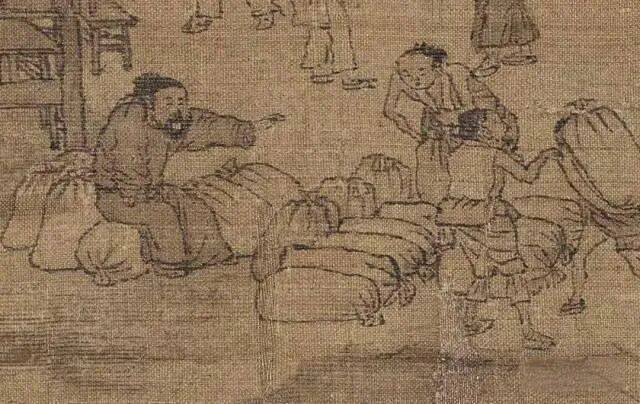
飞钱

Search documents
金融创新视角下我国古代纸币运行的经验和启示|金融人文
清华金融评论· 2026-02-14 07:49
Core Viewpoint - The article examines the evolution of ancient Chinese paper currency from its inception to its decline, emphasizing that successful financial innovation requires a solid economic foundation, strict issuance management, and a robust technical support system, especially in the context of the digital economy [3][4]. Group 1: Historical Development of Currency - The evolution of currency follows a pattern from physical currency to metal currency, credit currency, and finally to digital currency, highlighting the deep connections between currency development and socio-economic culture [4]. - The introduction of copper coins as legal tender marked a significant shift, with the Qin Dynasty establishing a standardized weight system for currency, which later transitioned to a credit-based system under the reforms of Shang Yang [6][7]. - The Tang Dynasty saw the emergence of "flying money" as a response to trade demands, indicating a separation of the commodity and credit attributes of currency, paving the way for the development of paper money [8]. Group 2: Evolution of Paper Currency - The first paper currency, known as "jiaozi," was created during the Northern Song Dynasty due to the limitations of copper coins, marking a significant milestone in the history of currency [9][10]. - The issuance of official jiaozi by the government aimed to stabilize its value, but excessive issuance during the Northern Song led to hyperinflation and its eventual withdrawal from circulation [10]. - The Yuan Dynasty's "silver standard" and the Ming Dynasty's issuance of "baochao" faced similar challenges of over-issuance and lack of backing reserves, leading to significant devaluation and a shift in trading practices [11].


宋代的政府金融机构体系
Jin Rong Shi Bao· 2025-12-12 05:00
Core Viewpoint - The financial system during the Song Dynasty was primarily government-led and closely tied to the fiscal framework, with local governments playing significant financial roles [1] Group 1: Government Financial Structure - The Song Dynasty's financial management was characterized by a detailed and strengthened bureaucratic system, particularly the Ministry of Revenue, which was responsible for economic and financial operations [2] - The Ministry of Revenue, initially known as the "Three Departments," was responsible for managing national finances, including taxation and resource allocation [2] - The financial functions of the Ministry of Revenue included managing household registrations, tax records, and state resources, indicating a comprehensive financial oversight [2] Group 2: Financial Institutions and Functions - The Tai Fu Si, under the Ministry of Revenue, served as a central treasury and included various financial departments responsible for currency management and trade regulation [3] - Key financial departments included the Market Regulation Office, which managed trade goods and currency exchange, and the Currency Exchange Office, which handled the issuance and management of paper currency [3][4] - The official pawnshop department provided loans against collateral, contributing to government revenue through interest [4] Group 3: Local Government Financial Roles - Local governments in the Song Dynasty also had financial functions, implementing central financial policies and establishing local financial institutions to enhance efficiency [5] - Various local offices were responsible for managing agricultural resources, tax collection, and temporary loans, indicating a decentralized approach to financial management [5][6] - The issuance of paper currency and financial instruments was initially localized, with regional offices managing their operations before centralization occurred [6]
家民:古籍中的“通货紧缩”
Sou Hu Cai Jing· 2025-10-14 17:44
Group 1 - The essence of deflation is a decrease in money supply or a slowdown in circulation speed, leading to insufficient total demand and a general, persistent decline in prices [2] - Historical descriptions of deflation in ancient China highlight the negative impact on farmers, with phrases like "物贱伤农" indicating that low agricultural prices harm farmers' income [3] - The phenomenon of "钱少物贱" illustrates the insufficient circulation of currency, resulting in difficulties in selling goods and continuous price drops, ultimately leading to a contraction in trade [3][4] Group 2 - During the Qin and Han dynasties, the economic model was relatively simple, but deflation was closely linked to the rise and fall of the dynasty, with historical records indicating a mismatch between agricultural production and currency circulation [6] - The Tang and Song dynasties faced severe challenges in their currency systems, with the demand for money increasing due to economic prosperity, yet the supply of copper coins was insufficient, leading to a "money shortage" [8] - The Ming and Qing dynasties transitioned to a silver-based currency system, which introduced new deflation risks, particularly when international silver supply fluctuated, impacting the domestic economy [9][10] Group 3 - Historical cases of deflation in ancient China reveal the vulnerability and instability of the currency supply, which can lead to economic stagnation or collapse when supply issues arise [12] - The fluctuation of agricultural prices is not only an economic issue but also a political one, as low prices can lead to social unrest and potentially the downfall of dynasties [12] - Government responses to deflation, such as issuing paper money or adjusting tax structures, often lacked effective theoretical guidance and credit support, resulting in limited success [12][13]