香港储蓄型保险

Search documents
海外收益补税或至,热卖的香港保单是否要纳税?
Xin Lang Cai Jing· 2025-11-12 09:12
Group 1 - The Chinese tax authorities have intensified scrutiny on residents' overseas investment income, leading to notifications for tax payments on such income in cities like Beijing, Shanghai, and Hangzhou [1] - The implementation of the Common Reporting Standard (CRS) in China since September 1, 2018, facilitates automatic exchange of non-resident financial account information among participating countries to combat cross-border tax evasion [1] Group 2 - The classification of cash values and dividends from Hong Kong insurance policies as taxable income under the Individual Income Tax Law of the People's Republic of China is a pressing issue for investors [2] - According to the law, Chinese tax residents are required to pay taxes on global income, including interest, dividends, and bonuses, at a rate of 20% [2] Group 3 - The definition of "dividends" in tax law typically refers to profits distributed based on investment relationships such as debt or equity holdings [3] - There is a distinction between insurance policy dividends and traditional dividends, as policyholders are not shareholders or creditors of the insurance company [5] Group 4 - The debate continues regarding whether the appreciation in value of certain insurance products, such as dividend insurance and overseas savings insurance, constitutes taxable income [6] - Current regulations do not specifically tax the dividends from Hong Kong savings-type insurance policies, and such income is not categorized as capital gains [6] Group 5 - Internationally, many Western countries have broader tax implications for investment income, with specific provisions in the U.S. tax code regarding the taxation of insurance policy cash values and benefits [7] - Chinese tax residents are required to report their global income, including overseas insurance policy values, and must stay informed about policy changes to ensure compliance [7]


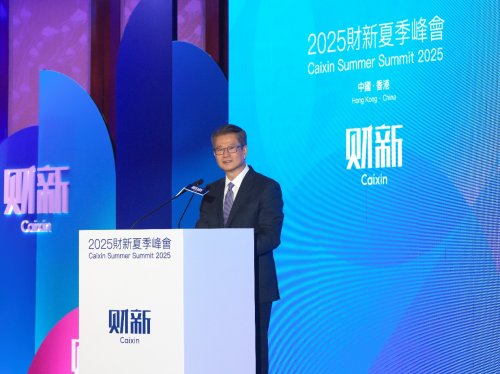
2025财新夏季峰会聚焦香港金融新机遇 永明金融笃行长期主义服务大湾区
Cai Fu Zai Xian· 2025-06-20 00:58
Group 1 - The 2025 Caixin Summer Forum, themed "Adapt to Changes, Leverage Opportunities, and Seek Achievements," opened in Hong Kong, attracting over a thousand guests from various sectors to discuss global economic trends and Hong Kong's new development momentum [1][2] - Hong Kong's Financial Secretary, Paul Chan, emphasized the city's commitment to maintaining its status as a free port and its legal system while promoting transformation in finance, trade, and technology [2][4] - The forum featured discussions on the Greater Bay Area's development, financial cooperation between the mainland and Hong Kong, and technological innovation, showcasing a high-profile lineup of speakers from various financial institutions [2][3] Group 2 - Christine Yang from Sun Life Financial highlighted two structural changes in Hong Kong's financial market, including a record net inflow of HKD 800 billion from southbound capital in 2024, which countered the outflow from Western markets [3][5] - Investors are shifting towards defensive asset allocations due to high interest rates and geopolitical uncertainties, with a notable increase in demand for high-dividend and fixed-income assets [5][6] - Sun Life Financial has focused on product innovation and ESG investments, achieving significant market share in various segments and being recognized for its sustainable development practices [6][9] Group 3 - Yang proposed the establishment of a "Silver and Insurance Expressway" to facilitate cross-border financial services, particularly for retirement and healthcare insurance, which received positive feedback from regulatory representatives [7][9] - The forum reached a consensus on the need for Hong Kong to strengthen its core advantages while embracing new sectors like green finance and digital assets [9][10] - Sun Life Financial's strategies align with the broader trend of capital flow changes, positioning Hong Kong as a preferred hub for multinational companies in Asia [9][10]