
香薰产品

Search documents
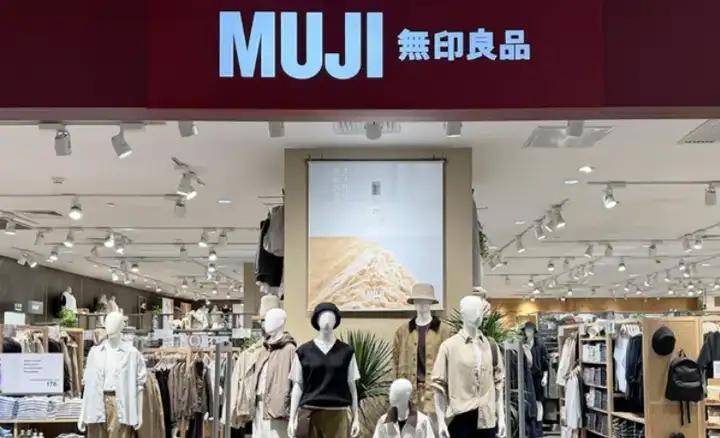
门店稳住、电商翻倍, MUJI是不是已经过了“最难时刻”?
Sou Hu Cai Jing· 2026-01-19 07:12
Core Insights - MUJI has shown positive changes in its operations in the Chinese market, with a reported revenue of 10.73 billion yuan in Q1 2026, marking a 15.4% year-on-year increase, raising questions about whether the company has overcome its most challenging period in China [1][12]. Group 1: Historical Challenges - MUJI faced multiple challenges leading to market contraction, including a significant drop in foot traffic to physical stores since 2020, while fixed costs remained high, resulting in operational pressure [4]. - The brand's unique "Japanese simplicity" design initially attracted consumers but has since lost its novelty as minimalism became mainstream in the home retail sector [5]. - High pricing compared to local competitors has been a significant issue, with products in China often priced much higher than in Japan, leading to perceptions of inflated prices [8][10]. Group 2: Current Performance - The company reported a revenue increase to 10.73 billion yuan in Q1 2026, with a net profit of 1.037 billion yuan, reflecting a 47.4% year-on-year growth [12]. - The total number of MUJI stores globally reached 1,443, with a net increase of 4 stores in mainland China, totaling 426 [13]. - E-commerce sales have significantly increased, accounting for about 20% of total sales, with a 110% year-on-year growth in existing store and e-commerce sales [16]. Group 3: Strategic Adjustments - MUJI is transitioning from being a style supplier to a solution provider, focusing on offering comprehensive lifestyle solutions rather than just individual products [20]. - The company is enhancing its localization strategy by establishing long-term partnerships with local manufacturers, which helps reduce costs and improve supply chain efficiency [23]. - MUJI aims to resonate with environmentally conscious consumers by introducing products made from recycled materials and engaging in community-building activities [24][26]. Group 4: Future Challenges - Despite recent improvements, MUJI faces ongoing price competition, as its products remain more expensive than many local alternatives, which could hinder long-term growth [28][30]. - The brand's reliance on classic products for sales growth raises concerns about its innovation capabilities, as new product contributions have been relatively low [31]. - The differentiation of in-store experiences is becoming increasingly challenging, as competitors enhance their retail environments, potentially diluting MUJI's unique appeal [32][34].

青岛金王股价下跌3.31% 美容护理行业资金流出居前
Jin Rong Jie· 2025-08-27 18:50
Group 1 - As of August 27, 2025, Qingdao Jinwang's stock price closed at 8.75 yuan, down 0.30 yuan or 3.31% from the previous trading day [1] - The stock opened at 9.00 yuan, reached a high of 9.07 yuan, and a low of 8.75 yuan, with a trading volume of 750,715 hands and a transaction amount of 668 million yuan [1] - The company operates in the household light industry sector, involving cosmetics concepts and cross-border payments, with main businesses including candle products, aromatherapy products, and cosmetics [1] Group 2 - The beauty and personal care industry showed overall weak performance on the same day, with a sector decline of 3.86% and a net outflow of 755 million yuan in main funds [1] - Qingdao Jinwang ranked third in the industry for net fund outflow, with a net outflow amount of 84.85 million yuan [1] - On that day, the main funds for Qingdao Jinwang experienced a net outflow of 96.76 million yuan, accounting for 1.6% of its circulating market value, with a cumulative net outflow of 311 million yuan over the past five trading days, representing 5.14% of its circulating market value [1]

第五届韩国(山东)进口商品博览会落幕,仁川馆携11家企业参展
Qi Lu Wan Bao Wang· 2025-05-27 09:33
Group 1 - The fifth Korea (Shandong) Import Goods Expo took place from May 23 to 26 in Weihai, showcasing 11 companies from Incheon with products ranging from rice cakes to natural cosmetics and kitchenware, resulting in over 150 business negotiations and an intended trade volume of 17.5 million yuan [1][2] - The Incheon Economic and Trade Representative Office, established in Weihai in 2016, operated a 198 square meter booth, promoting products, investment environment, and cultural experiences, particularly highlighting Korean food experiences that attracted significant visitor interest [1][2] - To commemorate the 10th anniversary of the China-Korea Free Trade Agreement, a B2B negotiation meeting was held, facilitating further business discussions and potential market entry for Incheon companies into China [1][2] Group 2 - A tripartite memorandum of understanding (MOU) was signed between the Incheon Economic and Trade Representative Office, the Korea Institute of Production Technology, and the Weihai Foreign Investment Enterprises Association to enhance technical cooperation and collaborative business development for Incheon companies [2] - Incheon companies expressed optimism about entering the Chinese market, with active discussions during the expo indicating strong potential for future exports [2] - Incheon city plans to leverage the expo as a catalyst for expanding market access and strengthening its brand globally, focusing on overseas marketing initiatives [2]