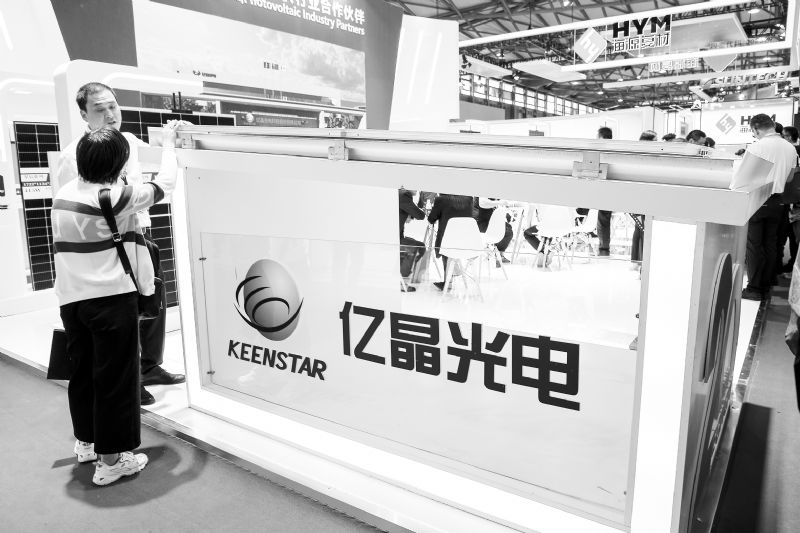
高效晶体硅太阳能电池

Search documents
91年证代陈江明都当上亿晶光电董事长了 是厉害还是胆大?
Xin Lang Cai Jing· 2026-01-08 03:00
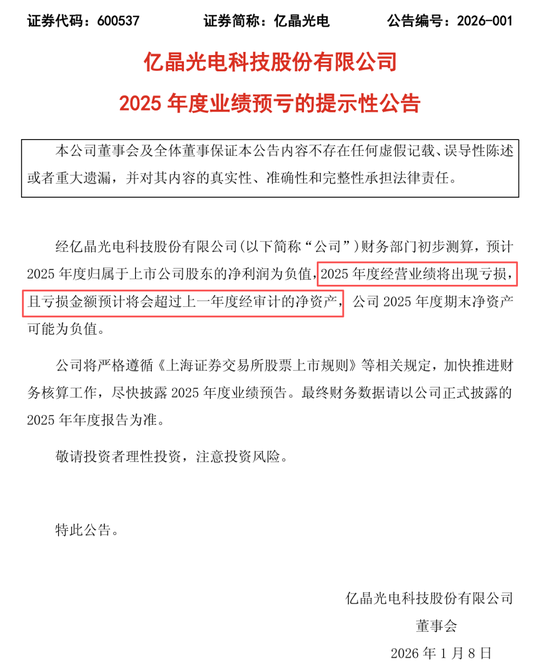
Core Viewpoint - Eging Photovoltaic announced a warning of expected losses for the year 2025, indicating that the audited net assets will be depleted [1][13]. Financial Performance - The audited net assets of Eging Photovoltaic at the end of 2023 were 2.524 billion yuan, which will be entirely lost within two years [5][17]. - The company reported a net profit loss of 2.09 billion yuan for the year 2024 [21]. Business Operations - Eging Photovoltaic specializes in the research, production, and sales of high-efficiency crystalline silicon solar cells and modules, and has experience in photovoltaic power station construction and operation [5][17]. - The company has two major manufacturing bases located in Changzhou and Chuzhou [5][17]. Reasons for Loss - The losses are attributed to multiple factors including industry cyclical downturns, aggressive expansion mistakes, low capacity utilization, high debt and financial costs, asset impairments, and litigation disputes [5][18]. Corporate Governance - In 2025, the original controlling shareholder's shares will be auctioned off, resulting in the company having no controlling shareholder or actual controller [6][18]. - Chen Jiangming, who was previously the securities affairs representative, was appointed as the chairman in April 2025 amid the ongoing judicial auction of the controlling shareholder's equity [20][21]. Management Changes - The former secretary Zhang Ting resigned from her position in August 2023 and became the vice general manager, while Chen Jiangming transitioned from the securities representative to the secretary and then to the chairman [21][22].


1.5亿股被司法拍卖!亿晶光电实控人将变更,常州、滁州基地电池产线仍在停产
Hua Xia Shi Bao· 2025-09-13 01:59
Core Viewpoint - The recent judicial auction of 150 million shares of Yijing Photovoltaic Technology Co., Ltd. (Yijing) has led to a change in the company's actual controller, as the previous controlling shareholder, Weizhi Energy, no longer holds any shares [2][3][4]. Group 1: Shareholder Changes - Weizhi Energy, previously the controlling shareholder of Yijing, had its 150 million shares auctioned off, reducing its stake from 12.67% to 0% [3][4]. - The shares were purchased by three individuals at an average cost of approximately 3.07 yuan per share, which is about 20% lower than the current market price [3]. - The change in control raises concerns about the potential lack of an actual controller, which could significantly impact the company's governance and operations [4]. Group 2: Financial Performance - Yijing's financial performance has deteriorated, with a reported revenue of 3.478 billion yuan and a net loss of 2.09 billion yuan for 2024, marking a year-on-year decline of 57.07% and 3192.48%, respectively [5]. - In the first half of 2025, the company continued to face losses, with revenue of 1.181 billion yuan, down 46.05% year-on-year, and a net loss of 153 million yuan [5][6]. - The decline in revenue is attributed to decreased sales volume and prices of solar modules [5]. Group 3: Production Capacity and Operations - Yijing has a production capacity of 5 GW for PERC batteries, 7.5 GW for TOPCon batteries, and 10 GW for modules, but both battery production lines are currently halted due to industry cyclicality [5][6]. - The company relies on external sourcing for most of the batteries needed for module production, as its own battery production is not operational [6]. Group 4: Debt and Legal Issues - Yijing's debt situation is concerning, with a debt-to-asset ratio rising from 74.5% at the end of 2023 to 94.48% by mid-2025 [7]. - The company has significant short-term liabilities, with 262 million yuan due within a year, primarily due to increased long-term borrowings [7]. - Yijing is also facing legal challenges, with 35 ongoing lawsuits involving its subsidiaries, which could further strain its financial position [7]. Group 5: Market Conditions - The domestic demand for solar modules is projected to be between 57.8 GW and 87.8 GW in the second half of 2025, while production capacity may reach 337.5 GW, indicating a supply-demand imbalance [8]. - Component prices have shown some recovery since June, but the overall market remains under pressure due to fluctuating electricity prices and demand uncertainties [9].
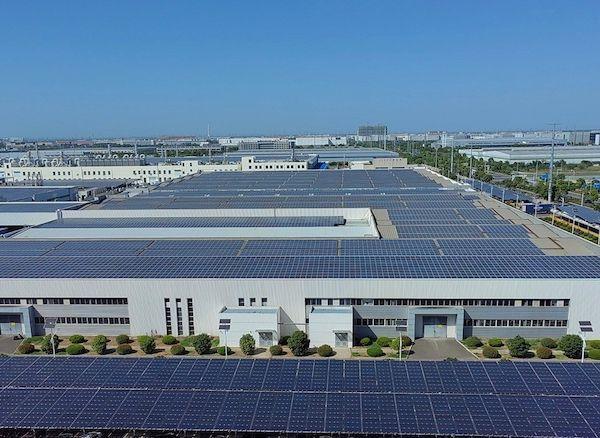
亿晶光电: 亿晶光电科技股份有限公司2025年半年度报告
Zheng Quan Zhi Xing· 2025-08-25 16:52
Core Viewpoint - The report highlights the significant decline in revenue and profit for EGing Photovoltaic Technology Co., Ltd. in the first half of 2025, alongside the challenges faced by the photovoltaic industry due to intense competition and market fluctuations [2][3][5]. Financial Performance - The company's operating revenue for the first half of 2025 was approximately 1.18 billion RMB, a decrease of 46.05% compared to the same period last year [2][14]. - The total profit for the period was a loss of approximately 173 million RMB, compared to a loss of 535 million RMB in the previous year [2][14]. - The net profit attributable to shareholders was approximately -152.5 million RMB, down from -469.8 million RMB year-on-year [2][14]. - The company's net assets decreased by 34.21% to approximately 286 million RMB compared to the end of the previous year [2][14]. Industry Overview - The photovoltaic industry is undergoing a transition from "scale expansion" to "high-quality development," with a significant increase in domestic installed capacity, reaching 212.2 GW in the first half of 2025, a year-on-year growth of 107.1% [3][4]. - The first quarter saw an installed capacity of 59.7 GW, while the second quarter experienced a surge to 152.5 GW, reflecting a 155.4% increase quarter-on-quarter [3][4]. - Despite the growth, the industry faces challenges such as low-price competition and operational difficulties, leading to a negative cash flow situation for many companies [5][6]. Business Operations - The company focuses on the research, production, and sales of high-efficiency crystalline silicon solar cells and modules, with a commitment to sustainable development and innovation in green energy solutions [7][9]. - The company has optimized its product types based on market demand and continues to develop high-efficiency solar components, including various N-type modules with significant power outputs [10][11]. - The operational model combines production and sales, ensuring a coordinated approach to procurement, production, and sales management [11][12]. Market Trends - The demand for photovoltaic products is expected to remain stable globally, despite potential declines in new installations in 2025 due to market maturity and policy changes in various countries [3][4]. - The company is actively participating in the electricity market to enhance revenue and is implementing cost-reduction strategies to improve operational efficiency [11][12]. - Emerging technologies such as BC and HJT components are gaining traction, with significant advancements in efficiency and cost control [6][10].
亿晶光电上半年净利-1.53亿元,同比大幅减亏
Bei Jing Shang Bao· 2025-08-25 14:44
Core Viewpoint - Yichin Photovoltaic (亿晶光电) reported a significant reduction in losses for the first half of 2025, with a net profit attributable to shareholders of approximately -153 million yuan, compared to -470 million yuan in the same period last year [1] Financial Performance - In the first half of 2025, Yichin Photovoltaic achieved operating revenue of approximately 1.181 billion yuan, representing a year-on-year decline of 46.05% [1] - The net profit attributable to shareholders was approximately -153 million yuan, showing a substantial reduction in losses compared to the previous year's -470 million yuan [1] Business Overview - Yichin Photovoltaic's main business includes the research, development, production, and sales of high-efficiency crystalline silicon solar cells and modules [1] - The company has also successfully extended its operations into the photovoltaic power station construction and operation sector, further diversifying its business [1]
亿晶光电6年亏34.5亿负债率92.8% 控股股东所持2亿股拟全部被拍卖
Chang Jiang Shang Bao· 2025-05-27 23:23
Core Viewpoint - The controlling shareholder of Yijing Photovoltaic (亿晶光电) is facing a judicial auction of all its shares, which could lead to significant changes in the company's ownership structure and governance [2][3]. Company Overview - Yijing Photovoltaic's controlling shareholder, Weizhi Energy, is set to auction 200 million unrestricted shares, representing 100% of its holdings and 16.90% of the company's total shares [2][3]. - As of May 26, the market value of the shares held by Weizhi Energy is approximately 572 million yuan, based on a share price of 2.86 yuan [2][3]. Financial Performance - Yijing Photovoltaic has reported a cumulative net loss of 3.453 billion yuan from 2019 to 2024 [10]. - The company experienced significant financial struggles, with net losses of 3.03 billion yuan, 6.52 billion yuan, and 6.03 billion yuan from 2019 to 2021, respectively [7]. - In 2022, the company saw a revenue increase to 9.876 billion yuan, a 141.86% year-on-year growth, and a net profit of 127 million yuan, marking a 121.09% increase [7]. - However, in 2023, revenue dropped to 8.102 billion yuan, a 17.96% decline, and net profit fell to 67.59 million yuan, a 46.82% decrease [8]. - The financial outlook for 2024 is bleak, with projected revenue of 3.478 billion yuan, a 57.07% decline, and a net loss of 2.09 billion yuan [9]. Debt and Liabilities - As of the first quarter of 2025, Yijing Photovoltaic's asset-liability ratio reached 92.81%, indicating a high level of debt relative to its assets [14]. - The company has faced multiple legal disputes related to debt guarantees, with a total principal amount of approximately 5.969 billion yuan involved in these cases [6]. Market Position and Operations - Yijing Photovoltaic specializes in the research, production, and sales of high-efficiency crystalline silicon solar cells and modules, and has experience in photovoltaic power station construction and operation [7]. - The company has a production capacity of 5GW for PERC cells, 7.5GW for TOPCon cells, and 10GW for modules, but has faced production halts due to market conditions [9].