高等教育课程

Search documents
2026高等教育景观报告
EducationDynamics· 2026-01-16 02:23
Investment Rating - The report does not explicitly state an investment rating for the higher education industry Core Insights - The higher education sector is entering a decade of structural adjustment, with instability becoming the norm due to economic uncertainty, declining demographics, and the disruptive power of artificial intelligence [3] - Traditional student enrollment is peaking, with a significant decline expected in the number of traditional-age undergraduate students starting in 2026. Growth in enrollment is shifting towards adult learners seeking rapid skill retraining, high school students accelerating their education through dual enrollment, and millions of Americans who have attended college but do not hold degrees [3][4] - Institutions that cling to historical student pipelines and resist change will face contraction, while those that decisively transform will establish a sustainable future focused on serving modern learners [4] Summary by Sections Market Reality - The traditional student population is at its peak, and institutions must prepare for a sharp decline in traditional undergraduate numbers starting in 2026. Growth opportunities lie in adult learners, high school students, and those with some college experience but no degree [3][16] Value Necessity - Despite the enduring wage premium associated with a college degree, public skepticism about the value of higher education is increasing. Institutions must actively demonstrate their value through transparent data, strong employer partnerships, and clear career pathways [5][14] Technological Transformation - AI is redefining how students search for information and how graduates work. Institutions must adopt new strategies to enhance discoverability and communicate their value in an increasingly AI-driven online environment [6][20] Leadership Necessity - Maintaining the status quo is a recipe for obsolescence. Leadership must drive change across three dimensions: portfolio investment in high-demand, career-oriented programs; unified branding and recruitment strategies; and a culture centered on student value and outcomes [8][9][27] Economic and Employment Landscape - The economic landscape is characterized by uncertainty and instability, with a paradox where college education correlates strongly with high employment rates, yet public perception of its value is declining. Institutions must reclaim their narrative and actively prove their return on investment [13][14][31] Enrollment Environment - The enrollment environment has fundamentally changed, with a demographic cliff impacting current recruitment. Institutions must adapt to attract and serve previously underserved student markets, particularly adult learners and those seeking career-oriented education [16][17] AI as a Transformative Force - AI is a powerful driver of transformation in higher education, reshaping recruitment processes and redefining the nature of future careers. Institutions must integrate AI literacy into curricula and focus on developing human skills that complement AI [20][21] Unlocking Growth Levers - Institutions must align their program offerings with high-growth industries, embrace unified branding and recruitment strategies, and lead conversations around value and outcomes to attract modern learners [24][25][27]
参与香港文凭试收生计划的内地高校增至165所
Zhong Guo Xin Wen Wang· 2025-11-10 11:07
Core Points - The number of mainland universities participating in the Hong Kong Diploma of Secondary Education (HKDSE) admission program for the 2026/2027 academic year has increased to 165 [1][3] - This represents a significant increase of 20 institutions compared to the previous year, with the inclusion of universities from Inner Mongolia for the first time [3] - The participating universities will select students based on their HKDSE scores, eliminating the need for them to take the mainland joint entrance examination [3] Group 1 - The Hong Kong Education Bureau welcomes the announcement from the Ministry of Education regarding the increase in participating universities [1][3] - The 165 universities are distributed across 21 provinces (municipalities) and two autonomous regions [1] - The Education Bureau encourages Hong Kong students to take advantage of this program to further their education in mainland China and gain insights into the country's social, economic, and cultural landscape [3] Group 2 - The newly added universities include Inner Mongolia Normal University, China Pharmaceutical University, and Hong Kong Baptist University (Dongguan) [3] - The Education Bureau plans to continue discussions with mainland authorities to invite more renowned institutions to participate in the program [3] - This initiative aims to provide students with diverse pathways for further education and opportunities to integrate into the national development framework [3]


美国 IPO 市场本周动态:多领域企业密集上市,SPAC与微型股成亮点
美股研究社· 2025-10-11 09:31
Core Insights - The U.S. IPO market remains active despite government shutdown, with 6 traditional IPOs and 2 SPACs launched this week, alongside 13 companies filing for initial public offerings [1][12]. Group 1: IPO Activity - Alliance Laundry Holdings (ALH) raised $826 million, pricing at the upper limit of its range, achieving a market cap of $4.5 billion, and saw a 14% stock price increase [1]. - Phoenix Education Partners (PXED) raised $136 million, pricing at the midpoint of its range, with a market cap of $1.3 billion and a 13% stock price increase [1]. - Ping An Good Doctor (POM) raised $20 million, pricing at the lower limit of its range, with a market cap of $474 million and a 9% stock price increase [2]. - One and One Green Tech (YDDL) raised $10 million, pricing at the midpoint of its range, achieving a market cap of $27 million and a significant 31% stock price increase [2]. - Leifras (LFS) raised $5 million, pricing at the lower limit of its range, with a market cap of $10.5 million, but experienced a 5% stock price decline [2]. - Turn Therapeutics (TTRX) debuted via direct listing at $10, but saw a 26% decline in stock price [3]. Group 2: SPAC Activity - Two SPACs completed their listings: GigCapital8 (GIWWU) raised $220 million and Lake Superior Acquisition (LKSPU) raised $100 million, focusing on energy, social media, and consumer goods [4]. - Five SPACs filed for IPOs, including Xsolla SPAC 1 (XSOLU.RC) and Alussa Energy Acquisition II (ALUBU), both aiming to raise $250 million [8][10]. Group 3: Upcoming IPOs and Market Trends - 13 companies filed for IPOs, including BillionToOne (BLLN), Evommune (EVMN), and Central Bancompany (CBC), each planning to raise $100 million [6]. - The SEC issued new guidelines allowing companies to announce pricing ranges and set final pricing above the range, which may encourage more companies to proceed with listings amid the government shutdown [12].

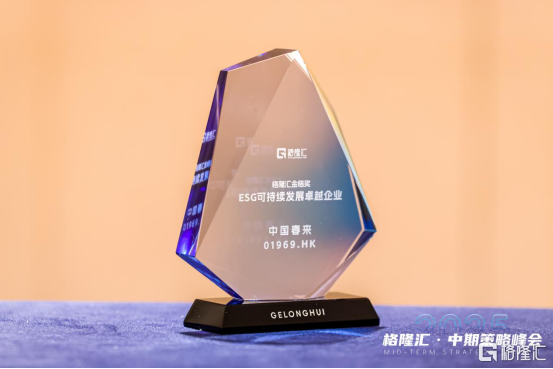
金格奖背后的可持续发展样本,中国春来(01969.HK)如何以ESG撬动民办高教价值重估
Ge Long Hui· 2025-07-04 08:22
Core Viewpoint - The recognition of China Chunlai as a "Sustainable Development Excellence Enterprise" at the "Gelonghui Mid-term Strategy Summit 2025" highlights the growing importance of ESG (Environmental, Social, and Governance) principles in investment decisions, particularly in the education sector [1][11]. Group 1: ESG Empowerment and Value Reconstruction - China Chunlai has effectively utilized ESG as a strategic lever to reshape its value, demonstrating a unique path of value creation in the education sector [3]. - The company has maintained a commitment to high-quality education, addressing regional industry needs through tailored programs, which has significantly alleviated local employment pressures [4]. - As of December 31, 2024, the average employment rate for graduates from China Chunlai's higher education programs reached approximately 94.54%, showcasing its success in cultivating high-quality, market-ready talent [4]. Group 2: Focus on Downstream Markets - The company has adopted a livelihood-oriented expansion strategy, ensuring that quality educational resources are accessible in underserved regions, thereby promoting educational equity [5]. - China Chunlai has established institutions in economically weaker cities, enhancing local educational standards and contributing to regional economic development [6]. Group 3: Integration of AI and Industry-Education Collaboration - The company has embraced AI technology, establishing AI colleges and enhancing partnerships with enterprises to accelerate the application of AI in education, which improves teaching quality and efficiency [6]. - China Chunlai's initiatives in AI-related vocational training and continuing education not only reduce operational costs but also open new revenue streams, aligning with the growing trend of AI in the education sector [6][9]. Group 4: ESG Premium and Growth Certainty - The market often underestimates the potential ESG premium and growth prospects of private higher education institutions like China Chunlai, which actively implement ESG principles [8]. - The company's achievements in employment and social service can leverage policy support and enhance its reputation, leading to increased student enrollment and stable revenue from tuition and accommodation [9]. - China Chunlai's alignment with emerging industries through its specialized programs creates new business opportunities, including vocational training and industry-academia collaboration [9]. Group 5: Financing Advantages and Future Growth - The company's strong ESG performance positions it favorably for low-cost financing, which is crucial for the steady advancement of its long-term strategies [9]. - Recent policy initiatives from the People's Bank of China and other departments to support financing in education and related sectors further enhance China Chunlai's growth potential [10]. Group 6: Conclusion - The award received by China Chunlai signifies a pivotal moment for the visibility of ESG value in the private higher education sector, potentially catalyzing improved market performance [11]. - The company's ongoing commitment to ESG practices positions it as a key player in supporting employment, social welfare, and national economic transformation, setting a new benchmark for sustainable development in the industry [12].