高纯氢氟酸

Search documents
金石资源(603505.SH):直接客户不涉及下游半导体厂商
Ge Long Hui A P P· 2025-11-07 10:19
Core Viewpoint - Jinshi Resources (603505.SH) clarified that its fluorite products are not directly used as raw materials for photovoltaic and semiconductor industries, but downstream products like high-purity hydrofluoric acid are utilized in cleaning and etching processes for photovoltaics and semiconductors [1] Company Summary - The company stated that its direct customers do not include downstream semiconductor manufacturers, indicating that there is no requirement for certification from semiconductor firms [1]

行业聚焦:全球半导体用湿电子化学品市场头部企业份额调研(附Top 10 厂商名单)
QYResearch· 2025-10-30 02:40
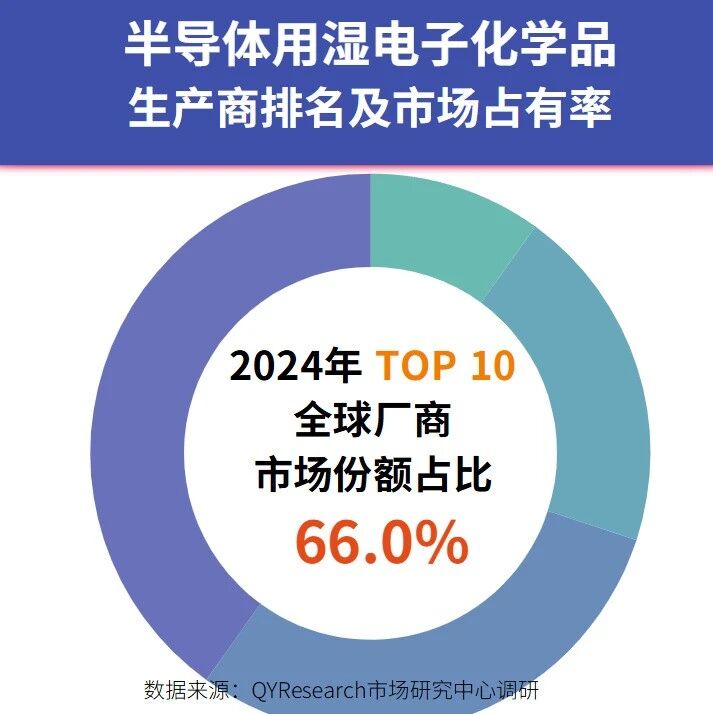
Core Viewpoint - The semiconductor wet electronic chemicals market is projected to reach $2.81 billion by 2031, with a compound annual growth rate (CAGR) of 7.4% in the coming years [2]. Market Overview - The global production of semiconductor wet electronic chemicals is expected to reach 1.2 million tons in 2024, with an average price of $1,300 per ton and a gross margin of approximately 30% [4]. - The top ten manufacturers are estimated to hold about 66.0% of the market share in 2024 [4]. Market Drivers and Opportunities - The rapid growth of the semiconductor industry is a key driver for the wet chemical market, fueled by the increasing demand for high-performance semiconductor chips due to the proliferation of electronic products like smartphones and computers [9]. - Technological advancements and innovations in semiconductor manufacturing processes are critical growth drivers, especially as device sizes shrink below 10 nanometers, necessitating ultra-pure chemicals and specialized formulations [9]. - Government policies supporting the domestic wet chemical industry, such as financial subsidies and tax incentives, positively impact market growth [9]. Market Trends - There is a rising demand for higher purity levels in wet chemicals as semiconductor nodes shrink to 7 nanometers and below, leading to the development of specialized formulations and purification processes [11]. - Approximately 70% of semiconductor manufacturers have adopted advanced cleaning steps using specialized wet chemicals like hydrogen peroxide to ensure the quality and performance of semiconductor chips [11]. - The use of AI-controlled quantitative feeding systems is increasing, with about 45% of semiconductor manufacturers implementing these systems to enhance accuracy and efficiency in chemical feeding [11].

公司有电子氟化液的产品布局吗?多氟多:目前没有
Mei Ri Jing Ji Xin Wen· 2025-08-29 09:36
Group 1 - The company currently does not have a product layout for electronic fluorinated liquids [2] - In the first half of 2025, the company's revenue from electronic information materials is projected to be 240 million yuan [2]

美国芯片,另一个短板
半导体行业观察· 2025-03-29 01:44
Core Viewpoint - The article emphasizes the critical need for a resilient and self-sufficient semiconductor supply chain in the U.S., highlighting the significant investments required to address material shortages and support semiconductor manufacturing growth [1][2][3]. Group 1: Investment and Supply Chain Challenges - The U.S. plans to invest over $450 billion in semiconductor manufacturing capacity by 2024, but faces a potential shortfall in the supply of over 60% of the necessary materials and chemicals by 2030 [1][10]. - An estimated one-time capital investment of around $9 billion is needed to fill the material gap and keep pace with semiconductor manufacturing capacity expansion [2][13]. - The overall semiconductor market in the U.S. is projected to exceed $140 billion by 2030, more than doubling from $68 billion in 2024, with related chemicals and materials demand expected to grow from $4 billion to approximately $13 billion [3]. Group 2: Importance of Chemical Supply - The semiconductor industry relies on over 100 types of chemicals and materials, many of which require ultra-high purity, making the supply chain vulnerable to disruptions [8][10]. - The U.S. currently imports nearly all ultra-high purity hydrogen fluoride needed for advanced semiconductor devices, indicating a heavy reliance on foreign supply chains [8][10]. - A diversified chemical supply chain is essential for supporting U.S. semiconductor manufacturing without significantly impacting overall manufacturing costs, as raw materials account for less than 5% of total costs [8]. Group 3: Types of Chemical Supply Gaps - Seven types of chemical supply challenges have been identified, ranging from attractive domestic supply to critical gaps in technology and raw material access [9][18][21]. - For example, high-purity hydrogen fluoride faces economic challenges due to reliance on imports, while some materials are restricted due to environmental regulations [21][22]. - The article outlines the need for collaboration among industry players to develop local supply chains and reduce dependency on imports [27]. Group 4: Future Directions - To ensure a reliable supply of critical materials, companies should consider trade agreements, securing key raw material sources, and addressing investment and operational cost disparities in the U.S. [27]. - The establishment of resilient semiconductor material supplies is crucial for scaling the domestic semiconductor industry and securing access to key technologies in the 21st century [27].