
医疗器械指数ETF(159898)

Search documents
低位反弹!医疗器械指数ETF(159898)开盘拉升0.90%,出口韧性与脑机接口双轮驱动
Sou Hu Cai Jing· 2026-02-25 02:35
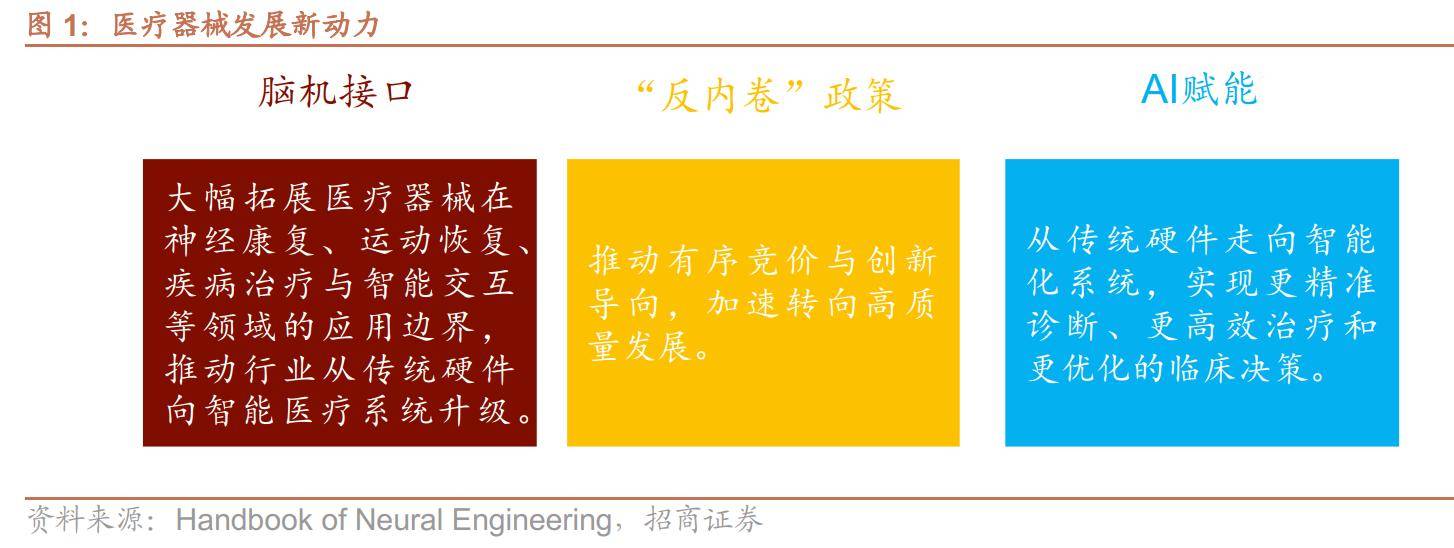
Core Viewpoint - The medical device sector is experiencing a rebound, driven by policy support, technological advancements, and a shift towards domestic innovation and global competition [1][4]. Group 1: Medical Device Sector Performance - On February 25, the medical device sector saw a rebound with the medical device index ETF (159898) rising by 0.90%, following a net subscription of 1.67 million yuan the previous trading day [1]. - Key stocks such as Aidi Te, Zhend Medical, and Lepu Medical saw significant gains, with Aidi Te rising over 5% and others like Hualan Biological and Yuyue Medical also showing strong performance [1]. Group 2: Brain-Computer Interface Developments - The brain-computer interface (BCI) sector is accelerating, with significant policy backing and capital investment. A semi-invasive BCI company, Borui Kang, is preparing for a listing on the Sci-Tech Innovation Board [4]. - The global BCI market is projected to grow from approximately $2.62 billion in 2024 to $12.4 billion by 2034, with a compound annual growth rate (CAGR) of 17.35% [4]. - In China, the BCI market is expected to reach 3.2 billion yuan in 2024 and grow to 6.14 billion yuan by 2028 [4]. Group 3: Export Resilience and Growth - China's medical device exports demonstrated strong resilience, with a total export value of $45.542 billion in the first 11 months of 2025, marking a year-on-year increase of 3.82% [5]. - The export structure is evolving, with significant growth in high-end products such as hospital diagnostic and treatment equipment, which increased by 8.36% [5]. Group 4: Domestic Market and Innovation - The implementation of the fifth batch of national high-value medical consumables procurement has significantly reduced prices, such as the cost of cochlear implants dropping from over 200,000 yuan to around 50,000 yuan [7]. - The domestic medical device market is projected to reach 1,017.4 billion yuan by 2026, with a CAGR of approximately 5.9% to 6.6% from 2020 to 2035, driven by aging population, equipment upgrades, and technological innovation [7]. - In 2025, a total of 3,402 medical device products were approved, including 76 innovative devices, maintaining a high approval rate for three consecutive years [7]. Group 5: ETF Performance - The medical device index ETF (159898) tracks the CSI All Medical Device Index, focusing on the medical equipment, consumables, and in vitro diagnostics sectors, with a notable exposure to the BCI concept at 23.79% [9]. - Since its inception, the ETF has achieved a total return of 1,015.07%, with an annualized return of 12.52% and a one-year annualized return of 20.86% [9]. - The revenue and net profit of the ETF's constituent stocks have shown a year-on-year recovery, indicating a gradual improvement in the industry's fundamentals [9].

2项脑机接口医疗器械行业标准立项,医疗器械指数ETF(159898)盘中涨超1%
Sou Hu Cai Jing· 2026-01-29 05:31
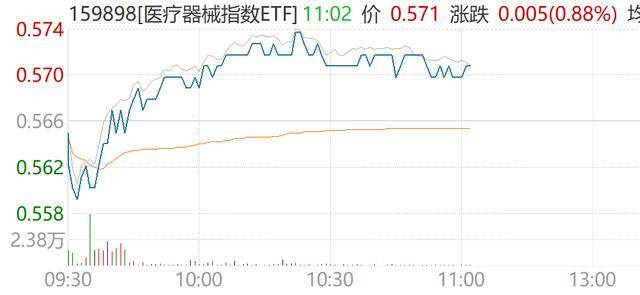
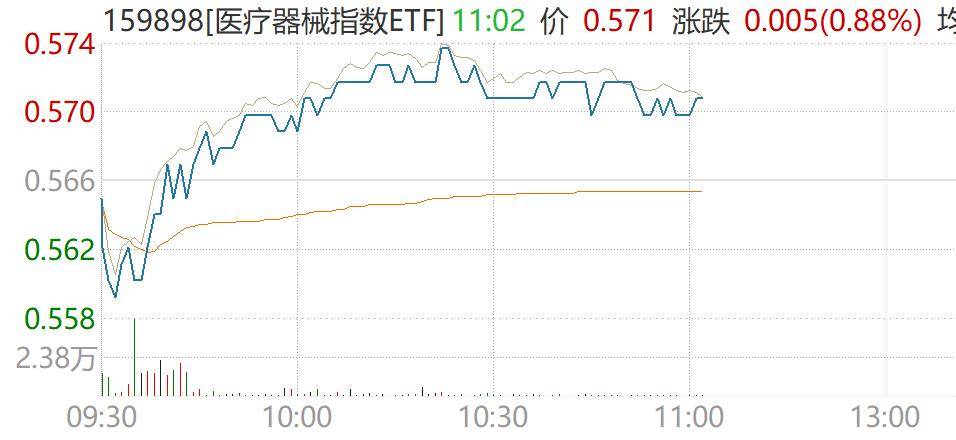
Group 1 - The medical device sector is experiencing a catalyst with the approval of two major standards in the brain-computer interface (BCI) field, leading to a rise in the medical device index ETF (159898) by approximately 0.88% [1][3] - The National Medical Products Administration has approved the establishment of two industry standards related to BCI technology, which addresses common challenges in the industry and aligns with previous government initiatives to promote innovation in the BCI sector [3] - The fourth largest weight stock in the medical device index ETF, Lepu Medical, announced an expected net profit of 800 million to 1.2 billion yuan for 2025, representing a year-on-year growth of 223.97% to 385.95% due to stable growth in cardiovascular intervention and contributions from new sectors [3] Group 2 - The medical device sector is seen as a strategic focus for the country, with policies aimed at optimizing competition and accelerating innovation in response to technological breakthroughs, including BCI and AI medical technologies [4] - The CSI All Share Medical Device Index includes 103 constituent stocks, focusing on medical equipment, consumables, and in vitro diagnostics, with a significant exposure to the BCI concept at 23.79% [7] - The index has shown impressive performance with a total return of 1015.07% since its inception and an annualized return of 20.86% over the past year, indicating a recovery in the industry's fundamentals [8]
政策+业绩双轮驱动!脑机接口标准落地,龙头净利预增超223%,医疗器械指数ETF(159898)盘中涨超1%
Sou Hu Cai Jing· 2026-01-29 03:38
Core Viewpoint - The medical device sector is experiencing a significant catalyst with the recent approval of two major standards in the brain-computer interface (BCI) field, leading to notable stock performance in related companies [1][3]. Group 1: Industry Developments - The National Medical Products Administration has approved two projects for the establishment and revision of standards related to BCI technology in medical devices, aimed at promoting high-quality development in the sector [3]. - This approval is seen as a direct implementation of previous guidelines issued by multiple government departments to foster innovation in the BCI industry [3]. - The BCI sector is currently in a transitional phase characterized by technological breakthroughs, clinical validation, and commercial deployment, with a focus on applications in medical rehabilitation and neurological disorders [3]. Group 2: Company Performance - The medical device index ETF (159898) saw a rise of approximately 0.88%, with significant gains from key stocks such as Yirui Technology (up 6.61%) and Lepu Medical (up over 3%) [1]. - Lepu Medical has projected a net profit of 800 million to 1.2 billion yuan for 2025, representing a year-on-year growth of 223.97% to 385.95%, driven by steady growth in cardiovascular interventions and contributions from new sectors [3]. - The overall performance of the medical device index has been strong, with a total return of 1015.07% since its inception and an annualized return of 20.86% over the past year [8]. Group 3: Market Outlook - The medical device sector is expected to gradually recover, supported by technological advancements and policy changes that optimize competition and accelerate innovation [4]. - The index focuses on 103 selected stocks, primarily in the medical equipment, consumables, and in vitro diagnostics sectors, with a significant exposure to the BCI concept at 23.79% [7]. - The international revenue of the index constituents is expanding, indicating a strategic orientation towards global market engagement [7].
医疗器械指数ETF(159898)冲击四连涨!脑机接口接棒商业航天要“起飞”?
Sou Hu Cai Jing· 2026-01-13 04:16
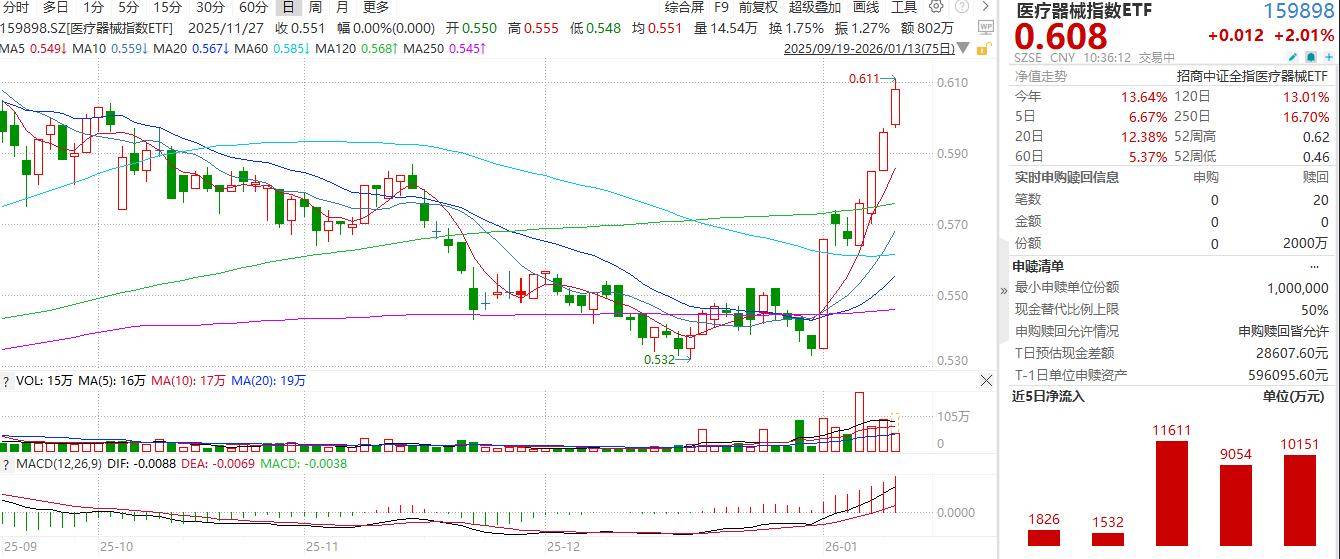
Group 1 - The medical device index ETF (159898) has shown strong performance, with a more than 2% increase in intraday trading, marking four consecutive days of gains, and a total net inflow of 342 million yuan over the past five trading days [1] - Strong Brain Technology, a Chinese brain-computer interface unicorn, has secretly submitted an IPO application in Hong Kong, potentially becoming the first listed company among the "Hangzhou Six Little Dragons," with a fundraising scale expected to reach several hundred million dollars [3] - The brain-computer interface sector is recognized as a significant technological breakthrough, with the national "14th Five-Year Plan" explicitly listing it as a future industry requiring forward-looking layout [3] Group 2 - The commercial pathway for brain-computer interfaces is expanding, with potential applications moving from medical rehabilitation to broader fields such as consumer electronics, smart homes, and industrial safety [3] - The global market for brain-computer interfaces is projected to exceed 10 billion dollars by 2030, with medical applications expected to dominate, and could grow to 145 billion dollars by 2040 [3] - The medical device index ETF (159898) tracks the CSI All-Share Medical Device Index, with 24% of its constituent stocks related to brain-computer interfaces, providing efficient coverage of this cutting-edge sector [4]
继脑机接口之后,AI制药“粉墨登场”?高贝塔医疗器械指数ETF(159898)连续6日吸金3.66亿元
Sou Hu Cai Jing· 2026-01-13 02:52
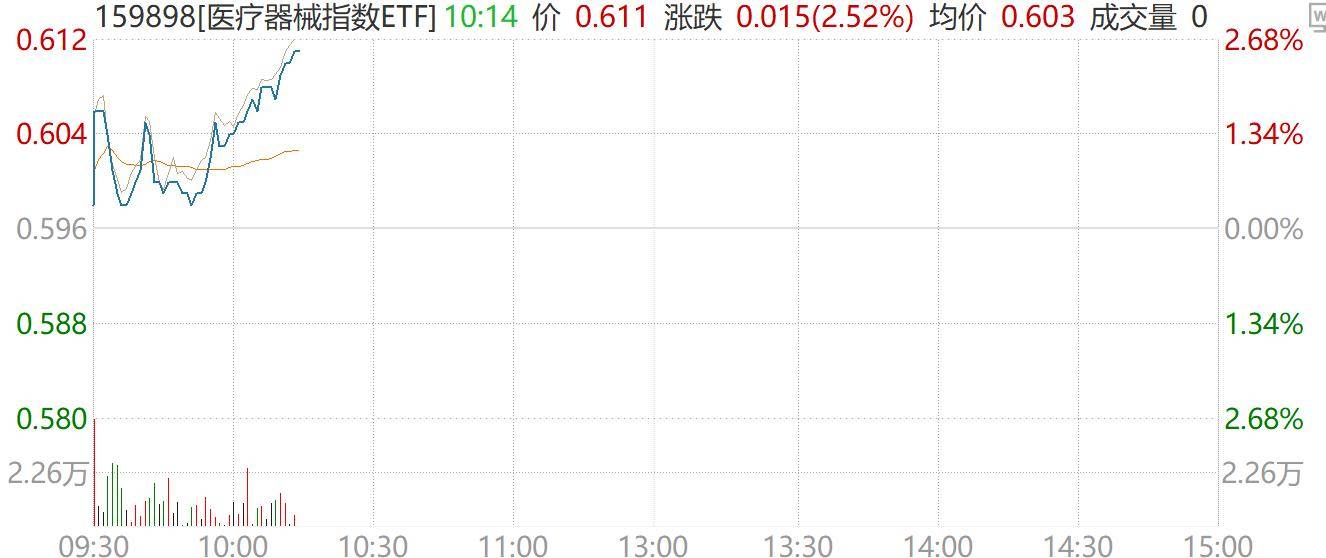
Group 1 - Nvidia and Eli Lilly will invest $1 billion over the next five years to establish an AI drug laboratory, focusing on accelerating medical discovery and production through robotics and physical AI [1] - The announcement has led to a significant rise in related pharmaceutical stocks, with Dean Diagnostics hitting the daily limit up for three consecutive trading days, and other companies like BGI Genomics and Berry Genomics seeing increases of over 16% and 8% respectively [1] - The medical device index ETF (159898) has gained 2.52% and has seen a net subscription of 366 million yuan over six consecutive days, indicating high market interest [1] Group 2 - Huafu Securities predicts that 2026 will mark the beginning of a new five-year period for AI healthcare, with expectations of more proactive fiscal signals supporting AI medical applications [2] - The current demand for AI applications in healthcare is expected to sustain the industry's long-term development, with recent events indicating a shift towards commercialization [2] - The National Medical Products Administration is expected to release ten measures by 2025-2026 to support the innovation and development of AI healthcare and high-end medical devices [2] Group 3 - The medical device index ETF (159898) tracks the CSI All-Share Medical Device Index, focusing entirely on the A-share medical device sector, with a pure beta quality [3] - The top ten holdings of the index include leading companies like Mindray Medical and United Imaging Healthcare, with over 80% of the portfolio in the ChiNext and STAR Market [3] Group 4 - The ETF's index includes a significant focus on brain-computer interface concepts, which account for approximately 24% of the index [4] - There is a scarcity of pure brain-computer interface stocks in the A-share market, presenting opportunities for capturing innovation in the industry [4] Group 5 - The medical device sector, which includes brain-computer interfaces, is expected to see substantial demand before and during the initial production phase of these technologies [5]
迪安诊断涨停!医疗器械指数ETF(159898)“含脑量”24%成脑机接口抢筹良器?
Sou Hu Cai Jing· 2026-01-12 01:58
Core Insights - The brain-computer interface (BCI) sector is experiencing significant momentum driven by multiple catalysts, including investment inflows into the medical device index ETF, which has a 24% exposure to BCI-related companies [1][4] - The medical device index ETF (159898) has attracted 264 million CNY over five consecutive days, indicating strong investor interest [1][2] - Key stocks in the ETF, such as Di'an Diagnostics and Innotec, have shown substantial price increases, reflecting positive market sentiment towards the BCI sector [1][3] Investment Trends - The medical device index ETF (159898) has seen a high opening with a gain of over 1%, and several component stocks have experienced significant price increases, indicating a bullish trend in the market [1][3] - The ETF's structure allows for efficient exposure to the BCI sector, which is currently underrepresented in the A-share market [2][4] Industry Dynamics - The BCI market is expected to grow significantly, with projections indicating a global market size of approximately 2.62 billion USD in 2024, increasing to 12.4 billion USD by 2034, reflecting a compound annual growth rate of 17.35% [4] - Domestic policies are increasingly supportive of BCI development, with goals set for 2027 and 2030 to establish a competitive industry ecosystem [3][4] - Technological advancements in BCI, including new wireless implant systems, are enhancing the feasibility and efficiency of these devices, further driving market interest [3][4]

脑机接口的“身份证”来了?新晋顶流,最强马斯克概念!
Jin Rong Jie· 2026-01-09 06:34
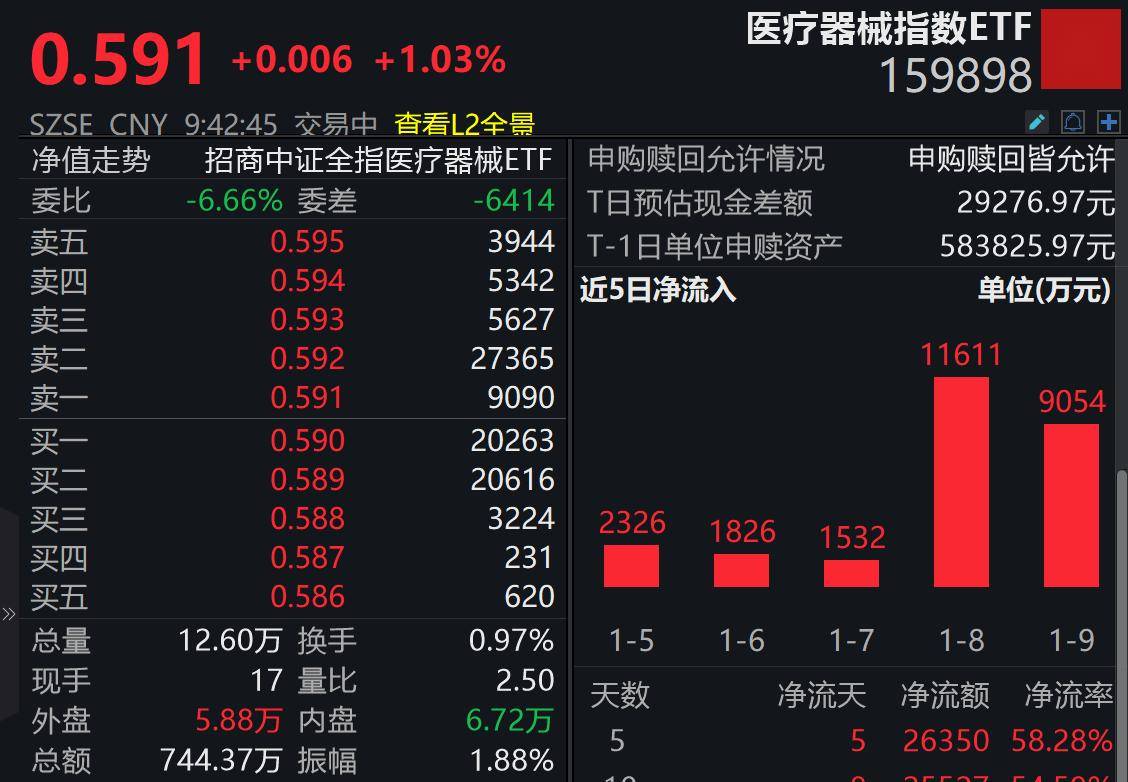
Core Insights - The announcement of the first non-invasive brain-computer interface (BCI) medical device registration in China marks a significant shift from laboratory research to clinical and market applications, indicating a new growth trajectory for the industry [1][2] - The medical device sector is experiencing a surge, with companies like Dean Diagnostics and Kingmed Diagnostics hitting their upper trading limits, reflecting strong market interest in BCI technologies [1][3] - The BCI sector is seen as a promising investment opportunity, with a clean chip structure and lower entry points compared to other tech sectors like satellites and chips [1] Industry Developments - The Chinese government has included BCI in its new five-year plan as a key future industry, signaling ongoing support for research and approval processes [2][3] - Major players in the industry are accelerating their efforts, with Neuralink announcing plans for large-scale production by 2026 and significant investments being made domestically [2][3] - Technological advancements in China, such as the ability for paralyzed patients to drink water using their thoughts, demonstrate the country's leadership in BCI technology [2] Market Dynamics - The BCI technology is categorized under medical devices, which are essential for addressing real and painful issues faced by patients, such as stroke recovery and spinal cord injuries [3][4] - The medical device index ETF (159898) includes approximately 24% of companies with substantial BCI business operations, providing an efficient investment vehicle for this emerging sector [3][4] - The medical device sector, which has faced declines over the past four years, is expected to see a turnaround driven by advancements in BCI technology [4]
卫星翻倍、有色称王、脑机顶流,三大赛道起爆!谁是真王者?
Jin Rong Jie· 2026-01-09 05:32
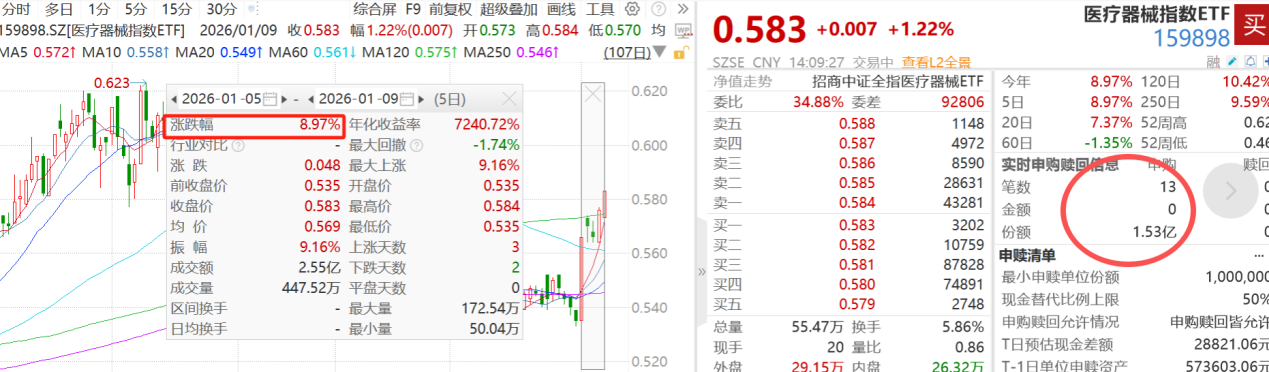
Core Viewpoint - The years 2025 and 2026 are expected to witness significant historical milestones in the Chinese stock market, particularly with the Shanghai Composite Index breaking records and sectors like aerospace, non-ferrous metals, and brain-computer interfaces experiencing rapid growth [1]. Group 1: Satellite Industry - The satellite industry is currently in an unprecedented acceleration phase, with the satellite industry ETF (159218) being the first in the commercial aerospace sector to double in value this year [1]. - The International Telecommunication Union (ITU) has submitted an application for an additional 203,000 satellites, covering 14 satellite constellations, which indicates a potential doubling of satellite launches in 2026 compared to 2025 [4]. Group 2: Non-Ferrous Metals - The non-ferrous metals sector is poised for a new bull market in 2026, driven by the weakening of the US dollar and the increasing demand for materials like copper and rare earths, which are essential for electric vehicles, AI data centers, and high-end manufacturing [5]. Group 3: Brain-Computer Interfaces - The brain-computer interface sector is gaining attention due to its inclusion in the "14th Five-Year Plan" and significant advancements such as Neuralink's announcement of mass production in 2026 and successful clinical trials of domestic products [6]. - The most immediate application of brain-computer interfaces is in medical rehabilitation for patients with spinal injuries and strokes, highlighting the importance of practical applications over speculative concepts [8]. - The focus on brain-computer interfaces should be on high-end medical devices, as the sector is currently experiencing a policy and innovation cycle that supports its growth [8].
脑机接口量产临界,医疗器械指数ETF(159898)连续4日获资金净流入、规模站上新高
Sou Hu Cai Jing· 2026-01-09 03:24
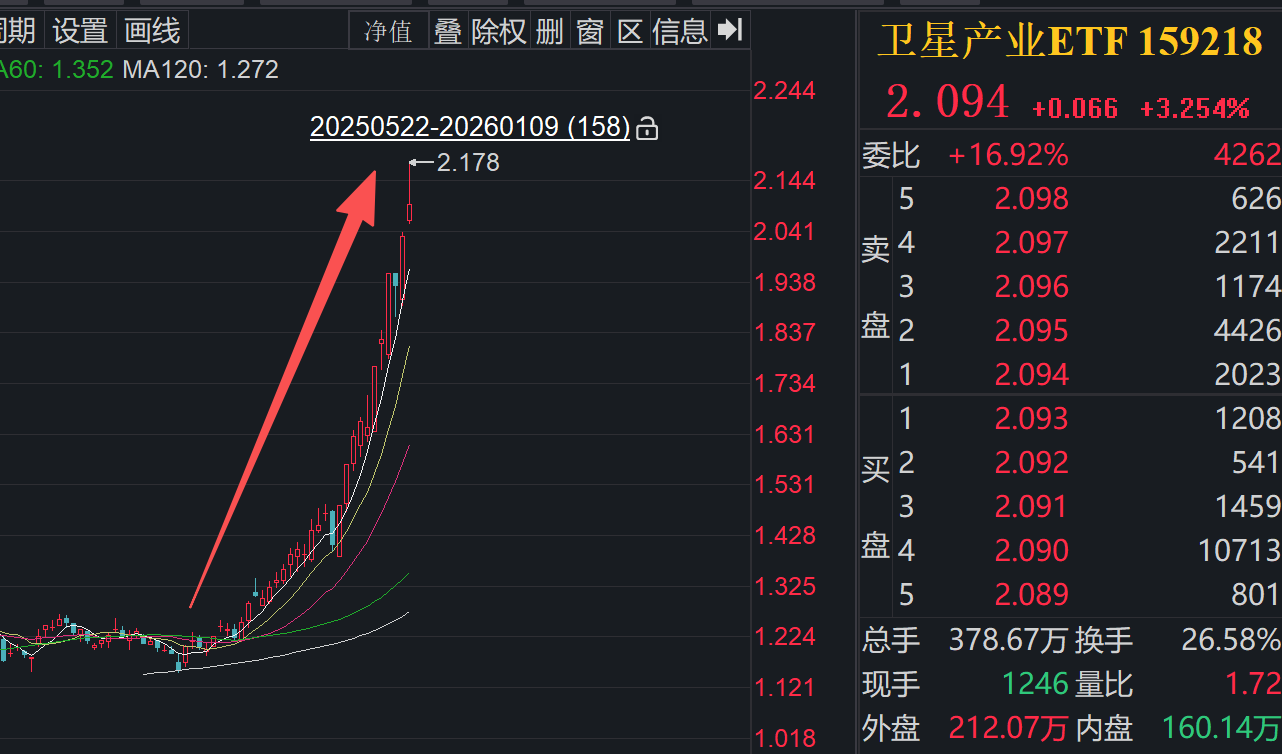
Group 1 - The core viewpoint of the article highlights the increasing market and funding attention towards brain-computer interfaces (BCIs), which are seen as a cutting-edge technology with significant future industry potential [2] - The medical device index ETF (159898) has seen a net inflow of over 170 million yuan in the last four trading days, with a single-day inflow exceeding 116 million yuan on January 8, marking a new high in its scale [2] - The medical device index ETF (159898) includes approximately 24% of companies with substantial involvement in the BCI sector, making it a convenient and efficient tool for investment in this emerging field [2][3] Group 2 - BCIs are interdisciplinary technologies that integrate neuroscience, computer science, and medicine, enabling direct communication between the brain and external devices [4] - Current applications of BCI technology are primarily in medical rehabilitation, particularly for patients recovering from strokes and spinal cord injuries, with potential future applications in education, entertainment, and industry [4] - The BCI sector is expected to experience strong growth driven by simultaneous advancements in policy, industry, and technology, with significant milestones anticipated by 2026 [7] Group 3 - The domestic BCI "unicorn" company, Qiangnao Technology, recently completed approximately 2 billion yuan in financing, becoming the second-largest financing in the BCI field globally, following Neuralink [7] - The Chinese government is actively supporting the BCI industry through various policies, emphasizing its importance as a key development area in the new five-year plan [7] - Recent breakthroughs in domestic BCI technology include successful clinical trials of fully implanted, wireless BCI products, indicating rapid advancements in the field [9] Group 4 - China's BCI market size grew from approximately 1 billion yuan in 2020 to about 1.73 billion yuan in 2023, representing a 12.5% share of the global BCI market [10] - Different institutions have varying growth forecasts for the BCI industry, with estimates suggesting the global market could reach 7.63 billion USD by 2029 [11] - The global BCI market is projected to grow to approximately 12.4 billion USD by 2034, with a compound annual growth rate (CAGR) of 17% from 2025 to 2034 [14] Group 5 - BCIs are considered a potential key catalyst for driving upward trends in the medical device sector, supported by innovation and policy backing [15] - The medical device index ETF (159898) tracks the entire A-share medical device sector, with a pure representation of the industry and a 24% inclusion of BCI concepts, making it suitable for capturing opportunities in this emerging market [15]
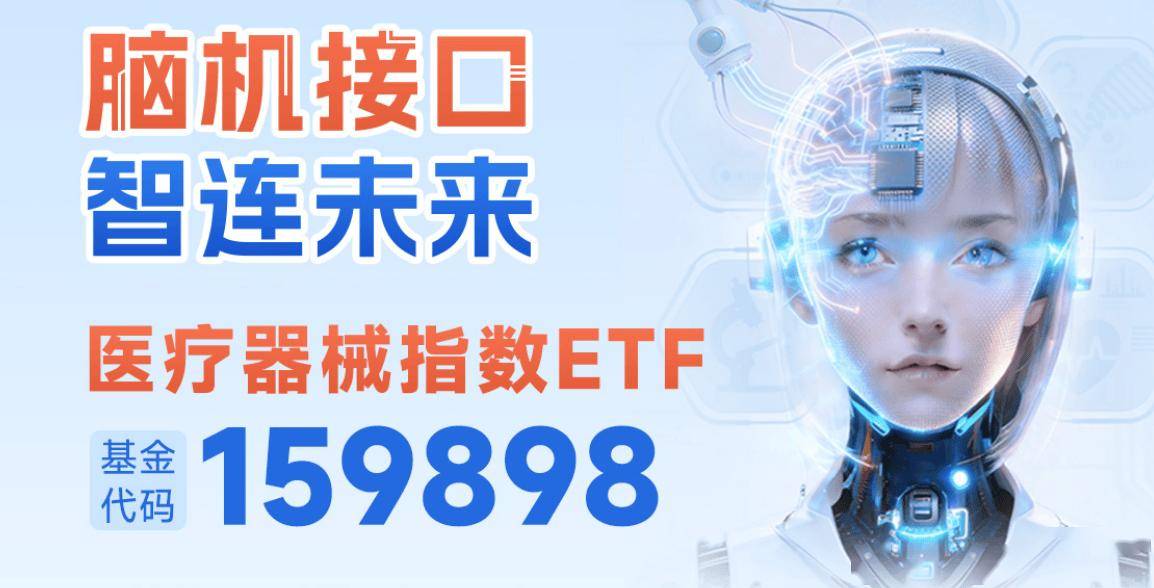
脑机接口燃爆市场!医疗器械指数ETF(159898)含“脑”量24%、盘中获大额净流入
Sou Hu Cai Jing· 2026-01-08 06:36
Core Viewpoint - The brain-computer interface (BCI) sector is experiencing significant growth, driven by technological advancements and increased investment, particularly in the A-share market, with related stocks showing strong performance [1][5]. Group 1: Market Performance - The medical device index ETF (159898) has seen a rise of over 1.94%, with approximately 37 million yuan in net inflow as of the report [1]. - Key stocks in the BCI sector include Kewei Medical, which surged over 19%, and Shuoshi Bio, which increased over 13%, among others [3]. Group 2: Industry Growth - The global BCI market has grown from $1.2 billion in 2019 to nearly $2 billion in 2023, with a compound annual growth rate (CAGR) exceeding 13% [5]. - Projections indicate that the global BCI industry could reach $7.63 billion by 2029, with a CAGR of over 25% from 2024 to 2029 [5]. Group 3: Investment Opportunities - The BCI sector is positioned at a critical juncture with strong policy support, rapid technological iteration, and accelerated commercialization, making it a promising area for investment [8]. - The medical device index ETF (159898) tracks a broad range of medical device sectors, with leading companies like Mindray Medical and United Imaging Healthcare, providing a pure representation of the A-share medical device sector [8][9].


