
植入式无线脑机接口系统

Search documents
强脑科技拟赴港IPO 脑机接口商业化前景如何?
2 1 Shi Ji Jing Ji Bao Dao· 2026-01-26 08:23
Group 1 - The core viewpoint of the articles highlights the growing interest and investment in the brain-computer interface (BCI) sector, with companies like BrainCo preparing for IPOs amid a favorable market environment [1][8] - BrainCo, established in 2015, focuses on non-invasive BCI technology and has recently completed a financing round of approximately 2 billion RMB, achieving a post-investment valuation of over 1.3 billion USD [1] - The BCI market is projected to grow significantly, with estimates suggesting a global market size of approximately 2.6 billion USD in 2024, increasing to 2.9 billion USD in 2025 and further to 3.3 billion USD in 2026 [9] Group 2 - BCIs are primarily expected to impact the medical field, particularly for individuals with neurological impairments, aiming to restore or replace certain neural functions [2] - The BCI technology is categorized into invasive, semi-invasive, and non-invasive types, with non-invasive systems being more widely accepted due to their safety [3] - Companies like Neuralink are leading the invasive BCI path, while BrainCo focuses on non-invasive applications in rehabilitation and health management [3][4] Group 3 - The regulatory landscape for BCI products is becoming clearer, with the National Healthcare Security Administration introducing specific fees for non-invasive BCI adaptations to enhance accessibility [6] - The industry is witnessing a significant increase in R&D investment, with an average R&D expense ratio of about 18% among BCI-related companies [12] - The number of domestic BCI companies in China has surpassed 200, with expectations for the industry scale to reach tens of billions of RMB by 2026 [12] Group 4 - Ethical and regulatory challenges remain a concern in the application of BCI technology, particularly regarding data privacy and the potential for misuse in educational settings [7] - The market for BCI is experiencing a phase of industrial expansion, with a notable increase in financing activities, indicating a robust interest in clinical advancements [12] - Policy support is crucial for the BCI sector, with government initiatives aimed at fostering innovation and establishing a competitive industry ecosystem by 2030 [13][14]
脑机接口行业跟踪:马斯克宣布脑机接口公司Neuralink2026年将实现大规模生产
Changjiang Securities· 2026-01-05 23:30
Investment Rating - The report maintains a "Positive" investment rating for the healthcare sector [10]. Core Insights - Elon Musk announced on December 31, 2025, that his brain-computer interface company Neuralink will begin "mass production" of brain-computer interface devices in 2026, transitioning to a "more streamlined and almost fully automated surgical process" [2][6]. - The brain-computer interface market has significant growth potential, with invasive products expected to become a key focus area. Internationally, companies like Neuralink are leading in technology, while several domestic companies in China have made breakthroughs in R&D, supported by favorable policies [2]. - The global brain-computer interface market is projected to reach USD 2.62 billion by 2024, with a compound annual growth rate (CAGR) of 17.4% from 2025 to 2034. In China, the market is expected to exceed RMB 6 billion by 2028, with a CAGR of approximately 17.7% from 2024 to 2028 [14]. - Neuralink employs a minimally invasive implantation approach, with 12 individuals having implanted devices as of September 2025, totaling over 20,000 hours of usage [14]. - Several domestic companies have achieved breakthroughs in brain-computer interface technology, with notable advancements in clinical trials and regulatory approvals [14]. - The industry is encouraged by supportive policies, with the National Healthcare Security Administration in China having established pricing for brain-computer interface services [14]. - Experimental animals, such as mice and monkeys, play a crucial role in brain-computer interface research, with mice being used for initial testing and monkeys for more advanced validation due to their closer anatomical and functional similarities to humans [14]. - Recommended companies to watch include Meihao Medical for brain-computer interfaces and Zhaoyan New Drug for experimental animals [14].
医药生物行业周报:国内侵入式脑机接口再迎突破,产业发展加速-20251224
Shanghai Securities· 2025-12-24 12:04
Investment Rating - The industry investment rating for the pharmaceutical and biotechnology sector is "Hold" [2]. Core Insights - The report highlights significant breakthroughs in the domestic brain-computer interface (BCI) technology, indicating an acceleration in industry development and international recognition [5]. - The report emphasizes the transition of invasive brain-computer interfaces from laboratory settings to market approval processes, suggesting a rapid expansion of application scenarios [6]. Summary by Relevant Sections Industry Overview - The report discusses the recent advancements in invasive brain-computer interface technology, including the first domestic medical device entering the FDA's breakthrough therapy pathway, which enhances the international recognition of China's BCI technology [5]. - It mentions successful clinical trials using high-throughput wireless invasive BCI systems, enabling patients with high-level paralysis to control smart wheelchairs and robotic dogs through brain signals, achieving a 15%-20% improvement in brain control performance [5]. Investment Recommendations - The report suggests focusing on companies such as Innovation Medical, Aipeng Medical, and Sanbo Brain Science, as they are positioned to benefit from the advancements in the BCI sector [6].



修复瘫痪、增强常人,脑机接口会成未来人类「外挂」吗?
36氪· 2025-12-07 09:55
Core Viewpoint - The article discusses the emerging potential of brain-computer interfaces (BCIs) in consumer healthcare over the next five to ten years, highlighting significant advancements and investments in the field, particularly in the context of medical applications and the integration of AI technologies [4][10]. Group 1: Industry Developments - In mid-2025, Neuralink, led by Elon Musk, secured $650 million in funding, reaching a valuation of $9 billion, expanding its focus from severe motor function disorders to include rehabilitation for patients with speech and vision impairments [4]. - In August, Sam Altman initiated the establishment of Merge Labs, aiming to raise $250 million from OpenAI to utilize ultrasound technology for reading and modulating brain signals [5]. - In November, Synchron raised $200 million in Series D funding, while Paradromics received FDA approval to commence human clinical trials for speech function restoration using BCIs [6]. Group 2: Chinese Market Dynamics - Chinese BCI startups, such as Borui Kang and Ladder Medical, are progressing steadily under strict medical device regulations, leveraging domestic clinical resources to advance clinical trials and product optimization [7]. - Ladder Medical's invasive BCI system completed China's first prospective clinical trial at Huashan Hospital in March, and in November, it entered the "green channel" of the National Medical Products Administration, potentially shortening the clinical validation to market access timeline [7]. Group 3: Application Scenarios - The primary application scenarios for BCIs include brain-controlled systems for decoding motor and speech intentions, neuroregulation for managing brain disorders, and sensory reconstruction for restoring lost sensory functions [11][12]. - The clinical value of BCIs in treating diseases is expected to be validated within the next three to five years, improving patients' quality of life and work capabilities [13]. Group 4: Future Prospects - The consumer healthcare attributes of BCIs are anticipated to emerge in the next five to ten years, transforming human-machine interaction and enhancing efficiency through direct brain control of intelligent devices [14]. - The goal of Ladder Medical's BCI system is to enable severely disabled patients to control external electronic devices and improve their quality of life, including daily activities and re-engagement with the digital world [15][17]. Group 5: Data and AI Integration - The accumulation of single-cell data from BCIs is crucial for advancing neuroscience understanding and enhancing product design and application scenarios [21][23]. - AI and algorithms will play a significant role in processing complex brain data, with the potential to develop a foundational model that improves the performance of future patients' decoding capabilities [24]. Group 6: Human-Machine Fusion - The integration of BCIs with AI is seen as a necessary evolution, creating a seamless connection between humans and machines, which could lead to enhanced capabilities beyond current human limits [27][29]. - The article emphasizes the importance of maintaining human control over AI systems to prevent loss of agency, advocating for a harmonious coexistence between humans and intelligent systems [29].

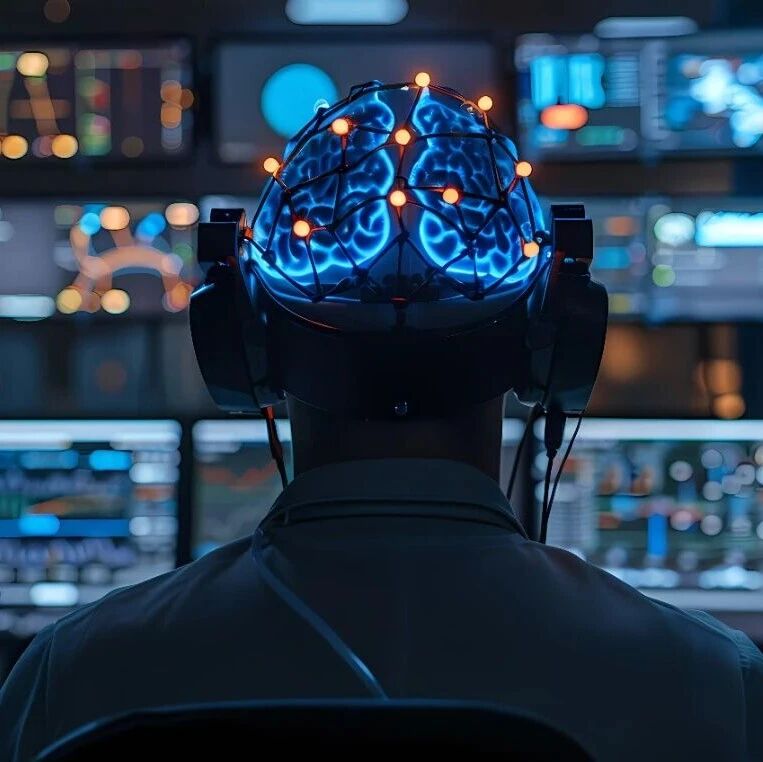
脑机接口加速临床普惠:首例政府指导价手术落地武汉
2 1 Shi Ji Jing Ji Bao Dao· 2025-12-05 10:39
Core Viewpoint - The first government-guided pricing brain-computer interface (BCI) surgery in China has been successfully implemented, marking the formal inclusion of implantable BCI technology into the standardized medical service system [1][3]. Group 1: Clinical Application and Policy Support - The BCI technology is rapidly transitioning from laboratory research to clinical application, with the first surgery performed in Wuhan on a patient with spinal cord injury [1][3]. - The surgery utilized a 64-channel high-throughput flexible electrode device, which accurately monitors brain signals related to hand movement and sensation [3]. - The National Healthcare Security Administration has established specific pricing for BCI services, including a placement fee of 6,552 yuan per procedure, which provides a regulatory framework for clinical implementation [3][4]. Group 2: Industry Development and Market Potential - The successful surgery at Tongji Hospital is seen as a critical step towards the large-scale clinical application of BCI technology, fostering its accessibility and industrial development [4][5]. - Multiple cities in China have established clinical transformation centers for BCI, indicating a growing ecosystem and collaborative environment for BCI technology [4][6]. - The BCI market in China is projected to reach 3.2 billion yuan in 2024, with an expected growth rate of 18.81% year-on-year, indicating significant market potential [6][7]. Group 3: Investment and Competitive Landscape - Investment activity in the brain science and BCI sector is increasing, with 14 financing events reported in the first half of 2025, totaling over 800 million yuan [7]. - China has a unique advantage in the BCI industry, with over 800 core enterprises in the sector, primarily located in China and the United States [7]. - The BCI technology is becoming a focal point of global technological competition, with advancements in flexible, minimally invasive, and intelligent solutions being pursued [7].

重磅大会密集袭来!瞄准这个未来产业
Zheng Quan Shi Bao Wang· 2025-12-03 00:02
Group 1: Conferences and Events - The "2025 Brain-Computer Interface Conference" will be held in Shanghai from December 4 to 5, featuring the first large-scale domestic multi-track brain-computer interface competition and a developer conference [2] - The "2025 Intelligent Connection·Future" International Conference will take place in Hangzhou on December 11 to 12, focusing on the cutting-edge technology and application hotspots of brain-computer intelligence [2] - The "2025 Shenzhen Brain Expo" will occur in Shenzhen on December 28 to 29, promoting a new pattern of brain-computer interface development through three major interaction themes [2] Group 2: Policy Support - Brain-computer interfaces have been elevated to a national strategy and are included in the "14th Five-Year Plan" [3] - The Ministry of Industry and Information Technology and other departments issued implementation opinions aiming for breakthroughs in key technologies by 2027 and significant improvements in innovation capabilities by 2030 [3] - Local policies supporting brain-computer interfaces have emerged in various regions, including Shanghai and Beijing, with specific targets for clinical trials and application scenarios [3] Group 3: Investment and Financing - As of November, there have been 28 financing events in the brain-computer interface sector in China, with total financing exceeding 5 billion yuan, including a record 350 million yuan financing by Ladder Medical [4] - Capital is accelerating towards the brain-computer interface field due to policy encouragement [4] Group 4: Market Potential - The global market for brain-computer interfaces in medical applications is projected to reach 40 billion USD by 2030 and exceed 145 billion USD by 2040 according to McKinsey [5] Group 5: Company Developments - Sixteen brain-computer interface concept stocks have received institutional research, with companies like Xiangyu Medical and Lepu Medical actively engaging in the sector [7] - Companies are focusing on integrating brain-computer interface technology into their products, with significant R&D investments directed towards this area [7]
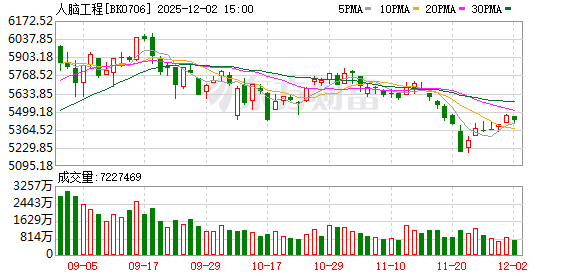
脑机接口“大会潮”来袭 行业发展按下加速键
Zheng Quan Shi Bao· 2025-12-02 18:04
Core Insights - The brain-computer interface (BCI) has been elevated to a "national strategy" and is recognized as one of the six future industries requiring forward-looking layout, as stated in the 14th Five-Year Plan [2] - Multiple large-scale BCI conferences are scheduled in December 2025 across various cities, showcasing significant advancements and investment opportunities in the sector [1] Industry Developments - Various local governments, including Shanghai, Beijing, Sichuan, Zhejiang, and Jiangxi, have introduced supportive policies for BCI development [3] - Shanghai's action plan aims for breakthroughs in semi-invasive BCI products by 2027, while Beijing's plan focuses on achieving major original results in key technologies by the same year [3] Clinical Application and Regulation - The National Medical Insurance Administration has opened a "green channel" for BCI and other innovative medical products to facilitate their approval [4] - The National Medical Products Administration has included a wireless implanted BCI system in its special review process for innovative medical devices [4] Investment Trends - Capital is rapidly flowing into the BCI sector, with 28 financing rounds completed in 2023, totaling over 5 billion yuan, and a record 350 million yuan raised by Ladder Medical [5] - The global market for BCIs in medical applications is projected to reach $40 billion by 2030 and exceed $145 billion by 2040 [5] Market Performance - BCI-related stocks have shown remarkable performance in 2023, with companies like Century Huatong rising over 250% and others doubling in value [6] - 16 BCI concept stocks have undergone institutional research, indicating strong interest from investors [6] Company Insights - Xiangyu Medical reported that 60%-70% of its R&D investment is related to BCI technology [7] - Lepu Medical plans to deepen its brainwave collection technology and integrate it with neural stimulation and intelligent algorithms [7] - Meihua Medical is collaborating with BCI clients to facilitate efficient commercialization from laboratory research to mass production [7]
外高桥集团启动脑机接口伙伴计划
Di Yi Cai Jing· 2025-11-27 12:29
Core Insights - The Waigaoqiao Group has launched the "Brain-Computer Interface Innovation Development Partnership Program" to enhance its position in the brain-computer interface (BCI) sector, aiming to become a preferred "landing point" and "accelerator" for BCI innovations [1] Group 1: Partnership Program Details - The partnership program aims to unite enterprises, hospitals, and government departments to collaboratively build an innovative ecosystem that addresses bottlenecks in clinical transformation, cross-border data, and market access for BCI technology [1] - Participating companies will receive the "Waigaoqiao Brain-Computer Interface Product Service Package," which includes comprehensive support from cross-border R&D pilot projects to clinical approval acceleration and market expansion [1] - Initial participants will also benefit from preferential support in terms of space and guidance on relevant industrial policies provided by the Waigaoqiao Group [2] Group 2: Industry Context and Developments - The BCI sector is on the verge of transitioning from laboratory research to clinical application, with companies aiming to establish a full-service capability from R&D to market entry to capture future industry opportunities [2] - Recently, Ladder Medical's "Implantable Wireless Brain-Computer Interface System" has entered the special review process by the National Medical Products Administration, marking a significant milestone for invasive BCI products in China [2] - Ladder Medical has developed the world's smallest brain-controlled implant and is progressing towards full domestic production, collaborating with Fudan University Huashan Hospital for prospective clinical trials [2] Group 3: Strategic Advantages - The development of BCI technology relies heavily on interdisciplinary collaboration, cross-border R&D, and international cooperation, which aligns with Waigaoqiao's strategic advantages [3] - Waigaoqiao offers "bonded R&D" policy functions and serves as a hub connecting domestic and international markets, facilitating data cross-border and personnel movement [3] - The company provides comprehensive policy adaptation services for BCI enterprises, covering the entire process from clinical trials to overseas registration [4]

打造百亿级产业集群,全国首个脑机接口未来产业集聚区12月投入运营
Xuan Gu Bao· 2025-11-21 07:20
Group 1 - The first brain-computer interface (BCI) industrial cluster in China, named "Brain Intelligence World," is officially operational as of December 10, announced during the National Brain-Computer Interface Conference [1] - The cluster is located in the core area of the Hongqiao International Central Business District and aims to gather approximately 150 medical device companies by 2027, achieving an industrial scale of about 10 billion yuan [2] - The cluster will focus on two strategic engines: the BCI future industrial cluster and a global innovative medical device exhibition and training center, along with four functional platforms [2] Group 2 - The development path for the cluster includes three phases: building three core platforms and nurturing 2-3 leading companies by 2025-2026, breaking through key technologies and reaching a fund scale of 1 billion yuan by 2027-2028, and striving to create a national technology innovation center by 2029-2030 [2] - The area has already attracted clinical resources, including Huashan Hospital's Hongqiao branch, which has an annual outpatient volume exceeding 1 million, providing significant clinical transformation scenarios for BCI technology [2] Group 3 - The Central Committee of the Communist Party of China has included BCI as one of the six major directions for future industries in the 15th Five-Year Plan, elevating the field to a national strategic level [3] - With rapid advancements in neuroscience, artificial intelligence, and microelectronics, BCI technology is transitioning from laboratory research to commercial applications, with the global market for medical applications projected to reach $40 billion by 2030 and exceed $145 billion by 2040 [3] Group 4 - The Ministry of Industry and Information Technology and other departments have issued implementation opinions to promote innovation in the BCI industry, aiming for breakthroughs in key technologies by 2027 [4] - Related companies have seen stock price increases, with Innovation Medical and Xiangyu Medical experiencing significant gains following the announcement [4] Group 5 - Zhongke Information is developing a closed-loop BCI system for smart anesthesia and rehabilitation, while Sanbo Neuroscience is collaborating with Tsinghua University on a precision medicine research center [7] - Hanwei Technology is focusing on flexible micro-nano sensor development for BCI applications, and Yingqu Technology is the largest seller of BCI devices in China [7] - Chengyitong is leading BCI hardware and signal decoding algorithm development, while Yanshan Technology has successfully implemented non-invasive BCI in gaming and is working on invasive applications [8]
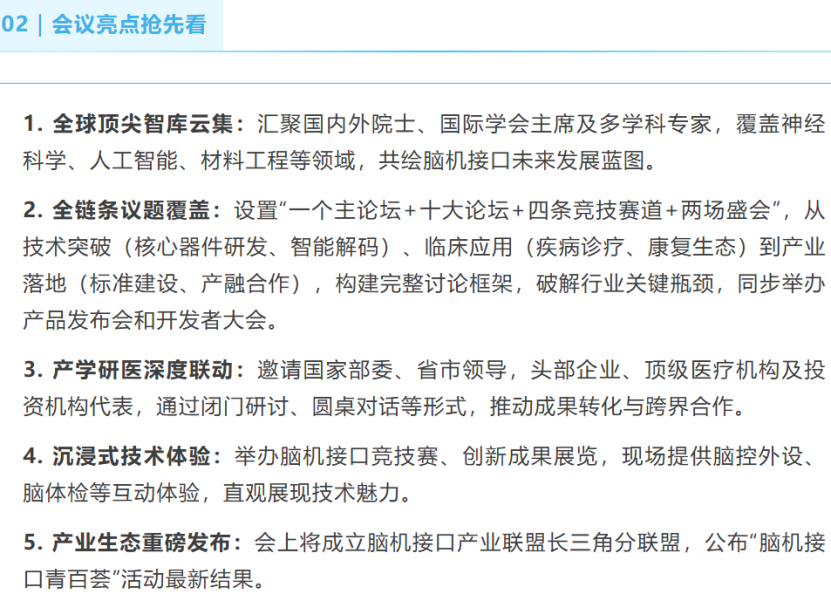
翔宇医疗:超六成研发投向脑机接口领域,明年合作医院将覆盖至1000家
Zheng Quan Shi Bao Wang· 2025-11-19 09:33
Core Insights - Brain-computer interface (BCI) technology has achieved a significant breakthrough in policy, with Shanghai Ladder Medical Technology Co., Ltd. announcing that its "implantable wireless brain-computer interface system" has entered the special review process for innovative medical devices by the National Medical Products Administration, marking a transition from laboratory to clinical application [1] - Interest in companies related to brain-computer interfaces has surged, with over ten brokerages and several investment funds conducting joint research on Xiangyu Medical [1] Company Developments - Xiangyu Medical reported a total R&D investment of 49.0947 million yuan in the third quarter, representing a year-on-year increase of 27.67%, with approximately 60%-70% allocated to brain-computer interface-related fields [2] - The company has established strategic partnerships with over 260 large hospitals to develop brain-computer interface treatment centers and research-oriented wards, aiming to cover 500 top-tier hospitals by the Spring Festival and expand to over 1,000 hospitals next year, with progress ahead of expectations [2] - Xiangyu Medical's innovative products, including those utilizing brain-computer interface technology, present new opportunities for collaboration with high-level hospitals, enhancing the company's brand positioning and influence in the high-end hospital market [2]
