高钙牛奶燕麦片

Search documents
菌落总数超标!“燕麦第一股”西麦再登市场监管总局抽检“黑榜”
Guo Ji Jin Rong Bao· 2026-01-21 12:03
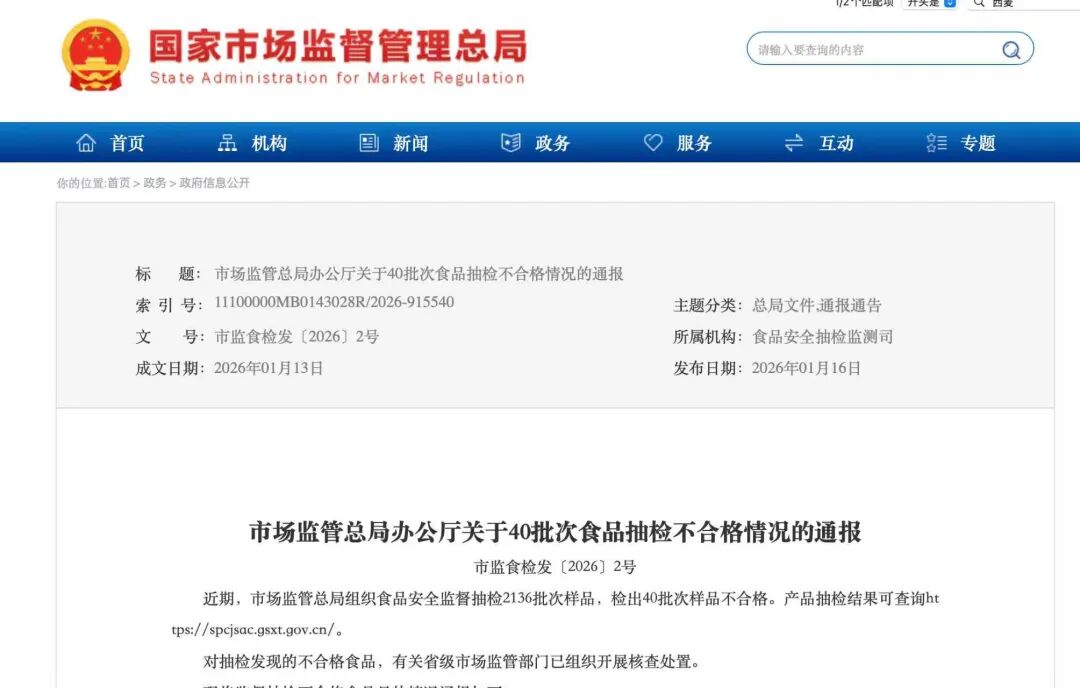
Core Viewpoint - Ximai Food, known as "China's Oatmeal First Stock," has been flagged for non-compliance with microbial standards, following a previous incident of excessive mold levels in 2024, raising concerns about its product safety and quality control measures [1][7]. Group 1: Product Quality Issues - Ximai Food's "Middle-aged Nutritional Oatmeal" was found to have unacceptable total bacterial counts, exceeding the national food safety standards during a recent inspection of 2,136 samples, with 40 samples identified as non-compliant [2][4]. - The specific bacterial counts for the oatmeal samples were recorded as 34,000 CFU/g, 49,000 CFU/g, 18,000 CFU/g, 15,000 CFU/g, and 25,000 CFU/g, all surpassing the allowable limits [2][4]. - The company attributed the quality issues to improper management by a distributor, which has since terminated its partnership with Ximai [1][7]. Group 2: Historical Context and Recurrent Issues - This incident follows a previous case in late 2024 where another product, "High-Calcium Milk Oatmeal," was also flagged for excessive mold, with counts significantly exceeding the safety limit [7][8]. - Ximai has faced multiple quality control issues in the past, including a 2019 incident involving "Oatmeal Walnut Powder" due to mold contamination [8]. - The frequency of these quality problems coincides with Ximai's strategic push into the health market, which may undermine consumer trust and impact sales and partnerships [8]. Group 3: Regulatory and Market Implications - The National Market Supervision Administration indicated that such issues may stem from inadequate control over production and processing hygiene, as well as potential problems with packaging and storage conditions [4]. - As Ximai aims to establish a new growth trajectory focused on health products, the ongoing quality concerns could jeopardize its brand value, which is closely tied to food safety [8].

难“啃”的面包:桃李面包上半年业绩遭“毒打”,桂发祥亏损
Bei Ke Cai Jing· 2025-09-12 03:56
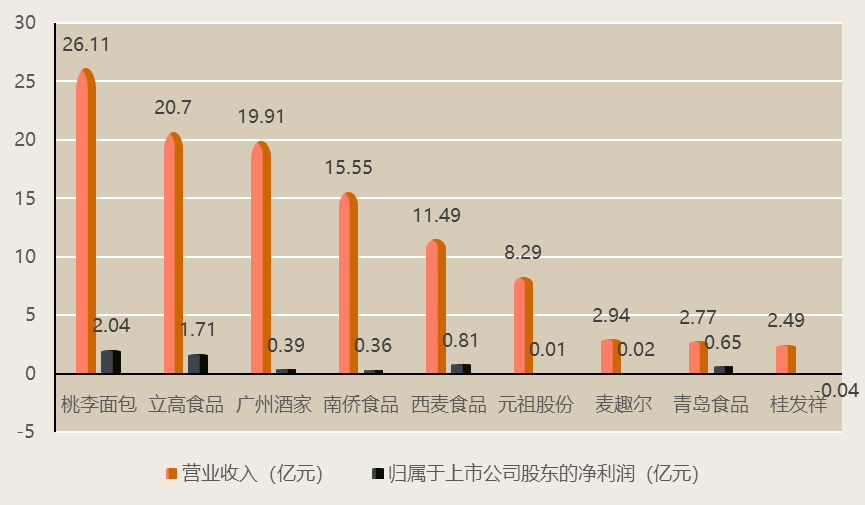
Core Viewpoint - The baking industry is experiencing significant performance divergence, with some companies like Tao Li Bread facing substantial profit declines while others like Li Gao Food are showing steady growth [1][4][14]. Group 1: Company Performance - In the first half of the year, the total revenue of nine listed baking companies in A-shares was approximately 11.03 billion yuan, with a net profit attributable to shareholders of about 595 million yuan [1][4]. - Tao Li Bread, known as the "first stock of bread" in A-shares, reported a net profit of approximately 204 million yuan, a year-on-year decline of 29.7% [2][6]. - The revenue of Tao Li Bread was about 2.61 billion yuan, down 13.55% year-on-year, with a net profit excluding non-recurring gains and losses of approximately 194 million yuan, a decline of 30.03% [6][7]. Group 2: Industry Challenges - The baking industry is facing severe challenges, with trends moving towards chain operations, segmentation, and health-oriented products, emphasizing high cost-performance and differentiated competition [3][14]. - The competition is intensifying, with new entrants in the short-shelf-life bread and general baking products market, leading to increased promotional costs and pressure on profit margins [9][18]. Group 3: Regional Performance - Tao Li Bread's revenue declined across all regions except for the Central China region, indicating a widespread downturn in sales performance [7]. Group 4: Cost and Pricing Pressures - Companies are experiencing pressure from rising costs and sensitivity to end prices, making it difficult to raise prices without impacting profit margins [18]. - The operational challenges include decreased foot traffic and average transaction value in direct sales channels, contributing to revenue declines [10]. Group 5: Food Safety Concerns - Food safety has become a recurring theme in the financial reports of baking companies, with several firms, including Tao Li Bread, facing scrutiny and complaints related to product quality [19][20][25].