高铁列车

Search documents
京津冀协同发展十二周年:“轨道上的京津冀”里程翻倍,“多城记”稳步推进区域高质量发展
Hua Xia Shi Bao· 2026-02-27 06:28
Core Insights - The article discusses the significant progress and development of the Beijing-Tianjin-Hebei (Jing-Jin-Ji) region, emphasizing the expansion of transportation networks and economic growth over the past 12 years. Transportation Development - The high-speed rail network in the Jing-Jin-Ji region has expanded from 1,284 kilometers at the end of 2013 to 2,675 kilometers by the end of 2025, achieving over 100% growth and covering all cities above the prefecture level [1] - The introduction of the first circular high-speed train in the region on January 26, 2026, enhances connectivity between key cities such as Beijing, Xiong'an, and Tianjin [2] - The opening of the Tongzhou Station and the full operation of the Beijing-Tangshan intercity railway have reduced travel time to just 55 minutes [2] - A comprehensive railway network has been established, featuring multiple axes and connections to major cities, creating a "0.5-1 hour traffic circle" and a basic two-hour travel circle among major cities [2] Economic Growth - The economic output of the Jing-Jin-Ji region has increased from 5.95 trillion yuan in 2014 to nearly 12 trillion yuan by 2025, crossing six trillion yuan milestones consecutively [1] - The region's collaborative development is marked by the integration of transportation, industry, culture, and public services, as outlined in the "Modern Capital Metropolitan Area Spatial Coordination Plan (2023-2035)" [3] Resource Optimization - The number of scheduled passenger trains has increased by 77% since 2014, with high-speed trains seeing a 167% increase, facilitating travel across 32 provincial-level administrative regions [4] - The collaboration among the three regions has improved water resource management, enhancing the ecological environment and promoting tourism through special trains [4] Logistics and Trade - The establishment of new international freight routes, including the opening of the first Central Asia train to Uzbekistan and a new route to Belarus, has expanded the reach of "Jing-Jin-Ji manufacturing" to Europe and Central Asia [5] - The region has developed multiple international freight train bases, with 22 scheduled trains per week connecting to various countries, enhancing trade and logistics capabilities [5]
普速列车规模不减、高铁专列便利通勤 这个假期铁路出行选择多
Xin Lang Cai Jing· 2026-02-15 12:41
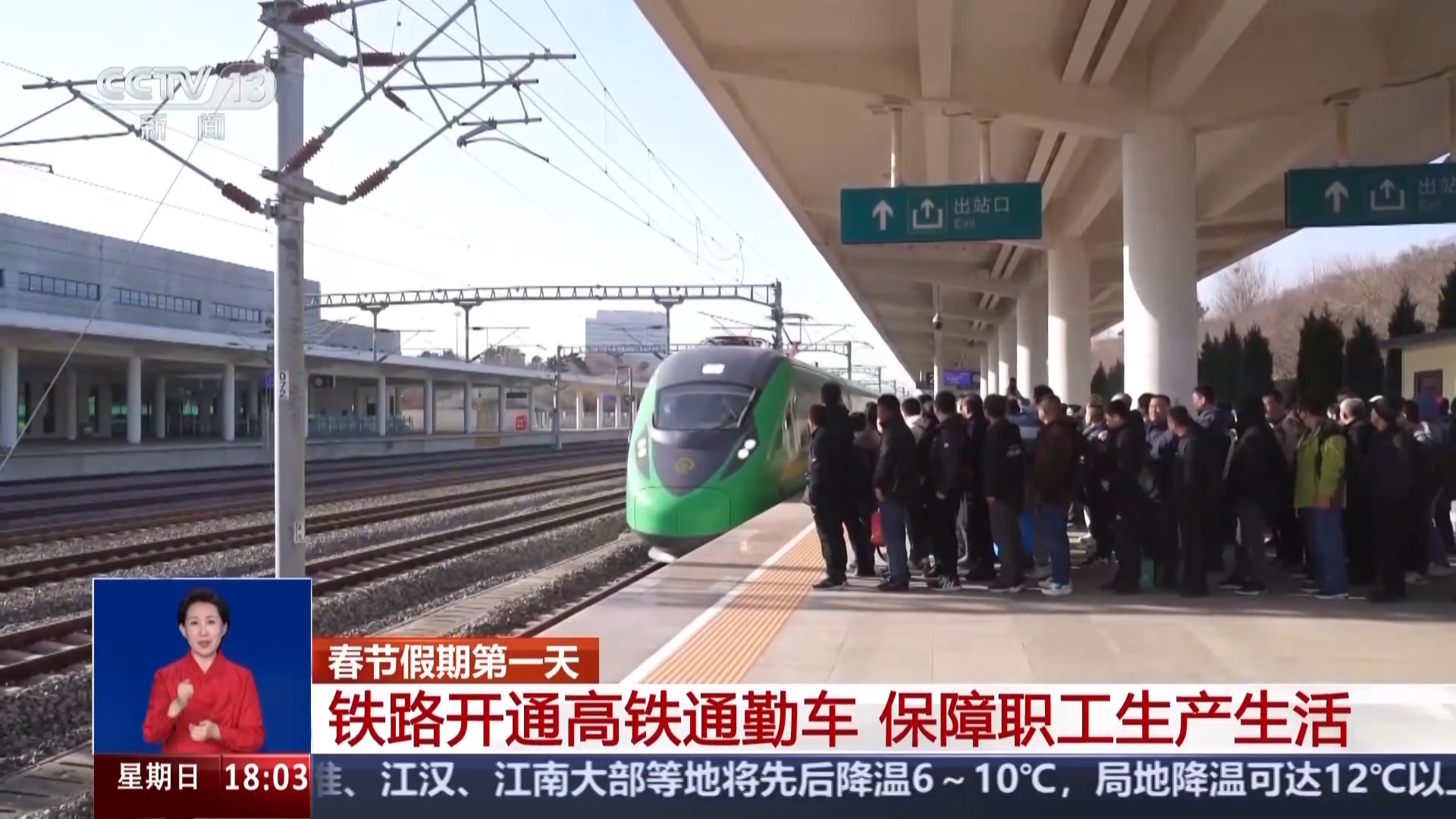
Group 1 - The core viewpoint of the article highlights the efforts of the national railway system to ensure passenger travel during the Spring Festival, with an expected 13.95 million passengers and the addition of 1,568 trains on the first day of the holiday [1] - The railway departments are maintaining a balance between high-speed and conventional trains, enhancing the accessibility and coverage of railway transport during the Spring Festival [1] - The railway system is also supporting enterprise operations, with several companies in the Dongjiakou Economic Zone continuing production during the holiday, and special commuter trains being added to facilitate employee travel [3] Group 2 - The addition of three dedicated high-speed commuter trains daily between Dongjiakou Economic Zone and Qingdao city is aimed at creating a one-hour rapid commuting circle for workers [3] - Special green channels have been established at stations like Dongjiakou, allowing passengers to enter the station and board trains within three minutes, making travel more convenient for employees [3]

南京南站增开23列始发夜间高铁,去往湖南、湖北、江西、安徽等方向
Yang Zi Wan Bao Wang· 2026-02-14 05:15
Core Viewpoint - The Spring Festival travel rush in the Yangtze River Delta continues to maintain high passenger flow, with significant increases in train services to accommodate the demand [1][3]. Group 1: Passenger Flow and Train Services - On February 13, the Shanghai Railway Bureau reported that 3.135 million passengers were sent, with an expected 3.15 million on the following day [1]. - The Shanghai Railway Group plans to increase train services by adding 601 trains, including 383 direct trains and 218 local trains, primarily heading to regions such as Yunnan, Guizhou, Sichuan, Chongqing, Henan, Hunan, Hubei, Northeast China, Southern Jiangsu, and Anhui [3]. - Among the added trains, 325 are night high-speed trains, with 133 on major high-speed rail lines like Beijing-Shanghai and Shanghai-Kunming [3]. Group 2: Service Enhancements - The Shanghai Railway Group is optimizing service measures to enhance Spring Festival travel support, including the deployment of a humanoid robot at Wuhu Station for passenger assistance [5]. - Additional amenities such as free charging stations and disposable cups have been provided at various stations to improve the travel experience [5]. - Special services for passengers with unique needs include wider security checks and green safety passages, along with features like portable night lights and service call buttons in sleeper cars [5]. Group 3: Travel Reminders - The railway department advises travelers to stay updated on train schedules due to the dynamic nature of train operations during the Spring Festival [7]. - Passengers are encouraged to use the ticket reservation features on the China Railway 12306 website and app for purchasing tickets [7]. - It is important for travelers to confirm their departure station information to avoid delays caused by going to the wrong station [7].

春运首个周末迎客流高峰 广州南站今起加开夜间高铁
Xin Lang Cai Jing· 2026-02-08 00:58
Core Insights - The article highlights the significant increase in passenger traffic during the 2026 Spring Festival travel season, with the Guangzhou Railway Bureau reporting a total of 2.222 million passengers on February 7, marking a year-on-year increase of 157,000 passengers or 7.6% [2][3] - To accommodate the surge in demand, the Guangzhou Railway Bureau has planned to add 515 night high-speed trains from February 8 to 15, with tickets already on sale [3][4] - The article also discusses the introduction of specialized trains, such as the G1136 train from Guangzhou to Jingmen, which aims to provide efficient travel options for migrant workers returning home [8] Passenger Traffic Increase - On February 7, the Guangzhou Railway Bureau sent 2.222 million passengers, a 7.6% increase compared to the previous year [2] - Within Guangdong province, 1.598 million passengers were sent, indicating a significant rise in travel demand [2] Night Train Services - From February 8 to 15, 515 night high-speed trains will be added to major routes, including those to Chengdu, Guiyang, Changsha, Wuhan, and Nanchang [4] - The night trains are part of a broader strategy to enhance transportation capacity during peak travel periods [3][4] Special Train Initiatives - The G1136 train is the first dedicated return home train from Guangzhou to Jingmen, providing a direct and efficient travel option for workers [8] - The train service includes engaging activities for passengers, enhancing the travel experience [8] Enhanced Travel Experience - The introduction of "moving hotel" sleeper trains between the Greater Bay Area and Chengdu aims to meet the needs of travelers seeking comfort and convenience during their journeys [10][11] - These sleeper trains are equipped with modern amenities and offer regional cuisine, catering to both leisure and business travelers [10][11]
春运开始,返乡旅游奏响出行双重奏
2 1 Shi Ji Jing Ji Bao Dao· 2026-02-02 11:07
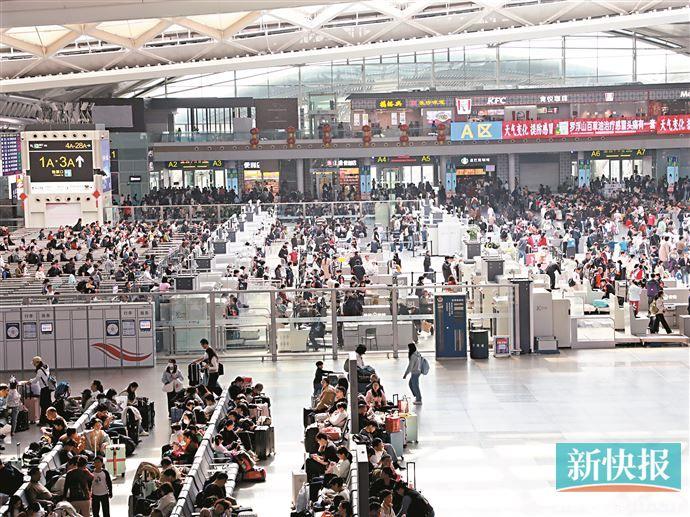
Group 1: Spring Festival Travel Trends - The Spring Festival travel period is expected to see a record 9.5 billion trips, with self-driving accounting for about 80% of the total [1] - The average travel days per person during the Spring Festival is projected to reach 5.9 days, an increase of 1.1 days compared to last year [1] - There is a notable trend of travelers opting for "city hopping" during the festival, with flight bookings during the holiday period increasing by 55% year-on-year [4][5] Group 2: Transportation Capacity and Operations - National railways are expected to transport 540 million passengers, with a daily average of 13.48 million, reflecting a 5% year-on-year increase [2] - Airlines are planning to operate over 126,000 flights during the Spring Festival, with China Southern Airlines alone executing over 109,000 domestic flights [3] - The introduction of C919 aircraft by airlines is highlighted as a significant development, with Eastern Airlines deploying 14 C919 jets for nearly 50 daily flights, marking a more than 50% increase in flight volume [3] Group 3: Accommodation and Tourism Preferences - There is a significant increase in hotel bookings during the Spring Festival, with a year-on-year growth of 71%, peaking on the third day of the new year [5] - The demand for vacation rentals, particularly for family-oriented accommodations like villas, has surged, with bookings increasing by 48% week-on-week since January [5][6] - Tourists are increasingly seeking cultural experiences, with searches for traditional events like lantern festivals and folk performances rising by 117% [6] Group 4: Travel Behavior and Preferences - The trend of "slow travel" and deep experiences is driving a shift in travel consumption, with a notable increase in self-driving trips, which account for over 85% of surrounding travel bookings [7] - The peak traffic volume on highways during the Spring Festival is expected to reach 71 million vehicles per day, with an increase in the use of electric vehicles [8] - There is a shift in group travel dynamics, with a trend towards smaller, more customized tour groups, reflecting a desire for flexibility among travelers [9]
春运期间客流量或创新高
Xin Lang Cai Jing· 2026-01-31 18:30
Group 1: Railway Transportation - The 2026 Spring Festival transportation period will start on February 2 and end on March 13, lasting a total of 40 days, with the Spring Festival holiday from February 15 to 23, which is the longest holiday in history [1] - During the Spring Festival transportation period, the total number of railway and air passengers in the city is expected to reach 770,000, potentially setting a new record [1] - The railway stations in Quzhou are expected to send 650,000 passengers, a year-on-year increase of 20%, with Quzhou Station alone expecting 551,000 passengers [1] Group 2: Airport Transportation - Quzhou Airport is projected to handle 120,000 passengers during the Spring Festival transportation period, representing a 5% year-on-year increase, indicating a new peak in passenger flow [2] - The travel pattern during the Spring Festival is characterized by a combination of family visits and tourism, with peak travel times around the Spring Festival holiday and after the Lantern Festival [2] - Quzhou Airport has completed preparations for increased flight frequency and capacity adjustments, and will resume two routes from February 1, enhancing travel options for passengers [2] Group 3: Weather Impact - Weather forecasts indicate significant temperature fluctuations and increased rain and snow during the Spring Festival transportation period, with the possibility of a large-scale cold wave [2] - The lowest temperatures in mountainous areas may reach around -9°C, which could pose challenges for road, air, and self-driving travel [2] - Travelers are advised to monitor weather changes and traffic conditions closely, plan their trips accordingly, and allow sufficient travel time to ensure safe and smooth returns [2]
寒假开启,铁路部门加密热门线路保障群众出行需求
Yang Guang Wang· 2026-01-28 01:26
Group 1 - The core focus of the railway departments is to optimize train operations and increase capacity on popular routes to ensure smooth travel for passengers during the Spring Festival and winter vacation [1][2] - The Zhengzhou Railway Bureau has added 17 direct passenger trains to major cities such as Jinan East, Qingdao North, Nanchang West, and Xi'an, enhancing connectivity and convenience for travelers [1] - The introduction of the G467/8 high-speed train from Dazhong South Station to Shanghai Hongqiao has significantly reduced travel time by 4 hours and 40 minutes, now taking only 8 hours and 51 minutes [1][2] Group 2 - The Long Triangle Railway's 2026 Spring Festival plan includes the addition of 437.5 pairs of passenger trains, with a peak daily operation exceeding 1,700 pairs [2] - The Ma'anshan East Station has seen a significant increase in capacity following the recent timetable adjustments, enhancing its role as a key node in the regional transportation network [2] - Special ticket discounts have been introduced for 2026 college graduates seeking employment in different regions, addressing the needs of this demographic [2]
广州火车站升级成高铁站?回应来了
Xin Lang Cai Jing· 2026-01-24 09:20
Core Viewpoint - Guangzhou Railway Station is transitioning from operating conventional trains (green trains) to focusing on high-speed rail services, marking a significant shift in the city's transportation landscape [1][8]. Group 1: Transition from Green Trains - Guangzhou Railway Station will no longer handle the starting and terminating services of conventional trains from January 26, 2024, but will still have several conventional trains passing through [2][3]. - The last green train service from Guangzhou Station was the K303 train to Xuzhou on January 25, 2024 [1]. Group 2: High-Speed Rail Development - Guangzhou Station has been functioning as a high-speed rail station since the introduction of high-speed trains in May 2016, but it will undergo further renovations to fully modernize its facilities [3][4]. - The station will start operating 50 high-speed trains from the former Guangzhou Baiyun Station after the national railway timetable adjustment on January 26, 2024 [3][6]. Group 3: Future Infrastructure Plans - A new link line between Guangzhou Station and Guangzhou South Station is under construction, expected to be completed by 2027, which will enhance connectivity and facilitate high-speed rail operations [4][6]. - Guangzhou East Station is also undergoing significant renovations to become a modern high-speed rail hub, which will be completed before the upgrades at Guangzhou Station [6]. Group 4: Relocation of Conventional Train Services - The newly opened Guangzhou Baiyun Station will take over most of the conventional train services from Guangzhou and Guangzhou East Stations, allowing for the modernization of the latter two [7][8]. - After the timetable adjustment, Baiyun Station will operate 376 trains daily, including 300 starting and terminating services, which is a significant increase from the previous quarter [7]. Group 5: Rationale for the Transition - The shift away from green trains is part of a broader strategy to enhance high-speed rail access in urban centers, addressing the limitations of existing infrastructure [8][9]. - The relocation of conventional trains to Baiyun Station aims to reduce noise and vibration in city centers, improving the urban environment while optimizing land use [8][9].
26日铁路调图后,江苏这些车次有大变化
Xin Lang Cai Jing· 2026-01-15 15:17
Group 1 - The upcoming railway schedule adjustment in Jiangsu province will implement significant changes, including the introduction of high-speed trains connecting various cities, such as direct services from Lianyungang and Yancheng to Fuzhou [1] - The adjustment will enhance connectivity with new high-speed train services added daily from Nanjing and Wuxi to major cities like Hefei South, Wuhan, Changsha South, Guangzhou South, Shenzhen North, and Hong Kong West Kowloon [1] - The new train service G3309/G3310 will operate between Qingdao North and Fuzhou, marking the first direct high-speed rail link between Lianyungang, Yancheng, and Fuzhou, facilitating travel across significant regions in Jiangsu [1] Group 2 - The previous schedule adjustment on July 1 introduced direct train services between Yangzhou and Hohhot East, which will now be optimized with new train numbers G3768/9/8 and G3767/70/67, along with additional stops at Xuzhou East and Suqian [2] - Travel time between Yangzhou and Hohhot East will be reduced by over two and a half hours due to the new schedule [2] - The new schedule allows for convenient transfers between Xuzhou Station and Xuzhou East Station, with a travel time of only 17 minutes, enhancing passenger convenience for journeys to cities like Jinan and Zhengzhou [2]
长三角铁路将实施新列车运行图 多地首开进港高铁
Xin Lang Cai Jing· 2026-01-15 13:17
Core Viewpoint - The China Railway Shanghai Bureau Group Co., Ltd. announced a new train operation schedule effective from January 26, 2026, which includes the highest-ever number of scheduled passenger and freight trains in the Yangtze River Delta region, with 24 pairs of passenger trains and 4 pairs of freight trains added [1][2] Group 1: Passenger Train Enhancements - The new schedule will increase the number of daily passenger trains on the Beijing-Shanghai high-speed railway by 8 pairs, including 5 pairs of benchmark trains for business travel and urgent passenger needs [1] - Twelve existing high-speed trains will be upgraded, with travel times reduced by over 90 minutes for routes such as Shanghai to Taiyuan, Datong, Lanzhou, and Changchun [1] Group 2: Cross-Border and Night Train Services - The schedule optimizes capacity between Shanghai and Hong Kong, adding two pairs of cross-border high-speed trains, with the fastest travel time between the two cities being 8 hours and 37 minutes [1][2] - A new overnight high-speed sleeper train service will operate between Shanghai and Hong Kong, with a travel time of 10 hours and 58 minutes [2] Group 3: Regional Connectivity and Freight Services - The new schedule expands the high-speed train network to include routes from Shanghai to several revolutionary historical areas, such as Yan'an in Shaanxi and Zhanjiang in Guangdong [2] - The Yangtze River Delta railway will introduce multiple rapid intercity freight train lines, enhancing freight capacity and covering regions including Beijing-Tianjin-Hebei and the Guangdong-Hong Kong-Macau Greater Bay Area [2]