
中欧(中亚)班列

Search documents
京津冀协同发展十二周年:“轨道上的京津冀”里程翻倍,“多城记”稳步推进区域高质量发展
Hua Xia Shi Bao· 2026-02-27 06:28
Core Insights - The article discusses the significant progress and development of the Beijing-Tianjin-Hebei (Jing-Jin-Ji) region, emphasizing the expansion of transportation networks and economic growth over the past 12 years. Transportation Development - The high-speed rail network in the Jing-Jin-Ji region has expanded from 1,284 kilometers at the end of 2013 to 2,675 kilometers by the end of 2025, achieving over 100% growth and covering all cities above the prefecture level [1] - The introduction of the first circular high-speed train in the region on January 26, 2026, enhances connectivity between key cities such as Beijing, Xiong'an, and Tianjin [2] - The opening of the Tongzhou Station and the full operation of the Beijing-Tangshan intercity railway have reduced travel time to just 55 minutes [2] - A comprehensive railway network has been established, featuring multiple axes and connections to major cities, creating a "0.5-1 hour traffic circle" and a basic two-hour travel circle among major cities [2] Economic Growth - The economic output of the Jing-Jin-Ji region has increased from 5.95 trillion yuan in 2014 to nearly 12 trillion yuan by 2025, crossing six trillion yuan milestones consecutively [1] - The region's collaborative development is marked by the integration of transportation, industry, culture, and public services, as outlined in the "Modern Capital Metropolitan Area Spatial Coordination Plan (2023-2035)" [3] Resource Optimization - The number of scheduled passenger trains has increased by 77% since 2014, with high-speed trains seeing a 167% increase, facilitating travel across 32 provincial-level administrative regions [4] - The collaboration among the three regions has improved water resource management, enhancing the ecological environment and promoting tourism through special trains [4] Logistics and Trade - The establishment of new international freight routes, including the opening of the first Central Asia train to Uzbekistan and a new route to Belarus, has expanded the reach of "Jing-Jin-Ji manufacturing" to Europe and Central Asia [5] - The region has developed multiple international freight train bases, with 22 scheduled trains per week connecting to various countries, enhancing trade and logistics capabilities [5]
中欧(中亚)班列畅通中国-中亚经济繁荣发展“黄金通道”
Xin Hua She· 2025-12-07 12:26
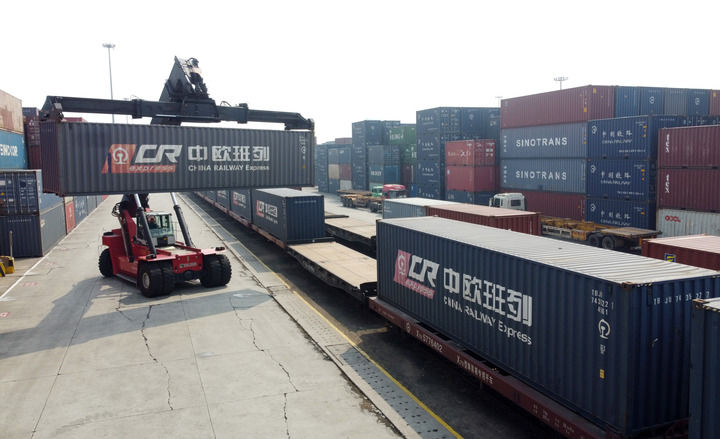
Core Insights - The China-Europe (Central Asia) freight trains are establishing a "golden corridor" for economic cooperation between China and Central Asia, facilitating efficient logistics and trade connections [1][2][3] Group 1: Freight Train Operations - In the first 11 months of this year, the number of China-Europe (Central Asia) freight trains passing through Xinjiang's two major ports reached 16,000, a year-on-year increase of 7.6%, with over 200 types of goods transported [1] - The China-Europe (Central Asia) freight trains have three main routes, with the western corridor being a crucial railway transport channel for China-Central Asia trade [1] Group 2: Port Efficiency Improvements - The continuous upgrade of port customs capabilities has led to improved operational efficiency, with vehicle turnover efficiency increasing by over 20% at the Horgos port [2] - The implementation of a "fast loading and unloading" model at the Alashankou port allows for customs clearance on the same day of arrival, with a maximum delay of 24 hours [2] Group 3: Economic Impact and Trade Growth - The China-Europe (Central Asia) freight trains are not only logistics channels but also vital engines for regional economic activation and industrial linkage, with more Central Asian specialty products entering the Chinese market [2] - In 2024, Xi'an Aijiu Grain and Oil Industrial Group plans to import 92,000 tons of grain through the freight trains, generating sales of 180 million yuan from imported raw materials [2] Group 4: Manufacturing and Export Growth - The average assembly time for a dishwasher at the headquarters of Shaanxi Konka Smart Home Appliances is every 20 seconds, with over 60% of their goods being exported via the China-Europe freight trains [3] - From January to October this year, the number of China-Europe (Xi'an) freight trains reached 5,063, marking a 16.3% year-on-year increase and achieving the highest record for the same period [3]
将“中国制造”加速送往欧洲!新疆双口岸通行中欧班列数量占全国五成以上
Hua Xia Shi Bao· 2025-09-30 13:21
Core Insights - The article highlights the significant growth in the number of China-Europe (Central Asia) freight trains passing through the Horgos and Alashankou railway ports in Xinjiang, with a total of 11,722 trains recorded by August, marking a year-on-year increase of 10.4% [1][6] Group 1: Trade and Economic Impact - The Horgos railway port has seen a daily average of over 25 freight trains, with a total of more than 46,000 trains passing through since its inception, connecting 18 countries and 46 cities [2][6] - The freight trains serve as a vital link in international trade, facilitating the export of Chinese goods to Europe and the import of unique products from Eurasia [1][6] Group 2: Infrastructure and Efficiency Improvements - The implementation of a "smart port" system has led to a 99.9% detection rate for train status, reducing on-site operations by 20% and improving vehicle turnover efficiency by over 20% [4] - The customs clearance time for imported goods has been reduced from 2-3 days to under 16 hours, achieving a 70% decrease, while export processing times have improved by 80% [4] Group 3: Freight Volume Growth - The Urumqi Railway Bureau reported a 34.76% year-on-year increase in freight volume at the Zhundong station, reaching 1.0739 million tons by August [7] - The overall freight volume in Xinjiang has been on a continuous upward trend, with a projected completion of 2.37 billion tons in 2024, reflecting a 10.7% increase [7] Group 4: Logistics and Transportation Development - The Xinjiang railway sector is actively developing comprehensive logistics solutions and expanding multimodal transport networks, including rail-sea and rail-air services [8] - The establishment of a one-stop booking system for freight trains has enhanced operational efficiency, with the Urumqi to Xi'an e-commerce train becoming a national model [8]
霍尔果斯口岸今年通行中欧(中亚)班列已超6600列
Jing Ji Guan Cha Bao· 2025-08-30 05:51
Core Insights - The number of China-Europe (Central Asia) freight trains passing through the Horgos railway port has exceeded 6,600 this year, representing a year-on-year increase of 21.8% [1] Group 1 - The continuous growth in the number of freight trains supports the supply chain security and smooth operation of the industrial chain for the Shanghai Cooperation Organization member countries [1]
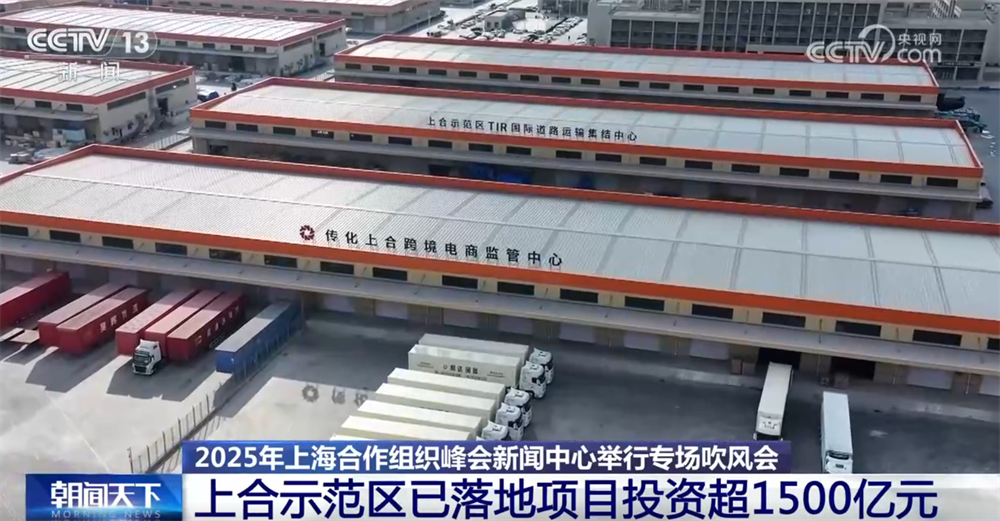
1500亿元、6600列、56%……亮眼数据勾勒“上合”经贸合作成绩单
Yang Shi Wang· 2025-08-30 02:45
Core Viewpoint - The China-Shanghai Cooperation Organization (SCO) Local Economic and Trade Cooperation Demonstration Zone in Qingdao, Shandong Province, has become a significant platform for cooperation between China and SCO member countries, focusing on regional logistics, modern trade, bilateral investment cooperation, and cultural exchanges. Group 1: Investment and Economic Impact - The total investment in industrial projects within the SCO Demonstration Zone has exceeded 150 billion yuan, with an average annual growth of 56% in imports and exports with SCO countries [3] - The demonstration zone has established itself as a key area for showcasing SCO culture, resource integration, and hosting important activities, contributing positively to building a community with a shared future for SCO [3] Group 2: Logistics Development - The regional logistics center has seen significant improvements, with 42 maritime routes and 223 air routes opened to SCO countries, leading to the highest container volume in coastal ports for sea-rail intermodal transport [5] - Over the past seven years, the demonstration zone has facilitated 4,803 China-Europe freight trains, with an average annual growth of 33%, transporting over 330,000 tons of goods [9] Group 3: Modern Trade and Digital Infrastructure - The modern trade center has enhanced its efficiency by establishing four major platforms: a comprehensive service platform for SCO trade, an international energy trading center, a green agricultural product trading center, and a Silk Road e-commerce service base, promoting digital infrastructure for trade [7] - The demonstration zone has implemented a "new infrastructure" for digital trade, making cross-border trade more convenient, efficient, and cost-effective [7] Group 4: Bilateral Investment Initiatives - The bilateral investment center has strengthened its capabilities by focusing on industry, technology, and finance, attracting innovative resources and development factors, and establishing itself as a preferred destination for industrial investment [9] - The zone has collaborated with 40 domestic and international parks to create an SCO industrial park alliance, resulting in the establishment of key industrial parks such as the Chaos Industrial Internet Ecological Park and the SCO Aerospace Industrial Park [9] Group 5: Freight Train Operations and Efficiency - The number of China-Europe (Central Asia) freight trains passing through the Horgos railway port has exceeded 6,600 this year, marking a 21.8% increase, which supports the smooth operation of regional industrial and supply chains among SCO member countries [10] - Recent reforms at Horgos port have significantly reduced the customs clearance time for imported goods from 2-3 days to under 16 hours, achieving a 70% reduction [11]

细节里的“和合与共”
Xin Hua Wang· 2025-08-25 02:13
Group 1: Shanghai Cooperation Organization (SCO) Overview - The Shanghai Cooperation Organization has grown into the largest regional cooperation organization in terms of area and population over the past 25 years [1] - The largest summit since the establishment of the SCO will be held in Tianjin from August 31 to September 1, showcasing new collaborative initiatives [1] Group 2: Transportation and Trade - Tianjin has become a crucial hub for the China-Europe (Central Asia) freight trains, with over 7,300 trains launched since 2013, connecting 25 countries and regions [4] - In the first half of this year, Tianjin's customs area dispatched 365 freight trains, marking an 18.4% year-on-year increase [4] - The port of Tianjin has over 140 container shipping routes, maintaining trade relations with more than 500 ports in over 180 countries and regions [5] Group 3: Energy and Investment Projects - The 500 MW solar power project in Uzbekistan's Namangan region is a significant example of China's investment in renewable energy, expected to provide over 1 billion kWh of stable green electricity annually by 2026 [11] - By 2024, trade between China and SCO member states is projected to reach a record $890 billion, accounting for 14.4% of China's total foreign trade [13] Group 4: Technological and Educational Cooperation - The SCO has seen deepening cooperation in technology, with initiatives like remote laboratories and vocational training programs being established [20][21] - The "Luban Workshop" initiative has been implemented in 23 countries, providing vocational education and training to over 270,000 individuals [27] Group 5: Cultural and Human Exchange - Cultural exchanges are being promoted through various initiatives, including art exhibitions and student cultural markets, enhancing mutual understanding among SCO countries [36][37] - Medical cooperation has been initiated, with Chinese experts providing training and health screenings in SCO member states [32]
走出更加宽广的合作共赢之路(大使随笔)
Ren Min Ri Bao· 2025-06-16 21:58
Group 1 - The relationship between China and Central Asian countries has maintained high-level development, with significant achievements in the Belt and Road Initiative under the leadership of President Xi Jinping and the leaders of the five Central Asian countries [1] - The first China-Central Asia Summit was successfully held in May 2023, marking a new era in China-Central Asia relations, with the second summit expected to further enhance cooperation and outline new collaborative blueprints [1] - Comprehensive strategic partnerships have been established, covering core interests and facilitating extensive cooperation in various sectors, including the signing of cooperation documents related to the Belt and Road Initiative [1] Group 2 - Trade between China and Central Asian countries has surged from $460 million at the time of diplomatic relations to an expected $94.8 billion in 2024, representing a growth of over 200 times [2] - China's direct investment in Central Asian countries has exceeded $15 billion in 2023, with engineering contracts amounting to hundreds of billions, making China the most important trade and investment partner for the five Central Asian countries [2] - Major projects such as the China-Central Asia Gas Pipeline and the China-Kyrgyzstan-Uzbekistan Railway are progressing steadily, with the China-Europe (Central Asia) freight trains achieving record high operations [2] Group 3 - China and Central Asian countries adhere to a common, comprehensive, cooperative, and sustainable security concept, establishing bilateral and multilateral security cooperation mechanisms to combat terrorism and organized crime [3] - Close collaboration within multilateral frameworks like the United Nations is maintained, promoting true multilateralism and advocating for an open and inclusive world economy [3] - The deepening cooperation between China and Central Asia aligns with the development trends of the times and meets the common aspirations of the people in both regions [3]