麻黄

Search documents
新疆首次发布主要林木目录
Zhong Guo Zi Ran Zi Yuan Bao· 2025-12-26 08:17
Core Viewpoint - The release of the "Main Timber Directory of Xinjiang" marks the first time such a directory has been published in the region, including six specific tree species that are significant for ecological and economic development [1][2] Group 1: Main Timber Directory - The directory includes four-winged saltbush, salt-tolerant wood, camel hair saltbush, pistachio, ephedra, and jujube, which are recognized for their drought and salt tolerance, playing a crucial role in combating desertification in Xinjiang [1] - The directory follows a "national + provincial" management model, where the national directory focuses on species with significant ecological, economic, or social value, while the provincial directory can include up to eight additional species based on local conditions [1] Group 2: Policy and Economic Implications - Only tree species included in the main timber directory and approved through variety certification can be recognized as quality tree species, thus qualifying for policy support and promotion [1] - The directory's release is a key initiative in advancing the "Three North" project, aligning local ecological construction with industrial development needs, and expanding the range of certified timber species [2] - The Xinjiang Forestry and Grassland Bureau plans to dynamically adjust the directory based on ecological progress and industrial changes to support ecological protection and high-quality forestry development [2]
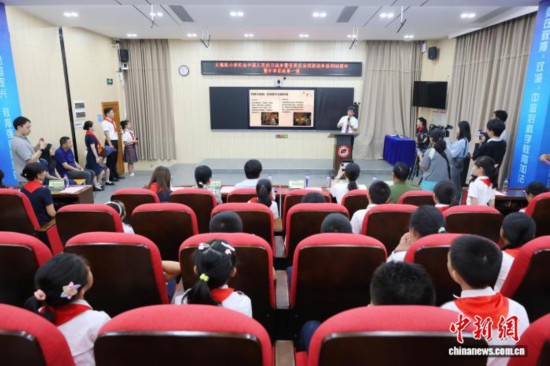
开学第一课 广东名中医为小学生讲述“抗战中的中医药”
Zhong Guo Xin Wen Wang· 2025-09-04 00:50
Core Viewpoint - The lesson delivered by Zhang Zhongde emphasizes the significant role of traditional Chinese medicine (TCM) during the Anti-Japanese War, highlighting its effectiveness in treating soldiers and the importance of passing down TCM wisdom to future generations [1][3]. Group 1: Role of Traditional Chinese Medicine - TCM played a crucial role during the Anti-Japanese War when Western medicine was scarce, utilizing local herbs such as mugwort, honeysuckle, and angelica to treat soldiers [1][3]. - Medical workers demonstrated resourcefulness by gathering herbs from the mountains and employing traditional methods to treat injuries and illnesses [2][3]. - The use of TCM for treating malaria and dysentery was validated through clinical trials, showcasing its effectiveness in wartime conditions [2][3]. Group 2: Cultural and Educational Significance - The lesson aims to instill a sense of patriotism and appreciation for traditional culture among students, linking physical health to the ability to contribute to the nation [4]. - The initiative reflects a broader educational goal of inspiring students to pursue careers in medicine, fostering a new generation of healthcare professionals [4].