黄金投资品

Search documents
年终奖到手了吗?马年“春节档”理财这样投
Xin Jing Bao· 2026-02-13 07:37
Core Viewpoint - As the Spring Festival approaches, banks and wealth management companies are promoting financial products to help workers make the most of their year-end bonuses, with a focus on investment opportunities during the holiday period [1][2]. Group 1: Financial Products and Strategies - Multiple banks have set February 13 as the last trading day for specific wealth management products, allowing customers to earn returns during the 9-day Spring Festival holiday [2][3]. - ICBC Wealth Management offers various open-type wealth management products with a risk level of PR1, generally yielding annualized returns below 2%, but allowing daily subscriptions and redemptions [2]. - Minsheng Wealth Management has launched "Cash+" products that can accrue interest during the holiday, with one fixed-income product achieving an annualized return of 5.80% [2]. - Some banks have extended their operating hours to accommodate customers, with Zhaoyin Wealth Management allowing purchases until midnight on February 13 [3]. Group 2: Structured Deposits and Interest Rates - Several banks have introduced short-term structured deposits that accrue interest during the Spring Festival, with some offering rates below 2% [5]. - Smaller banks have quietly raised deposit rates to attract customers, with specific examples showing increases in rates for various term deposits [6]. - Structured deposits are characterized by capital protection and are considered lower risk compared to wealth management products, while offering higher rates than traditional bank deposits [5]. Group 3: Gold Investment Trends - There is a growing interest in gold investment products as customers flock to banks to purchase gold bars and related products ahead of the Spring Festival [7]. - The demand for gold is driven by a hot precious metals market and festive sentiments, although banks are increasing risk controls and investor education due to price volatility [7]. - Analysts suggest that gold should be viewed as a stabilizing asset in investment portfolios, recommending strategies such as dollar-cost averaging to mitigate short-term price fluctuations [7].
黄金税改两周,水贝低价神话终结?
3 6 Ke· 2025-11-18 10:41
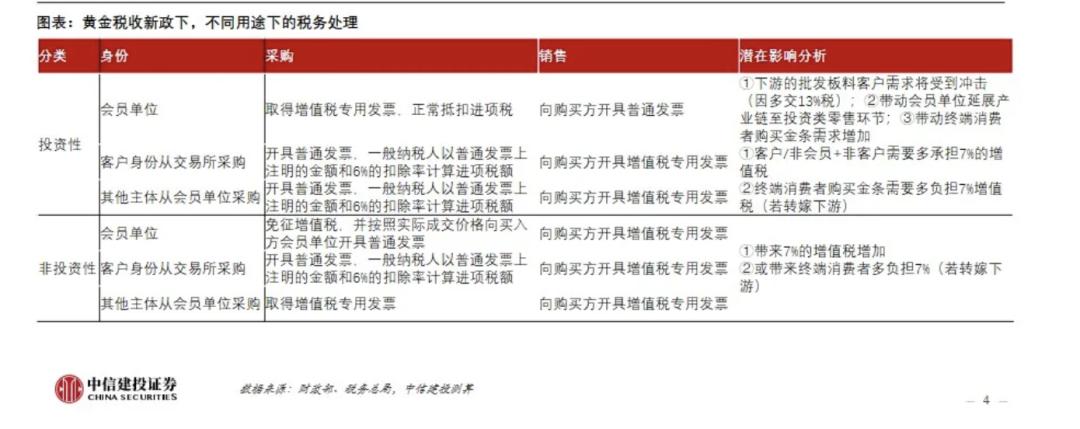
Core Insights - The new tax policy on gold has significantly impacted the market dynamics, leading to increased prices and reduced sales activity among retailers in the Shenzhen Shui Bei market [2][3][9] Market Reaction - Following the announcement of the new tax policy, major brands like Chow Tai Fook raised prices for gold jewelry by over 60 yuan per gram, resulting in a noticeable decline in market activity [3][4] - Retailers in Shui Bei reported a drastic drop in sales, with some shops halting operations due to the inability to sustain business under the new pricing structure [4][6] Tax Policy Changes - The new tax policy differentiates between investment and non-investment gold, imposing different VAT rates, which has led to an increase in costs for non-investment gold sellers [9][10] - Previously, gold merchants could obtain a 13% VAT rebate, but under the new policy, they now face a 7% to 13% increase in tax costs, significantly affecting their profit margins [12][13] Price Disparity - The price of gold jewelry in Shui Bei has risen to around 1100 yuan per gram, which is approximately 150 yuan higher than the international gold price, diminishing the competitive pricing advantage that Shui Bei once held [4][5] - The price gap between retail and recovery prices has widened, leading to a situation where consumers face significant losses when selling back gold [13] Industry Transformation - The new tax regime is forcing the gold industry to shift from a price-driven model to a value-driven approach, prompting some retailers to explore alternative products like silver and alloy jewelry [8][14] - The market is witnessing a trend towards "curve purchasing," where consumers buy gold bars from banks at lower prices and then have them crafted into jewelry, reflecting a change in consumer behavior [17] Long-term Implications - The restructuring of the gold market may lead to a decline in speculative buying, as the new tax policy discourages short-term investments in physical gold [17][18] - The overall impact of the new tax policy is still unfolding, with many retailers in Shui Bei struggling to adapt to the new market conditions [18]