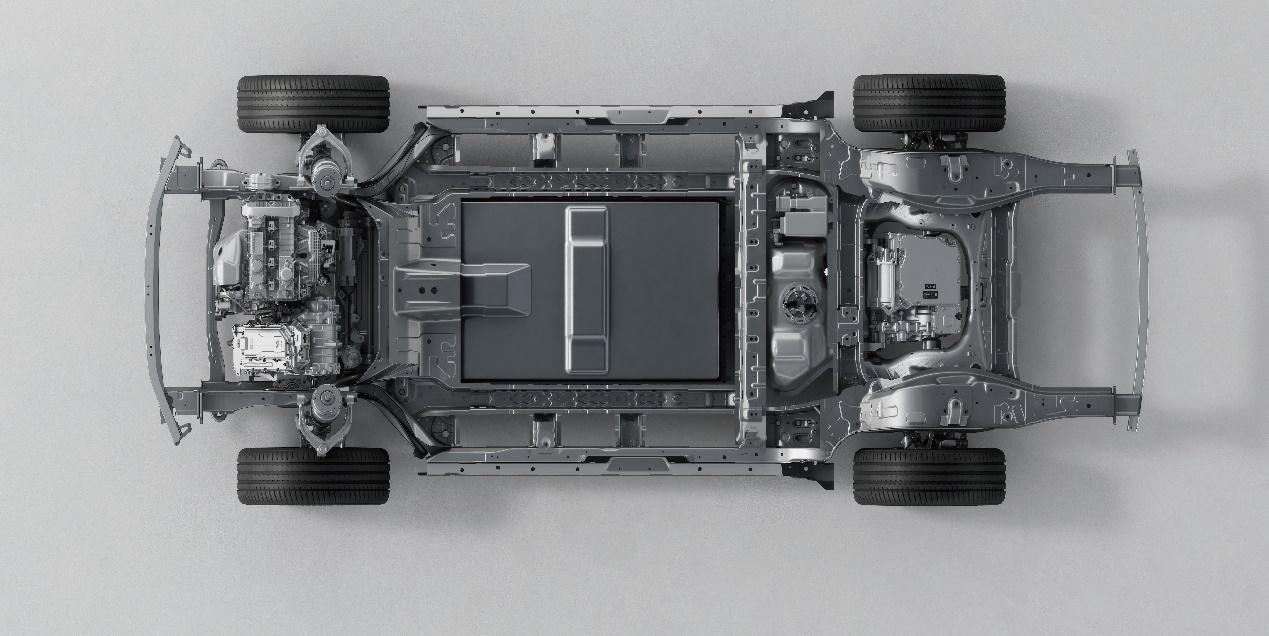
1.5T发动机

Search documents
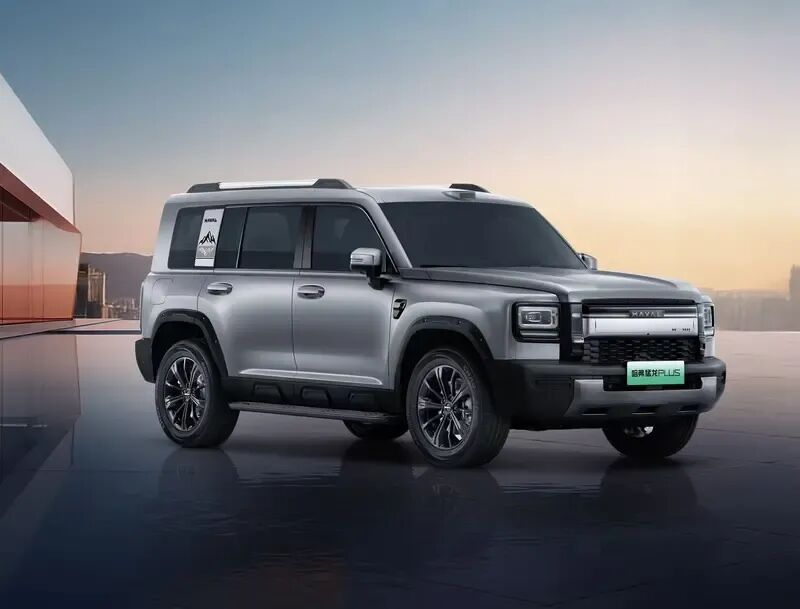
搭激光雷达!插混动力!5/7座版本!哈弗猛龙PLUS官图曝光!
Xin Lang Cai Jing· 2026-02-11 10:21
Core Viewpoint - Great Wall Motors has unveiled the official images of the Haval Menglong PLUS, which features both five-seat and seven-seat versions, and incorporates a plug-in hybrid power system with significant upgrades in size and technology [1][8]. Group 1: Design and Features - The exterior design retains the popular "boxy" shape of the Menglong series while introducing innovative details, including a new grille style that enhances its technological appeal and decorative side window trims for improved visual recognition [4][11]. - The vehicle dimensions are 4912mm in length, 1950mm in width, and 1905mm in height, with a wheelbase of 2850mm. It is equipped with laser radar and an upgraded intelligent driving assistance system to enhance safety and smart features [6][13]. Group 2: Powertrain and Performance - The Menglong PLUS offers options for lithium iron phosphate or ternary lithium battery packs, with three different battery capacities of 23.7kWh, 33.7kWh, and 44.7kWh. The WLTC range can reach up to 191km, providing users with a worry-free long-range experience [8][15]. - It continues to feature a 1.5T engine combined with Hi4 technology, delivering a maximum power output of 115 kW and a top speed of 190 km/h, suitable for both daily commuting and off-road adventures [8][15].


为什么增程车很少用2.0T?
Zhong Guo Zhi Liang Xin Wen Wang· 2025-09-26 07:50
Core Viewpoint - The shift from 2.0T engines to 1.5T engines in range-extended electric vehicles (REEVs) is driven by the need for efficiency, cost-effectiveness, and the evolving role of the engine as a generator rather than a primary power source [1][5][17] Engine Role in REEVs - In REEVs, the engine functions primarily as a generator to produce electricity, while the electric motor drives the wheels, making the engine's role fundamentally different from traditional vehicles [5][6] - The focus on a strong electric drive system reduces the necessity for a powerful 2.0T engine, as the 1.5T engine can efficiently meet the power requirements for typical driving conditions [3][17] Efficiency and Cost Considerations - The 1.5T engine is favored due to its higher thermal efficiency, with many achieving over 40%, compared to most 2.0T engines which remain below 38% [8][11] - The smaller size and weight of the 1.5T engine allow for better vehicle layout, optimizing space for batteries and electric motors, which enhances overall performance and range [10][11] Market Trends and Consumer Preferences - Major REEV models like Li Auto's L series and Aito's M series predominantly use 1.5T engines, reflecting a strategic choice based on technology, cost, and efficiency [6][11] - As battery technology improves, the reliance on the engine for power generation decreases, further solidifying the 1.5T engine's position as the optimal choice for most consumers [17] Performance and Application - While 2.0T engines can provide higher power output, their advantages are often unnecessary for everyday driving, as demonstrated by the performance metrics of vehicles like the Li L9 [13][15] - The increasing battery capacity in modern REEVs means that the need for a larger engine is diminishing, aligning with consumer demands for lower operating costs and quieter driving experiences [17]