增程式混动技术

Search documents
为什么增程车很少用2.0T?
Zhong Guo Zhi Liang Xin Wen Wang· 2025-09-26 07:50
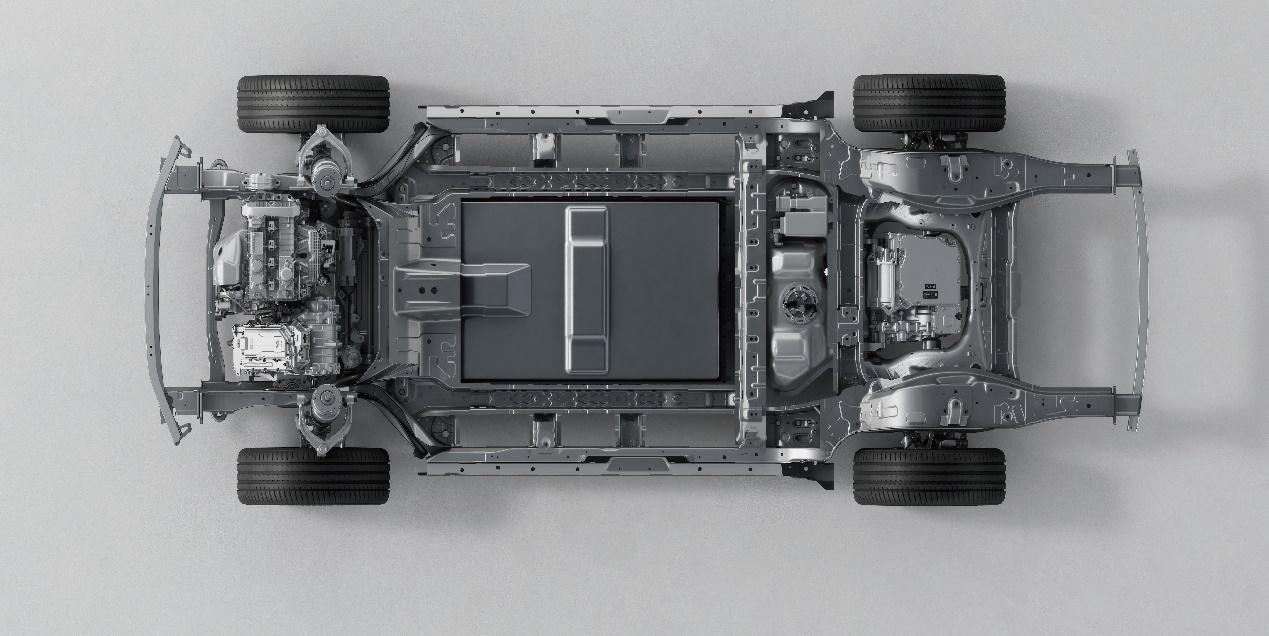
Core Viewpoint - The shift from 2.0T engines to 1.5T engines in range-extended electric vehicles (REEVs) is driven by the need for efficiency, cost-effectiveness, and the evolving role of the engine as a generator rather than a primary power source [1][5][17] Engine Role in REEVs - In REEVs, the engine functions primarily as a generator to produce electricity, while the electric motor drives the wheels, making the engine's role fundamentally different from traditional vehicles [5][6] - The focus on a strong electric drive system reduces the necessity for a powerful 2.0T engine, as the 1.5T engine can efficiently meet the power requirements for typical driving conditions [3][17] Efficiency and Cost Considerations - The 1.5T engine is favored due to its higher thermal efficiency, with many achieving over 40%, compared to most 2.0T engines which remain below 38% [8][11] - The smaller size and weight of the 1.5T engine allow for better vehicle layout, optimizing space for batteries and electric motors, which enhances overall performance and range [10][11] Market Trends and Consumer Preferences - Major REEV models like Li Auto's L series and Aito's M series predominantly use 1.5T engines, reflecting a strategic choice based on technology, cost, and efficiency [6][11] - As battery technology improves, the reliance on the engine for power generation decreases, further solidifying the 1.5T engine's position as the optimal choice for most consumers [17] Performance and Application - While 2.0T engines can provide higher power output, their advantages are often unnecessary for everyday driving, as demonstrated by the performance metrics of vehicles like the Li L9 [13][15] - The increasing battery capacity in modern REEVs means that the need for a larger engine is diminishing, aligning with consumer demands for lower operating costs and quieter driving experiences [17]


26.98万元起的昊铂HL增程版上市,广汽重返增程赛道
Guo Ji Jin Rong Bao· 2025-08-21 08:05
Core Insights - GAC Group has launched its first strategic model equipped with the Star Source range extension technology, the Haobo HL Range Extender, aiming to penetrate the mid-to-high-end electric vehicle market with a differentiated strategy [1][2] - The new vehicle features a price range of 269,800 to 299,800 yuan, a 60 kW·h battery from CATL, and offers a maximum pure electric range of 350 kilometers, addressing range anxiety with a total range of 1,369 kilometers and a fuel consumption of 6.7L when depleted [1] - The Haobo HL Range Extender incorporates 800V/5C ultra-fast charging technology, allowing for a 210-kilometer charge in just 10 minutes, supported by a nationwide charging network of over 24,000 charging piles [1] Industry Trends - In the first half of 2024, sales of range-extended electric vehicles in China increased by 35% year-on-year, with the 300,000 yuan segment growing by 52%, indicating a significant shift in consumer preferences [2] - GAC Group's chairman acknowledged a previous misjudgment regarding customer range anxiety and the potential of range-extended and plug-in hybrid technologies, leading to a strategic pivot in their new energy development approach [2] - Starting in 2025, GAC Group plans to introduce multiple hybrid models, with the Haobo HL8 being the first, followed by offerings from the Trumpchi and Aion brands [2]

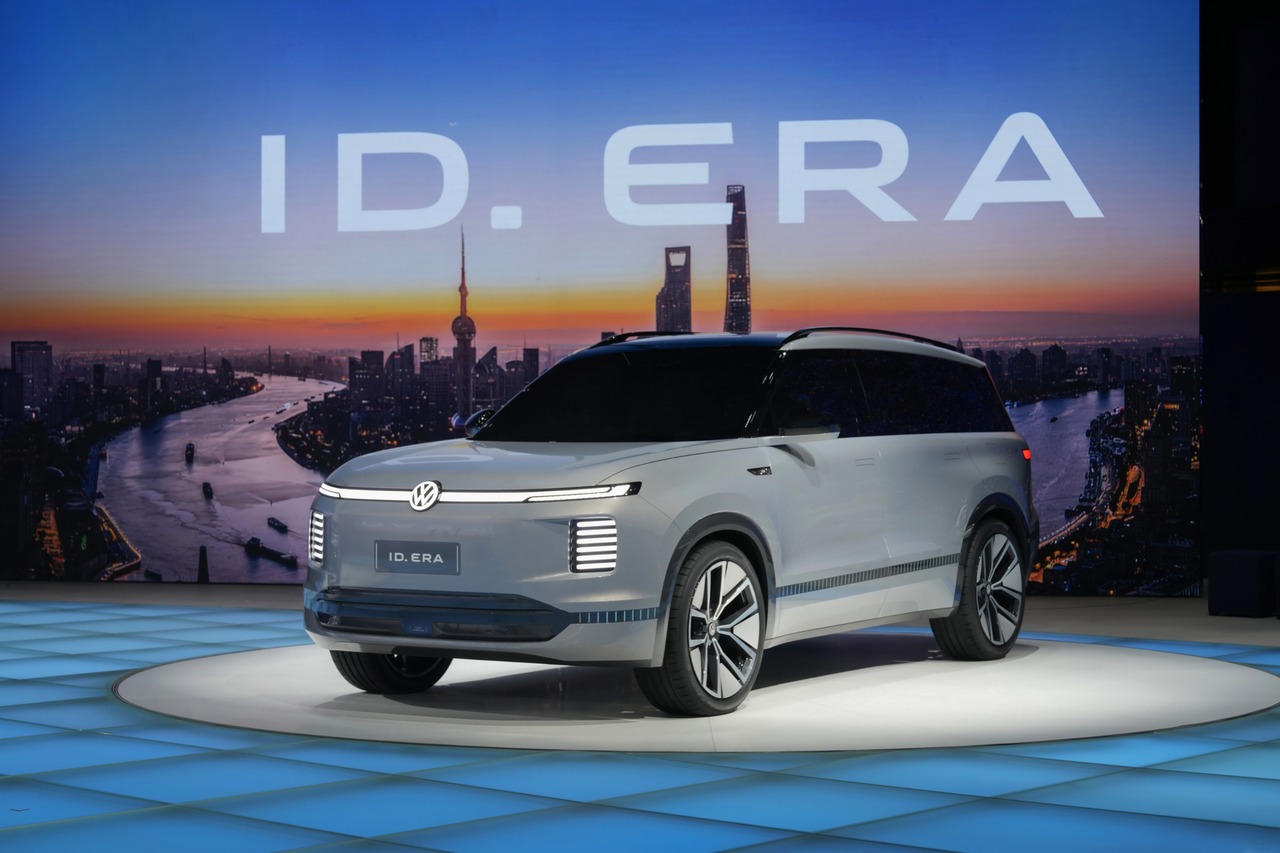
从批判到跟进!大众汽车上海车展发布首款增程概念车,合资品牌在华战略转向“中国市场主导”
Mei Ri Jing Ji Xin Wen· 2025-04-30 07:15
Core Viewpoint - Volkswagen is shifting its strategy in China from "global technology import" to "China market-led," as evidenced by the launch of its first full-size range-extended SUV concept, ID.ERA, at the 2025 Shanghai Auto Show [1][5]. Group 1: Volkswagen's New Product Launch - The ID.ERA is based on Volkswagen Group's global development standards, featuring a CLTC comprehensive range of over 1000 kilometers and a pure electric range of 350 kilometers, with mass production expected to start in Q1 2026 [1]. - This marks a significant change in Volkswagen's stance on range-extended hybrid technology, which was previously criticized by its executives [1]. Group 2: Market Trends and Competitive Landscape - The 2025 Shanghai Auto Show highlighted range-extended hybrid technology as a focal point for many automakers, indicating a strategic direction for joint ventures in China [3]. - In 2024, the production and sales of new energy vehicles in China are projected to exceed 12 million units, with a penetration rate of over 40%, and range-extended vehicle sales reaching 1.18 million units, a year-on-year increase of 84.2% [3]. Group 3: Volkswagen's Performance in China - In 2024, Volkswagen delivered 2.93 million vehicles in China, with over 200,000 being new energy vehicles, accounting for 7% of total sales [4]. - Despite a 17% year-on-year increase in sales of ID series electric models, Volkswagen's growth lags behind the 84.2% increase in range-extended vehicle sales and the expansion of local brands like BYD [4]. Group 4: Strategic Adjustments and Local Development - Volkswagen is placing the Chinese market at the core of its strategy, recognizing it as the largest new energy vehicle market and a benchmark for technological innovation [5]. - The establishment of the Volkswagen (China) Technology Company (VCTC) in Hefei aims to enhance local R&D capabilities, with a 30% reduction in development cycles and a 40% cost optimization for the locally developed CMP platform [5]. Group 5: Future Plans and Market Positioning - Volkswagen plans to leverage its three joint ventures in China to introduce over 30 new models in the next three years, focusing on quality and user experience rather than just quantity [6]. - The strategic shift is seen as a rational choice driven by data, with success dependent on adapting to "Chinese speed" and integrating traditional strengths with local innovation [6].