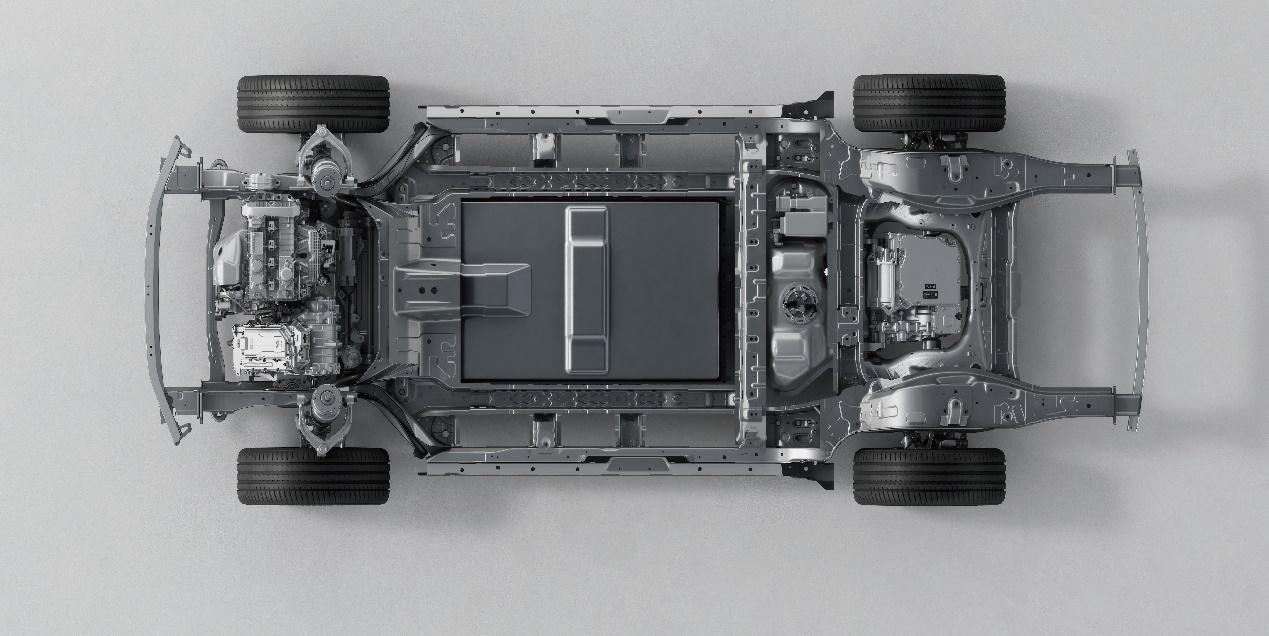
2.0T发动机

Search documents
“中国心”动力测试:2.0T与专用混动成行业新锚点
Zhong Guo Qi Che Bao Wang· 2025-11-13 09:06
Core Insights - The "China Heart" 2025 Annual Top Ten Engines and Hybrid Systems real vehicle testing event has commenced, marking its 20th anniversary, with 14 automotive companies participating and showcasing a variety of power systems [2][8] - The current trend in China's automotive industry shows a parallel development of multiple technical routes for power systems, transitioning from an economic optimization phase to a new stage of performance evolution [2][4] Group 1: Engine and Hybrid System Trends - Among the 14 models tested, 10 are 2.0L engines, with 9 being 2.0T engines, indicating a trend towards uniformity in engine displacement [3] - The trend of specialized power systems is becoming more pronounced, with Chery's high-performance hybrid system designed specifically for off-road use, featuring a total power of 665 kW and torque of 1135 N·m [3][4] - BYD's 2.0T horizontally opposed engine is notable as the first mass-produced model of its kind from a Chinese brand, showcasing innovative design solutions for compact engine compartments [3] Group 2: Market Positioning and Consumer Trends - The participation of larger displacement power systems reflects the automotive industry's shift towards the mid-to-high-end market and the demand for enhanced power [4] - The evaluation of various power systems indicates a focus on improving cost-performance ratios, with companies striving for advancements in weight reduction, noise reduction, and vibration control [4][5] - The increasing electrification of domestic mid-to-high-end off-road vehicles is expected to enhance China's competitive edge in this niche market globally [4] Group 3: Safety and Regulatory Considerations - Experts express concerns regarding the safety risks associated with high-performance vehicles, emphasizing the need for regulatory frameworks to manage power output standards [5][6] - The importance of user experience over sheer performance metrics is highlighted, with companies encouraged to focus on practical efficiency rather than excessive technological advancements [6] Group 4: Industry Evolution and Future Outlook - The "China Heart" initiative has documented the evolution of China's automotive power systems over the past 20 years, reflecting a shift from reliance on joint ventures to a stronger presence of domestic brands [8][9] - The future of the automotive industry in China is expected to see continued growth and innovation, with a focus on self-sufficiency in technology and enhancing the international competitiveness of domestic brands [9]




为什么增程车很少用2.0T?
Zhong Guo Zhi Liang Xin Wen Wang· 2025-09-26 07:50
Core Viewpoint - The shift from 2.0T engines to 1.5T engines in range-extended electric vehicles (REEVs) is driven by the need for efficiency, cost-effectiveness, and the evolving role of the engine as a generator rather than a primary power source [1][5][17] Engine Role in REEVs - In REEVs, the engine functions primarily as a generator to produce electricity, while the electric motor drives the wheels, making the engine's role fundamentally different from traditional vehicles [5][6] - The focus on a strong electric drive system reduces the necessity for a powerful 2.0T engine, as the 1.5T engine can efficiently meet the power requirements for typical driving conditions [3][17] Efficiency and Cost Considerations - The 1.5T engine is favored due to its higher thermal efficiency, with many achieving over 40%, compared to most 2.0T engines which remain below 38% [8][11] - The smaller size and weight of the 1.5T engine allow for better vehicle layout, optimizing space for batteries and electric motors, which enhances overall performance and range [10][11] Market Trends and Consumer Preferences - Major REEV models like Li Auto's L series and Aito's M series predominantly use 1.5T engines, reflecting a strategic choice based on technology, cost, and efficiency [6][11] - As battery technology improves, the reliance on the engine for power generation decreases, further solidifying the 1.5T engine's position as the optimal choice for most consumers [17] Performance and Application - While 2.0T engines can provide higher power output, their advantages are often unnecessary for everyday driving, as demonstrated by the performance metrics of vehicles like the Li L9 [13][15] - The increasing battery capacity in modern REEVs means that the need for a larger engine is diminishing, aligning with consumer demands for lower operating costs and quieter driving experiences [17]