
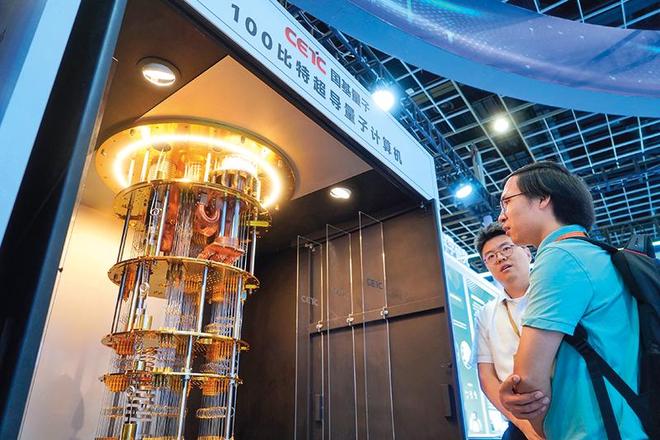
100比特超导量子计算机

Search documents
瞭望 | 量子计算突围路线图
Xin Hua She· 2026-01-26 09:44
Core Insights - The global quantum computing competition is intensifying, with countries like the US, EU, and Japan elevating quantum computing to a national strategy, focusing on legislation, substantial investments, and international collaboration [3][4] - China has made significant strides in quantum computing, establishing itself in the first tier of the industry, but faces challenges in technology breakthroughs, supply chain security, and standardization [1][4] - The success of quantum computing depends on building a sustainable, full-stack ecosystem rather than just the parameters of individual machines [1][7] Investment and Strategic Initiatives - The US has invested approximately $6.078 billion over seven years through the National Quantum Initiative Act, while the EU plans to invest around $1.1 billion from 2018 to 2027 under its Quantum Technology Flagship program [3] - Japan has earmarked 1.05 trillion yen for quantum technology, designating 2025 as the "year of quantum industrialization" [3] - South Korea has allocated 198 billion won for quantum technology in 2025, indicating a global trend towards comprehensive breakthroughs in quantum computing [3] Technological Development - The focus is on six core capabilities: quantum chip systems, quantum computing measurement and control systems, quantum computing environmental support systems, quantum operating systems and software, quantum computing cloud platforms, and quantum application software [3][4] - China is advancing its quantum computing capabilities with a focus on "self-controllable" technology, achieving several independent results in the six core capability areas [4][5] Ecosystem and Collaboration - The US and EU are building ecosystems centered around operating systems, with companies like IBM and Google leading the way in standardization and collaboration [4][5] - China's quantum computing cloud platform is rapidly developing, providing low-cost access to quantum computing for various industries, thus promoting application exploration [5][6] Challenges and Barriers - The core technology barriers in quantum computing stem from its high specialization, requiring significant R&D investment and long-term technical accumulation [8][9] - The ecological barriers arise from the interdependence of hardware and software, with leading global companies creating user stickiness and technological moats [9][10] - Standard barriers are critical for industry dominance, with the US and EU actively working on international standards that could dictate future developments [9][10] Future Directions - Experts suggest that China should focus on three essential capabilities: quantum chips, measurement and control systems, and operating systems, to achieve breakthroughs [11][12] - A coordinated national strategy is recommended to foster innovation and industry cultivation, ensuring that China can compete effectively in the global quantum landscape [11][12] - The development of a shared ecosystem between research and industry is crucial for advancing quantum applications in key sectors like biomedicine and finance [12]


关注未知 耐心布局 携手陪伴——江苏未来产业演绎发展“三重奏”
Xin Hua Ri Bao· 2025-08-30 23:21
Group 1 - The 2025 Jiangsu Future Industry Innovation Development Exchange Conference was held in Nanjing, showcasing the rapid growth and innovation in the province's future industries, with over 3,000 core enterprises generating more than 750 billion yuan in revenue [1] - Jiangsu has established a "10+X" future industry system, focusing on both established directions and emerging possibilities, positioning future industries as a backbone of the economy [2] - The conference highlighted significant advancements in various sectors, including high-throughput gene sequencing, solid rocket technology, and superconducting quantum computing, indicating a strong emphasis on original innovation [2][3] Group 2 - Collaborative efforts across multiple sectors are evident, with the establishment of numerous key laboratories and research institutes focusing on critical areas such as third-generation semiconductors and new energy storage [4] - The Jiangsu Future Industry (Technology) Research Institute was officially announced, comprising 18 entities aimed at accelerating the development of the "10+X" future industry system [4] - The conference reported that 21 pilot regions for future industries achieved a combined revenue of 423.36 billion yuan, with significant growth in high-tech enterprises and innovation platforms [6] Group 3 - The Jiangsu market regulatory authority introduced ten exemplary cases of future industry standards, enhancing the province's influence and leadership in key sectors [7] - The introduction of new financial products by Jiangsu Rural Commercial Bank aims to support future industries with a commitment to provide at least 10 billion yuan in loans within a year [7][8] - The Jiangsu Provincial Strategic Emerging Industry Fund has reached a total scale of 174.9 billion yuan, providing essential financial support for the growth of future industries [8]