
全栈生态

Search documents
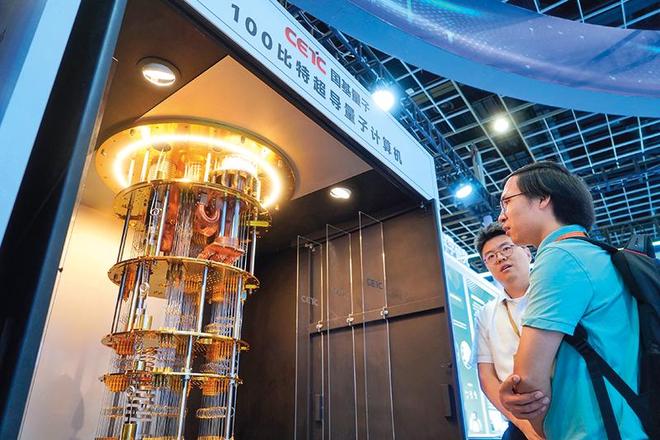
瞭望 | 量子计算突围路线图
Xin Hua She· 2026-01-26 09:44
Core Insights - The global quantum computing competition is intensifying, with countries like the US, EU, and Japan elevating quantum computing to a national strategy, focusing on legislation, substantial investments, and international collaboration [3][4] - China has made significant strides in quantum computing, establishing itself in the first tier of the industry, but faces challenges in technology breakthroughs, supply chain security, and standardization [1][4] - The success of quantum computing depends on building a sustainable, full-stack ecosystem rather than just the parameters of individual machines [1][7] Investment and Strategic Initiatives - The US has invested approximately $6.078 billion over seven years through the National Quantum Initiative Act, while the EU plans to invest around $1.1 billion from 2018 to 2027 under its Quantum Technology Flagship program [3] - Japan has earmarked 1.05 trillion yen for quantum technology, designating 2025 as the "year of quantum industrialization" [3] - South Korea has allocated 198 billion won for quantum technology in 2025, indicating a global trend towards comprehensive breakthroughs in quantum computing [3] Technological Development - The focus is on six core capabilities: quantum chip systems, quantum computing measurement and control systems, quantum computing environmental support systems, quantum operating systems and software, quantum computing cloud platforms, and quantum application software [3][4] - China is advancing its quantum computing capabilities with a focus on "self-controllable" technology, achieving several independent results in the six core capability areas [4][5] Ecosystem and Collaboration - The US and EU are building ecosystems centered around operating systems, with companies like IBM and Google leading the way in standardization and collaboration [4][5] - China's quantum computing cloud platform is rapidly developing, providing low-cost access to quantum computing for various industries, thus promoting application exploration [5][6] Challenges and Barriers - The core technology barriers in quantum computing stem from its high specialization, requiring significant R&D investment and long-term technical accumulation [8][9] - The ecological barriers arise from the interdependence of hardware and software, with leading global companies creating user stickiness and technological moats [9][10] - Standard barriers are critical for industry dominance, with the US and EU actively working on international standards that could dictate future developments [9][10] Future Directions - Experts suggest that China should focus on three essential capabilities: quantum chips, measurement and control systems, and operating systems, to achieve breakthroughs [11][12] - A coordinated national strategy is recommended to foster innovation and industry cultivation, ensuring that China can compete effectively in the global quantum landscape [11][12] - The development of a shared ecosystem between research and industry is crucial for advancing quantum applications in key sectors like biomedicine and finance [12]


美股AI突变,OpenAI沦为“股价毒药”,硅谷八巨头一夜蒸发3.8万亿元市值,专家:看好谷歌,其拥有两项致胜“法宝”
3 6 Ke· 2025-12-15 01:28
Core Insights - The "OpenAI concept stocks" have seen a significant decline, with major companies like Oracle and Broadcom experiencing substantial stock price drops due to concerns over the viability of their contracts with OpenAI [1][15] - Oracle's stock fell 27.7%, losing $209.4 billion in market value, while Broadcom's stock dropped 11%, resulting in a $219.2 billion loss in market capitalization [17] - OpenAI's financial commitments and the long return cycles associated with its contracts have raised doubts about its revenue potential and ability to fulfill obligations [8][12] Company Performance - Broadcom reported a Q4 FY2025 earnings per share of $1.95, exceeding analyst expectations, with revenues of $18.02 billion, also above forecasts [4] - Despite having $73 billion in AI product orders, Broadcom's low profit margins on AI revenue compared to non-AI revenue have caused investor disappointment [6][7] - Oracle's total revenue for Q2 FY2026 was $16.06 billion, falling short of expectations, while its remaining performance obligations surged 438% to $523 billion, raising concerns about its future financial health [9][12] Market Reactions - The combined market value of major AI companies dropped by $547 billion (approximately 3.8 trillion RMB) in a single day, reflecting investor anxiety over the sustainability of OpenAI's business model [1][16] - Companies deeply tied to OpenAI, including Oracle, SoftBank, Microsoft, and Nvidia, have collectively seen their stock prices decline significantly since late October [16][17] Competitive Landscape - OpenAI's recent launch of GPT-5.2 is seen as a reactive measure to increasing competition from Google's Gemini 3, which poses a significant threat to OpenAI's market position [3][18] - Analysts suggest that OpenAI's reliance on external partnerships and its high operational costs may hinder its ability to compete effectively against Google's integrated ecosystem [23][25] Financial Viability - HSBC's report indicates that OpenAI may face a cumulative free cash flow deficit of $207 billion by 2030, necessitating additional debt or equity financing to sustain operations [19] - The financial strain on Oracle, with a projected capital expenditure increase to $50 billion, raises concerns about its ability to manage its commitments to OpenAI [12][14]



