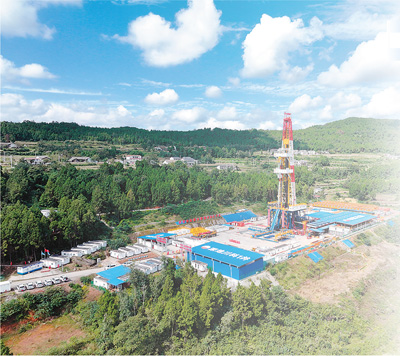
12000米自动化钻机

Search documents
“十四五”时期,中国首口超万米科探井完钻,成为亚洲第一、世界第二垂直深度井——掘进地下万米
Ren Min Ri Bao Hai Wai Ban· 2026-01-14 08:13
Core Viewpoint - The successful completion of China's first 10,000-meter scientific exploration well, the Deep Taka 1 Well, marks a significant milestone in deep earth engineering, enhancing national energy security and showcasing advancements in drilling technology and geological understanding [1][6][12]. Group 1: Drilling Achievements - The Deep Taka 1 Well reached a depth of 10,910 meters, setting five drilling records, including the fastest completion of a 10,000-meter well on land and the deepest tailpipe cementing [2][5]. - The well is located in the Tarim Basin, where depths exceeding 9,000 meters are classified as ultra-deep wells, presenting significant challenges akin to standing atop Mount Everest and looking down at the Yarlung Tsangpo River [3][4]. Group 2: Technical Challenges - The drilling faced extreme environmental conditions, with temperatures ranging from over 50 degrees Celsius in summer to nearly -30 degrees Celsius in winter, complicating operations [3]. - The well encountered complex geological formations, requiring frequent adjustments to drilling techniques and equipment due to rapid changes in rock properties at depth [4][8]. Group 3: Technological Innovations - The project utilized a self-developed 12,000-meter automated drilling rig capable of lifting 900 tons, significantly enhancing operational efficiency and reducing manual labor by over 80% [8][9]. - Advanced drilling technologies, including high-temperature resistant drilling fluids and specialized drill bits, were developed to meet the unique challenges of ultra-deep drilling [8][9]. Group 4: Geological Insights - The successful drilling provided valuable geological data from depths previously unexplored, confirming the potential for oil and gas resources in the Tarim Basin, which is recognized as a major oil and gas reservoir in China [6][10]. - The exploration of deep geological formations will contribute to understanding ancient environmental conditions and the evolution of sedimentary basins, aiding in broader scientific research [11]. Group 5: Strategic Importance - The advancement in deep drilling technology is crucial for China's energy security, as the country relies heavily on oil and gas imports, with significant resources located in deeper geological layers [10]. - The successful completion of the well signifies a shift from occasional breakthroughs in deep drilling to more routine operations, reflecting China's commitment to enhancing its capabilities in this critical area [12][13].

陕西省人民政府新闻办公室举办新闻发布会介绍陕西“十四五”时期区域发展和新型城镇化建设成效有关情况
Shan Xi Ri Bao· 2025-11-27 01:04
Core Viewpoint - The press conference highlighted the achievements and progress made in the "14th Five-Year Plan" period in Shaanxi Province, focusing on regional development and new urbanization strategies, emphasizing the importance of coordinated development and urban-rural integration [5][6][42]. Group 1: Regional Development Mechanisms - The establishment of the Provincial Regional Coordination Development Leadership Group has improved the coordination of national regional strategies and urban-rural integration [6][43]. - A series of policy documents have been issued to support the construction of a unified national market and promote cross-regional resource flow [6][43]. Group 2: Regional Linkage - The integration of the Guanzhong innovation elements with the energy and ecological resources of Northern and Southern Shaanxi has been accelerated, with significant projects like the Xi'an headquarters and Xianyang base being developed [7][44]. - The Xi'an metropolitan area has reached a permanent population of 18.75 million and an economic total of 1.67 trillion yuan [7][44]. Group 3: Industrial System Development - The Guanzhong region has focused on technological innovation, with strategic emerging industries accounting for 80% of the province's total [8][45]. - The energy revolution in Northern Shaanxi has led to an average annual GDP growth rate of 7.3% since the beginning of the "14th Five-Year Plan" [8][45]. Group 4: Connectivity Improvements - Major cross-regional water conservancy projects have been accelerated, and significant transportation infrastructure has been developed, including the completion of the T5 terminal at Xi'an Xianyang International Airport [9][46]. - The road mileage in Guanzhong, Northern Shaanxi, and Southern Shaanxi has increased significantly compared to 2020, enhancing transportation connectivity [9][46]. Group 5: Environmental Improvements - The ecological environment in the Qinba Mountains has been effectively protected, with a significant area classified as having excellent ecological quality [10][47]. - The province's renewable energy capacity has reached 63.18 million kilowatts, 2.6 times that of the end of 2020 [10][47]. Group 6: Urban-Rural Integration - The county economy is being developed as a strategic measure to reduce urban-rural and regional disparities, with the total county economy expected to reach 1.68 trillion yuan by 2024 [11][48]. - The urbanization rate in the province is projected to increase significantly, reflecting the ongoing efforts in urban-rural integration [11][48].

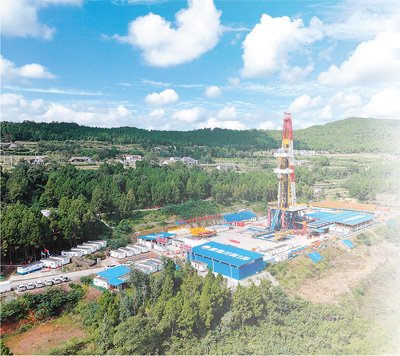
“十四五”时期,中国首口超万米科探井完钻,成为亚洲第一、世界第二垂直深度井—— 掘进地下万米
Ren Min Ri Bao Hai Wai Ban· 2025-10-30 10:09
Core Viewpoint - The successful completion of China's first 10,000-meter scientific exploration well, the Deep Earth Taka 1 Well, marks a significant milestone in deep earth engineering and oil and gas exploration, showcasing advancements in technology and geological understanding [9][13][18]. Group 1: Project Overview - The Deep Earth Taka 1 Well, located in the Tarim Basin, achieved a drilling depth of 10,910 meters, setting five global drilling records [9][12]. - This well is part of China's major deep earth engineering initiatives during the 14th Five-Year Plan period, aimed at enhancing national energy security [8][10][16]. Group 2: Technical Challenges - Drilling at such depths involves extreme conditions, including high temperatures (up to 220 degrees Celsius) and pressures (145 MPa), making it a formidable engineering challenge [12][14]. - The well had to penetrate 12 different geological layers, each with varying rock properties, necessitating frequent adjustments in drilling techniques and equipment [11][12]. Group 3: Technological Innovations - The project utilized a self-developed 12,000-meter automated drilling rig, capable of lifting 900 tons, significantly enhancing operational efficiency [14][15]. - Advanced drilling technologies, including high-temperature drilling fluids and specialized drill bits, were developed to meet the unique challenges of deep drilling [14][15]. Group 4: Geological Insights - The successful drilling provided valuable geological data from depths previously unexplored, confirming the potential for oil and gas resources in the Tarim Basin [13][17]. - The exploration of deep geological formations can reveal insights into ancient environmental conditions and the evolution of sedimentary basins [17][18]. Group 5: Strategic Importance - The advancement in deep drilling capabilities is crucial for China's energy strategy, as the country seeks to reduce its reliance on foreign oil and gas [16][18]. - The exploration of deep and ultra-deep oil and gas resources is identified as a key area for future discoveries, with significant remaining resources in the 8,000-meter and deeper categories [16][18].
“十四五”,我们见证这些硬核突破丨掘进地下万米
Ren Min Ri Bao Hai Wai Ban· 2025-10-30 07:18
Core Insights - The successful completion of China's first 10,000-meter exploratory well, the Deep Taka 1 Well, marks a significant milestone in deep earth engineering, providing strong support for national energy security [4][8][11] Group 1: Project Overview - The Deep Taka 1 Well, located in the Taklamakan Desert, reached a depth of 10,910 meters, setting five drilling records, including the fastest land drilling to exceed 10,000 meters [4][7] - The well is part of a major deep earth engineering initiative by China National Petroleum Corporation (CNPC) in the Tarim Basin, which is recognized as a "forbidden zone" for exploration due to its complex geological conditions [5][8] Group 2: Technical Challenges - Drilling at such depths involves overcoming extreme environmental conditions, including temperatures reaching over 50 degrees Celsius in summer and nearly -30 degrees Celsius in winter [5][6] - The well had to penetrate 12 different geological layers, with significant variations in rock types, requiring constant adjustments to drilling techniques and equipment [6][9] Group 3: Technological Innovations - The project utilized advanced technologies, including a self-developed 12,000-meter automated drilling rig capable of lifting 900 tons, significantly enhancing operational efficiency [9][10] - A total of 10 proprietary technologies were developed for the project, including high-temperature resistant drilling fluids and high-strength drilling rods, which proved effective under extreme conditions [10][11] Group 4: Strategic Importance - The successful drilling of the Deep Taka 1 Well is crucial for China's energy security, as the country relies heavily on oil and gas imports, with a significant portion of its resources located in deep layers [11][12] - The well's completion is expected to facilitate further exploration in deep layers, which hold approximately 671 billion tons of oil equivalent, representing about 34% of China's total oil and gas resources [11][12] Group 5: Future Prospects - The completion of the Deep Taka 1 Well signifies a shift in China's drilling capabilities from occasional breakthroughs to routine operations, with plans for further deep drilling projects underway [13][14] - The exploration of deep earth is anticipated to yield valuable geological data, contributing to the understanding of ancient environments and the evolution of sedimentary basins [12][14]
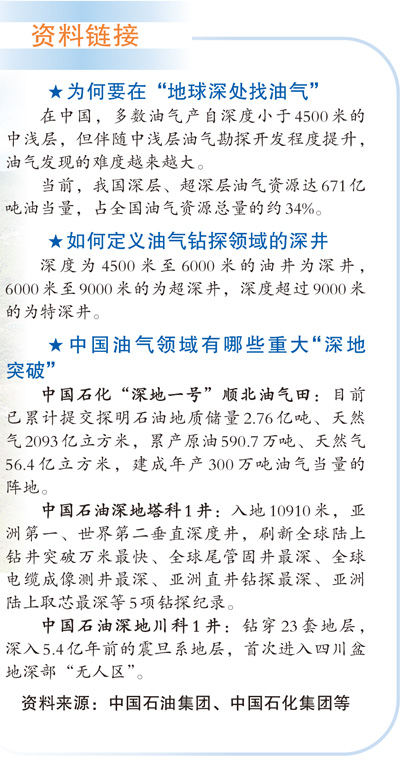
掘进地下万米(“十四五”,我们见证这些硬核突破⑥)
Ren Min Ri Bao Hai Wai Ban· 2025-10-29 22:55
Core Insights - The successful completion of China's first 10,000-meter scientific exploration well, the Deep Earth Ta Ke 1 Well, marks a significant milestone in deep earth engineering and energy security for the country [5][9][14]. Group 1: Project Overview - The Deep Earth Ta Ke 1 Well, located in the Aksu region of Xinjiang, has reached a depth of 10,910 meters, setting five drilling records [5][6][8]. - This well is part of a major deep earth engineering initiative by China Petroleum in the Tarim Basin, which is known for its complex geological conditions [6][9]. Group 2: Technical Challenges - Drilling at such depths presents extreme challenges, including high temperatures (up to 220 degrees Celsius) and pressures (up to 145 MPa), as well as complex rock formations that require frequent adjustments in drilling techniques [7][10][11]. - The project utilized advanced technology, including a self-developed 12,000-meter automated drilling rig and specialized drill bits to handle the extreme conditions [10][11]. Group 3: Geological Significance - The successful drilling of the well has provided valuable geological data from depths previously unexplored, confirming the potential for oil and gas resources in the Tarim Basin [9][12]. - The well's findings contribute to understanding ancient geological environments and the evolution of sedimentary basins, which is crucial for future exploration [13]. Group 4: Strategic Importance - The advancement in deep earth drilling technology is essential for China's energy security, as the country seeks to reduce its reliance on foreign oil and gas [12][14]. - The exploration of deep layers is becoming increasingly important as shallow resources are depleted, with significant reserves identified in depths exceeding 8,000 meters [12][14].