
30兆瓦级纯氢燃气轮机

Search documents
绿氢,为何成为未来产业和新兴能源载体?
国家能源局· 2026-03-22 03:27
Core Viewpoint - The article emphasizes the strategic importance of green hydrogen as a key component in the future energy landscape, highlighting its role in achieving carbon neutrality and its potential for widespread application across various industries [1][2][5]. Group 1: Future Industries and Green Hydrogen - The Chinese government is focusing on future industries, including hydrogen energy, as part of its development strategy, with green hydrogen being identified as a crucial energy carrier [1][2]. - Green hydrogen is derived from renewable energy sources and is essential for achieving carbon neutrality, serving as a zero-carbon fuel and raw material across multiple sectors [2][5]. Group 2: Advantages of Green Hydrogen - Green hydrogen offers significant advantages over hydrogen produced from fossil fuels, including lower costs, higher efficiency, and no carbon emissions during production [5][6]. - The storage costs for hydrogen are significantly lower than those for energy storage batteries, making it a viable option for large-scale renewable energy storage [5][6]. Group 3: Applications of Hydrogen Energy - Hydrogen can be utilized in various applications, including hydrogen storage, as a raw material in chemical and metallurgical industries, and in hydrogen-powered systems such as fuel cells for vehicles and machinery [6][7]. - The development of hydrogen fuel cells has advanced significantly, with applications expanding to various sectors, including transportation and industrial machinery [7][8]. Group 4: Technological Breakthroughs - The hydrogen energy technology chain includes multiple stages such as renewable energy generation, hydrogen production, storage, and application, requiring a comprehensive technological framework [8][10]. - China has made progress in developing alkaline electrolysis technology for hydrogen production, with plans to establish a complete industrial chain by 2025 [8][11]. Group 5: Commercialization Challenges - The commercialization of green hydrogen faces challenges due to the complexity of its production, transportation, storage, and utilization processes, necessitating technological advancements and integration across various energy forms [11][12]. - Strategies for large-scale commercialization include utilizing surplus renewable energy for hydrogen production and integrating hydrogen with electricity and thermal energy systems [11][12]. Group 6: Innovative Projects - Recent breakthroughs include the development of a pure hydrogen gas turbine that can operate stably, significantly reducing carbon emissions compared to traditional power generation methods [14]. - The "Hydrogen Teng" fuel cell developed for extreme environments demonstrates the versatility and reliability of hydrogen technology, with potential applications in various sectors [15].


攒足发展“硬支撑”底气!借助重大工程“拼图”看经济发展澎湃“硬核”动力
Yang Shi Wang· 2025-12-29 03:26
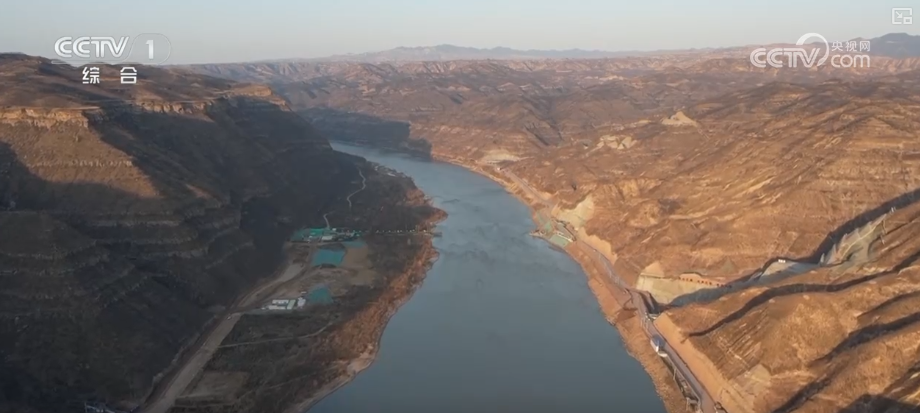
Core Viewpoint - Recent significant progress in major projects across water conservancy, energy, and transportation sectors in China highlights the country's economic vitality [1] Water Conservancy - The Yellow River Guxian Water Conservancy Hub's diversion tunnel successfully completed, marking a major milestone in the project aimed at enhancing flood control and disaster reduction capabilities [5] - The Nanning Pumped Storage Power Station, part of the "14th Five-Year Plan," has been fully operational, representing Guangxi's first pumped storage power station with a total investment of approximately 8 billion yuan and a capacity of 1.2 million kilowatts [19][22] Energy - The first domestically developed 30-megawatt pure hydrogen gas turbine has achieved pure hydrogen power generation, reducing carbon emissions by over 200,000 tons annually compared to conventional power generation [8][41] - The Xinjiang Oilfield's carbon capture and storage project has become China's first oilfield to inject over 1 million tons of carbon annually, marking a significant step in carbon capture and utilization [35][38] Transportation - The Guangdong Yangchun to Xinyi Expressway has officially opened, reducing travel time between the two cities from 4 hours to 1.5 hours, enhancing connectivity between the Guangdong-Hong Kong-Macao Greater Bay Area and the Guangxi Beibu Gulf Economic Zone [10] - The Nanjing Metro Line 4's second phase underwater tunnel has successfully completed, representing the deepest underwater metro tunnel in the Yangtze River Delta region [13] - The Dongyang Expressway has been completed, achieving "county-to-county" expressway connectivity in Liaocheng, Shandong Province [15] Natural Gas Infrastructure - The Sichuan section of the "West-to-East Gas Transmission" project has been fully operational, expanding the natural gas resource export channel from the Sichuan-Chongqing region [30][32]
氢能从试点探索迈入有序破局
Jing Ji Ri Bao· 2025-08-12 22:03
Group 1 - The core viewpoint of the articles highlights the rapid development and significant projects in China's hydrogen energy sector, indicating a transition from pilot exploration to a more structured and impactful phase [1][2][3] - Major hydrogen energy projects have been launched this year, including the world's first 30 MW pure hydrogen gas turbine demonstration project and the largest green hydrogen ammonia project in Inner Mongolia, showcasing China's leadership in renewable hydrogen production [1][2] - The National Energy Administration's report indicates that China accounted for over 50% of the global renewable energy hydrogen production capacity, with a projected hydrogen production and consumption scale exceeding 36.5 million tons in 2024, making it the world's largest [1][3] Group 2 - Technological innovation in hydrogen energy is driving breakthroughs across the entire industry chain, with significant advancements in hydrogen production, storage, and application technologies [2][3] - The first commercial operation of a megawatt-level proton exchange membrane electrolyzer and the completion of a long-distance high-pressure pipeline capable of hydrogen blending are notable achievements in hydrogen production and transportation [3] - The hydrogen energy industry is transitioning from being policy-driven to a dual-driven model involving both policy and market forces, necessitating a systematic approach to overcome existing technological and cost challenges [3][4] Group 3 - Recommendations from experts include accelerating the scale-up of technological equipment, establishing green hydrogen certification systems, and promoting cross-border trade rules to enhance innovation and industry development [4] - The establishment of innovation consortia led by major enterprises is encouraged to facilitate the integration of research, technology transfer, and industrial application [4]