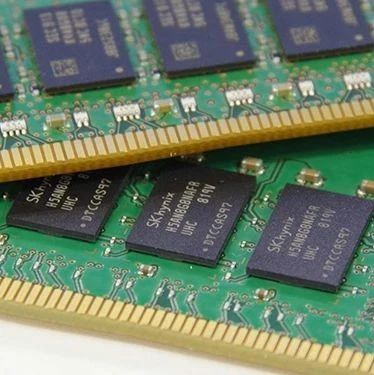
4GB DDR4

Search documents
存储器、面板、贵金属全面上涨,2026年电视全球出货量恐下修
WitsView睿智显示· 2026-01-31 01:04
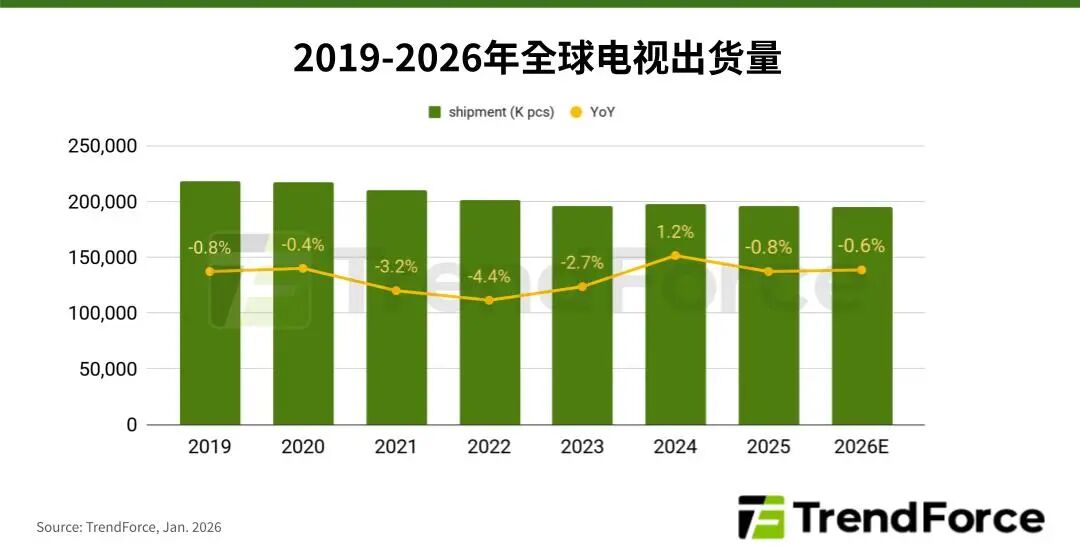
Core Viewpoint - The television industry is facing rising costs due to increases in memory, panel, and precious metal prices, leading to a downward revision of expected shipment volumes for 2026, now projected to decrease by 0.6% to approximately 194.81 million units [2]. Group 1: Market Trends - From early 2025, uncertainty in international conditions prompted TV brands to stock up in advance, but inventory adjustments in the second quarter led to a disappointing third-quarter shipment, which fell below 50 million units for the first time [5]. - Despite pressures to meet annual shipment targets in the fourth quarter and preemptive stocking due to rising memory prices, global TV shipments are still expected to decline by 0.8% in 2025, reaching nearly 196.2 million units [5]. - In the first half of 2026, promotional events like the Super Bowl and FIFA World Cup are expected to boost shipments by 2% year-on-year to 46.51 million units, although the second half may face challenges [5]. Group 2: Cost Analysis - Panels account for approximately 40-50% of the total cost of a TV, and prices have begun to rise as of January 2026. The supply of memory for TVs is being squeezed by demand from HBM and server applications, leading to price increases starting in the second half of 2025 [5]. - The contract price for 4GB DDR4 memory, commonly used in 4K TVs, has increased over fourfold in the past year, with expectations of a further increase of over 60% in the first quarter of 2026 [5][6]. - The share of DRAM in the bill of materials (BOM) cost for TVs has risen from 2.5-3% to 6-7% due to recent price adjustments, putting pressure on brand profitability, particularly for smaller players with fewer resources [6]. Group 3: Market Opportunities - In 2026, favorable subsidy policies in the Chinese market will benefit Mini LED models, with major brands showcasing RGB TV technology at CES 2026 and targeting more affordable sizes between 55-75 inches [6]. - TrendForce has revised its forecast for Mini LED TV penetration in 2026 to 10%, with shipments expected to approach 20 million units. TCL is positioned to lead the Mini LED TV market, potentially surpassing a 30% market share [6].


集邦咨询:存储器、面板、贵金属同步涨价 预计电视生产成本承压
智通财经网· 2026-01-29 09:19
Core Insights - The television industry is facing rising costs due to increases in memory, panel, and precious metal prices, leading to a downward revision of the expected annual shipment volume for 2026 from a decrease of 0.3% to 0.6%, totaling approximately 194.81 million units [1] Group 1: Market Trends - From early 2025, television brands began stockpiling inventory due to uncertainties in international conditions, followed by inventory adjustments in the second quarter, resulting in a third-quarter shipment drop below 50 million units for the first time [3] - Despite promotional events in early 2026, such as the Super Bowl and FIFA World Cup, brands are accelerating inventory preparation due to rising prices of memory and panels, leading to a projected 2% year-on-year increase in first-quarter shipments to 46.51 million units [3] Group 2: Cost Analysis - The cost of panels constitutes approximately 40-50% of the total cost of a television, with prices starting to rise in January 2026. The supply of memory for televisions is being squeezed by demand from other applications, causing prices to increase significantly [3] - The proportion of DRAM in the bill of materials (BOM) for televisions has risen from 2.5-3% to 6-7% due to recent price adjustments, putting pressure on brand profitability, particularly for smaller players [4] Group 3: Product Development and Market Position - In 2026, favorable subsidy policies in the Chinese market will benefit Mini LED products, with major brands showcasing RGB television technology at CES 2026 and targeting more affordable sizes between 55-75 inches [4] - TrendForce has revised its forecast for Mini LED television penetration in 2026 to 10%, with shipments expected to approach 20 million units, while TCL is positioned to lead the Mini LED market with a market share exceeding 30% [4]
研报 | 存储器、面板、贵金属涨价影响电视品牌获利,2026年全球出货量恐下调
TrendForce集邦· 2026-01-29 09:01
Core Insights - The television industry is facing rising costs due to increases in memory, panel, and precious metal prices, leading to a downward revision of the global TV shipment forecast for 2026 from a decrease of 0.3% to 0.6%, totaling approximately 194.81 million units [3][5] - The cost structure has made it difficult to maintain previous low pricing strategies, necessitating price increases for new models [5][6] - The share of memory in the Bill of Materials (BOM) cost for TVs has risen from 2.5-3% to 6-7% due to the price surge [5][7] Shipment Forecast - The global TV shipment for 2026 is projected to be 194.81 million units, reflecting a year-on-year decrease of 0.6% [5][6] - Despite promotional events like the Super Bowl and FIFA World Cup, the second half of 2026 may face challenges in maintaining shipment momentum due to rising component prices [6][7] Cost Analysis - Panel costs account for approximately 40-50% of the total TV production cost, with prices beginning to rise as of January 2026 [6][7] - The price of 4GB DDR4 memory, commonly used in 4K TVs, has increased over fourfold in the past year, with expectations of a further increase of over 60% in the first quarter of 2026 [6][7] Market Dynamics - Smaller brands with limited resources are likely to be more adversely affected by the rising memory prices, impacting their production capabilities and profitability [7] - In the Chinese market, favorable subsidy policies for energy-efficient products are expected to benefit Mini LED models, with an anticipated penetration rate of 10% and shipments reaching 20 million units [7] - TCL is positioned to lead the Mini LED TV market, with a market share projected to exceed 30% due to its integrated advantages in materials and manufacturing [7]
DRAM大宗交易价格5月上涨10%
日经中文网· 2025-06-12 07:24
Group 1 - The Japanese government is considering adjustments to the tax exemption policy for small imported goods, currently exempting goods under 10,000 yen from consumption tax and tariffs, which supports companies like "Temu" and "SHEIN" [1] - DRAM prices have been rising continuously, with the price of the benchmark 8GB DDR4 product reaching approximately $2.06, marking a high since August 2024, and the 4GB product increasing to about $1.57, both showing a 10% increase for two consecutive months [1][2] - Major DRAM manufacturers, including Samsung, SK Hynix, and Micron, are expected to halt or reduce DDR4 production due to supply constraints, leading to increased prices [2] Group 2 - The production of DDR4 by Taiwanese companies Nanya Technology and Winbond is lower than the impact of the three major manufacturers' production cuts, contributing to supply tightness [2] - China's ChangXin Memory Technologies (CXMT) is increasing DDR4 production, which is affecting the market share of the three major manufacturers in China [2] - The three major manufacturers are also focusing on producing high-bandwidth memory (HBM) for generative AI applications, with SK Hynix leading the HBM market share at 36% as of early 2025 [2] Group 3 - There is uncertainty regarding the upward trend in DDR4 prices due to weak demand for PCs and smartphones, with prices having been in a downward trend since September 2024 before the recent surge [4] - Some industry voices express concern that the current rate of price increase is too rapid [4]