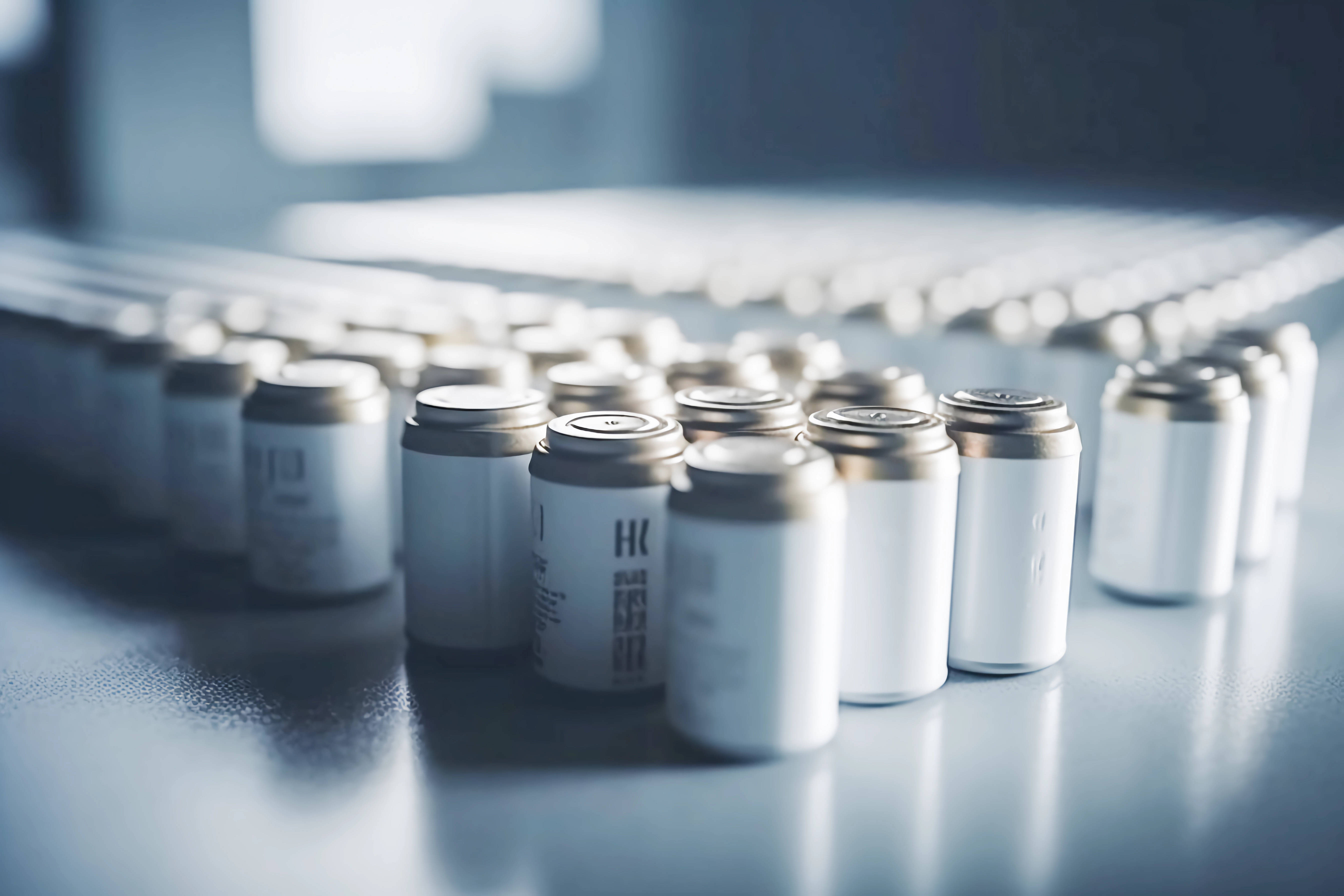
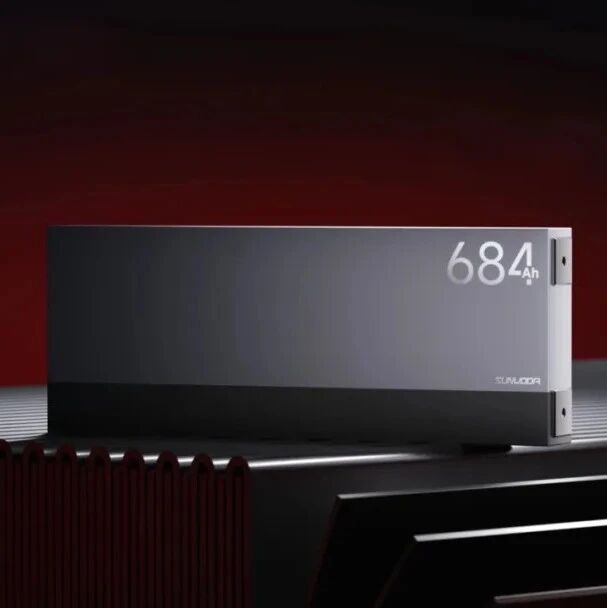
684Ah叠片电芯

Search documents
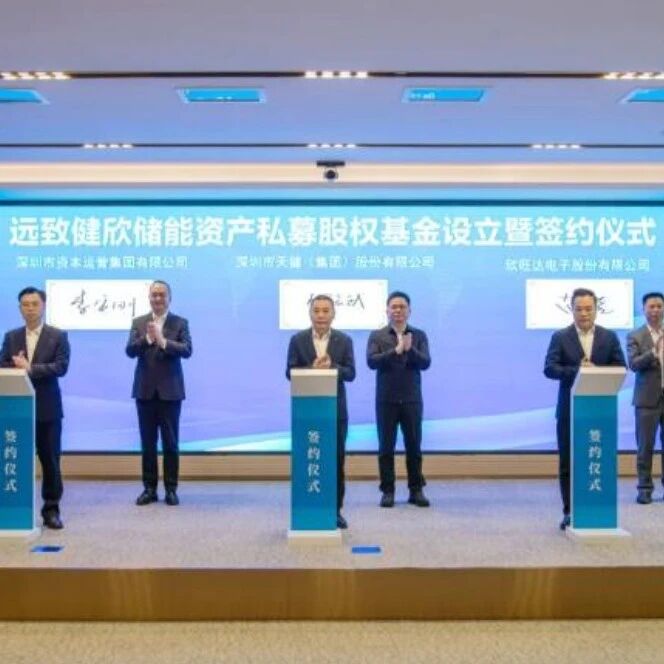
欣旺达携手天健集团设立5亿基金
中关村储能产业技术联盟· 2026-03-09 04:08
Group 1 - The "Yuan Zhi Jian Xin Energy Storage Asset Private Equity Fund" has been officially established with a total scale of 500 million yuan, focusing on new energy storage stations primarily based on electrochemical storage, integrated solar storage, and energy management systems [3][5] - XINWANDA, a leading global provider of lithium battery and energy storage system solutions, plays a crucial role in this collaboration by providing industry leadership and technical support [5] - The fund has already reserved a number of high-quality projects in Guangdong, Zhejiang, Anhui, and Hebei, aiming to promote energy transition and cultivate new productive forces through capital operations and complementary industrial advantages [5] Group 2 - XINWANDA has confirmed its participation in the 14th International Energy Storage Summit and Exhibition (ESIE 2026), inviting industry peers to attend this global energy storage industry event [6] - The ESIE 2026 will take place from March 31 to April 3, 2026, at the Capital International Exhibition Center in Beijing, with free admission for attendees [7]


欣旺达:在印度、越南、泰国、摩洛哥、匈牙利等地有生产基地
Zheng Quan Ri Bao Wang· 2026-01-13 10:45
Group 1 - The core viewpoint of the article is that Xiwanda (300207) is making significant progress in its solid-state battery development and has established production bases in multiple countries [1] - The company has production bases in India, Vietnam, Thailand, Morocco, and Hungary [1] - The solid-state battery is currently in the research and development stage, with smooth progress reported [1] - Since the production launch in September 2025, the company has achieved mass production and delivery of its 684Ah stacked cell, reaching a scale of one million units [1]
储能产业迈向价值增长新阶段
Zheng Quan Ri Bao· 2026-01-12 17:13
Core Insights - The global energy transition is entering a critical phase, with energy storage becoming a core infrastructure to balance the volatility of renewable energy and ensure energy system security [1] - The storage industry is experiencing a fundamental transformation driven by AI computing power and energy structure changes, marking a key turning point for value growth [1] - By 2025, China's energy storage industry is expected to initiate a high-quality transformation cycle, with structural growth opportunities emerging in 2026 [1] Group 1: Technological Foundations - Technological innovation is the core engine for high-quality development in the energy storage industry, with three main characteristics emerging in battery cell technology by the second half of 2025: large cells over 500Ah becoming mainstream, stacking technology accelerating to replace winding technology, and breakthroughs in long-duration storage technology [2] - The industry consensus indicates that by 2026, the development characteristics will include large cells, liquid cooling, long-duration capabilities, and multiple technological routes coexisting [2] - Major companies are leading the technological iteration wave, establishing a solid technical foundation for industry value enhancement [2] Group 2: Demand Drivers - The global energy storage market demand is expected to maintain strong growth, with projections of 150GWh and 203GWh of new installations in China for 2025 and 2026, respectively, and approximately 290GWh globally in 2025 [4] - AI computing infrastructure is becoming a new growth engine, with significant electricity demand from AI data centers, which also increases the need for renewable energy and storage solutions [5] - The share of long-duration storage systems (≥4 hours) is expected to rise significantly by 2026, driven by increasing demand for cross-day and cross-season adjustments in renewable energy [5] Group 3: Value Enhancement - The energy storage industry is transitioning from "scale expansion" to "value growth," with optimized business models and improved supply-demand dynamics driving continuous value elevation [6] - The mainstream business model of "spot arbitrage + capacity compensation + ancillary services" is becoming replicable in regions like Guangdong and Shandong, enhancing investment return capabilities [6] - By 2026, the market is anticipated to enter a new phase of "volume and price increase + quality supremacy," with a focus on smart solutions for various application scenarios and a more diverse business model [6] Group 4: Global Market Opportunities - The global energy storage market is entering an explosive growth phase, with predictions of lithium battery shipments for data centers exceeding 69GWh by 2027 and reaching 300GWh by 2030 [7] - Companies like CATL, Haicheng Energy, and others are accelerating their internationalization strategies, with overseas markets becoming a core growth engine [7] - The focus on localization in overseas markets is expected to enhance customer responsiveness and loyalty, transitioning from "Made in China" to "localized global operations" [7]


储能大电芯迎来规模化量产元年—CNESA年终盘点
中关村储能产业技术联盟· 2026-01-12 03:32
Core Viewpoint - The energy storage industry is transitioning from a focus on "paper parameters" to practical applications, with large capacity battery cells achieving mass production and delivery, indicating a significant shift towards commercial viability and cost efficiency in energy storage systems [2]. Group 1: Mass Production of Large Capacity Battery Cells - Since 2025, several battery companies have reported significant progress in the mass production of 500Ah+ battery cells, with production capacity and delivery rates accelerating [4]. - CATL has initiated mass production of its 587Ah energy storage battery in June, with a production capacity exceeding 22,000 units per day, aiming for 3GWh of shipments by the end of the year [4]. - EVE Energy plans to start mass production of its 628Ah battery by the end of 2024, with a target of 750,000 units in 2025, and has successfully applied it in a 200MW/400MWh independent energy storage project [4]. - Envision AESC has achieved mass production of its 500+Ah battery cells, with plans for next-generation 700Ah+ products [4]. - Hicharge Energy has launched the world's first 1175Ah battery cell and has completed deliveries of its 587Ah battery [4]. - A number of other companies, including Chuang Neng New Energy and Penghui Energy, are also announcing timelines for the mass production of 500Ah+ and 600Ah+ products, indicating a competitive landscape by 2026 [5]. Group 2: Strategic Collaborations and Supply Chain Dynamics - The relationship between system integrators and battery manufacturers is evolving towards long-term, large-scale, and deeply integrated collaborations [7]. - By the end of 2025, significant orders of over 100GWh highlight the importance of supply chain stability and cost control in market competition [7]. - CATL has signed a procurement agreement for no less than 200GWh with a partner, with its 587Ah battery already applied in a 400MW/2400MWh energy storage project [7]. - EVE Energy has established a three-year collaboration for 20GWh with a partner, including 10GWh of large battery cells [7]. - These long-term agreements not only secure production capacity but also indicate a trend towards early collaborative development between systems and battery cells, enhancing overall product performance and safety [7]. Group 3: Global Market Expansion - The competitiveness of China's energy storage industry is being tested globally, with significant progress in the export of 500Ah+ battery cells [9]. - CATL delivered its 587Ah battery for a project in Abu Dhabi, while EVE Energy secured orders in Australia and signed a project agreement for 1GWh [9]. - Hicharge Energy has partnered with a Saudi power company for a 1GW/4GWh energy storage project, utilizing its 1175Ah battery cell [9]. - The export of large battery cells represents not only product output but also the extension of system solutions and standards, opening new opportunities for Chinese energy storage companies in the global long-duration energy storage market [9]. Group 4: Industry Trends and Future Directions - The 500Ah+ battery cells are still in a rapid development phase characterized by diverse sizes and specifications, but there is a consensus that 6MWh+ energy storage systems will accelerate the replacement of previous 5MWh+ solutions, driving down energy storage costs [10]. - The year 2025 is positioned as a pivotal year for large battery cells transitioning from laboratory settings to practical applications in energy storage systems [10].

深圳储能巨头100万颗684Ah叠片电芯下线
鑫椤储能· 2025-12-26 06:09
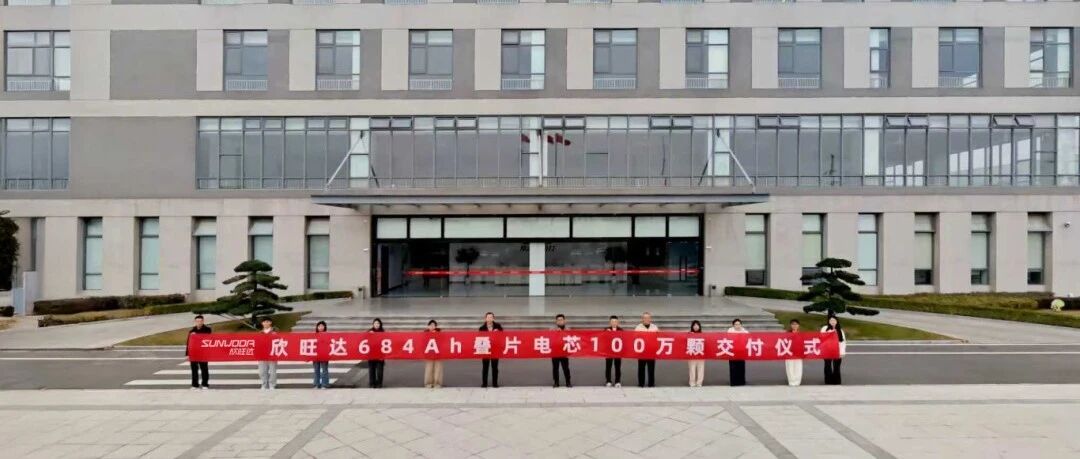
Core Viewpoint - The successful production of the one millionth 684Ah stacked cell by XINWANDA marks a significant milestone in the large-capacity stacked cell manufacturing process, indicating the technology's maturity and stability in mass production [1][3]. Group 1: Technological Advancements - XINWANDA's 684Ah stacked cell technology showcases its leading advantages in production capabilities, supported by a comprehensive manufacturing system from product design to mass production [3]. - The 684Ah cell achieves a volumetric energy density exceeding 440Wh/L and features a thermal management system that extends its lifespan to over 20 years [5]. - The 588Ah cell, utilizing a winding process, boasts a cycle life of 10,000 times while maintaining 70% health, with a high energy conversion efficiency of 96.5% [6]. Group 2: Market Position and Financial Performance - XINWANDA's market capitalization has surpassed 50 billion, reflecting its strong position in the lithium battery industry [3]. - In the first three quarters of this year, XINWANDA reported revenues of 43.534 billion, a year-on-year increase of 13.73%, and a net profit of 1.405 billion, up 15.94% [4]. - The third quarter alone saw revenues of 16.549 billion, with a net profit growth of 41.51% [4]. Group 3: Industry Implications - The successful mass production of the 684Ah cell reinforces XINWANDA's core competitiveness in the energy storage cell sector and lays the groundwork for large-scale applications in the global energy storage market [3][10]. - The advancement of large-capacity cells is entering a new phase, where manufacturing process proficiency is more critical than peak parameters [10]. - The emergence of various large-capacity cells reflects a "scene adaptation logic," where different technological routes cater to distinct application demands [9].
欣旺达第100万颗684Ah叠片电芯顺利下线!
中关村储能产业技术联盟· 2025-12-24 23:49
Core Viewpoint - The successful production of the 1 millionth 684Ah stacked cell by XINWANDA marks a significant milestone in the large-capacity energy storage cell manufacturing, demonstrating the company's leading advantages in technology and production capabilities [2][4]. Group 1: Production Milestone - On February 23, XINWANDA achieved the production of its 1 millionth 684Ah stacked cell, just three months after starting mass production on September 6 [2]. - This milestone indicates that large-capacity stacked cells have entered a stable and mature stage of mass manufacturing [2]. Group 2: Technological and Manufacturing Advantages - XINWANDA's success is attributed to its forward-looking layout and continuous investment in the stacking process, which has established a complete manufacturing system from product design to mass production [4]. - The company has achieved improvements in consistency, reliability, and efficiency, ensuring stable delivery of large-capacity energy storage cells [4]. Group 3: Industry Impact - The successful launch of the 1 millionth 684Ah stacked cell strengthens XINWANDA's core competitiveness in the energy storage cell sector and lays the foundation for large-scale applications and long-term partnerships in the global energy storage market [4]. - This achievement validates the industrialization path of the stacking process in large-capacity energy storage cells, promoting advancements in energy storage systems towards higher safety, efficiency, and overall lifecycle value [4].
宁德时代PK阳光电源,谁能拿下第三代储能电芯话语权?
Sou Hu Cai Jing· 2025-07-02 08:24
Core Viewpoint - The competition in the next-generation energy storage cell market is intensifying, with companies like CATL and Sungrow leading the charge with their respective high-capacity cells, 587Ah and 684Ah, highlighting a broader technological and market strategy battle [4][5][8]. Group 1: Company Strategies - CATL believes that the optimal capacity for energy storage cells is 587Ah, balancing system integration efficiency and safety [5][6]. - Sungrow emphasizes that the efficiency of the entire energy storage system is more critical than the individual cell capacity, advocating for a holistic approach to system design [6][10]. - Both companies agree that larger capacity is not always better, and finding the right balance is essential for optimal performance [5][9]. Group 2: Technological Approaches - CATL utilizes a winding process for its 587Ah cells, which they argue provides a better match for national standards and enhances energy density [5][6]. - Sungrow, on the other hand, employs a stacking process for its 684Ah cells, which they claim is more suitable for high-capacity applications and offers advantages in system-level efficiency [6][7]. - The industry is witnessing a shift towards stacking technology, with over 20 manufacturers now producing stacked cells, indicating a growing trend in this direction [7][8]. Group 3: Market Dynamics - The energy storage market is evolving towards a more integrated approach, where the overall performance of the energy storage system is prioritized over individual cell specifications [10][11]. - The competition is not just about capacity but also about the technological routes and safety standards that each company adheres to [8][9]. - As the market matures, hardware differentiation is expected to diminish, leading to a focus on software capabilities and system integration as key competitive advantages [11].