
ADAS激光雷达解决方案

Search documents
图达通(02665.HK)登陆港交所,激光雷达三巨头齐聚港股
Ge Long Hui· 2025-12-10 02:26
Core Viewpoint - The successful listing of Tudatong on the Hong Kong Stock Exchange marks the establishment of a strong domestic lidar market, positioning the company as a leading player in the industry with significant growth potential and self-sustaining capabilities [1][2]. Group 1: Company Overview - Tudatong is the world's first supplier to achieve mass production of automotive-grade high-performance lidar solutions, ranking second globally in sales revenue for ADAS lidar solutions from 2022 to 2024 [2]. - The company has delivered approximately 230,000 automotive-grade lidar units in 2024, establishing itself alongside major competitors like Huawei and Hesai Technology [2]. - Tudatong's competitive edge is built on a dual-line strategy focusing on both current mass production and future technological advancements [2][4]. Group 2: Commercialization and Market Expansion - The company has successfully penetrated the market through partnerships, notably with NIO, leading to over 600,000 units of its Falcon series lidar being delivered [3]. - Tudatong's product offerings have expanded into various price ranges and markets, enhancing its commercial breadth [4]. - The company has diversified its customer base, securing contracts with major automotive manufacturers and expanding into non-automotive applications such as robotics and smart cities [7][8]. Group 3: Financial Performance and Growth Potential - Tudatong's revenue is projected to grow from $66.3 million in 2022 to $159 million by 2024, with a compound annual growth rate of 55.1% [12]. - The gross margin improved to 12.9% in the first five months of 2025, indicating a shift towards a balanced focus on quality and scale [12]. - The lidar market is expected to grow significantly, with projections indicating a rise from $3.5 billion in 2025 to $41.3 billion by 2030, driven by policy support and increasing demand [13][14]. Group 4: Strategic Vision and Future Outlook - Tudatong aims to leverage its technological advancements and market positioning to facilitate the intelligent upgrade of various industries beyond automotive [16]. - The company's founder envisions a future where 3D perception technology connects the digital and physical worlds, enhancing applications in smart vehicles, robotics, and smart city operations [16].
图达通成功登陆港股,引领高性能激光雷达赛道
Ge Long Hui· 2025-12-10 02:13
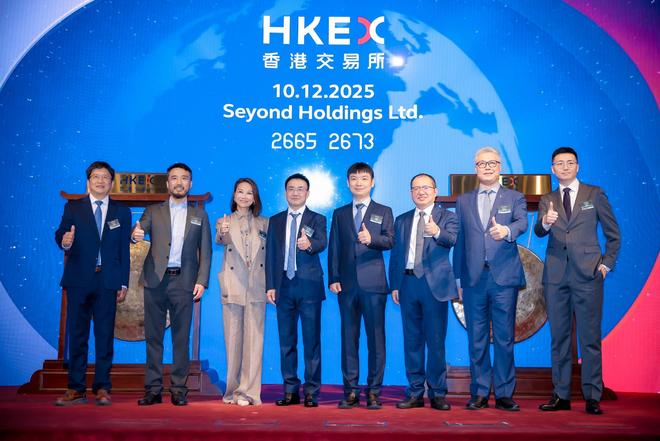
Core Viewpoint - Seyound Tuda Technology (2665.HK) has officially listed on the Hong Kong Stock Exchange through a De-SPAC process, marking a significant milestone in the global automotive-grade LiDAR sector [1] Company Summary - Seyound Tuda Technology raised approximately HKD 1.027 billion during its listing, becoming the third company to successfully go public via SPAC in Hong Kong [1] - The stock initially surged by 13%, reaching HKD 11.3, with a market capitalization exceeding HKD 14.6 billion [1] - Founded in 2016 by Dr. Bao Junwei and Dr. Li Yimin, Seyound Tuda is recognized as a leading player in the LiDAR industry, achieving several industry-leading milestones [1] - The company is the first globally to achieve mass production of automotive-grade high-performance LiDAR solutions, ranking second in cumulative sales revenue for ADAS LiDAR solutions from 2022 to 2024 [1] Industry Summary - The successful listing of Seyound Tuda signifies a new development phase in the global automotive-grade LiDAR field, emphasizing the essential role of LiDAR technology in future automotive applications [1] - CEO Bao Junwei stated that LiDAR is not an option but a necessity, predicting its importance and growth will surpass expectations [1]

图达通借壳港股上市:绑定蔚来陷依赖 高单价难换盈利 117亿估值承压
Xin Lang Cai Jing· 2025-11-14 10:33
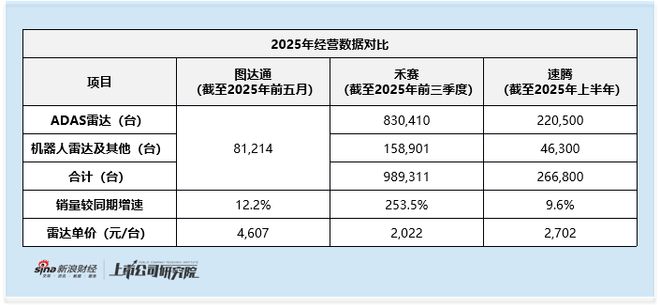
Core Viewpoint - The business merger of Chinese automotive lidar company TuDatong (Seyond) with SPAC TechStar Acquisition Corporation has successfully passed the Hong Kong Stock Exchange listing hearing, with a valuation set at HKD 11.7 billion, expected to officially list on December 10, 2025. This marks TuDatong as the third completed De-SPAC merger in Hong Kong, alongside Lion Group and Zhaogang Group, forming a competitive landscape with Hesai and RoboSense in the lidar sector. However, concerns remain regarding TuDatong's limited business layout, lack of financial self-sustainability, and valuation rationality, alongside a tumultuous listing history, necessitating market awareness of these operational risks [1][2]. Group 1: Market Position and Sales Performance - TuDatong ranks fourth in the global market share for ADAS lidar solutions with 12.8% as of 2024, but this ranking is misleading as it is primarily supported by high product pricing rather than sales volume. The average price of TuDatong's lidar is RMB 4,607 per unit, significantly higher than Hesai's RMB 2,022 and RoboSense's RMB 2,702, leading to much lower sales volumes [3][6]. - In the first five months of 2025, TuDatong sold only 81,214 units of lidar, while Hesai and RoboSense achieved sales of 989,311 and 266,800 units respectively, highlighting TuDatong's struggle to compete in terms of volume despite its high pricing [3][6]. Group 2: Customer Dependency and Financial Performance - TuDatong's revenue is heavily reliant on a single customer, NIO, with revenue contributions from NIO accounting for 88.7% to 91.6% from 2022 to early 2025. This dependency ties TuDatong's performance closely to NIO's financial health, which has been underperforming compared to competitors like Li Auto and Xpeng [4][5]. - TuDatong has faced persistent financial losses, with losses increasing from USD 188 million in 2022 to USD 398 million in 2024, and a loss of USD 21.49 million in the first five months of 2025. In contrast, Hesai achieved profitability in 2024, and RoboSense has been narrowing its losses [7][8]. Group 3: Competitive Landscape and Valuation Concerns - TuDatong's high product pricing has hindered its ability to attract new customers and expand into new business areas, unlike Hesai and RoboSense, which are actively pursuing international clients and diversifying their applications in robotics and smart driving [5][9]. - The PIPE financing raised HKD 551 million from three investors, but the limited amount may not be sufficient to overcome TuDatong's operational and profitability challenges. The company's valuation of HKD 11.7 billion corresponds to a TTM price-to-sales ratio of 11.1, which is higher than Hesai's 10.5 and RoboSense's 10.3, indicating a significant valuation mismatch given TuDatong's lack of profitability and limited customer base [9][10][11].

第三次冲刺,图达通赴港上市获备案,激光雷达三巨头有望在港会师?
3 6 Ke· 2025-10-17 11:56
Core Insights - TudaTong's plan for a Hong Kong listing has progressed following the successful second listing of Hesai, indicating a new phase of commercialization in the lidar industry with multiple companies meeting listing conditions [1][2] - TudaTong ranks second globally in cumulative sales revenue for ADAS lidar solutions as of Q1 2023, trailing only Hesai [1][6] - The company has historically relied heavily on NIO for revenue, with nearly 90% of its income coming from NIO orders in recent years [2][3] Company Development - TudaTong was founded in 2016 by former Baidu employees and focuses on designing, developing, and producing automotive-grade lidar solutions for ADAS and ADS applications [2] - The company has achieved significant milestones, including being the first to mass-produce automotive-grade high-performance lidar and leading in global passenger car lidar shipments in 2023 [2][4] Financial Performance - TudaTong's revenue grew from $0.66 billion in 2022 to $1.60 billion in 2024, with a gross margin of 12.6% in Q1 2025, indicating improved profitability [6] - The company has delivered over 493,000 automotive-grade lidar solutions, with nearly half of these delivered in 2024 alone, showcasing a rapid commercialization process [6] Market Dynamics - The lidar market is experiencing price declines and increased competition, with TudaTong's negotiation power being affected by NIO's market pressures [3][7] - The global penetration rate of new energy vehicles is expected to exceed 45% by 2025, shifting the focus of competition towards "intelligentization" and making lidar a standard safety feature in new vehicles [3] Technological Advancements - TudaTong employs a dual-technology strategy with its Falcon series (1550nm) and Sparrow series (905nm/940nm), catering to both high-end and mass-market vehicles [4][5] - The introduction of the new solid-state lidar, Hummingbird D1, enhances TudaTong's technological edge, with a product matrix covering various distance and solid-state solutions [5] Client Diversification - To reduce reliance on NIO, TudaTong is actively expanding its client base, securing exclusive supply agreements with major automotive groups and multiple orders from state-owned and joint venture manufacturers [5][6] - The company is also penetrating new markets such as commercial vehicles and robotics, establishing partnerships with leading firms in these sectors [8][9]