
AI交通系统

Search documents
当方向盘交给AI,会发生什么
2 1 Shi Ji Jing Ji Bao Dao· 2026-02-25 02:50
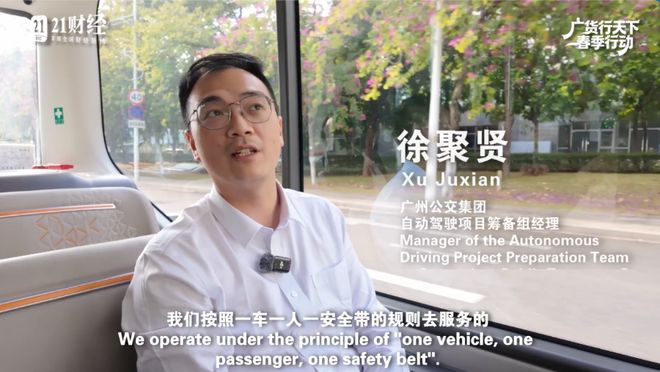
Core Insights - The article discusses the transformative impact of AI on urban transportation in Guangdong, highlighting the integration of autonomous driving technology and smart traffic management systems [1][2][17] - It emphasizes the collaboration between advanced manufacturing and modern services to create a new intelligent economy, enhancing safety and efficiency in urban transport [1][17] Group 1: AI Integration in Transportation - AI has been deeply integrated into transportation in Guangdong, with autonomous buses and smart traffic systems improving the flow and safety of urban transport [2][5] - The implementation of AI-driven traffic management during the 15th Games in Guangzhou resulted in zero errors, complaints, or accidents, showcasing the effectiveness of the system [9][11] Group 2: Challenges and Future of Autonomous Driving - Despite the current success, concerns remain about accountability in case of AI decision-making errors during autonomous driving [7] - Experts predict that the year 2026 will mark a significant milestone for the large-scale application of autonomous driving technology, with continuous advancements expected in the next three to five years [17][20] Group 3: Economic and Social Implications - The rise of autonomous public transport may lead to the reorganization of job roles, with traditional driving positions evolving into safety monitoring roles [13][15] - The shift towards AI in transportation is expected to reduce the number of vehicles on the road, thereby transforming urban infrastructure and reducing parking needs [15][17] Group 4: Global Impact and Market Expansion - Companies like BYD have surpassed Tesla in electric vehicle sales, indicating a growing global presence for Chinese smart transportation solutions [17][18] - The expansion of companies like XPeng into new markets reflects the international demand for AI-driven transportation solutions, contributing to the global output of China's smart traffic ecosystem [18][17]



2026年值得期待的十大技术应用都有啥?
Huan Qiu Wang Zi Xun· 2025-12-04 06:38
Core Insights - The article highlights the rapid advancements in technology expected by 2026, including emotional AI, wearable health devices, renewable energy innovations, and more, which are set to transform daily life and work environments [1]. Group 1: Emotional AI and Personalization - Emotional AI assistants are evolving beyond traditional voice assistants like Siri and Alexa, becoming capable of understanding human emotions through tone and expression, thus providing personalized support [2]. - These AI systems are increasingly being integrated into mental health support and personal development, marking a significant shift in the role of technology in daily life [2]. Group 2: Wearable Health Technology - Next-generation wearable devices are anticipated to monitor vital health metrics in real-time, shifting healthcare from reactive to proactive approaches [3]. - Innovations such as smart skin patches and AI watches are expected to provide early warnings for health risks, contributing to personalized health management [3]. Group 3: Renewable Energy Innovations - New night-time solar panels that capture infrared radiation are expected to overcome previous limitations of solar energy, enabling continuous power supply even in darkness [4]. - Advances in lithium-sulfur and solid-state battery technologies are projected to enhance energy storage, significantly improving electric vehicle performance and promoting sustainable transportation [4]. Group 4: Brain-Computer Interfaces - Brain-computer interface technology is moving from medical applications to everyday use, allowing users to control devices through thought, which could revolutionize rehabilitation and enhance daily life [6]. - This technology is expected to play a role in various fields, including prosthetics and augmented reality [6]. Group 5: Space Economy - The space economy is poised for growth, with reduced costs for suborbital flights and the emergence of zero-gravity hotels, indicating a new era of space exploration and commercial opportunities [7]. - Companies are exploring asteroid mining, suggesting a potential new frontier for resource acquisition [7]. Group 6: AI in Education - AI-driven personalized education is set to replace standardized teaching methods, adapting to individual learning styles and enhancing engagement for both children and adults [8]. - This transformation in education is expected to significantly impact workforce adaptability in response to industry changes [8]. Group 7: Quantum Computing - Quantum computing is anticipated to become practical by 2026, potentially solving complex problems beyond the capabilities of classical computers [9]. - Applications in pharmaceuticals and supply chain optimization could drastically reduce costs and timeframes in various industries [9]. Group 8: Smart Cities - The integration of AI and IoT technologies is expected to create smarter cities, improving traffic management, waste collection, and security systems [10]. - These advancements aim to enhance urban living by making cities cleaner, safer, and more efficient [10]. Group 9: Robotics - Robotics technology is expected to permeate everyday life, with applications in kitchens, construction, and elder care, making robots an integral part of daily routines [11]. - The decreasing costs and advancements in AI are driving this trend, leading to widespread adoption of robotic solutions [11]. Group 10: Bioprinting - The bioprinting field is projected to experience significant advancements, enabling the creation of disease models and personalized medical treatments [12]. - This technology could revolutionize organ transplantation and food production, addressing future challenges in healthcare and food security [12].
2026年值得期待的十大技术应用
Ke Ji Ri Bao· 2025-12-04 00:55
Core Insights - The article highlights the rapid advancements in technology expected by 2026, including emotional AI, wearable health devices, renewable energy innovations, and more, which are set to transform daily life and work environments. Group 1: Emotional AI - The next generation of emotional AI assistants is surpassing traditional ones like Siri and Alexa by understanding human emotions through tone, expression, and wording, providing personalized relaxation recommendations and enhancing customer care [2] - Emotional AI is becoming a partner in daily life, playing a significant role in mental health support and personal growth [2] Group 2: Wearable Devices - By 2026, wearable devices are expected to evolve into "life guardians," with smart skin patches monitoring hydration, stress hormones, and nutrition levels, while AI watches can predict heart disease risks days in advance [3] - These innovations are shifting healthcare from reactive treatment to proactive prevention [3] Group 3: Renewable Energy - New night-time solar panels will capture infrared radiation, allowing for continuous power supply even in darkness, while advancements in lithium-sulfur and solid-state battery technologies will enhance energy storage for electric vehicles [4] - 2026 may mark a historical turning point for the decline of fossil fuels as the dominant energy source [5] Group 4: Brain-Computer Interfaces - Brain-computer interface technology is moving from medical applications to everyday use, enabling paralyzed patients to control devices with their thoughts and enhancing work efficiency through instant data retrieval [6] - By 2026, these interfaces will be integrated into daily life, impacting prosthetics, rehabilitation, and augmented reality experiences [6] Group 5: Space Economy - The space economy is set to flourish, with suborbital flight prices dropping below $100,000 and companies developing zero-gravity hotels, indicating a new era of space exploration and commercialization [7] Group 6: AI in Education - AI-driven personalized education is emerging, adapting courses to individual learning styles and helping adults with career transitions, fundamentally reshaping educational approaches [9] Group 7: Quantum Computing - Quantum computing is expected to solve complex problems beyond the capabilities of classical computers, significantly reducing drug development timelines and optimizing supply chains [10] Group 8: Smart Cities - Cities will become smarter by 2026, with AI traffic systems alleviating congestion, IoT-enabled waste management, and predictive security systems enhancing urban living [11] Group 9: Robotics - Robotics will become ubiquitous in households and various work environments, with cooking robots, construction robots, and personal care robots transforming daily tasks [12][13] Group 10: Bioprinting - The bioprinting field is anticipated to achieve significant advancements, enabling the creation of disease models, personalized medicine, and potentially addressing organ donation shortages [14]