
AI信贷

Search documents
网商银行信息科技部总经理马晓航:人工智能推动银行业迈向“AI银行”时代
Cai Jing Wang· 2025-11-27 03:38
Core Insights - The article discusses the strategic vision of Wangshang Bank, which aims to leverage AI technology to transform its services for small and micro enterprises, ultimately positioning itself as their "AI CFO" over the next decade [1][4]. Group 1: Strategic Goals - Wangshang Bank has introduced a new "New 310" goal, which emphasizes 360-degree user perception, one-on-one expert service, and zero-delay real-time interaction, aiming to provide personalized financial advisory services [1][3]. - The transition from the original "310" model, which focused on speed, to the "New 310" model, which prioritizes understanding customer needs, reflects the bank's commitment to enhancing customer experience [3][4]. Group 2: AI Integration - The bank's strategy involves deepening AI applications across various financial sectors, enabling AI to become a professional assistant in each business area [5]. - Wangshang Bank aims to empower employees with AI rather than replace them, fostering a workforce of "super individuals" who can provide high-quality services to small and micro enterprises [5]. Group 3: AI Applications - Current AI applications at Wangshang Bank focus on three main areas: AI lending, AI marketing, and AI wealth management [6]. - The bank plans to equip each small and micro enterprise with an AI lending expert, supported by intelligent assistants to assess credit risk and match financing needs accurately [7]. Group 4: Financial Solutions - Wangshang Bank has developed AI-driven wealth management solutions that enhance investment managers' capabilities, helping to stabilize product scales and improve returns [8]. - The bank's future plans include providing comprehensive financial services through AI, such as daily operational suggestions for business owners and end-to-end management of financial documents [8][9].
携AI应用亮相新加坡金融科技节,网商银行AI探索引全球同行关注
凤凰网财经· 2025-11-14 13:06
Core Viewpoint - The article highlights the significant advancements and applications of AI in the banking sector, particularly through the practices of WeBank, showcasing how AI can enhance financial services and promote inclusive finance globally [2][5][15]. Group 1: AI in Banking - AI is transforming banking from merely having technology to improving its quality and efficiency, with McKinsey reporting potential cost reductions of up to 20% for banks fully adopting AI [4]. - WeBank's AI applications include AI credit, AI wealth management, AI marketing, and AI security, demonstrating a deep integration of AI into core business functions [2][8]. - The accuracy of AI in credit approval has significantly improved, with the consistency rate rising from 39% to 90% over five months, validating AI's reliability in credit risk management [10]. Group 2: Financial Inclusion - The rapid growth of inclusive finance is evident, with China's micro-enterprise loan balance increasing from 8.8 trillion yuan in 2017 to 32.3 trillion yuan by 2024, reflecting a compound annual growth rate of 20.74% [9]. - WeBank's AI credit expert system addresses the challenges of high-cost offline due diligence for medium to large loans, enhancing the efficiency of loan approvals [9][10]. - AI-driven financial services are making diverse and high-quality financial solutions accessible to small and micro-businesses, promoting equality in financial services [13]. Group 3: Global Interest and Adoption - WeBank's AI practices have attracted attention from global financial institutions, with executives from Southeast Asia and beyond showing keen interest in the technology [14]. - The Chinese government's supportive policies on data application and AI technology have positioned China as a leader in AI banking innovations [15]. - The high demand for financial services among small and micro-enterprises in Southeast Asia is driving the region to become a hub for fintech startups, with Chinese experiences serving as a guide for many entrepreneurs [16].

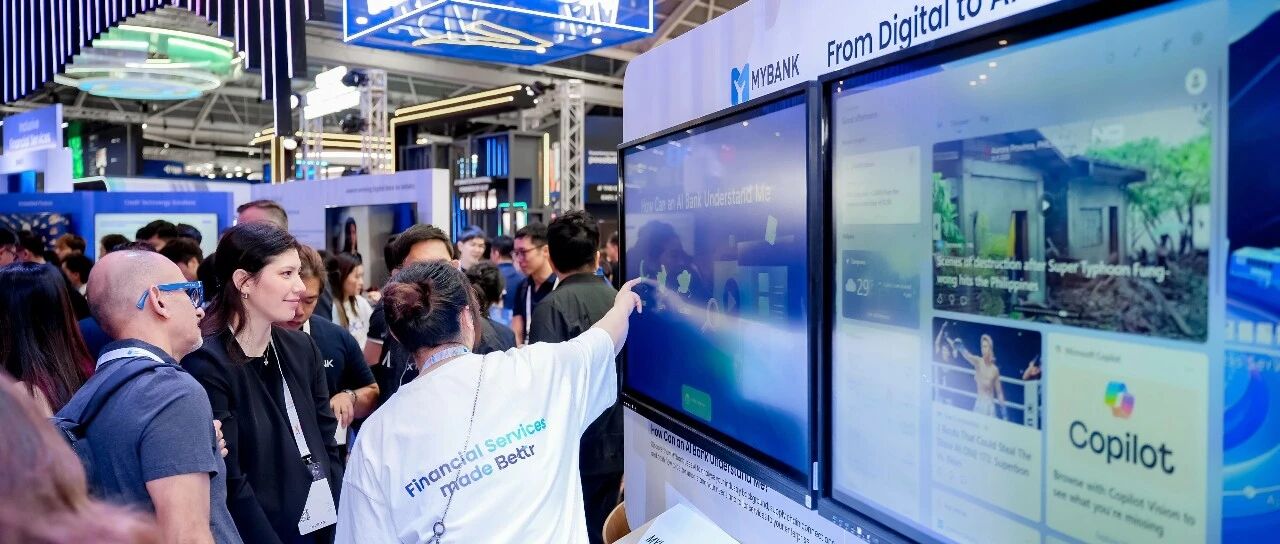
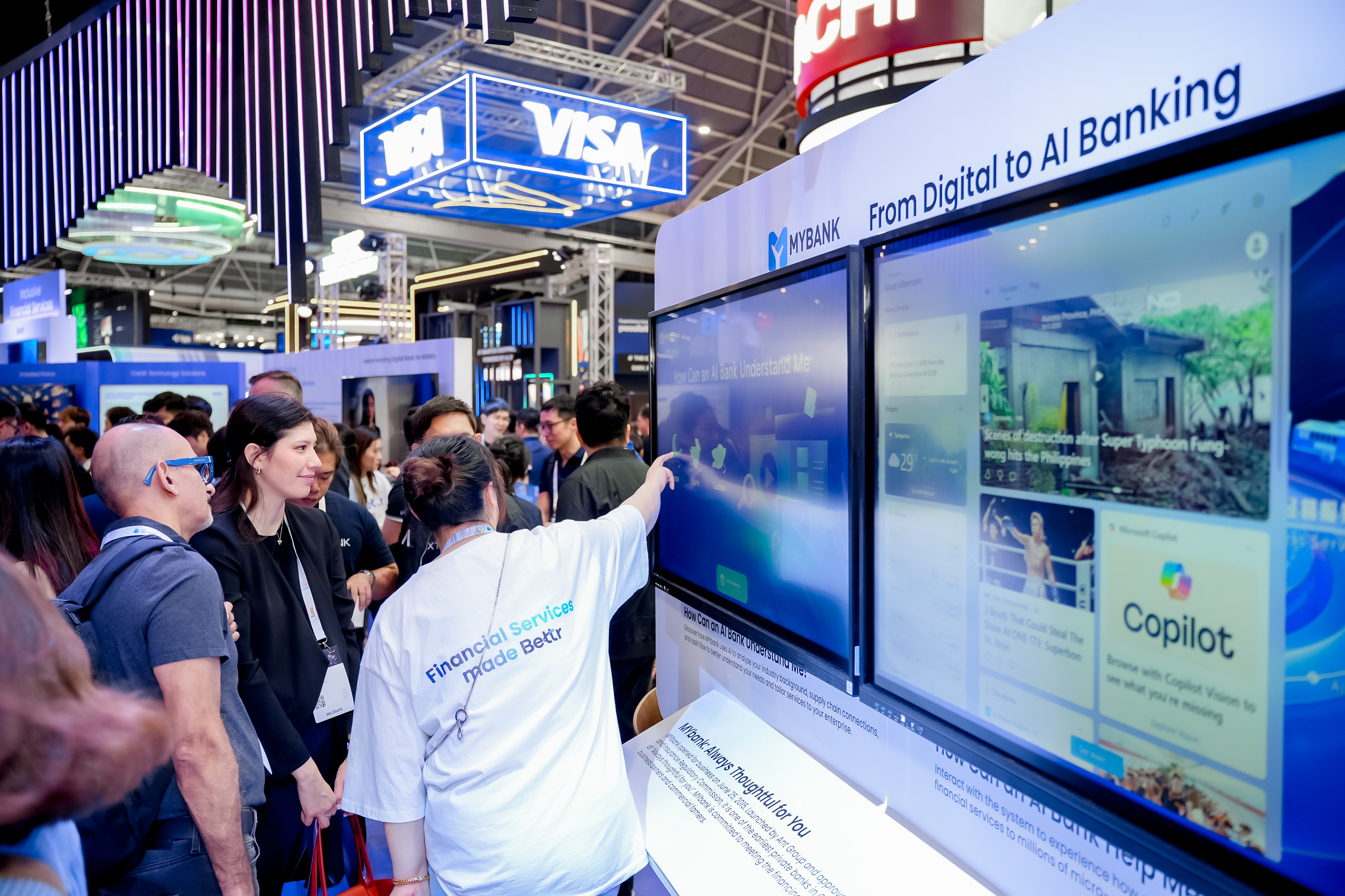
网商银行携AI应用亮相新加坡金融科技节 向世界展示AI银行的“中国经验”
Zhong Guo Jing Ji Wang· 2025-11-14 08:10
Core Insights - The article highlights the innovative use of AI by Ant Bank to redefine banking services, particularly in microfinance, showcased at the Singapore FinTech Festival [1][4][9] - Ant Bank's AI applications in credit assessment and wealth management are positioned as advanced solutions compared to traditional banking methods [5][8] Group 1: AI in Banking - AI is transforming banking services, with full AI integration potentially reducing costs by up to 20% and enhancing user experience [4] - Ant Bank's AI-driven credit assessment has achieved a consistency rate of 90% with human approval after five months of practice, indicating reliability in risk control [6] Group 2: Microfinance Growth - The balance of microloans in China has surged from 8.8 trillion yuan in 2017 to 32.3 trillion yuan in 2024, reflecting a compound annual growth rate of 20.74% [5] - Ant Bank's AI credit experts utilize two AI assistants to enhance the credit evaluation process, significantly improving efficiency and accuracy [5][6] Group 3: Global Interest and Adoption - The AI practices of Ant Bank have attracted attention from global financial institutions, with executives from Southeast Asia expressing interest in the technology [9][11] - The Chinese government's supportive policies on data application and AI technology have facilitated the rapid development of AI banking solutions [9][11] Group 4: Market Potential in Southeast Asia - Southeast Asia, with 97% of its enterprises being micro and small businesses, presents a significant market for fintech innovations, where only 23% of these businesses currently access traditional bank loans [11] - Ant Bank's experience serves as a model for fintech entrepreneurs in Southeast Asia, where the demand for financial services among small businesses is high [11]
网商银行公布AI信贷、理财、营销新进展 提出“新310”模式
Zheng Quan Ri Bao Wang· 2025-09-12 07:13
Group 1 - The core objective of the company is to leverage AI to address real industry problems, with a 10-year strategic plan called "New 310" aimed at providing comprehensive user insights, personalized expert services, and real-time interactions, ultimately becoming the AI CFO for millions of small and micro enterprises [1] - The company aims to develop an "AI credit expert" to facilitate online approval for medium to large loans, ensuring stable credit limits, supported by two AI assistants: one for industry research and another for due diligence [1] - In the area of AI wealth management, the company plans to introduce tools like the "Redemption Intelligent Operation Engine" and "Capital Structure Adjustment Engine" to enhance the stability of returns for partner institutions, with the former already implemented in 14 institutions, reducing return volatility by 5 basis points compared to market averages [1] Group 2 - In AI marketing, the company is shifting from broad marketing strategies to personalized approaches, aiming for "one strategy per person" to enhance user engagement and satisfaction [2] - The company emphasizes that the application of AI technology is not about replacing human roles but empowering individuals to become "super individuals," enhancing the capabilities of ordinary credit officers, wealth managers, and marketing personnel to better serve users and create incremental value [2]
宇信科技(300674) - 宇信科技:2025年5月21日-22日投资者关系活动记录表
2025-05-22 15:06
Group 1: AI Applications in Banking - AI credit applications are crucial for banks, focusing on improving efficiency and quality in loan processes [2] - AI marketing utilizes user characteristics for intelligent modeling and enhances marketing strategies [3] - AI data capabilities help clients improve data analysis through natural language processing and data language conversion [3] - AI regulatory tools establish a bridge between raw data and final metrics for compliance and reporting [3] - AI knowledge bases assist clients in visualizing workflows and addressing specific business queries [3] Group 2: Challenges in AI Implementation - The accuracy of large models is generally high, but measures are in place to manage potential inaccuracies in client applications [4] - Implementing AI in client systems is complex due to existing architecture and processes, requiring a phased, modular approach [5] - Continuous technological advancements necessitate ongoing evaluation of new AI technologies for compatibility and application [5] - Communication barriers between technical and business teams can lead to mismatched requirements, which the company addresses by integrating algorithm personnel into business research [6] Group 3: Talent and Capability Development - Transitioning from IT product capabilities to business empowerment requires hybrid talent that understands both business needs and AI technology [6] - Product managers are essential for designing AI solutions that enhance client business capabilities and drive growth [6] Group 4: Risk Awareness - The content discussed in the investor relations activity does not constitute a substantive commitment from the company regarding future development plans or performance expectations [6]
