AI健康监测腕表

Search documents
八大科技展区亮相CES Asia 2026,勾勒未来消费电子蓝图
Sou Hu Cai Jing· 2026-02-05 07:38
Core Insights - CES Asia 2026 will focus on "Technology Integration and Innovative Symbiosis," showcasing advancements in embodied intelligence, artificial intelligence, and low-altitude economy across an immersive 50,000 square meters exhibition space [2] - The event is scheduled to take place from June 10 to June 12, 2026, in Beijing, providing a platform for technology display, business matchmaking, and ecosystem building [2] Group 1: Embodied Intelligence - The Embodied Intelligence exhibition area will highlight breakthroughs in "flexible technology + multimodal interaction," featuring humanoid robots and flexible operational devices [3] - Key technologies such as hand-eye servo coordination, emotional computing, and spatial intelligent navigation will be showcased, addressing diverse scenarios like home services and emergency rescue [3] - The integration of flexible robots and drones will be a highlight, enabling innovative applications in complex environments [3] Group 2: Artificial Intelligence - The Artificial Intelligence exhibition area will emphasize "AI-native and full-scenario empowerment," showcasing core technologies like edge large models and cross-device collaboration [4] - AI-native smartphones will be a focal point, enhancing multi-modal interaction and task automation even in offline environments [4] - Emerging terminals like smart glasses and immersive AI desktop partners will also be presented, aiming to transform smartphones into intelligent assistants [4] Group 3: Low-altitude Economy - The Low-altitude Economy exhibition area will focus on the integration of "flying carriers + intelligent applications," featuring aerial work robots and eVTOLs [5] - Aerial work robots equipped with flexible robotic arms will demonstrate practical capabilities in high-altitude cleaning and precise delivery [5] - The intelligent mobility segment will showcase L4 autonomous driving and smart cockpit innovations, aligning with national low-altitude economic development strategies [5] Group 4: Smart Living - The Smart Living exhibition area will center on "seamless intelligence and health co-existence," showcasing the transition from single product intelligence to whole-home connectivity [6] - Home automation systems will utilize Matter protocol and 3D spatial scanning technology for seamless device integration and energy management [6] - The healthcare segment will focus on AI health monitoring devices, emphasizing non-invasive blood glucose monitoring and ECG analysis [7] Group 5: Intelligent Cockpit - The Intelligent Cockpit exhibition area will highlight the deep integration of automotive electronics and consumer electronics, showcasing innovations in "multi-modal perception + edge large models" [8] - New-generation smart cockpits will move beyond traditional app interactions, providing proactive service based on driver and passenger needs [8] - Solutions for seamless connectivity between travel and home will be presented, promoting cars as mobile smart living spaces [8] Group 6: Green Energy Storage - The Green Energy Storage exhibition area will align with the "dual carbon" strategy, showcasing portable storage and home energy systems [9] - Home energy systems will demonstrate solutions for solar integration and emergency power supply, catering to energy autonomy needs [9] - Portable storage products will leverage high energy density batteries and fast charging technology for outdoor and emergency applications [9] Group 7: Electronic Components - The Electronic Components exhibition area will focus on "hardcore foundation and innovation empowerment," presenting core technologies in the consumer electronics supply chain [10] - High-performance AI chips and flexible PCBs will be highlighted, addressing supply chain bottlenecks and enhancing product competitiveness [10] - The exhibition will facilitate connections between upstream and downstream enterprises, showcasing the entire industry chain [10] Group 8: Digital Art Technology - The Digital Art Technology exhibition area will emphasize "technology empowerment and creative expression," featuring AR/VR content and interactive art installations [11] - AR educational materials will utilize 3D visualization to enhance immersive learning experiences [11] - The exhibition will provide a platform for cross-industry innovation, connecting technology with culture, education, and entertainment [11] Additional Insights - The eight exhibition areas are interconnected through the theme of "technology integration," creating a comprehensive innovation ecosystem [11] - The event will also host forums and matchmaking events to discuss industry trends and foster collaboration among leading enterprises and research institutions [11] - Registration for exhibitors is ongoing, providing opportunities for businesses to engage with cutting-edge technologies and expand commercial partnerships [11]


AI终端八大“新宠”
Xin Lang Cai Jing· 2026-02-02 10:52
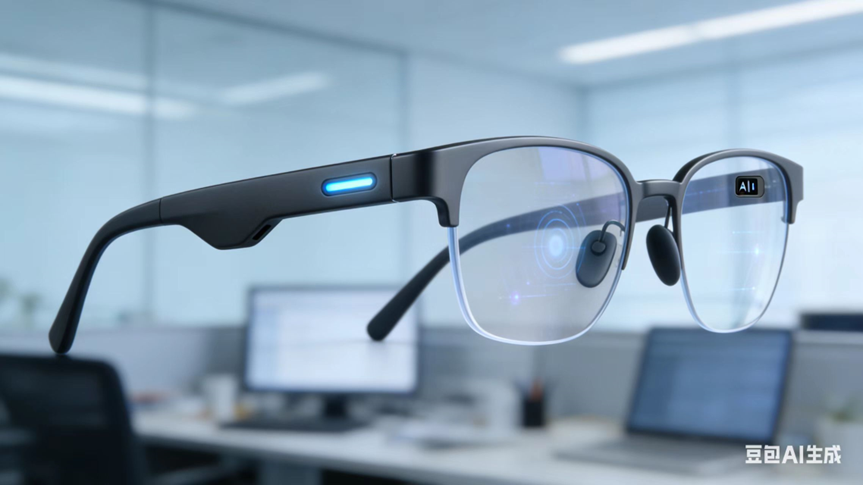
Group 1: AI Hardware Trends - The year 2026 is expected to be a pivotal point for AI hardware, transitioning towards scalability, humanization, and contextualization in consumer scenarios [1][21] - AI technology is reshaping interactions between the public and the digital world through lightweight, intelligent, and integrated forms [1][21] Group 2: Full-Function Smart Glasses - AI glasses are anticipated to enter a phase of explosive growth by 2026, supported by national policies and advancements in lightweight materials and low-power optical solutions [4][23] - Innovations such as eSIM independent communication, diffraction optical waveguides, and directional audio are expected to enhance user experience, with glasses weighing less than 50 grams [4][23] Group 3: Embodied Intelligent Home Robots - Humanoid robots are extending from industrial to home environments, with practical designs entering real household testing by 2026 [6][25] - Features like hand-eye coordination for precise tasks and emotional computing for interaction with family members are key highlights [6][25] Group 4: Immersive AI Desktop Companions - Desktop AI terminals are becoming new entry points for user engagement, evolving from single devices to integrated systems of hardware, agents, and cloud services by 2026 [9][28] - The shift from passive response to proactive sensing and emotional companionship is a significant trend [9][28] Group 5: AI-Native Smartphones - The smartphone market is entering a phase of stock competition, with AI as a core differentiator, leading to a reconstruction of smartphones into intelligent assistants by 2026 [11][30] - Innovations will include deep integration of edge AI models with operating systems, enabling seamless service flows across applications [11][30] Group 6: AI Health Monitoring Smartwatches - Smart wearable devices are transitioning from fitness tracking to medical-grade health monitoring, with II class medical device certification becoming a market entry requirement [13][32] - Key features include non-invasive blood glucose monitoring and real-time health data analysis, enhancing user safety [13][32] Group 7: Personalized AI Education Tablets - AI education is shifting from auxiliary teaching to personalized learning, with AI learning devices expected to grow over 50% annually [15][34] - Technologies like knowledge graphs will enable automatic diagnosis of student weaknesses and personalized learning paths [15][34] Group 8: All-Domain Perception Intelligent Cockpits - Intelligent cockpits are emerging as a new growth area in automotive electronics, with a trend towards "de-appification" by 2026 [18][37] - Features will include multi-modal perception systems for real-time monitoring of driver status and passenger needs, with edge AI models becoming standard [18][37] Group 9: Whole-Home Smart Home Hubs - Smart home technology is rapidly evolving from single-device intelligence to whole-home solutions, with the Matter protocol facilitating integration of existing devices [20][39] - Innovations in spatial awareness technology will allow AI to optimize device control and energy management, potentially reducing household energy consumption by over 30% [20][39]